
Making Armageddon Great Again

A Mushroom Cloud, A Smoking Gun

BILL ASTORE

JAN 15, 2026

Recently, the Bulletin of the Atomic Scientists featured a fiction contest: “Write Before Midnight.” I sent in an entry, which, sad to say, didn’t win. (The winners can be found here.) But that’s OK: I enjoyed writing something other than my usual essays. My “losing” entry to the contest follows. (Re-reading it, it’s perhaps too much like a memoir rather than fiction.)

*****

Making Armageddon Great Again

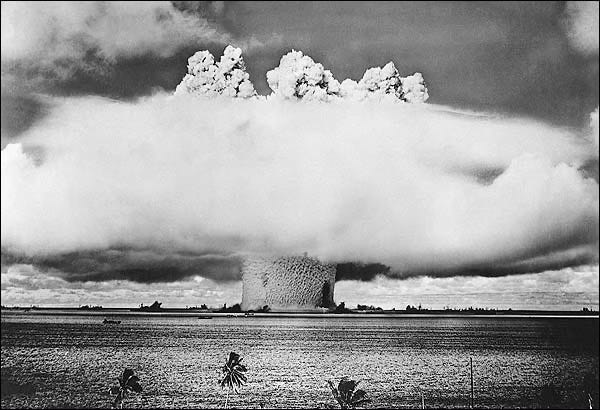
And so the missiles are finally here. Long ago, I thought I’d put nuclear war in the rearview mirror. I never expected to see a mushroom cloud through my windshield, rising in the near distance.

I’d seen something like it before—Russian nuclear missiles flying over the North Pole on their way to America—but that was fifty years ago. I was a young lieutenant then, working in the Missile Warning Center deep inside Cheyenne Mountain. Those missile tracks weren’t real; they were part of a war game, fed into our computers on magnetic tape. The exercise ended with a simulated Armageddon, soundless, screamless.

Even so, when the tracks terminated at U.S. cities, we all went quiet. Sitting two thousand feet under granite, staring at monochrome monitors, we imagined those cities vaporized in an instant. Millions dead, incinerated in a heartbeat. The thought chilled us.

I was 24 then, serving my country against the “evil empire” of the Soviet Union, near the tail end of the Cold War. The first Cold War, I should add—as opposed to the “new” one we’ve been trapped in for the past two decades. Well, it’s plenty hot now. Thermonuclear hot.

I was far enough from my city’s ground zero to survive the initial blast and heat. But at 74, I know these are my last days. Fallout will finish me—unless I take care of it myself first.

I now know for certain that, after an unimaginably destructive nuclear exchange (a nice euphemism, isn’t it?), the living will envy the dead. For now, I’m one of the living, caught in a land of the dead.

How did it come to this? We always ask that, don’t we? How did I let a 50-year-old nightmare scenario on magnetic tape become real? Couldn’t I have done something—anything—to stop it?

Even now, I like to think I could have. There was nothing inevitable about the “new” Cold War or its culmination in MAD—mutual assured destruction. I just wasn’t mad enough to resist it with the ferocity required. I gave my quiet consent to the warmongers, the death-wishers, the ones who talk tough about “big-boy pants,” the ones haunted by missile envy and mindless fear. The ones who blow hardest just before they decide to blow up the world.

I saw it coming. So did many others. I wrote against the “new” Cold War. I denounced so-called investments in new nuclear weapons. I warned about militarizing space, how our early warning satellites and sensors could be blinded. I cautioned that President Trump’s “Golden Dome” missile shield might make nuclear war more likely. None of it mattered. Money spoke louder than I ever could—talk of jobs and the promise of profits outweighed any argument I could muster.

And so here I am, facing darkness—smoke, ash, soot blotting out the sun. I’ve stocked enough supplies to last a couple of weeks, but what’s the point? I have no desire to navigate a post-apocalyptic hellscape.

Once upon a time, I was an Air Force historian, a captain, teaching cadets about the making and use of the atomic bomb. That was 1992—45 years ago. Where does the time go? We even took the cadets to Los Alamos, the birthplace of the bomb, and then on to the Trinity test site.

Back then I was oddly optimistic. The Soviet Union had collapsed. Politicians were talking about peace dividends. Some even hinted that America might become a normal country in normal times. Normalcy! Imagine that today.

I remember a somewhat glum spokesman at Los Alamos talking about reinventing the lab—shifting to peaceful purposes, maybe consumer electronics like VCRs and CD players, competing with Japan. I was skeptical. Nuclear physicists designing camcorders and video games? A longshot—but better than cranking out new warheads and bombs.

At Trinity, what struck me most was the absence of the tower from which the “gadget” had been suspended. Vaporized instantly. Only twisted rebar remained at the base. And that had been a baby nuke—mere kilotons compared to the megatons in our arsenal. I tried to impress this on the cadets, some of whom might someday be ordered to launch such weapons. But who can really picture megatons of destruction, repeated again and again and again?

A sharp-eyed cadet found a sliver of trinitite. For some reason, I had to touch it, briefly, radioactivity be damned. This tiny fragment, this ghost of Trinity, made it all seem real. As a few atomic tourists walked around the scrub desert in masks, fearful still of breathing in radioactive particles, I thought of Oppenheimer’s god of death, the destroyer of worlds. That god has finally come for us—bringing mass death just as Oppie knew he would.

Now, back in the present, at least I’ve filled both bathtubs with water. A small reserve. At Cheyenne Mountain, there was a pond underground, a kind of giant bathtub, complete with a rowboat, so I was told. Maybe Charon did the rowing. We used to joke that boat and reservoir was the Navy’s presence in our Air Force-run bunker. I never saw that boat or pond. I wish I had.

There’s a lot I wish I’d seen. I thought there’d be more time. Next month, next year, next life.

Next life. That’s what I cling to now. I fought the good fight. I tried to argue for disarmament as the only sane option—for America, for humanity, for the entire living breathing beautiful planet of ours. But others thought differently. Some were simply making too much money, making Armageddon great again.

So don’t judge me for thinking about the unthinkable. I know suicide is a mortal sin for us Catholics. But my Ruger 9mm sits by my side. Twelve rounds in the magazine—but I’ll only need the one in the chamber.

Yes, I’ve seen the mushroom cloud. And soon, quite soon, there’ll be a smoking gun.
Copyright 2026 William J. Astore.

Meet the New Holocaust Missile and Armageddon Submarine

W.J. Astore

Names Like Minuteman, Peacekeeper, and Sentinel Are Diabolically Dishonest

Ever think about names of U.S. weapons of war? Rarely are those names honest. I do applaud the relative honesty of Predator and Reaper drones, because those names capture the often predatory nature of U.S. foreign policy and the grim reaperish means that are often employed in its execution. Most names are not so suggestive. For example, U.S. fighter planes carry noble names like Eagle, Fighting Falcon, or Raptor. Nuclear bombers are an interesting case since they can carry thermonuclear bombs and missiles to kill hundreds of thousands, possibly millions, of people. So we have the B-52 Stratofortress (a great 1950s-era name), the B-1 Lancer, the B-2 Spirit, and the new B-21 Raider (the name has historical echoes to the Doolittle Raid on Tokyo in 1942).

Reaping what we sow? Just reaping? Whatever the case, the U.S. way of war is grim

Shouldn’t these bombers carry names like Megadeath or Mass Murder?

Think too of nuclear missiles. The Air Force’s Intercontinental Ballistic Missiles (ICBMs) have had names like Titan, Minuteman, Peacekeeper, and now the new Sentinel. But since these missiles carry warheads that could easily kill millions, wouldn’t a more honest name be The Holocaust ICBM? For that’s what these missiles promise: a nuclear holocaust.

Consider too the Navy’s Ohio-class nuclear missile-firing submarines (SSBN) with their Trident missiles. (Trident—gotta hand it to the Navy.) Just one submarine can carry 20 Trident II missiles, each with up to eight warheads, each warhead being roughly equivalent to six Hiroshima bombs. Again, roughly speaking, each of these submarines carries an arsenal equivalent to one thousand Hiroshima bombs. And the U.S. has fourteen of these submarines.

Instead of the Ohio-class of submarines, shouldn’t they be called the Armageddon-class? Or the Apocalypse-class? The Genocide-class?

With a bit more honesty, perhaps it wouldn’t be so easy to sell these horrific weapons to Congress and the American people. Then again, when the bottom line is higher budgets for the Pentagon and more jobs for Congressional districts, I guess America will buy most anything. Even Holocaust missiles and Armageddon submarines. And for upwards of $2 trillion over the next 30 years as well.

If they don’t bust the budget, perhaps they’ll destroy the world.

The Biggest Threat to America

W..J. Astore

Aside from climate change (Armageddon in slow motion) and nuclear war (Armageddon in the blink of an eye), the biggest threat to America is perpetual war and preparations for war driven by threat inflation. We’re witnessing it now, before our very eyes, with America’s increasingly polarized relations with China, notes David Vine in his latest effort for TomDispatch.com. Both parties, Republican and Democratic, accuse the other of being “soft” on China, even as the U.S. “defense” budget (meaning the war and weapons budget) soars with bipartisan support in Congress.

It’s folly, of course, and dangerous folly at that. China has roughly four times as many people as the U.S. and a vibrant economy; China is also a leading trading partner and owner of American debt. China, in short, should be a friend, or friendly rival, or a competitor worthy of respect. What China shouldn’t be in American eyes is a manifestation of a new “Yellow Peril,” an inscrutable foe, a soon-to-be enemy. Anything that tips us in that direction is truly folly, since any war with China could end in nuclear catastrophe. And even if such a catastrophe is avoided, war, even a “cold” one, will destroy any chance for concerted action against climate change, imperiling the very planet we live on.

If we want to avoid Armageddon, whether the one in slow motion or the one in the blink of an eye, the USA needs good relations with China, based again on mutual respect and a cooperative spirit. What should unite us (working to mitigate climate change and reduce the threat of nuclear war) is far more important than what is allegedly dividing us.

But threat inflation works, especially for the military-industrial-congressional complex, to justify colossal war budgets to the American people. Here’s the problem, though: When you inflate the threat, in some way you also create it. You instantiate it, at least in your own mind. You give it more and more substance.  And the more weapons you build to meet the threat you created, the more likely it becomes that you’ll choose to use those weapons when push comes to shove — and Americans sure do a lot of shoving in the world.

I just hope the Chinese are wise enough to see that America’s national security state is indeed a big threat — to America.  So they’d be wisest to stand back and let America defeat itself with debilitating wars and profligate spending on costly weaponry.  Meanwhile, they can use their strong economy to dominate trade.  While we build weapons and fight wars, China will defeat us — at capitalism!  Ah, the irony, comrade.

Yet even as China wins the new cold war, the planet itself will lose. Anything that distracts humanity from facing climate change together is folly. It may not seem so at this moment, but check back with the planet in 2031. Another decade lost to military folly is another nail in the coffin to efforts at preserving and restoring life on our planet.

So, as David Vine asks in his article, Do you want a new cold war? Anyone with any sense knows that “No!” is the only possible answer.

The Cold War, Rebooted and Rebranded

In my latest for TomDispatch.com, I tackle the Pentagon’s latest proclivity for “near-peer” conflicts, the near-peers being China and Russia, which conveniently serves to justify huge war budgets in perpetuity. It’s the Cold War, rebooted and rebranded, with a new generation of nuclear weapons thrown into the mix to make things even more interesting. As they say, what could possibly go wrong?

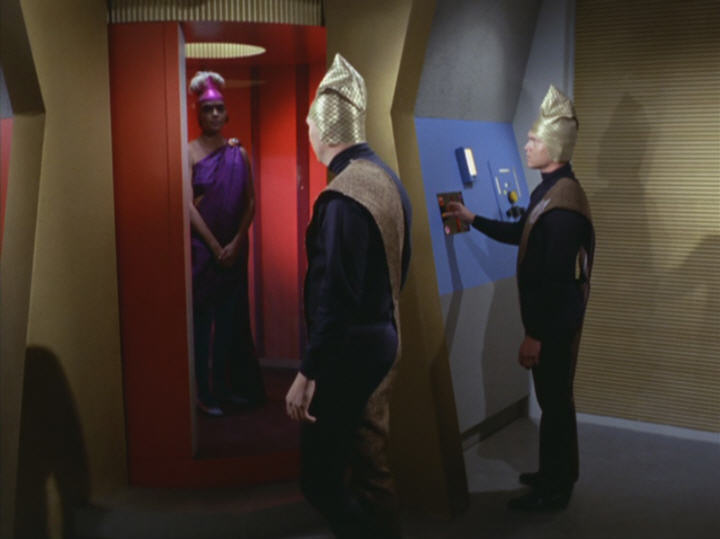
What follows is an excerpt that focuses on a “Star Trek” episode that has much to teach us:

In the 1970s, in fact, I avidly watched reruns of the original Star Trek. Lately, one episode, “A Taste of Armageddon,” has been on my mind. It featured two planets, Eminiar VII and Vendikar, at war with each other for 500 years. Here was the catch: those planets no longer used real weapons. Instead, they fought bloodlessly with computer-simulated attacks, even as citizens marked as “dead” had to report to disintegration chambers in a bizarre ritual meant to keep the peace through a computer-driven holocaust. The peoples of these two planets had become so accustomed to endless war that they couldn’t imagine an alternative, especially one that ended in a negotiated peace.

So many years later, I can’t help thinking that our country’s military establishment has something in common with the leaders of Eminiar VII and Vendikar. There’s so much repetition when it comes to America’s wars — with little hope of negotiated settlements, little talk of radically different approaches, and a remarkably blasé attitude toward death — especially when it’s largely the death of others; when foreign peoples, as if on another planet, are just “disintegrated,” whether by monster bombs like MOAB or more discrete Hellfire missile strikes via remotely piloted drones.

What gives? Right now, America’s military leaders are clearly turning back to the war they’d prefer to be fighting, the one they think they can win (or at least eternally not lose). A conventional warlike state vis-à-vis those near-peers seems to play to their skills. It’s also a form of “war” that makes loads of money for the military-industrial complex, driving lucrative acquisition decisions about weaponry in a remarkably predictable fashion.

Near-peer “war” remains largely a fantasy set of operations (though with all-too-real dangers of possible conflagrations to come, right up to nuclear disaster). In contrast, real war, as in this century’s terror wars, is a realm of chaos. So much the better to keep things as predictable as possible. Fresh and original ideas about war (and peace) are unlikely to prove profitable for the military-industrial complex. Worse yet, at an individual level, they could damage one’s chances for promotion or, on retirement, for future posts within the industrial part of that complex. It’s a lot healthier to salute smartly, keep planning for a near-peer future, and conform rather than fall on one’s sword for a dissenting idea (especially one related to peace and so to less money for the Pentagon).

Please read the article in its entirety here at TomDispatch.

On Eminiar VII, “casualties” of computer war willingly enter disintegration chambers to die as a way of keeping “peace”