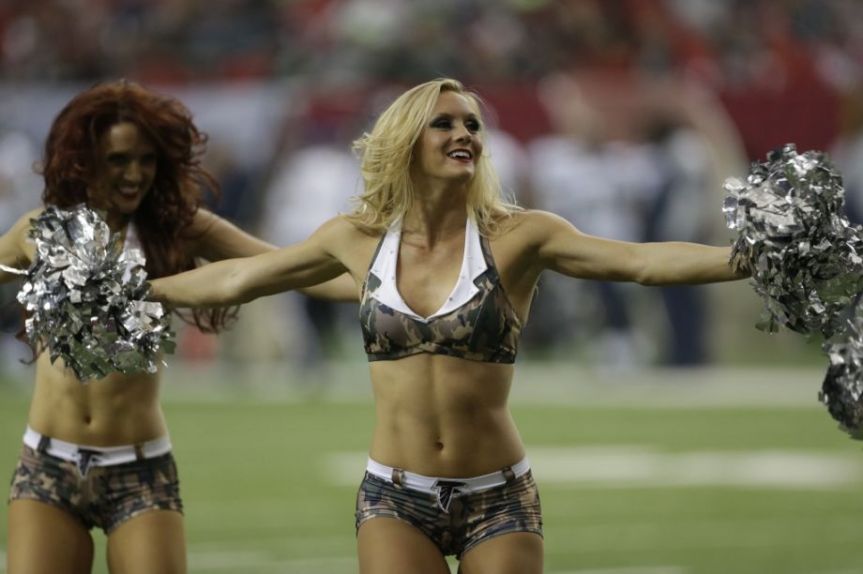
“Military appreciation” now includes cheerleaders in skimpy camo outfits
W.J. Astore
A few weeks ago, I was stuck at a dealership, my car awaiting service. In the waiting room, The Today Show was blasting out, featuring a performance by a well-known pop star. Choreographed and repetitive, her performance was substance- and content-free, a repetition of words that were mostly unclear to me, set to a machine gun-like beat echoed by gyrating dancers on stage.
And I thought to myself: this is much like America’s wars, or at least how they’re packaged and presented to the American people.
America’s wars have been choreographed. Obligatory cheers for “our” troops. Plenty of flags and songs to “bless” America. Lots of video footage of gyrating jets putting “bombs on target.” Meanwhile, the overall meaning is unclear. Vague promises are made of “progress,” but signs of the same are difficult to decipher.
War has become the background music to our lives. A sobering fact: If you’re a high school student in America, you can’t remember a time when America has been at peace. Your country has always been at war – and so it always will be, for it’s impossible to win a war on terror, because war is terror.
But back to TheToday Show. I watched it in the 1970s. Back then it featured serious news along with lighter “fluff” pieces like movie reviews (I fondly recall Gene Shalit). Now it’s dominated by entertainment and celebrities, infotainment driven by the pursuit of ratings. In other words, it’s much like our war coverage, which features celebrity generals and various forms of fluff, driven largely by “ratings,” i.e. keeping the people happy — and happily ignorant – about the realities of war.
I remember talking to an Army battalion commander about some of the realities he and his men faced in Iraq. Back in the Surge days, he mentioned a “churn rate” of 50% in U.S. infantry units: troops either didn’t want to reenlist, or they went into privatized militaries and doubled or tripled their pay. He mentioned repetitive overseas deployments that contributed to stress, domestic violence, divorce, and broken families. He himself was not at home for eight out of twelve Christmases.
In the field, his troops faced 12-16 hour days of drudgery. He referred to the Surge as “mental ditch-digging,” the fatigue that came with humping gear in the desert (or the cities) of Iraq with little to show for it. Such work, often frustrating, occasionally deadly, placed enormous strain on young troops, many of whom had been in high school not that long ago.
Nothing about this is exceptional – it’s just war. Demanding. Tough. Ugly. The kind of war that isn’t featured on American “news” shows, driven as they are by ratings and infotainment.
Of course, a real shooting war is far worse than simply long hours and repetitive duty. That’s why an Army major used to remind me, “Any day in the Army you’re not being shot at is a good day.” But our media prefers to put a happy face on war.
America’s latest wars are never-ending. A reason for this, not acknowledged enough, is the way they’re being packaged, sanitized, and sold to the American public as infotainment. As a performance that’s meant to be cheered briefly and just as quickly forgotten, like that pop star and her gyrating dancers on TheToday Show.
In my latest article for TomDispatch.com, I focus on the “alien” nature of U.S. military interventions. Here are some excerpts from my article:
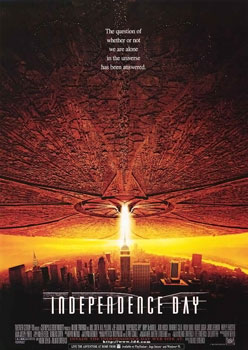
The latest Independence Day movie, despite earning disastrous reviews, is probably still rumbling its way through a multiplex near you. The basic plot hasn’t changed: ruthless aliens from afar (yet again) invade, seeking to exploit our precious planet while annihilating humanity (something that, to the best of our knowledge, only we are actually capable of). But we humans, in such movies as in reality, are a resilient lot. Enough of the plucky and the lucky emerge from the rubble to organize a counterattack. Despite being outclassed by the aliens’ shockingly superior technology and awe-inspiring arsenal of firepower, humanity finds a way to save the Earth while — you won’t be surprised to know — thoroughly thrashing said aliens.
Remember the original Independence Day from two decades ago? Derivative and predictable it may have been, but it was also a campy spectacle — with Will Smith’s cigar-chomping military pilot, Bill Pullman’s kickass president in a cockpit, and the White House being blown to smithereens by those aliens. That was 1996. The Soviet Union was half-a-decade gone and the U.S. was the planet’s “sole superpower.” Still, who knew that seven years later, on the deck of an aircraft carrier, an all-too-real American president would climb out of a similar cockpit in a flight suit, having essentially just blown part of the Middle East to smithereens, and declare his very own “mission accomplished” moment?
In the aftermath of the invasion of Afghanistan and the “shock and awe” assault on Iraq, the never-ending destructiveness of the wars that followed, coupled with the U.S. government’s deployment of deadly robotic drones and special ops units across the globe, alien invasion movies aren’t — at least for me — the campy fun they once were, and not just because the latest of them is louder, dumber, and more cliché-ridden than ever. I suspect that there’s something else at work as well, something that’s barely risen to consciousness here: in these years, we’ve morphed into the planet’s invading aliens.
Think about it. Over the last half-century, whenever and wherever the U.S. military “deploys,” often to underdeveloped towns and villages in places like Vietnam, Afghanistan, or Iraq, it arrives very much in the spirit of those sci-fi aliens. After all, it brings with it dazzlingly destructive futuristic weaponry and high-tech gadgetry of all sorts (known in the military as “force-multipliers”). It then proceeds to build mothership-style bases that are often like American small towns plopped down in a new environment. Nowadays in such lands, American drones patrol the skies (think: the Terminator films), blast walls accented with razor wire and klieg lights provide “force protection” on the ground, and the usual attack helicopters, combat jets, and gunships hover overhead like so many alien craft. To designate targets to wipe out, U.S. forces even use lasers!
In the field, American military officers emerge from high-tech vehicles to bark out commands in a harsh “alien” tongue. (You know: English.) Even as American leaders offer reassuring words to the natives (and to the public in “the homeland”) about the U.S. military being a force for human liberation, the message couldn’t be more unmistakable if you happen to be living in such countries: the “aliens” are here, and they’re planning to take control, weapons loaded and ready to fire.
Other U.S. military officers have noticed this dynamic. In 2004, near Samarra in Iraq’s Salahuddin province, for instance, then-Major Guy Parmeter recalled asking a farmer if he’d “seen any foreign fighters” about. The farmer’s reply was as simple as it was telling: “Yes, you.” Parmeter noted, “You have a bunch of epiphanies over the course of your experience here [in Iraq], and it made me think: How are we perceived, who are we to them?”
Americans may see themselves as liberators, but to the Iraqis and so many other peoples Washington has targeted with its drones, jets, and high-tech weaponry, we are the invaders.
Do you recall what the aliens were after in the first Independence Day movie? Resources. In that film, they were compared to locusts, traveling from planet to planet, stripping them of their valuables while killing their inhabitants. These days, that narrative should sound a lot less alien to us. After all, would Washington have committed itself quite so fully to the Greater Middle East if it hadn’t possessed all that oil so vital to our consumption-driven way of life? That’s what the Carter Doctrine of 1980 was about: it defined the Persian Gulf as a U.S. “vital interest” precisely because, to quote former Deputy Secretary of Defense Paul Wolfowitz’s apt description of Iraq, it “floats on a sea of oil.”
Consider it an irony of alien disaster movies that they manage to critique U.S. military ambitions vis-à-vis the “primitive” natives of far-off lands (even if none of us and few of the filmmakers know it). Like it or not, as the world’s sole superpower, dependent on advanced technology to implement its global ambitions, the U.S. provides a remarkably good model for the imperial and imperious aliens of our screen life.
A scarlet letter hasn’t prevented Petraeus’s rise after retirement
W.J. Astore
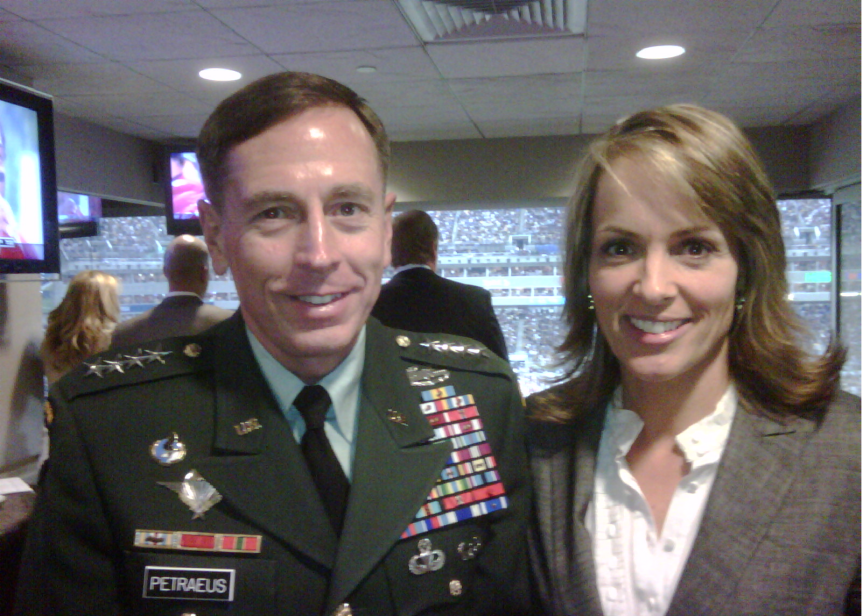
One of the more disturbing aspects of American militarism today has been the elevation of generals to the pantheon of heroes. Since 9/11, one U.S. general has excelled all others in hype: David Petraeus, the “Surge” savior of Iraq.
Today, Nick Turse has an outstanding article at TomDispatch.com on Petraeus and his charmed career. Despite his very public marital infidelity, and despite leaking highly classified secrets to his mistress, Petraeus has emerged from scandal as if reborn.
As Turse notes with telling humor, the retired general is more in demand than ever, so busy making money and giving advice to the high and mighty that he has no time to talk to (critical) journalists. Shepherded in style from event to event, looked up to as a sage on nearly every topic facing America today, Petraeus has somehow maintained a Messiah-like aura despite his past sins.
And I truly mean Messiah-like. Turse cites a story about Petraeus that I’d never heard that casts a whole new celestial light on Petraeus and his hype machine. Visiting a wounded soldier in the hospital, a soldier apparently in an irreversible coma, Petraeus reportedly awakened this man by shouting “Currihee,” a Cherokee word and unit battle cry that became famous after HBO’s popular “Band of Brothers” series.
And what immediately popped into my head? Lazarus, come forth!
In the New Testament, Jesus Christ awakened the dead Lazarus. Petraeus awakened a comatose soldier. Petraeus is not just a genius general — He’s the freakin’ Messiah!
America’s continued embrace of Petraeus says much about the American moment. Despite the fact that his “surges,” whether in Iraq or Afghanistan, were not miracles but rather, in their lack of staying power, essentially mistakes, Petraeus is still celebrated as warrior, sage, even saint (despite that obvious scarlet letter).
Is it possible that “saint” Petraeus might be “born again” to become a serious presidential contender in 2020? Heck, if thrice-married Donald Trump can break all the rules of civility to win his party’s nomination, why not the “honorable” Petraeus?
I’m not a prophet, but I’ll issue a warning anyway: Beware of false messiahs in 2020, especially those who wore general’s stars with miracle stories following in their wake.
People who don’t like noise get a bad rap in America. We once had neighbors in Colorado who used to ride off-road dirt bikes up and down the street. Someone complained about the noise and their response was, “Don’t like it? Move. This is America. We have freedom to make all the noise we want.”
Yesterday, my barber was talking about television. He was watching an “entertainment” show in which people were screaming, amplified by explosions, and he just couldn’t abide the noise. But he’s an old fuddy-duddy, like me, right?
When I watch baseball on TV, I keep the “mute” button very close by for the commercials. But even the commentators are getting noisy. Baseball used to be a fairly quiet game with two commentators in the booth, a play-by-play guy and a “color” guy (usually an ex-ballplayer). Now there are often three people in the booth, with another one (or even two) on the sidelines. They all need to speak, of course, so baseball on TV has become a constant contest of endless chatter featuring mindless statistics. There’s so much chatter that it’s difficult to hear the crack of a bat or the sound of a fastball smacking a catcher’s mitt. Then there are the stadiums that feature lots of rock music, sound effects (like smashing glass for a foul ball), horns and pyrotechnics that go off when a player hits a home run, and all those video boards that order the fans to “Make Some Noise!”.
I know — I sound like an old fuddy-duddy again — sort of like the Grinch who stole Christmas because he was tired of all the noise, noise, noise of the Whos in Whoville. And if the Grinch was bothered by Christmas festivities, just think of how he’d react to July 4th, America’s most pyrotechnic holiday. Prepare for bombs bursting in air, jets screaming overhead, and loud music everywhere.
Just so you know, I’ve been known to pump up the volume on my favorite songs; I’ve thrilled to fireworks exploding in the sky; I’ve watched my share of air shows; I’ve even been at the very front of rock concerts as “security” (I fondly recall a Warren Zevon concert at which I had to arrange the return of a leather coat loaned by a fan to Zevon, who donned it on stage to the delight of the fan).
But you might say those noise events were matters of personal choice. Lately, noise in America seems pervasive, ubiquitous, almost unavoidable. And noise isn’t simply about volume: it’s about persistence. It’s about invasiveness. Think of people who chatter away on Smart phones even as they’re out for a quiet walk along the beach or in the woods. How can you hear the waves or the birds if you’re screaming into a phone? Bits and pieces of conversations I’ve overheard are not about emergencies or even pressing matters; it’s more like, “Guess where I am? I’m at the beach/concert/top of the mountain!” Followed by selfies and postings and more calls or texts.
With all these forms of noise, it’s difficult to be in the moment. It’s even difficult to find a moment. Also, even in quiet times, people feel pressured to fill the silence with, well, something. So unaccustomed to quiet are they that they reach for their Smart phones (perhaps to play a noisy video game), or they turn on the TV, or they chatter away even when they have nothing to say. Must avoid “uncomfortable” silences, so we’ve been told.
Part of this is cultural. Today’s Americans are not about reflection; we’re about action. We’re not thinkers; we’re doers. If I rest I rust is our motto. Together with, Don’t just stand there — do something! Preferably, something loud, splashy, noisy.
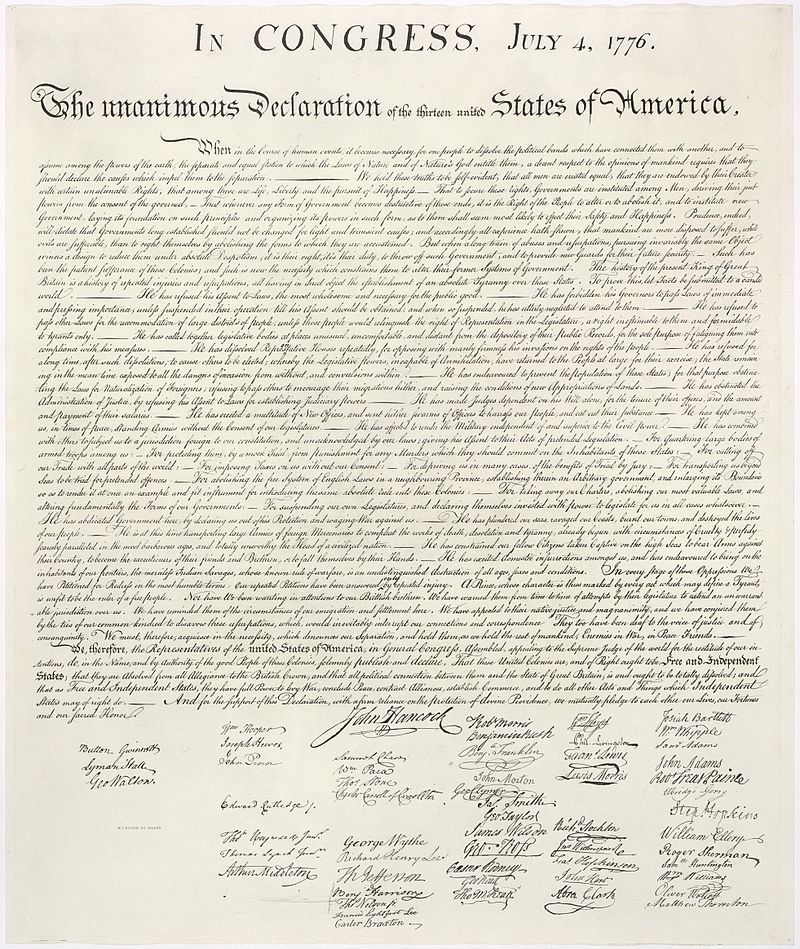
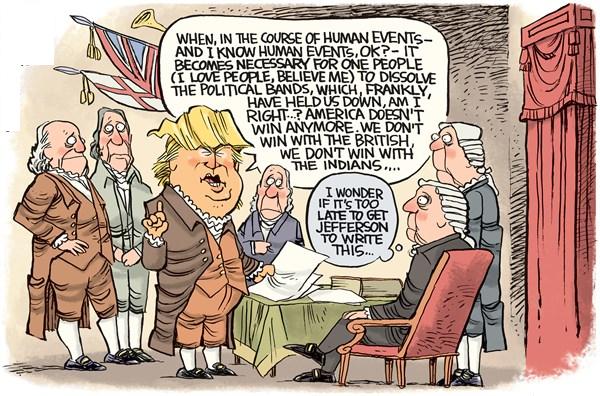
July 4th is a great holiday, but along with the fireworks and noise, perhaps we should celebrate the reflective thinkers of America, people like Thomas Jefferson who put the words to the noise of the American revolution in the Declaration of Independence. The quiet sound of a quill pen dipping in ink and scratching across parchment made a very big noise indeed in U.S. and World history.
This weekend, it wouldn’t hurt to put down or turn off the mowers, blowers, fireworks, Smart phones, TVs, and all the rest of our noisemakers and listen to the birds and waves while reading a few passages from that Declaration of Independence. For the right words can be explosive too.
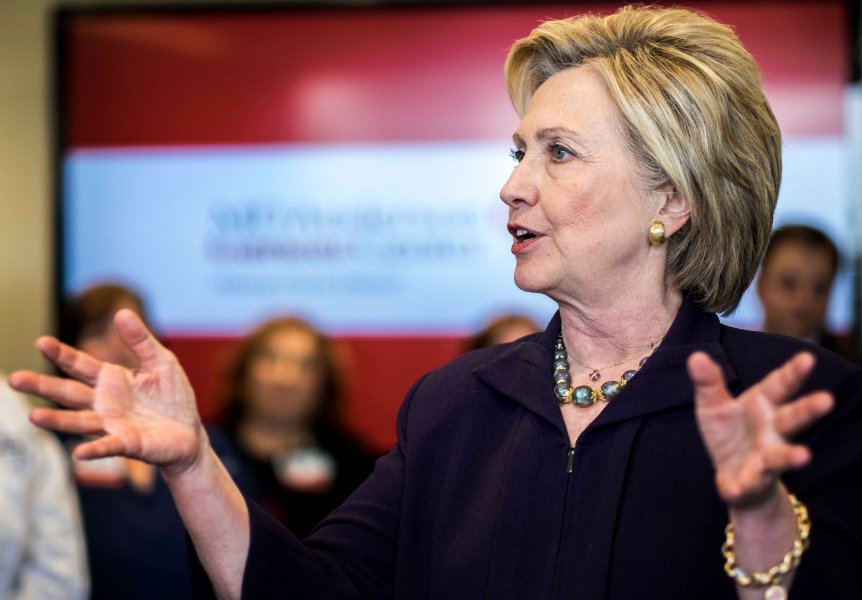
What does she really stand for? (Photo by Melina Mara/The Washington Post)
W.J. Astore
What does Hillary Clinton stand for? It’s a serious question. Sure, she’s given a lot of speeches, but without saying much. I’ve watched the debates and have listened to her speak, and the best I can come up with is this:
She’s continuing the legacy of Obama. For example, Obamacare will be extended to cover all Americans.
She’s going to break the glass ceiling that has blocked a woman from being president.
She loves Israel and will support whatever the Israeli government wants.
She’s going to work to raise the minimum wage for workers — $12.00 is the goal.
She’s going to work against the TPP (after she was initially for it).
She’s against the Keystone Pipeline (after initially supporting it).
She’s fully for equality for the LGBT community (after initially being against it).
She’s for an aggressive U.S. military posture and fully supports enormous defense budgets.
She’s not going to do dumb things like that scary Donald Trump.
She’s got a lot of experience in government. The length of her resume alone qualifies her to be president.
That’s the gist of her message as far as I’ve been able to discern. Of course, there are other messages for her followers. Surely Hillary will support reproductive rights, to include access to abortion. Surely she will appoint justices to the Supreme Court that are somewhere to the left of Antonin Scalia. Such considerations shouldn’t be dismissed out of hand.
But a new path for our country? Fresh ideas? They’re not coming from Hillary. Important issues like campaign finance reform, reforming banks and other powerful financial institutions, reducing income inequality in the United States, and similar issues of reform and fairness are dead on arrival if she’s elected president.
Also, Hillary’s embrace of Henry Kissinger as well as neo-conservative principles in foreign policy ensures a continuation of wars in Afghanistan, Iraq, and locations throughout the Greater Middle East. (When I first typed that, I unconsciously wrote, Greater Military East, because America’s engagement with the region is almost exclusively conducted in military terms, via bombing, drone strikes, and special ops raids).
The Clinton Campaign’s strategy of being fuzzy about specifics while vilifying her chief opponent (admittedly not difficult to do if your opponent is Trump) reminds me of a book I read many, many moons ago: “The Selling of the President 1968,” by Joe McGinniss. What I recall from that book was the cynical process of triangulation and secrecy as well as the tight control of “the message” by Candidate Nixon and his cronies, the cagey and sleazy way Nixon and his campaign refused to engage honestly with the American people. His campaign in 1968 foreshadowed the crimes of Nixon and his administration to come, most infamously Watergate. At the root was an attitude of privilege, superiority, and entitlement, a sense that Nixon had paid his dues and deserved to be president. Dammit, it was HIS turn. And look at the length of his resume!
Much can be said about comparing Hillary to “Tricky Dick.” Long political careers tainted by scandal. High negative ratings. A tendency by each to see vast right wing (or left wing) conspiracies, and therefore to compensate by surrounding themselves with trusted operatives, sycophants, and strap-hangers. A desire to appear tough, whether it’s about standing up to terrorists or communists.
After eight years of “No drama Obama,” perhaps the American people prefer a return to the paranoid style of politics of Richard Nixon — and Hillary Clinton. A style that’s economical with the truth, led by a person who believes himself — or herself — to be the smartest and toughest person in the room.
But I already saw how that ended in 1974; I’m not voting for a repeat, even if the dramatic lead this time around is female.
Well, she’s won. Hillary Clinton’s victories in last night’s presidential primaries have clearly put her over the top, clinching the Democratic nomination. Facing the loudmouthed bigotry and ignorant blustering of Donald Trump this fall, Hillary has an excellent chance of being elected as America’s first female president.
I’ve already written a lot of articles at this site on why I find both Hillary and The Donald to be poor choices as president. I won’t repeat those arguments here. But I do want to talk about Hillary’s campaign, and what it says about her candidacy.
I remember the first commercial Hillary made, the announcement of her candidacy. A tedious spot, it focused on her grandmotherly qualities. It had no vision, no bite, and little hope. It was about trying to make us feel comfortable with Hillary. Hey, she’s a mom and a grandma! Other women like her! She’s just like us!
It went downhill from there. Hillary’s campaign has been carefully scripted and modulated, the opposite of impassioned. Vapidness replaced vision. That’s why a democratic socialist Jew from Vermont via Brooklyn gave her a run for her money, because she had no passion or vision and he did (and does).
For me, the defining moment of their debates came when Bernie argued strongly for a $15.00 minimum wage for workers and Hillary was content with offering workers a $12.00 wage. (More than enough, peasants!) Combine that moment with her infamous statement about the gobs of money she made in three speeches to Goldman Sachs (“Well, that’s what they offered”) and you get a clear sense of who she is and what she’s about.
A quick note: A nursing aide making Hillary’s generous $12.00 hourly wage at 40 hours a week would take 28 years to earn the $675,000 that Clinton “earned” in a few short hours giving those speeches.
Her campaign claims she’s “fighting for us.” But I see Hillary as fighting for herself — and her circle of privileged cronies. There’s nothing new about this in American politics, of course. It’s just terribly disappointing for America that two narcissists, two voices of the privileged, will be vying for the presidency this fall.
One thing I would like to see (and it won’t happen): I’d like to see Trump and Hillary debate with Green and Libertarian candidates. I’d like to hear some real alternative views and how the “major” candidates respond to them. But even though the media found room for up to seventeen Republican primary candidates on the stage, you can bet the house that Trump and Hillary will share a stage alone together.
Alone together — get ready for gratuitous insults and sound bites, America. One thing is certain: neither candidate is fighting for us, and both are not about making America great again.
On this 72nd anniversary of D-Day, the Allied invasion at Normandy in France during World War II, it’s high time we thought about what is truly weakness versus strength in U.S. foreign policy.
There’s no doubt that in World War II American leaders demonstrated strength. Nazi Germany and Imperial Japan had to be defeated, and the means had to be military. Our leaders mobilized the nation and the deed was done by men and women of my parent’s generation.
What about today? Is our nation truly mobilized for war? Are threats like ISIS truly the equivalent of militarized nation-states like Nazi Germany and Imperial Japan? Are we truly engaged in wars of necessity, in wars of self-defense, or are our wars those of choice? The lack of any Congressional declarations of war, of any effort at national mobilization or shared sacrifice, suggests the latter. Our leaders choose to wage them – a choice that showcases weakness rather than strength.
How so? “Strength” is shown not by committing troops to quagmires; not by escalating wars; not by buying, sending or selling more weaponry; not by more and more bombing; not by drone assassinations. Indeed, weakness is shown in embracing these steps as providing “solutions.”
How “tough” do you really have to be to commit other people’s sons and daughters to war? How tough do you have to be to bomb foreigners without risk to yourself, to buy and sell weapons at healthy profits, to send in the B-52s or the drones or the privatized militaries? For Washington today, these are the easy steps to take, the expected ones, the expedient ones, the predictable ones. They are not evidence of “toughness” — rather the reverse.
So, what is really “tough” for today’s DC crowd? Patient diplomacy, quiet resolve, a willingness to withdraw from unwinnable wars, the resolve to retrench and rethink militarized positions. Being a peacemaker instead of a war-bringer – that is what is really tough in today’s hyper-violent America. But in “exceptional” America, war means never having to say you’re sorry.
The corporate media also has its categories of “weakness” and “strength” exactly backwards, hence the praise of Hillary Clinton for her toughness. Her embrace of Henry Kissinger is generally applauded, and if Henry wasn’t so old, one could imagine the media applauding her if she made him her VP. Donald Trump, of course, is riding a wave of (trumped up) toughness. He’s presented as a “Go ahead—make my day” kind of guy, as if attacking marginalized groups for political advantage is the height of manly courage. In polarized America, how tough do you have to be to criticize Muslims, immigrants of color, and other victimized or vulnerable groups? Trump would be truly tough if he took on racism, if he fought for justice, if he adopted positions based on democratic principles rather than his own biases and resentments.
The ass backwards nature of “strength” versus “weakness” is mirrored in America’s movies and TV shows. In my dad’s day (the 1930s and 1940s), America’s good guys didn’t obsess about weapons. Generally, it was gangsters who relied on them. Men of weak character played with guns. Truly tough men duked it out with fists when they weren’t otherwise facing each other down. Think Humphrey Bogart, unarmed, facing down the gangster Johnny Rocco and his gun-toting stiffs in “Key Largo” (1948).
Think too of Gary Cooper in “High Noon” (1952). He’s not spoiling for a fight, but he’s ready to endure one if it’s unavoidable. His main “weapon” is his decency, his nerve, his courage, his character. Today’s “heroes” in movies and TV are all about kinetic action, amped-up violence, and big guns. Violence and mayhem dominate, just as in America’s overseas wars of choice. Art imitates life while reinforcing it. As a result, Americans don’t even blink when they hear about the latest drone assassination in Where–is-it-stan. It’s happening off-stage, so who cares?
Even our war movies aren’t what they used to be. Think Gary Cooper (again) playing Sergeant Alvin C. York, the World War I hero who was a conscientious objector due to his religious views. Nowadays, our war movies celebrate gung-ho “American snipers” for their kill totals.
What is truly weakness and what is truly strength? And why are America’s leaders, leaders of the sole superpower with the self-avowed “best” military ever, so very, very afraid of being perceived as “weak”?
Now in its 15th year, the US war in Afghanistan continues to go poorly. The drug trade is up, the Taliban is resurgent, and Afghan security forces are weakening. Nevertheless, as Dan White notes below, Americans are told by their leaders in Washington that progress is steady, even if the usual Petraeus caveats (“fragile” and “reversible”) are thrown in about that “progress.” White recently had the chance to hear Said Jawad, Afghanistan’s former Ambassador to the US, speak about the war and his country’s relations with the US. What he heard was not encouraging. Sadly, the policy among America’s leaders is never to hear a discouraging word – or, never to share such a word with the American people.
Looming Failure in the Afghan War: It’s All Out in the Open
Dan White
A story from some actress about marriage and divorce always stuck with me, even if the actress’ name hasn’t. She talked about how if you are head over heels in love with someone, or if you are pissed off at them and divorcing them, you still see everything about the person, good and bad. Your vision doesn’t change with emotion, she said. The only thing that changes is which aspects of that person you bring into focus. Everything is out in the open for you to see, and you just choose what you want to focus on. She’s right about that. Not just in love, but in world events, too.
The Current Official Word (COW) from the Washington Beltway is that things are going as well as can be expected in Afghanistan. That’s the official spin, and it hasn’t changed since the war began. But other things are out there, in the open, and it’s high time we focused on them.
Afghanistan’s former Ambassador to the United States, Said Jawad, gave a speech on “America’s Longest War: The Afghan Perspective” on April 5th at UT-Austin, at a Strauss Center for International Relations/LBJ School event. Attendance at North America’s second-largest college campus for this event was about sixty; half the attendees were students while the rest were local residents, mostly affluent social security age or thereabouts. (Rather piss-poor attendance for a war America’s leaders are calling “generational.”)
I talked briefly to the Ambassador beforehand—he was friendly and approachable, always good for a diplomat. We talked about a book I was carrying, David Talbot’sThe War Without a Name, which is the best book written in English to date about the French counterinsurgency war in Algeria, 1954-62. This book was worth around $200 on Amazon back in 2004 or so, but I’d picked it up at the Half-Price slushpile for $2 the other day, and that fact probably showed something about how serious America was these days about wars, counterinsurgencies, and learning from history. Ambassador Jawad nodded politely. He declined my offer of the book as a gift; perhaps he knows the subject too well.
The Ambassador spoke for about 40 minutes. His PowerPoint presentation wasn’t working; it is somewhat disturbing that the Ambassador has become a slave to PowerPoint like everyone in the US government nowadays. I wasn’t expecting him to say much (the usual diplomatic discretion before an American audience combined with Beltway conformity). But if you were paying attention, the Ambassador let drop in the forefront, in easy camera range, some things that normally stay in the deep dark background.
Ambassador Jawad was as upfront as a diplomat can be about Afghanistan’s complete dependence on US military and political support and his expectations that it would continue at the current level for the next several years. This despite pronouncements from Official DC about our doing the contrary. He mentioned several times that ISIL pays its soldiers about three times what his government pays theirs, and how this was a major factor in ISIL’s success. Hmmm—I guess the three to one pay advantage trumps his army’s six to one numbers advantage. The former Ambassador also complained about Pakistan’s providing sanctuary for the enemy forces, and expressed a desire that the US would pressure Pakistan to stop doing so. Saudi Arabia came in for its licks too, and the Ambassador urged that the US pressure the Saudis into doing something to stop the financial support their citizens (and government too, Mr. Ambassador?) are giving to ISIS/ISIL. The Ambassador used the term ‘realistically’ several times about various actions Afghanistan or the United States could, and should, do.
One fact got dropped that I should have heard before, and that is that this past year was the bloodiest ever for the Afghan National Army and security forces. This was the first year ever that the war did not go into hibernation for the winter; it ran the whole year round. Ambassador Jawad said that there were 7000 government forces killed this past year and that current losses ran 16 KIA (killed in action) daily. I’d never heard this one before. 7000 KIA means a minimum of 21,000 WIA (wounded in action), a total of 28,000 casualties a year. The Afghan National Army has an official strength of around 150,000 (actual troop strength is a different smaller number due to potted plant soldiers) with roughly 150,000 auxiliary/police.
Losses at this level are militarily unsustainable for very long. I doubt anyone militarily knowledgeable would give the Afghan national forces more than two years before they collapse from losses at this rate. This means things are going to fall apart there in Afghanistan like they did in Iraq, and soon. There was not a sign of anyone in the audience catching this. If they did, they were too polite to say anything.
The Q&A came up, and again I wasn’t picked for a question (actually, I was ignored, a story for another day). Several faculty asked mostly pointless questions, and the student questions were wonkish policy-adjustment ruminations hewing to the Beltway line. No sign of intelligent life there, Scotty.
After the event, I spoke to the Ambassador again. He was apologetic about not selecting me for a question, delicately deferring blame, with much justification, to his host Robert Chesney. I dumped the question I had in mind to ask during the Q&A and instead I asked him this, something that had bubbled up from deep inside me:
Mr. Ambassador, I’ve already pointed out to you the story of this book and how its cratering in price shows something about how much interest the US has in its war in your country. Doesn’t this also show a distinct lack of competence in the US ruling elites, that they choose to remain ignorant about the biggest counterinsurgency war in the 20th Century, after this many years of failed wars?
And speaking of just how much real interest my country and countrymen have in your country and people, just look at the foreign aid amounts we’ve given to your country, a desperately poor country in dire need of everything, every last god-blasted handiwork of man there is, after four decades of war and devastation. It took us five years before we gave your country five billion dollars in aid. That’s peanuts and you know it. You also have to know that it took us another three years more before we hit ten billion dollars in aid. And certainly you have to know that aid like this is absolutely critically necessary and desperately time-sensitive for successful prosecution of a counter-insurgency, and doesn’t the fact that we cheaped out and didn’t deliver this militarily essential aid in anything near a timely fashion show again the incompetence of this country’s military and political ruling elites?
Doesn’t it also again show how little regard we here have for your fellow countrymen and their problems? Just look at our aid to Ukraine, instead. We officially spent five billion up front, unofficially twice that, on the latest color revolution there, and that was all money going to white European politicians for them to piss away on parties, bribes, and Swiss bank accounts. Doesn’t that show, decade and a half long war or not, just how little your country, its people, and our war there matter to the DC crowd?
Mr. Ambassador, you talked several times today about ‘realistic’ and ‘realistically’. Shouldn’t you be more realistic about the fact that there’s been a decade and a half for us to pressure the Saudis and Pakistanis to cooperate and we haven’t ever yet so realistically that just isn’t going to ever happen? Realistically shouldn’t you and your country adjust your policy plans and expectations to reflect this fact instead of calling still again for them? Shouldn’t you and your fellow countrymen be more realistic about this country of mine and its government and peoples and its profound indifference to you and your war and our rather gross and obvious failings as a nation and as a people by now?
The Former Ambassador listened to all this politely, and then gave a little speechette about how America was a great country full of great people who could do anything they put their minds to. I thanked him and left.
So just like that actress said, it’s all out in the open, and it’s just a question of if you want to focus on it and see it. We don’t, it doesn’t look like the Afghans do either, and we all will act surprised when the big crackup in Afghanistan happens soon. Our surprise will be genuine because our profound blindness certainly is.
Daniel N. White has lived in Austin, Texas, for a lot longer than he originally planned to. He reads a lot more than we are supposed to, particularly about topics that we really aren’t supposed to worry about. He works blue-collar for a living–you can be honest doing that–but is somewhat fed up with it right now. He will gladly respond to all comments that aren’t too insulting or dumb. He can be reached at Louis_14_le_roi_soleil@hotmail.com.
I lived and taught in a rural and conservative area in Pennsylvania for nine years, an area that’s “flyover country” for Beltway elites. Back in 2008, I remember how the locals went gaga over Sarah Palin’s visit to the area, and how crestfallen so many people were when Barack Obama was elected president. I remember how people sported Bush/Cheney stickers on their cars and trucks (even the faculty at the largely vocational college at which I taught), long after these men had left office. Sadly, I also recall a lot of Confederate flag license plates, especially on trucks, but there were also people who flew them at home from their flagpoles. This was not about “heritage,” since Pennsylvania was Union country in the Civil War. No – it was about being a White “redneck” and taking the country back from, well, the “other” – Blacks, Muslims, immigrants, anyone considered to be an outsider, anyone part of the “influx,” a racially-loaded word that referred to outsiders (where I lived, mainly Blacks from Philadelphia and its environs).
Rural PA, previously Sarah Palin country, is now Trump country. In the recent presidential primary, fifty thousand Democrats in PA changed party affiliation so they could vote Republican. An educated guess: they weren’t switching parties to vote for Kasich or Cruz. They were caught up in Trump hype about making America great again!
It says so on his hat!
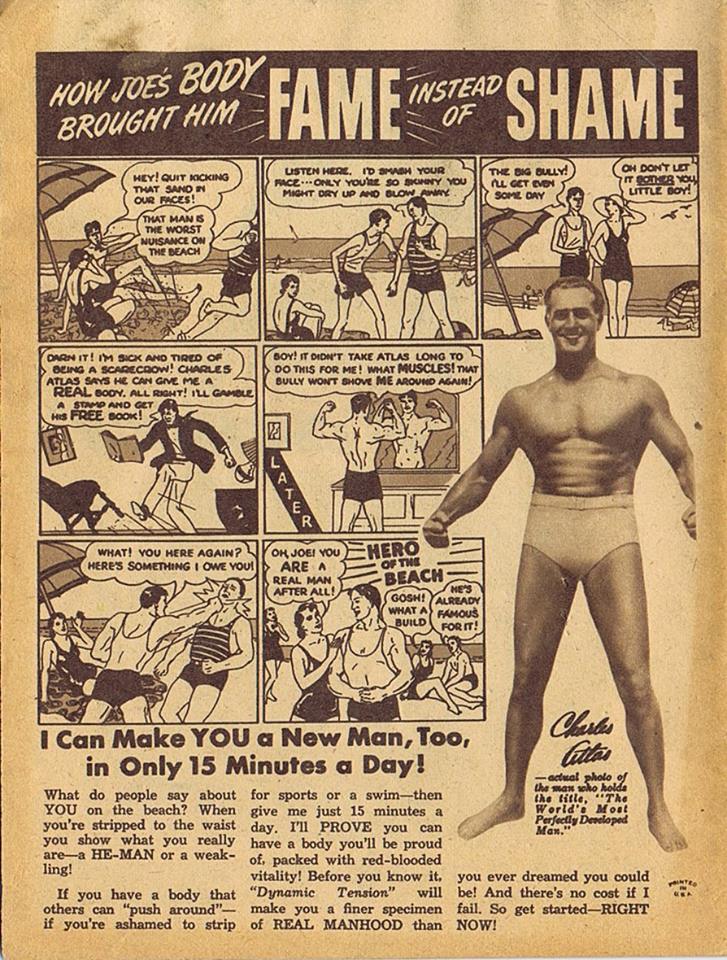
That’s a slogan to be reckoned with. Some say it’s a racist dog whistle. Those with ears attuned to the frequency hear the message as “making America great again by making it White again.” There’s truth to this, but the message is also one of nostalgia. Trump, like many of his followers, has recognized that the USA is no longer NUMBER ONE in all things, and he’s got the balls (as his followers might say) to say it plainly. No BS about America being the exceptional nation, the bestest, the kind of nonsense that flows freely from the mouths of most U.S. politicians. America is acting like a 99-pound weakling, Trump says, and he’s the Charles Atlas to whip us back into shape.
Trump’s vulgarity, his elaborate comb over, his tackiness, the shallowness of his knowledge (especially on foreign affairs), have contributed to the establishment’s ongoing dismissal of him. A recent article by Glenn Greenwald and Zaid Jilani documented the many dead certain (yet dead wrong) predictions of Trump’s imminent demise, even as he was winning primary after primary and gaining in the polls. The establishment elites just couldn’t believe that a man not vetted by them – a man best known for bloated casinos and lowbrow reality TV – could be a viable candidate for the presidency. And indeed they continue to predict his imminent demise at the hands of one of their own (Hillary Clinton) in the fall. Yet as I wrote back in July 2015, Trump is not to be underestimated.
What exactly is the appeal of Trump? Speaking his mind is one. Yes, he’s vulgar, he’s boorish, he’s ignorant, he’s sexist. Just like many of his followers. In a way, Trump revels in his flaws. He has the confidence to own them. Many people are attracted to him simply because (like Sarah Palin) he’s not a typical mealy-mouthed politician.
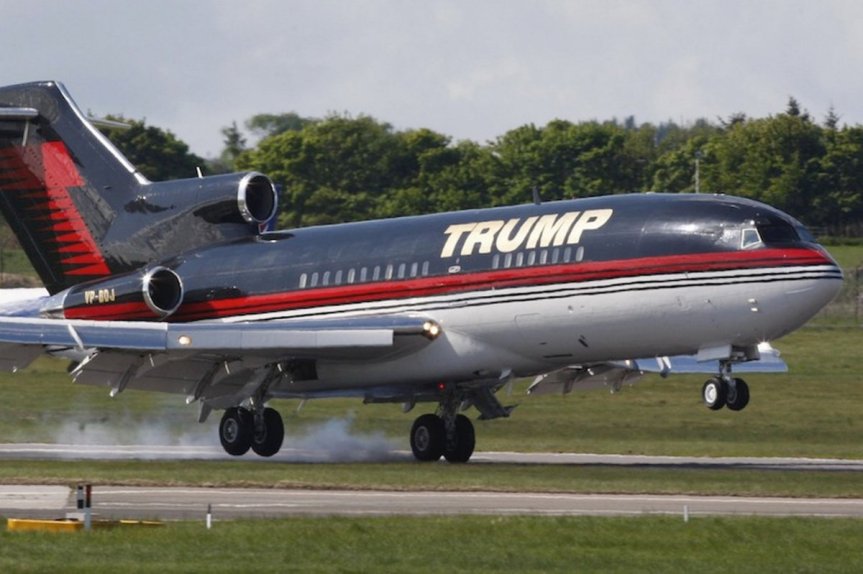
Another obvious appeal: He’s a rich celebrity who acts like a rube. Indeed, he acts like many regular folks would if they’d just won a Powerball jackpot. He’s got the trophy wife. He’s got a lot of pricey toys (How about that Trump jet?). He doesn’t have much class, but so what? Trump is Archie Bunker with money, a blowhard, an American classic. What you see is pretty much what you get. And that’s a refreshing feature for many of his followers, who have little use for complexity or nuance.
Not presidential? He already has his own “Trump Force One”
For all that, let’s not ignore Trump’s positions (such as they are) on the issues. He’s against a lot of things that many Americans are also against. He’s critical of immigration. He’s more than wary of Muslims. He despises “political correctness.” He’s against trade deals (so he says). The Chinese and Japanese come in for special opprobrium as trade cheaters. “And China! And China!” Trump declaims as he launches another round of attacks on the Chinese for stealing American jobs. Trump’s followers believe they’ve finally found their man, someone who will stand up to the Chinese, the Mexicans, the Muslims, and all those other foreigners who are taking their jobs and hurting America.
Trump is a master of scapegoating. But more than this, he takes positions that show a willingness to depart from Republican orthodoxy. He’s expressed support for Planned Parenthood (except for its abortion services) because of the health care it provides to women. He’s outspokenly critical of U.S. wars and nation-building (as well as Bush/Cheney and company). He wants to rebuild America’s infrastructure. He wants to force America’s allies to pay a greater share of their own defense costs. He’s not slavishly pro-Israel. He’s not enamored with neo-conservative principles and the status quo in U.S. foreign policy. He wants to put “America first.” As far as they go, these are respectable positions.
Yet I’ve not come to praise Trump but to explain, at least partially, his appeal and its persistence. Trump’s negatives are well known, and indeed I’ve written articles that are highly critical of him (see here and here and here). Most of Trump’s supporters are aware of the negatives yet plan to vote for him regardless. Why?
Desperation, to start. Americans are drowning in debt. They’re scared. Not just the lower classes but the middle classes as well. Just consider the title of a recent article at The Atlantic: The Secret Shame of Middle-Class Americans: Nearly half of Americans would have trouble finding $400 to pay for an emergency. Times are far tighter for ordinary Americans than Beltway elites know or are willing to admit.
In tough times an unconventional candidate like Trump (or Bernie Sanders) offers hope – the promise of significant change. What does Hillary Clinton offer? So far, more of the same. But scared or desperate people don’t want the same, with perhaps a few more crumbs thrown their way by establishment-types. They want a political revolution, to quote Bernie Sanders. They want freshness. Authenticity.
Strangely, despite all his flaws and insults and bigotry, or rather in part because of them, Trump seems more genuine, more of a candidate of the people, than does Hillary. Bernie Sanders, another genuine candidate with big ideas, beats him handily in the fall, I believe. But Bernie is being elbowed out by the establishment powerbrokers in the Democratic Party. The big money (of both parties) is pegging its hopes on Hillary. It’s already predicted her sobriety and “experience” will triumph over Trump’s wildness and inexperience.
Given the record of “expert” predictions so far in this election, as well as Trump’s own track record, I wouldn’t be too confident in betting against The Donald.
Donald Trump says he wants to make America great again. What does this mean, exactly?
Think about it. As American workers, how desperate are we to “hire” a man as president whose signature line to wannabe entrepreneurs is, “You’re fired”? We’re a bit like abused spouses who, despite being bruised and bloodied, still decide to stand by a bully.
Americans sense that our nation is in decline; indeed, that’s the implicit meaning (as noted in this article by Tom Engelhardt) of Trump’s slogan: he wants to make America great again. As in, we’re not great now, but we have been in the past, and under Trump we will be again. But how? Is Trump just going to fire all the “losers” in America?
Many abused workers have placed their faith in Trump to revive America. Yet the irony is that Trump himself has precipitated America’s decline, what with his tacky casinos, his off-shoring of jobs, his shady business deals that seek to maximize profits while minimizing pay to workers.
So much of our economic health today, such as it is, consists of massive spending tied to a sprawling national security state, which fosters military adventurism and interventionism as well as weapons exports, amplified by casino capitalism (literally “casino,” as in my old hometown, which desperately seeks a casino as a jobs producer).
Back in the day, the city of my birth was proud to manufacture shoes and to ship them around the world. Now, my city puts it faith in casinos and gambling. If that’s not a clear sign of economic decline, what is?
Again, consider the irony of placing faith in Trump to reverse this trend. Nearly 30 years ago, in the song “Gimme What You Got,” Don Henley captured the hollowness of “promoter Trump” with the following lines:
Now it’s take and take and takeover, takeover
It’s all take and never give
All these trumped up towers
They’re just golden showers
Where are people supposed to live?
Trumped up towers – more true today than when Henley penned that song (along with Stan Lynch and John Corey) back in 1988.
How have so many come to place their faith in America’s resurgence in the trumped up BS of Donald Trump? Again, someone whose signature line as a boorish and preening boss is, “You’re Fired”?
Let’s make America great again. Come this fall, let’s not hire Donald Trump as our new boss.






 Bracing Views