A Pilot in the Cockpit Is a Major Win for My Old Service
Recent Air Force projects have not been entirely successful, to put it gently. The F-22 Raptor was never built in the quantities the Air Force desired, nor was the B-2 stealth bomber. The F-35 has proven to be a disappointment, an overpriced “Ferrari” by the Air Force’s own admission that spends too much time in the shop even as its price over time continues to soar. The less said about the KC-46 tanker the better, as its future remains very much up in the air (or stuck on the ground, leaking fuel).
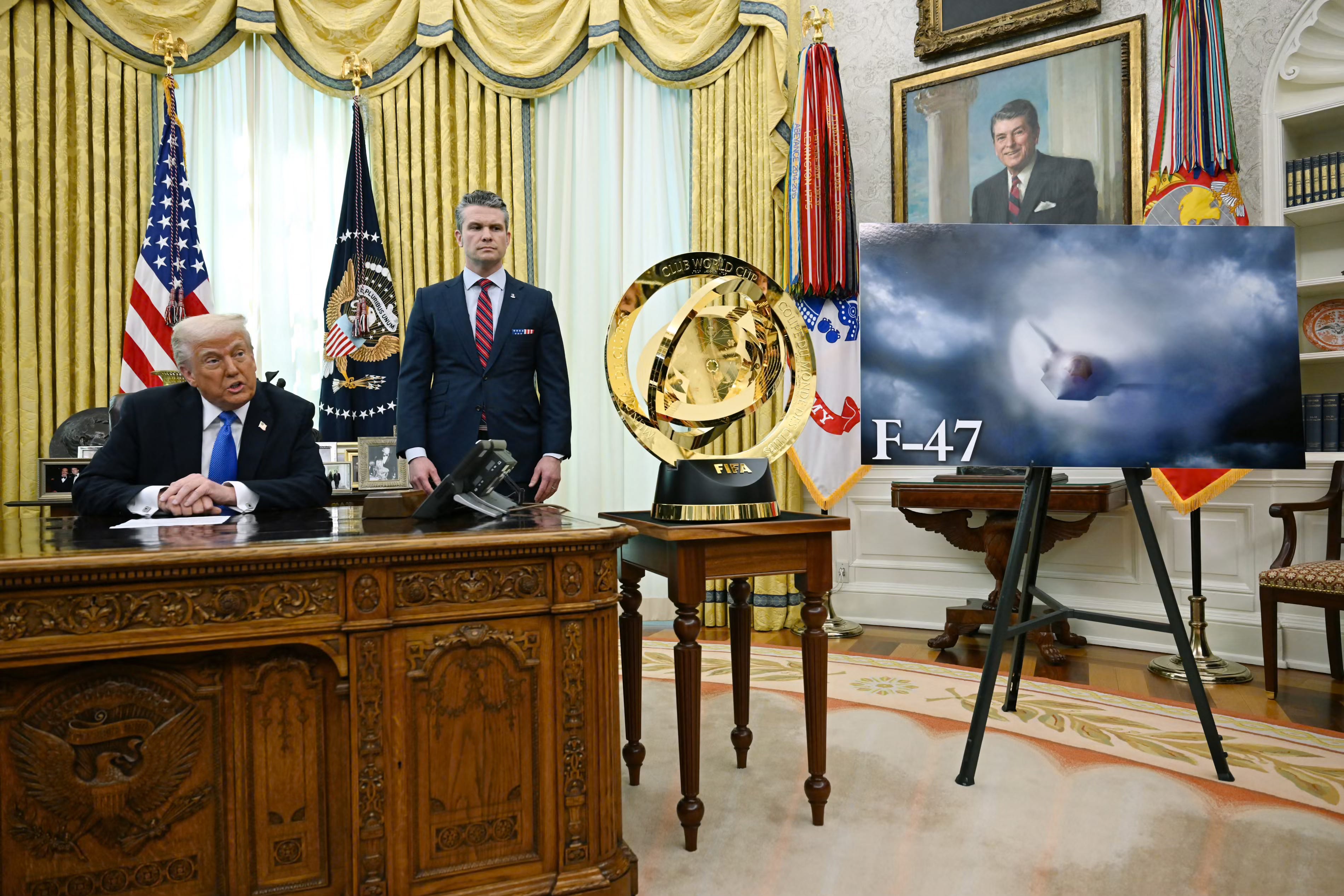
No worries. The Air Force and Boeing have been rewarded for their stellar performance with a new jet announced by President Trump yesterday, the F-47. (I don’t know what happened to the F-36 through 46 models.)
Look how badass that F-47 “bird” looks in that artist’s depiction!
Its key attribute, besides the usual hype about stealth and ultra-powerful engines and super-sensors and the like, is that it’s got a human pilot in the cockpit. This wasn’t a foregone conclusion, given Elon Musk’s belief in drones, whether fully automated or flown by pilots on the ground, at a distance. Keeping men and women in the cockpit was, is, and will always remain the most important goal of the Air Force, built as it is around the allure of pilots as masters of the air.
An interesting feature of this “6th generation” program is that the pilot will allegedly be able to control autonomous drones acting as “loyal wingmen” to the piloted F-47. That complexity should add scores of billions to the eventual price tag.
Trump always likes to boast that stealth planes like the proposed F-47, which have a low RCS, or radar cross section, will literally be invisible. The enemy will never see the F-47 coming, Trump said, jumping on board the hype train. Meanwhile, Boeing, the main contractor for the F-47, is already reaping rewards as its stock price has climbed at Mach 2 in the aftermath of Trump’s announcement.
The initial budget request of $20 billion will soon rocket skyward as the usual cost overruns kick in their afterburners. The Air Force promises the F-47 will cost less than the F-22 per unit, but if you believe that, take a look at the rising costs of the B-2, or the F-35, or the KC-46.
America may be a shitstorm today, but no other country burns through money for needless warplanes than the great USA. You may have stellar bullet trains, China, but do you have invisible 6th generation air supremacy jets? I thought not. USA! USA!
Yesterday, I posted the following comment to a fine article that addressed America’s nuclear triad and the reality that we really only need the Navy’s nuclear submarine force for deterrence:
My old service, the Air Force, will fight for new ICBMs and new “stealth” bombers just because they always want MORE. More money, more bases, more planes, more power. Doesn’t matter if America needs them or not. Doesn’t matter if new nuclear weapons may end the world. What matters is dominance, especially Air Force dominance over the U.S. Navy and Army.
“Nothing can stop the U.S. Air Force” in its budgetary battles at the Pentagon.
Honestly, this is self-evident to me. The Air Force always wants more planes, especially offensive aircraft like fighters and bombers. The Army always wants more divisions, more equipment, a bigger Army. The Navy always wants more ships.
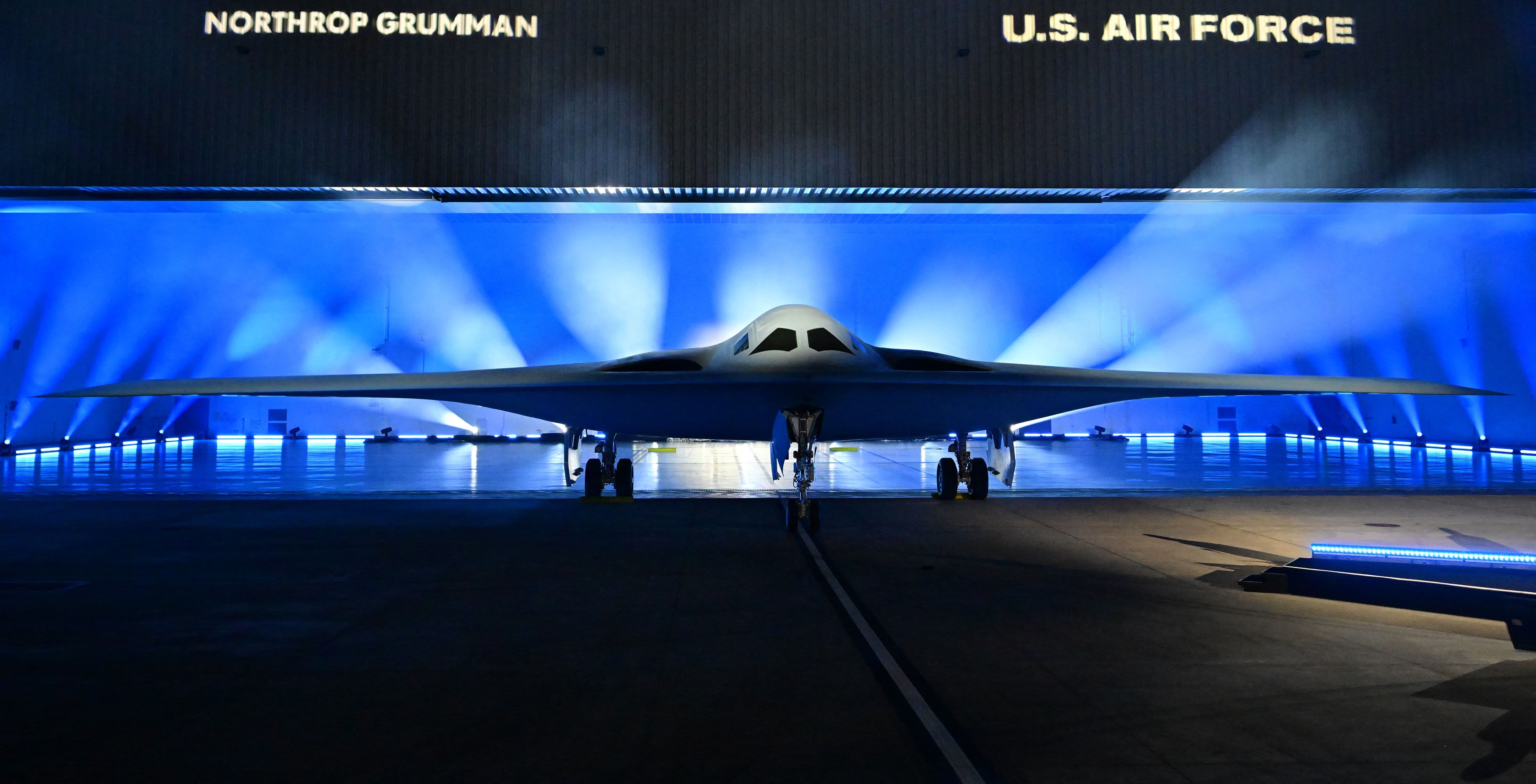
Who cares if it costs $700 million per plane? Or even a billion? It’s a bomber and the Air Force wants it! (The B-21 Raider)
Within the armed services, there are special interests. So, for example, the Navy carrier enthusiasts fight for their hegemony while the submariners fight to keep their slice of the budgetary pie. Within the “old” Army, the combat branches (infantry, armor, artillery) fought to ensure their continued relevance (and money). Now there’s an entire special ops and forces community, a military within the military, along with a new Space Force, a cyber command, various intelligence “communities,” all fighting for more budgetary authority and power.
Everyone always wants MORE. Victory in the U.S. military is measured by who wins the Pentagon budgetary battles, not who wins in Vietnam or Iraq or Afghanistan.
Service parochialism is encouraged at the highest levels and is instilled by the service academies. A friend of mine’s daughter recently received her acceptance letter to West Point. The letter stressed the proud tradition of the Army, and though it mentioned service, it said nothing about the Constitution and the oath of office. Each service academy stresses loyalty to service branch. Duty, honor, country takes a back seat to bleeding Air Force blue or Army green.
Pride in service isn’t necessarily a bad thing, but it can be blinding on issues like building new ICBMs and stealth bombers. The default Air Force position is to support more missiles and bombers “just because.” Because they’re “our” toys, part of “our” mission, bringing with them bases, command billets, influence, and all the rest.
Service parochialism ensures a military that is wasteful, overly conservative, and dysfunctional. Too much bleeding of Army green or Air Force blue has led to too much real bleeding of red.
The Stupidity of the Sentinel ICBM and the B-21 Raider Bomber
My fellow Americans, your government wants to spend nearly $2 trillion over the next 30 years to “modernize” its nuclear arsenal. Modernization, of course, is a euphemism. And the Pentagon actually uses the word “invest” rather than “spend.” The dividends on this “investment” go to the weapons makers, obviously, not to the American people.
Let’s first consider the Sentinel ICBM; the military wants to buy 400+ of these and stuff them in fixed silos in places like Wyoming and North Dakota. Land-based ICBMs were (among other things) obsolete by the 1970s; that’s why the MX was developed as a mobile system under President Jimmy Carter. Fortunately, the shell-game idea of moving nuclear missiles around by truck or rail was too dear and dumb even for the government. You don’t “modernize” that which is obsolete and redundant (and escalatory due to its inherent vulnerability). The smart move here is to eliminate land-based ICBMs.
Speaking as a retired Air Force officer, my old service will always want more of everything, including that which is obsolete. It’s all about budgetary share. No enemy is more to be dominated than the other services, who are also competing for money.
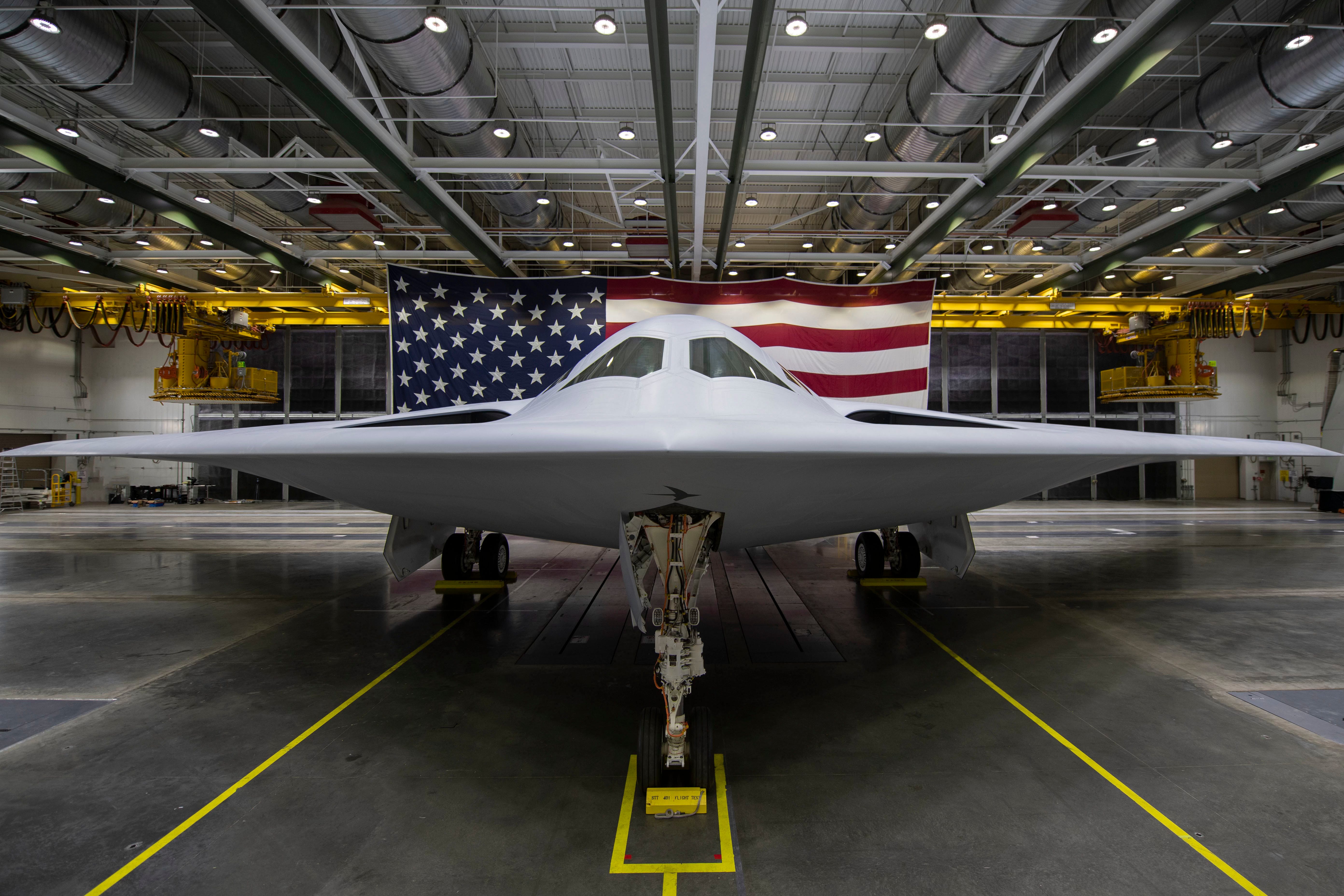
The B-21 Raider, with American flag (Northrop Grumman photo)
Similarly, strategic bombers to drop nuclear bombs (or even to launch cruise missiles) are not needed for nuclear deterrence. The whole idea of “penetrating” strategic bombers was obsolete by the late 1970s, which is why President Carter cancelled the B-1 bomber (it was revived by Ronald Reagan). We simply don’t need more strategic nuclear bombers–but the AF will always want them. If pilots can fly it (even if they have to do it remotely, as with drones), the AF wants it. Who cares if the B-21 will cost roughly $1 billion per plane when it’s finally fielded?
There is no need for the Sentinel or Raider. But the Air Force will fight until doomsday to protect its budgetary authority and the pilot and command billets that come with nuke missile fields and planes.
Let’s never forget the power of the industrial side of the military-industrial complex as well. There are hundreds—even thousands— of billions of dollars at stake here, so of course industry will fight to the end (of all of us) for the money. Weapons makers will spend millions on lobbyists, and millions more to buy politicians, to make billions in return. The profit margin here is better than crypto or most anything, actually.
They say alchemists were wrong that lead could be turned into gold, but every day the lead of bullets is sold, earning gold for the weapons makers, so alchemy is real after all. Now America’s weapons makers are turning radioactive uranium and plutonium into nearly $2 trillion in gold (or paper money, at least), the ultimate alchemical trick.
Would you buy a new car if its longevity was 40% of your old one?
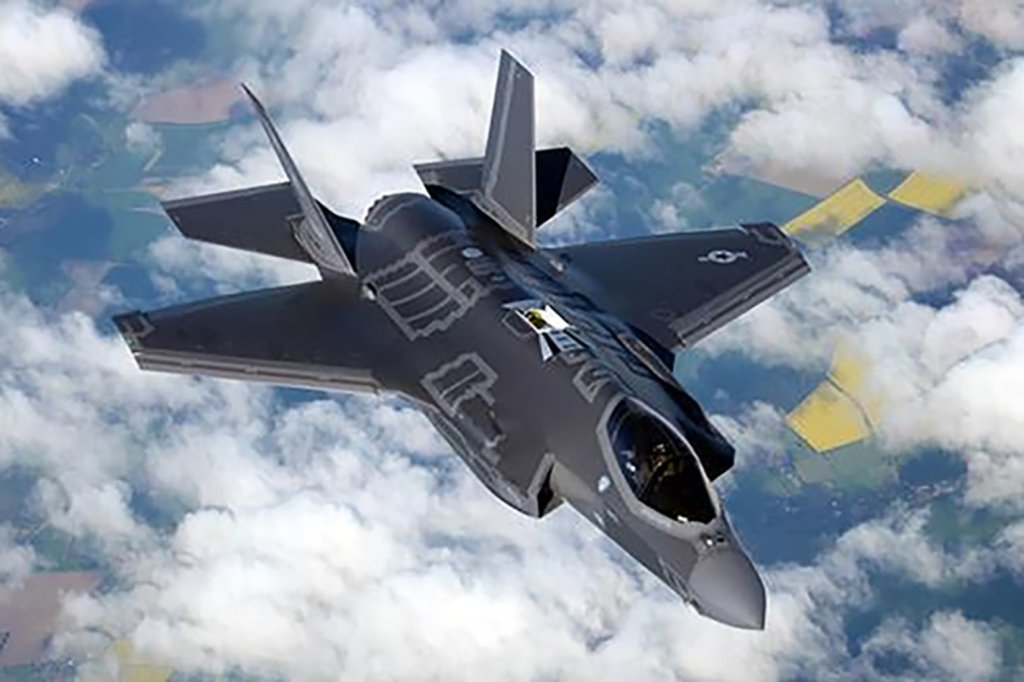
When I was still in the Air Force, the F-35 was on the drawing boards as a fairly low cost, multi-role, fighter-bomber somewhat akin to an F-150 pickup truck. Being designed and built by Lockheed Martin and also having to meet the varying requirements of the U.S. Air Force, the Navy, and the Marine Corps, cost and complexity quickly escalated, so much so that an AF Chief of Staff recently compared it to a Ferrari rather than to a trusty and capable pickup truck.
That Ferrari comparison is apt with respect to cost, though even Ferraris may be more durable and reliable than the F-35.
How so? A friend sent along an article on the F-15EX Eagle II fighter.
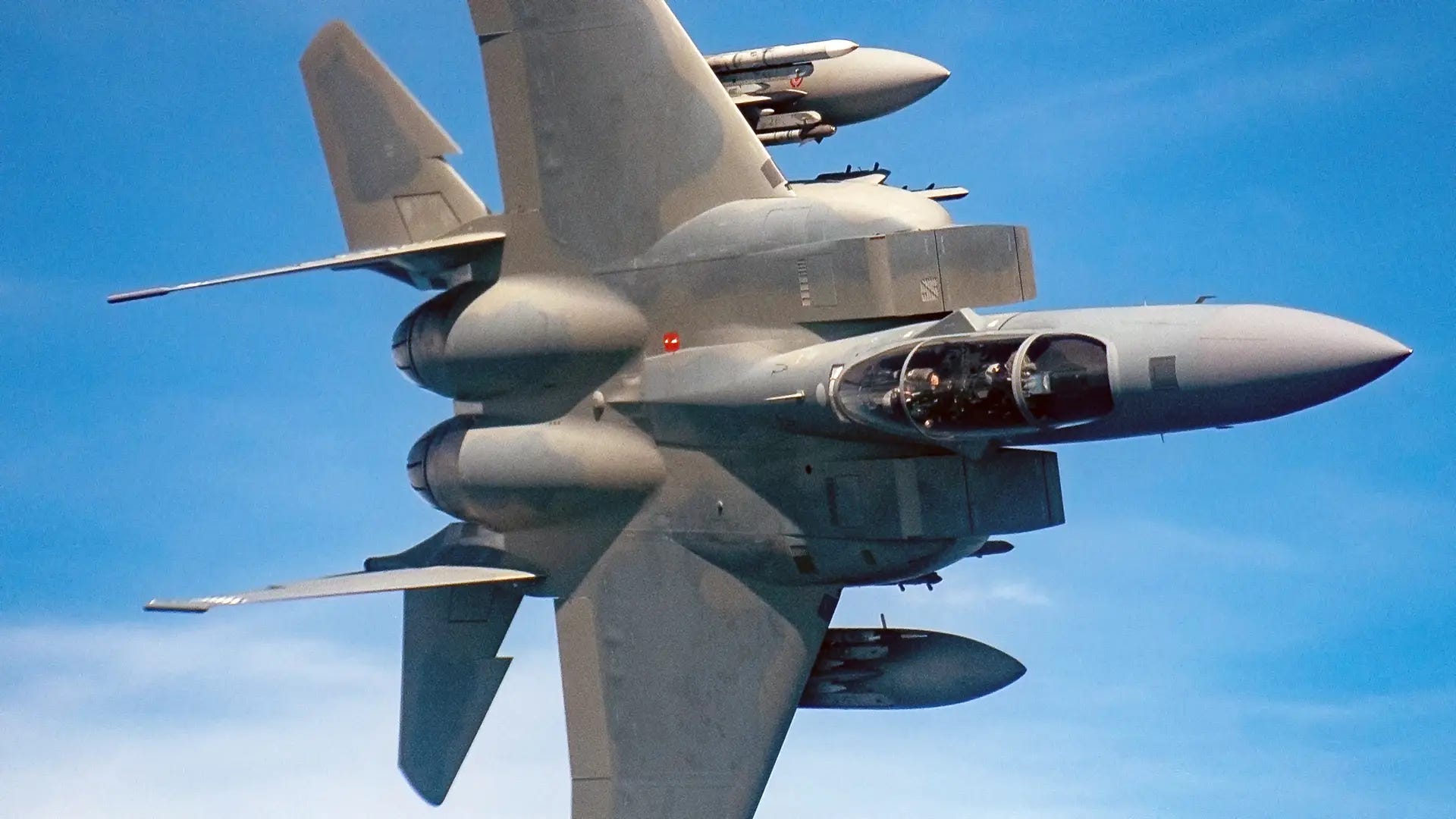
F-15EX Eagle II. Not stealthy, but its lasts 2.5 times as long as the F-35
Now, I’ve been reading about the F-15 since I was a teenager in the 1970s. It’s a proven fighter jet but it lacks the stealthy characteristics of the F-35. But here’s the section that got my attention from the article:
Remember, the F-15EX has a 20,000-hour airframe life. The F-35A has an 8,000-hour airframe life. This is one way the F-15EX gets done dirty when people make comparisons between it and the F-35, often based on unit cost alone, which is about equal. We are talking about two-and-a-half times the airframe hours out of the box with the F-15EX. That is not a knock against the F-35A at all. The F-15EX is just a very mature aircraft that has been optimized for longevity over a much younger one.
I like the way the author tries to explain away the short airframe life of the F-35. Hey, it’s a young aircraft! What can you expect except a 60% drop in longevity?
How many of us would buy a car, a truck, or any other technology if we were told the new tech would last only 40% as long as roughly comparable older tech? Would Apple advertise a new iPhone battery as lasting only four hours when the previous version lasted ten hours? How many people would rush out to buy the “new and improved” iPhone in this case?
The F-35 has many issues, which I’ve written about here and here. Add a much quicker expiration date to the mix.
I’m assuming Ferrari is none too happy with its cars being compared to the F-35!
The Madness of Nuclear Warfare, Alive and Well in America
W.J. Astore
(Here’s my latest for TomDispatch.com; If you haven’t subscribed, you should!)
Hey, cheer up because it truly is a beauty! I’m talking about this country’s latest “stealth bomber,” the B-21 Raider, just revealed by Northrop Grumman, the company that makes it, in all its glory. With its striking bat-winged shape and its ability to deliver a very big bang (as in nuclear weapons), it’s our very own “bomber of the future.” As Secretary of Defense Lloyd Austin put it at its explosive debut, it will “fortify America’s ability to deter aggression, today and into the future.” Now, that truly makes me proud to be an American.
And while you’re at it, on this MAD (as in mutually assured destruction) world of ours, let that scene, that peculiar form of madness, involving the potential end of everything on Planet Earth, sink in. As a retired Air Force officer, it reminded me all too vividly of my former service and brought to mind the old motto of the Strategic Air Command(SAC), “Peace Is Our Profession.” Headed in its proudest years by the notorious General Curtis LeMay, it promised “peace” via the threat of the total nuclear annihilation of America’s enemies.
SAC long controlled two “legs” of this country’s nuclear triad: its land-based bombers and intercontinental ballistic missiles, or ICBMs. During the Cold War, those Titans, Minutemen, and MX “Peacekeepers” were kept on constant alert, ready to pulverize much of the planet at a moment’s notice. It didn’t matter that this country was likely to be pulverized, too, in any war with the Soviet Union. What mattered was remaining atop the nuclear pile. A concomitant benefit was keeping conventional wars from spinning out of control by threatening the nuclear option or, as was said at the time, “going nuclear.” (In the age of Biden, it’s “Armageddon.”)
Luckily, since the atomic destruction of Hiroshima and Nagasaki in 1945, the world hasn’t gone nuclear again and yet this country’s military continues, with the help of weapons makers like Northrop Grumman, to hustle down that very path to Armageddon. Once upon a time, the absurdity of all this was captured by Stanley Kubrick’s masterpiece, the satirical 1964 film Dr. Strangelove, which featured a “war room” in which there was no fighting, even as its occupants oversaw a nuclear doomsday. Sadly enough, that movie still seems eerily relevant nearly 60 years later in a world lacking the Soviet Union, where the threat of nuclear war nonetheless looms ever larger. What gives?
The short answer is that America’s leaders, like their counterparts in Russia and China, seem to have a collective death wish, a shared willingness to embrace the most violent and catastrophic weapons in the name of peace.
Nuclear Bombers and ICBMs Return!
There’s nothing magical about the nuclear triad. It’s not the Holy “Trinity,” as a congressman from Florida said long ago. Even so, it’s worshipped by the U.S. military in its own all-too-expensive fashion. America’s triad consists of bombers capable of carrying nuclear weapons (B-52s, B-1s, B-2s, and someday B-21s), those land-based ICBMs, and that most survivable “leg,” the U.S. Navy’s Trident-missile-firing submarines. No other country has a triad quite as impressive (if that’s the word for it), nor is any other country planning to spend up to $2 trillion over the next three decades “modernizing” it. The Air Force, of course, controls the first two legs of that triad and isn’t about to give them up just because they’re redundant to America’s “defense” (given those submarines), while constituting a threat to life on this planet.
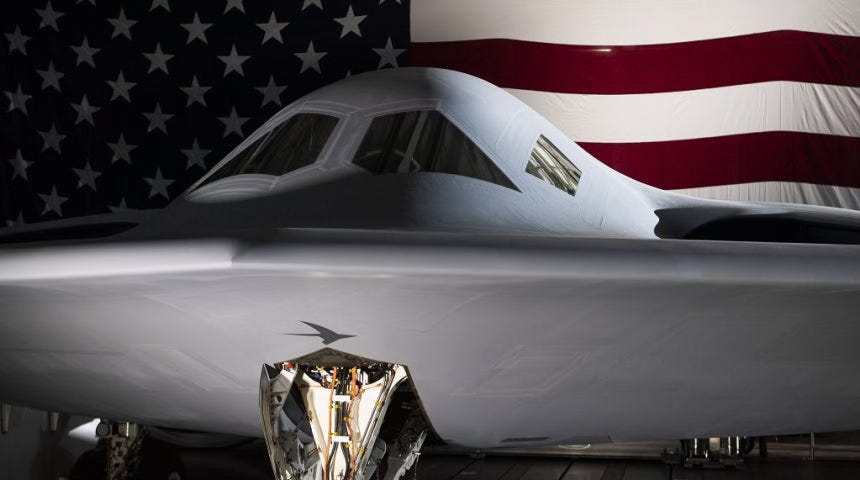
Recently, when the Air Force unveiled that B-21 Raider, its latest nuclear-capable bomber, we learned that it looks much like its predecessor, the B-2 Spirit, with its bat-like shape (known as a “flying wing” design) driven by stealth or the avoidance of radar detection. The Air Force plans to buy “at least” 100 of those planes at a projected cost of roughly $750 million each. Count on one thing, though: with the inevitable delays and cost overruns associated with any high-tech military project these days, the flyaway cost will likely exceed $1 billion per plane, or at least $100 billion of your taxpayer dollars (and possibly even $200 billion).
Four years ago, when I first wrote about the B-21, its estimated cost was $550 million per plane, but you know the story, right? The F-35 was supposed to be a low-cost, multi-role fighter jet. A generation later, by the Air Force’s own admission, it’s now a staggeringly expensive “Ferrari” of a plane, sexy in appearance but laden with flaws. Naturally, the B-21 is advertised as a multi-role bomber that can carry “conventional” or non-nuclear munitions as well as thermonuclear ones, but its main reason for being is its alleged ability to put nuclear bombs on target, even without Slim Pickens (“Major Kong” in Kubrick’s Dr. Strangelove) riding down on one of them.
The main arguments for expensive nuclear bombers are that they can be launched as a show of resolve but also, unlike missiles, recalled, if necessary. (Or so we hope anyway.) They have a “man in the loop” for greater targeting flexibility and so complicate the enemy’s defensive planning. Such arguments may have made some sense in the 1950s and early 1960s, before ICBMs and their sub-launched equivalents were fully mature technologies, but they’re stuff and nonsense today. If nuclear-capable nations like Russia and China aren’t already deterred by the hundreds of missiles with thousands of highly accurate nuclear warheads in America’s possession, they’re not about to be deterred by a few dozen, or even 100, new B-21 stealth bombers, no matter the recent Hollywood-style hype about them.
Yet logic couldn’t matter less here. What matters is that the Air Force has had nuclear-capable bombers since those first modified B-29s that dropped Little Boy and Fat Man on Hiroshima and Nagasaki, and the generals are simply not about to give them up — ever. Meanwhile, building any sophisticated weapons system like the B-21 is sure to employ tens of thousands of workers. (There are already 400 parts suppliersfor the B-21 scattered across 40 states to ensure the undying love of the most congressional representatives imaginable.) It’s also a boondoggle for America’s many merchants of death, especially the lead contractor, Northrop Grumman.
A reader at my Bracing Views Substack, a Vietnam veteran, nailed it when he described his own reaction to the B-21’s unveiling:
“What struck me in my heart (fortunately, I have a great pacemaker) was the self-assured, almost condescending demeanor of the Secretary [of Defense], the Hollywood staging and lighting, and the complete absence of consideration of what cognitive/emotional/moral injuries might be inflicted on the viewer, never mind experiencing exposure to the actual bomber and its payload — add in the incredible cost and use of taxpayer money for a machine and support system that can never actually be used, or if used, would produce incalculable destruction of people and planet; again, never mind how all that could have been used to start making America into a functioning social democracy instead of a declining, tottering empire.”
Social democracy? Perish the thought. The U.S. economy is propped up by a militarized Keynesianism tightly embraced by Congress and whatever administration is in the White House. So, no matter how unnecessary those bombers may be, no matter how their costs spiral ever upwards, they’re likely to endure. Look for them flying over a sports stadium near you, perhaps in 2030 — if, that is, we’re still alive as a species.
As the Air Force buys new stealth bombers with your tax dollars, they also plan to purchase a new generation of ICBMs, or a “ground-based strategic deterrent” in Newspeak, to plant in missile silos in garden spots like rural Montana, Nebraska, North Dakota, and Wyoming. The Air Force has had ICBMs since the 1960s. Roughly 1,000 of them (though that service initially requested 10,000) were kept on high alert well into the 1980s. Today’s ICBM force is smaller, but ever more expensive to maintain due to its age. It’s also redundant, thanks to the Navy’s more elusive and survivable nuclear deterrent. But, again, logic doesn’t matter here. Whether needed or not, the Air Force wants those new land-based missiles just like those stealth bombers and Congress is all too willing to fund them in your name.
Ka-ching! But hopefully not ka-boom!
Just as the purchase price for the B-21 project is expected to start at $100 billion (but will likely far exceed that), the new ICBMs, known as Sentinels, are also estimated to cost $100 billion. It brings to mind an old saying (slightly updated): a hundred billion here, a hundred billion there, and pretty soon you’re talking real money. In a case of egregious double-dipping, Northrop Grumman is once again the lead contractor, having recently opened a $1.4 billion facility to design the new missile in Colorado Springs, conveniently close to the Air Force Academy and various other Air and Space Force facilities. Location, location, location!
Why such nuclear folly? The usual reasons, of course. Building genocidal missiles creates jobs. It’s a boon and a half for the industrial part of the military-industrial-congressional complex. It’s considered “healthy” for the communities where those missiles will be located, rural areas that would suffer economically if the Air Force bases there were instead dismantled or decommissioned. For that service, shiny new ICBMs are a budget bonanza, while helping to ensure that the real “enemy” — and yes, I have the U.S. Navy in mind — won’t end up with a monopoly on world-ending weaponry.
In the coming decades, expect those “Sentinels” to be planted in fields far from where most Americans live under the guiding principle that, if we keep them out of sight, they’ll be out of mind as well. Yet I can’t help but think that this country’s military is out of its mind in “planting” them there when the only harvest can be of mass death.
It’s a MAD Old World
As MAD magazine’s Alfred E. Neuman would undoubtedly have said, “What, me worry?”
Oh, MAD old world that has such nukes in it! Color me astonished, in fact, that America’s nuclear weapons mix hasn’t changed much since the 1960s. That sort of world-ending persistence should tell us something, but what exactly? For one thing, that not enough of us can imagine a brave new world without genocidal nuclear weapons in it.
In 1986, President Ronald Reagan and Soviet leader Mikhail Gorbachev actually did so. They came close, in fact, to reaching a deal to eliminate nuclear weapons. Sadly, Reagan proved reluctant to abandon his dream of a nuclear space shield, then popularly known as “Star Wars” or, more formally, as the Strategic Defense Initiative. Since Reagan, sadly enough, U.S. presidents have stayed the course on nukes. Most disappointingly, the Nobel Prize-winning Barack Obama spoke of eliminating them, supported by former Cold War stalwarts like Henry Kissinger and George Schultz, only to abandon that goal, partly to solidify support in the Senate for a nuclear deal with Iran that, no less sadly, is itself pretty much dead and buried today.
If saintly Reagan and saintly Obama couldn’t do it, what hope do ordinary Americans have of ending our nuclear MADness? Well, to quote a real saint, Catholic peace activist Dorothy Day, “Our problems stem from our acceptance of this filthy, rotten system.” It’s hard to think of a system more filthy or rotten than one that threatens to destroy most life on our planet, so that this country could in some fashion “win” World War III.
Win what, exactly? A burnt cinder of a planet?
Look, I’ve known airmen who’ve piloted nuclear bombers. I’ve known missileersresponsible for warheads that could kill millions (if ever launched). My brother guarded ICBM silos when he was a security policeman in SAC. I sat in the Air Force’s missile-warning center at Cheyenne Mountain under 2,000 feet of solid granite as we ran computerized war games that ended in… yep, mutually assured destruction. We were, at least individually, not insane. We were doing our duty, following orders, preparing for the worst, while (most of us, anyway) hoping for the best.
A word of advice: don’t look for those within this nightmarish system to change it, not when our elected representatives are part of the very military-industrial complex that sustains this MADness. Only an alert and knowledgeable citizenry, with real freedom, could act to do so for the benefit of humanity. But will we ever do that?
“We’re going backwards as a country,” my wife reminds me — and I fear that she’s right. She summarized the hoopla at the B-21’s recent unveiling this way: “Let’s go gaga over a mass-murder machine.”
Collectively, it seems that we may be on the verge of returning to a nightmarish past, where we lived in fear of a nuclear war that would kill us all, the tall and the small, and especially the smallest among us, our children, who really are our future.
My fear: that we’ve already become comfortably numb to it and no longer can take on that culture of mass death. I say this with great sadness, as an American citizen and a human being.
No matter. At least a few of us will have profited from building new ultra-expensive stealth bombers and shiny new missiles, while ensuring that mushroom clouds remain somewhere in our collective future. Isn’t that what life is truly all about?
I was thinking today about my old service branch’s core values. No — not “more fighters, more bombers, more missiles” or “put bombs on target” or “jet noise is the sound of freedom” or “show me the money!” or that old Strategic Air Command classic, “peace is our profession.” No — the core values all airmen are supposed to uphold — integrity first, service before self, and excellence in all we do, in that order, sometimes abbreviated as integrity, service, excellence. How’s the Air Force doing here?
Not well, I’m afraid. Think of “integrity,” which I think of as truth-telling. Over the last 20 years, and indeed over the life of the service, going back to 1947 and before, the Air Force has consistently overestimated the accuracy of its bombing and consistently underestimated the number of civilians and non-combatants killed by that bombing. And that’s putting it charitably. In reality, the Air Force has conspired to advance an image of airpower as surgical and precise when it clearly isn’t, and indeed never has been. My old service branch advances this image because it’s good for the Air Force. It’s really that simple. Such image-making, i.e. lying, may be good for the Air Force budget, but it isn’t good for integrity. Nor is it good for America or those unfortunates on the receiving end of U.S. munitions.
Turning to “service before self,” I think of a system that when I served often stressed and rewarded self before service. For example, the promotion system in the military was structured to reward the hard-chargers, the overachievers, Type-A personalities, the thrusters and the true believers. Perhaps this is true of most bureaucracies, but the emphasis on ticket-punching and hoop-jumping in the Air Force was conducive to a narrow form of achievement in which “service” played second fiddle, when it played at all. Another way of putting it is that a certain kind of personal selfishness is more than acceptable as long as it advances institutional goals and agendas — a quite narrow form of service, if one is again being charitable.
And now we come to “excellence in all we do,” which brings to mind all kinds of disasters, such as drone strikes that kill innocents, or wayward generals, or cheating nuclear missile crews, and so on. But I’d like to focus on recent procurement practices, such as the lamentable F-35 jet fighter, which was supposed to be a fairly low-cost, high-availability fighter but which even the Air Force Chief of Staff now compares to a Ferrari, i.e. super-expensive and often in the shop. From tankers that can’t refuel to fighter planes that can’t shoot straight to nuclear bombers and missiles that the country (and, for that matter, humanity) simply doesn’t need, the Air Force’s record of excellence is spotty indeed.
What are we to do with a service that is so unwilling or unable to live up to its core values? Well, as usual, accountability and punishment are out of the question. I guess we’ll just have to give the Air Force more money while hoping it’ll reform itself, because you know that strategy always works.
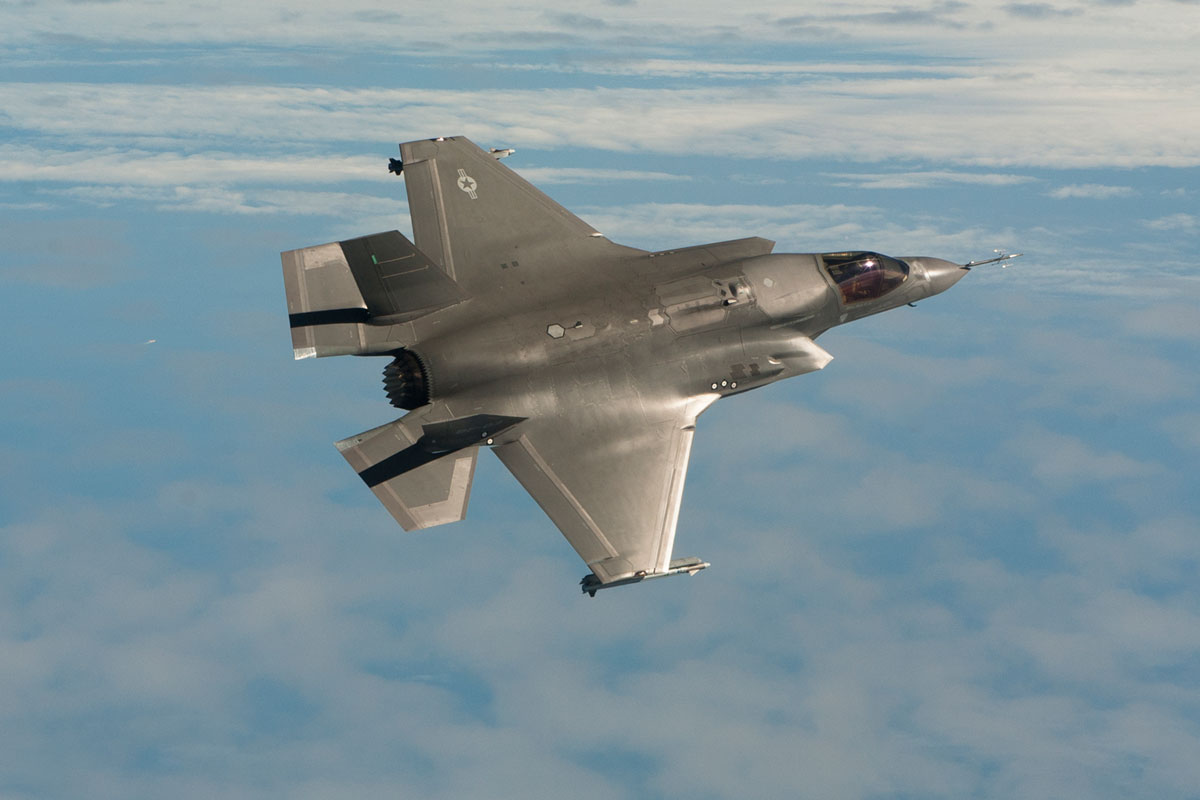
The F-35 “Ferrari”: It costs a lot and is often in the shop, but it looks kinda sexy. Too bad the F-35 was supposed to be a reliable workhorse, not a temperamental stallion. Interestingly, the inspiration for the Ferrari symbol of a prancing horse came from an Italian fighter pilot during World War I.
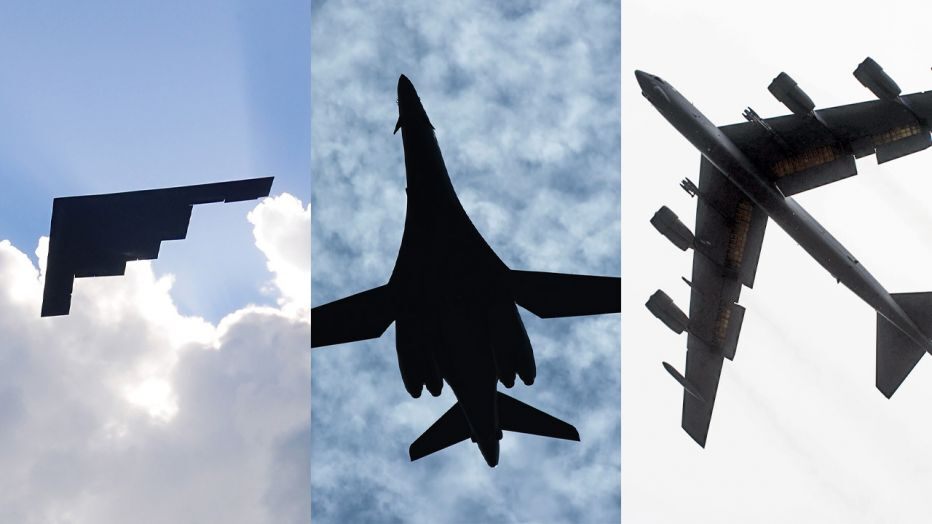
A B-2, a B-1, and a B-52. And I’m proud to be an American …
It’s Super Bowl Sunday — time to gather together and party responsibly, i.e. don’t turn your party into a Covid super-spreader event.
You can always learn a lot about America by watching the Super Bowl — and I’m not talking about football. Pregame ceremonies are telling, as are the elaborate halftime shows. This year, I noted how the Air Force is selling the story of a female pilot, Captain Sarah Kociuba, who will pilot a B-2 stealth bomber to open the festivities. She’ll be joined by a B-1B Lancer and a B-52 Stratofortress. The message, of course, is “pride” in America.
And I thought only the quarterbacks would be throwing bombs.
Seriously, these bombers are all about mass destruction. Possibly even nuclear mass destruction. Why I should feel “pride” in weapons of mass destruction (WMD) is beyond me.
Look! Up in the sky! It’s American-made WMD. Led by a highly-qualified female pilot. Diversity! America!
My latest article for TomDispatch.com focuses on the F-35 stealth fighter, which is estimated to cost $1.5 trillion over the life of the program. I hope you can read all of the article here; what follows is an extended excerpt on the history of the program. Did you ever notice how Congress never asks where the money is coming from for these incredibly expensive weapons? But ask for money for education, environmental protection, infrastructure, and especially for poor people and Congress starts screaming about the deficit, which is booming under Trump. But there’s always money for weapons! We need to remember that “government” money is our money, and we need to start spending it on priorities that matter to us, not to defense contractors and generals.
A Brief History of the F-35 Program
I first heard of what would become the F-35 in 1995. I was then a captain in the Air Force, working on flight-planning software. I was told that a new Joint Strike Fighter, or JSF, was being developed. The “joint” meant that the Air Force, Navy, and Marines would all use it. Its big selling point at the time was the striking level of anticipated savings expected due to the commonality of the design, of spare parts, and of everything else. (Those in the know then, however, remembered the Pentagon’s previous shot at “jointness,” the TFX program in the 1960s; the resulting plane, the F-111, would be rejected by the Navy and unloved by the Air Force.)
The new JSF was advertised as offering the highest-tech possible at the lowest price imaginable, a fighter that would replace legacy aircraft like the Air Force’s F-16s and A-10s and the Navy’s F-18s. Winning the competition to develop the plane was weapons giant Lockheed Martin and a prototype F-35 Lightning II first took to the skies in 2006, by which time I was already retired from the Air Force. In the 13 years since then, the F-35 has gone through a mind-boggling series of major program delays and setbacks, burning money all the way.
In 2014, the plane’s woeful record finally caught the eye of CBS’s 60 Minutes, which documented how the program was seven years behind schedule and already $163 billion over budget. The Pentagon, however, simply plunged ahead. Its current plan: to buy more than 2,600 F-35s by 2037, with the assumption that their service lives will possibly extend to 2070. In Pentagon terms, think of it as a multi-generational warplane for America’s multi-generational wars.
Five years after that 60 Minutes exposé and 13 years after its first flight, the F-35 unsurprisingly remains mired in controversy. Harper’s Andrew Cockburn recently used it to illustrate what he termed “the Pentagon Syndrome,” the practice of expending enormous sums on weapons of marginal utility. The F-35, he noted, “first saw combat [in 2018], seventeen years after the program began. The Marines sent just six of them on their first deployment to the Middle East, and over several months only managed to fly, on average, one combat sortie per plane every three days. According to the Pentagon’s former chief testing official, had there been opposition, these ‘fighters’ could not have survived without protection from other planes.”
So far, in other words, the F-35 has had an abysmally low rate of availability. Technically speaking, it remains in “initial operational testing and evaluation,” during which, as defense journalist Dan Grazier has noted, it achieved a “fully mission capable rate” of just 11% in its combat testing phase. (The desired goal before going into full production is 80%, which is, in a sense, all you need to know about the “success” of that aircraft so many years later.) Compounding those dreadful percentages is another grim reality: the F-35’s design isn’t stable and its maintenance software has been a buggy nightmare, meaning the testers are, in a sense, trying to evaluate a moving and messy target.
These and similar problems led President Trump and former acting Defense Secretary Patrick Shanahan to push possible alternatives to the F-35 as a way of pressuring Lockheed Martin to improve its performance. In December 2016, before he even entered the Oval Office, for example, Trump tweeted about building F-18 Super Hornets in place of the F-35. Later, Shanahan advocated for an updated version of the venerable F-15 Eagle, made by Boeing, a company for which he had only recently been a senior executive. But the president’s tweets have moved on, as has Shanahan, and Lockheed Martin continues to hold all the cards. For the Pentagon, it’s still the F-35 or bust.
Unsurprisingly, the president has changed his tune, enthusing that the F-35 is invisible (“You literally can’t see it”) rather than merely difficult to detect on radar. (He has also referred to Marillyn Hewson, the CEO of Lockheed Martin, as Marillyn Lockheed.) The main selling point of the F-35 is indeed its stealth technology, marking it as a “fifth generation” fighter when compared to the older F-15s, F-16s, F-18s, and A-10s, which are decidedly unstealthy and radar detectable. Primarily because of such technology, the Pentagon argues that the F-35 will prove far more “survivable” than previous warplanes in any future conflict with Russia, China, or some other country equipped with sophisticated radars and surface-to-air missiles.
Yet such stealthiness comes at a real cost and not just in monetary terms. To maintain its stealthy profile, the F-35 must carry its weaponry internally, limiting its load and destructive power compared to “fourth generation” planes like the A-10 and F-15. It must also rely on an internal fuel system, which will limit its range in battle, while its agility in air-to-air combat seems poor compared to older fighters like the F-16. (The Pentagon counters, unconvincingly, that the F-35 wasn’t designed for such dogfighting.)
As a former Air Force project engineer and historian of technology and warfare, here’s my take on the F-35 program today: in trying to build an aircraft to meet the diverse requirements of three services, Lockheed Martin has produced a jack-of-all-trades, master-of-none albatross. Each military service piled requirements onto the F-35, as ever more esoteric features were added, including that stealth capability; special software featuring eight million lines of code; unique (and wildly expensive) helmets for its pilots; and vertical landing/short takeoff capacity for the Marines, which led to an airframe design that made it ever less maneuverable for the Air Force and Navy. The result: perhaps the classic example of a plane that is far less than the sum of its staggeringly expensive parts.
To get more specific, consider the mission of close air support, or CAS, which means supporting troops in or near combat. The best and most survivable plane for such a role remains the one specifically designed for it: the unglamorous A-10 Warthog, which ground troops love but Air Force officialdom hates (because it was designed in response to Army, not Air Force, needs). By comparison, the F-35, which is supposed to fill the A-10’s role, simply isn’t designed for such a mission. It’s too fast, meaning its loiter time over targets is severely limited; its weapons load is inadequate; it has only one engine, making it more vulnerable to ground fire; and its (malfunctioning) gun lacks punch. (It also costs twice as much to fly.) Despite all this, the Air Force continues to advocate for the F-35 in a CAS role, even as it grudgingly re-wings A-10s to extend their lives.
And keep in mind as well that, if you want an attack platform that can loiter for hours, while removing all risk to pilots, why not just use already existing drones like the military’s Reapers? Who even needs an expensive F-35 stealth fighter? To these and similar criticisms the Pentagon responds that it’s fifth generation! It’s new! It’s stealthy! It’s a game-changer! It scares the Russians and Chinese! And if those answers don’t work, there’s always that old standby: tell me why you hate our troops!
Meanwhile, Lockheed Martin’s profits are soaring as that company and the Pentagon sell the F-35 to allies around the world. Despite its delays, cost overruns, and performance issues, it’s still being promoted as America’s latest and greatest. Foreign military sales have the added benefit of driving down per-unit costs for the Pentagon, even as politicians tout the F-35 as a huge job creator. In short, with no alternative in sight, Lockheed Martin remains top gun in the Pentagon’s cockpit (Eat your heart out, Tom Cruise!), with virtually guaranteed profits for the next half-century.
Last week while getting new tires, I came across the latest Air Force recruiting brochure. Its first line: “The Air Force dominates the sky with speed, precision and air power.”
It’s fascinating to me this emphasis on global domination. During the Cold War, the goal was not to dominate but to deter the Soviet Union, China, and similar rivals. Deterrence suggests rough equality — and some reasonable cap to defense spending. Domination, however, suggests something far different. As Michael Klare has noted, it suggests we must “overmatch” potential rivals; we must be capable of obliterating them, not just deterring and defeating them.
Domination makes perfect sense, of course, if your goal is to maximize “defense” spending. If the U.S. only intended to deter a (much weaker) Russia and (a mainly economic power) China, we could probably do that at half the cost we’re paying now. Imagine saving $350 billion a year and applying it to education, health care, infrastructure, and similar places of need in the USA.
But when the operative word is dominate, your budget is almost open-ended. You can always find (or imagine) a weakness somewhere, a place where we must boost spending. A Space Force, perhaps? Not even the sky is a limit to “dominant” defense spending.
This linguistic turn, from deterrence to dominance, doesn’t get enough attention in our media and culture. Those seeking dominance, no matter what they claim, are much more likely to breed war than to find peace.
Of course, the Air Force recruiting brochure I picked up at the auto shop showed no scenes of war: no bombs being dropped, no missiles being launched, no cities turned to rubble, and of course no casualties. Somehow America’s airmen are supposed to dominate the sky in a bloodless manner, or so our slick recruiting brochures suggest.
Not surprisingly, recruiting brochures don’t show the horrific realities of war. But what they do proudly announce is the U.S. military’s goal of total dominance. Never mind the cost, whether to ourselves or others.
Space exploration and exploitation isn’t what it used to be
W.J. Astore
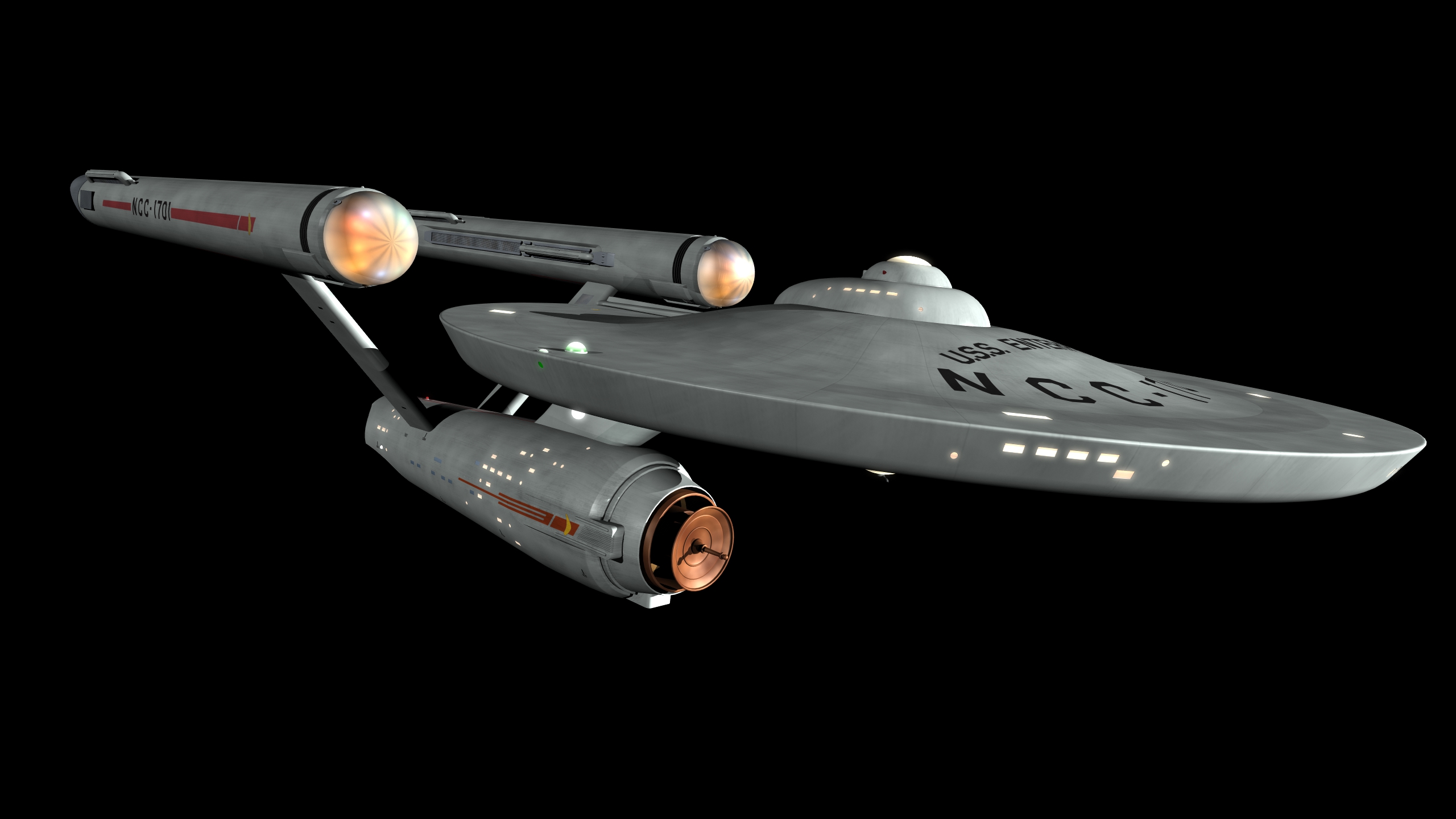
Space, the “final frontier,” isn’t what it used to be. In the 1960s and early 1970s I grew up a fan of NASA as well as Star Trek with Captain Kirk and Mr. Spock. NASA was (and is) a civilian space agency, even though its corps of astronauts was originally drawn from the ranks of military test pilots. Star Trekoffered a vision of a “federation” of planets in the future, united by a vision “to explore strange new worlds,” venturing forth boldly in the cause of peace. Within the US military, space itself was considered to be the new “high ground,” admittedly a great place for spy satellites (which helped to keep the peace) but a disastrous place for war. (Of course, that didn’t prevent the military from proposing crazy ideas, like building a military base on the moon armed with nuclear-tipped missiles.)
Attracted to the space mission, my first assignment as a military officer was to Air Force Space Command. I helped to support the Space Surveillance Center in Cheyenne Mountain Complex, which kept track of all objects in earth orbit, from satellites to space junk. (You don’t want a lost hammer or other space junk colliding with your billion-dollar satellite at a speed of roughly 17,000 miles per hour.) In the mid-1980s, when I was in AFSPACECOM, an offensive space force to “dominate” space was a vision shared by very few people. I had a small role to play in supporting tests of an anti-satellite (ASAT) missile launched from F-15s, but those tests were curtailed and later cancelled as the Soviet Union, considered as America’s main rival for control of space, began to collapse in the late 1980s.
But that was then, and this is now, and the “now” of the moment is a new US military service, an offensive space force, proposed by the Trump administration as essential to US national security. At TomDispatch.com, William Hartung provides the details of Trump’s new space force in this fine article. As I read Hartung’s article, a thought flashed through my mind: We’re not the peaceful Federation of Star Trek. We’re much more like the Klingon Empire.
In the original Star Trek, the Klingons were a highly aggressive and thoroughly militaristic species that was dedicated to dominating space. They were proudly imperial and driven by conquest. Trump, who with his bombast and barking and boasting would make a great Klingon, sees a “space force” that’s all military: that’s all about domination through aggressive action and better offensive weaponry.
Perhaps you’ve heard the saying: Everywhere we go, there we are. Increasingly for America, that saying means: Everywhere we go, there our military and weapons are. Even in space.
The “final frontier” of space, which in my youth was largely a realm of peaceful exploration, whether by NASA in the real-world or in the imaginary future of Star Trek, is now under Trump an increasingly militarized place. This is so because our minds, perhaps humanity’s true “final frontier,” have also been thoroughly militarized.
A war-driven people will bring war with them wherever they go. If the Vulcans (like Mr. Spock, who was half-Vulcan) are smart, they won’t reach out to humans if and when we find a “warp” drive that allows us to travel much faster than the speed of light. Logical and peaceful beings that they are, perhaps they’ll quarantine earth and humanity instead. Maybe with the Vulcan equivalent of a big, fat, beautiful wall?


 Bracing Views