

Thinking About the Declaration of Independence
Note to Readers: Here’s an article I wrote for the LA Progressive as America marks the 250th anniversary of the Declaration of Independence.
When I look back at my old parchment from 1976, I see noble words written by courageous but deeply imperfect men. We remain imperfect as well.
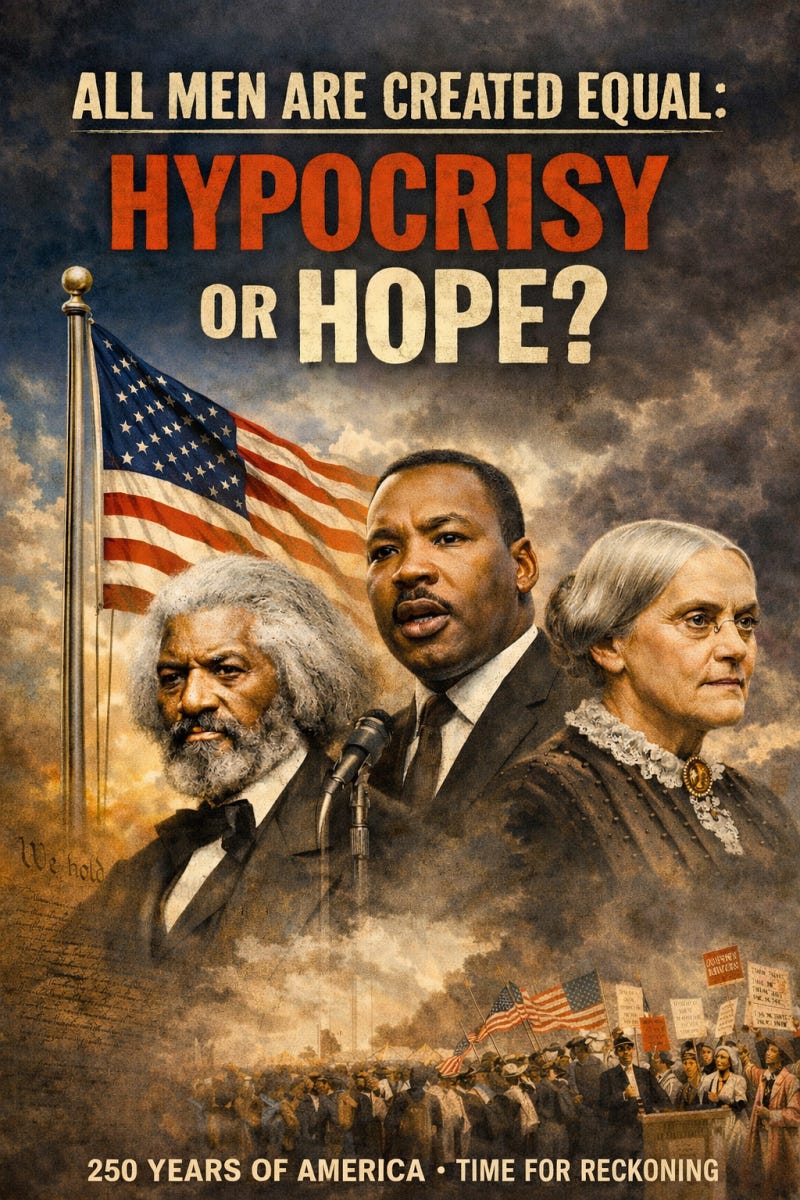
- This article is part of the series that addresses the question whether it was hypocrisy or hope when 250 years ago we stated in our Declaration of Independence that “All Men Are Created Equal.” Hypocrisy because more than half of the declaration signers were slaveholders. Plus, how about women, Native Americans, and the unpropertied? But also hopeful because sometime in the future those groups might (and would) be given the vote.
I was thirteen during our nation’s bicentennial in 1976. To celebrate, I had a parchment reproduction of the Declaration of Independence, something that meant a great deal to me at the time. I still remember John Hancock’s glorious signature—defiant, oversized, unmistakable. Take that, King George III.
Of course, declaring independence in 1776 didn’t make it so—history rarely bends simply because words demand it. The thirteen colonies had to fight a long, debilitating, and often brutal war for nearly six years. Even after Yorktown in 1781, George Washington and others struggled to keep the fragile new nation from collapsing into acrimonious division. True independence came only in 1783, when the British Empire formally recognized the former colonies through treaty. Even then, conflict lingered. The United States would fight Britain again in the War of 1812, a war that included the burning of Washington, D.C., underscoring how precarious American independence remained.
Rereading the Declaration later in life reminded me of the cleverness of its authors. They framed their cause in terms of noble ideals, which was smart, but they also personalized their grievances by casting blame on an allegedly tyrannical king, which was even smarter. By the standards of the eighteenth century, King George III was neither unusually cruel nor especially despotic. He expected obedience to the Crown, wanted the colonies to pay for their own defense, and sought order over disorder. If anything, he may not have been tyrannical enough to enforce compliance.
Still, the founders skillfully appealed to Parliament and to English citizens’ jealousy for their own rights—life, liberty, and property (or, as Thomas Jefferson famously revised it, the pursuit of happiness). This was the Age of Reason, after all, a time when the divine right of kings no longer went unquestioned. Even so, the Declaration often reads like a laundry list of complaints against the king—complaints that were not always fair or fully convincing.
Most colonists, at least early on, were not seeking a radical break with Britain. They wanted the traditional rights of Englishmen, especially as educated men who owned property. No matter how “enlightened” they considered themselves, these were men of their times: slaveholders like Jefferson, men who saw no reason to extend the right to vote to women, to enslaved Black people, or even to white men without property.
Yet embedded within the Declaration was a promise more radical than its authors likely intended. The assertion that all men are created equal and endowed with unalienable rights planted a seed that women, Black Americans, and other marginalized groups would later seize upon. Like the colonists themselves, these groups had to fight for those rights. Power, as the saying goes, concedes nothing without a demand—and rarely concedes much without sustained struggle.
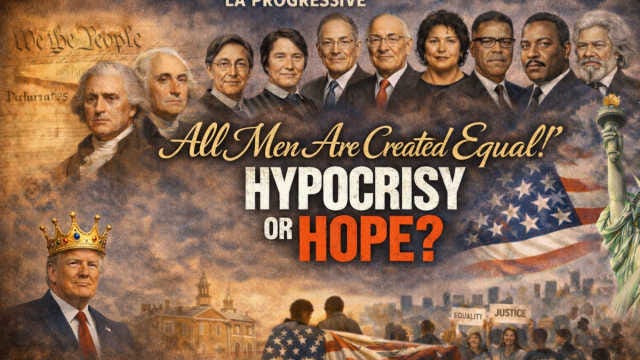
“All Men Are Created Equal”: Hypocrisy or Hope?
The same remains true today. Declaring America to be a democracy where all are equally respected does not make it so. Our country is more oligarchy than democracy, a land divided between the haves—and the have-mores—and the have-nots, rather than a nation that shares equitably in its collective bounty. We may have won independence from Britain, but we did not win freedom from the forces of history or from the imperfections of human nature.
America remains a place of contention, where the meaning of the American Revolution is still argued over and fought about. Yet there is enduring, aspirational nobility in the idea that we are all in this together, still striving to form a more perfect union. That goal is not achieved through declarations alone, no matter how brave or eloquent. It must be pursued, defended, and renewed every day—against tyrants large and petty, foreign and domestic.
When I look back at my old parchment from 1976, I see noble words written by courageous but deeply imperfect men. We remain imperfect as well. The question is whether we can regain the courage, fortitude, and commitment of the founders—not to idolize them, but to continue the unfinished work they began. I believe we can. To believe otherwise is to abandon the very spirit of America’s declaration in 1776. Why not work to make it so?
 Bracing Views