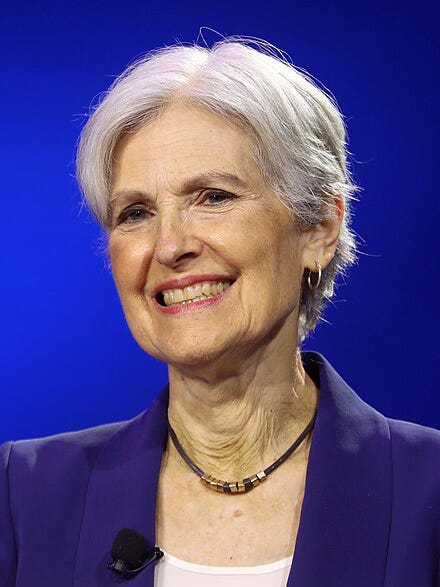
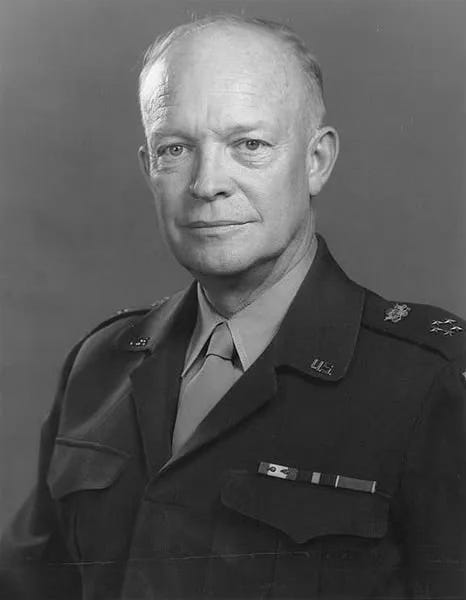
Kamala Harris is officially the Democratic nominee for the presidency. As Lee Fang has noted, it’s not wise to underestimate her, as she’s savvy at “messaging” and positioning herself among party elites. In this interview between Fang and Glenn Greenwald, it’s almost conclusively shown that Kamala doesn’t have a progressive bone in her body. What she is most of all, perhaps, is an opportunist.
It’s interesting to see how my local paper, The Boston Globe, announced her nomination:
Vice President Kamala Harris, a daughter of immigrants who rose through the California political and law enforcement ranks to become the first female vice president in US history, formally secured the Democratic presidential nomination on Monday — becoming the first woman of color to lead a major party ticket.
A lot of boxes are being checked there. She’s “a daughter of immigrants.” She rose through the ranks, with an emphasis on law enforcement. She’s the first female VP and now the first “woman of color to lead a major party ticket.”
Her positions on most of the leading policies and topics of the day, however, are largely unknown. Meanwhile, rank-and-file Democrats didn’t have a chance to vote for her or against her in the primaries. She’s been selected by party insiders, not elected by party voters.
All this brings to mind a snippet of conversation I overheard at a coffee shop this weekend. Three young women were ahead of me in line, talking about some offerings at the shop, and one said: “I don’t even know what that is, but I like it.”
You could say something similar of Kamala: “I don’t even know who she is or what she believes, but I like her.” It’s the ultimate triumph of image over substance.
So, for example, you might ask Kamala why the Biden/Harris administration is complicit in genocide in Gaza, and the answer might be: “She’s a daughter of immigrants!”
Or you might ask her to support single-payer health care and a higher federal minimum wage, and the answer might be: “She’s BIPOC!”
Kamala isn’t going to cut off the flow of weapons and money to Israel no matter how atrociously the Israeli government acts. She isn’t going to fight for affordable single-payer health care or for a higher federal minimum wage. She’s savvy, i.e. a cynical instrument of power, and she knows what to do and what to say to raise money and secure the support of the powerful.
Kamala wouldn’t have been selected (again, she wasn’t elected) by powerful corporate interests if she wasn’t sympathetic and obedient to them. In fact, the DNC has shown how it treats true progressives like Bernie Sanders and Dennis Kucinich. Kamala is on top because she’s willing to afflict the powerless for the powerful, and that’s not a formula that promises any change in a progressive direction.
Whether you believe the corporate-owned Democratic Party is less bad than the Trump-dominated Republican Party is a separate question, but let’s not kid ourselves about what Kamala represents.
Update: Minnesota Governor Tim Walz is Kamala’s VP choice! I thought Walter Kirn’s description of Walz was telling. Kirn, talking to Matt Taibbi, described Walz as a “county fair huckster,” a sort of “white hick” who balances the urban BIPOC Harris. Kirn and Taibbi speculated that Democrats are trying to outflank the Republicans and their choice of J.D. Vance, i.e. Walz is even more of a flannel-wearing Midwesterner, and he has more military experience to boot.
VP choices often don’t matter that much, until they do. Just look at Kamala. She basically didn’t matter until she did.
As Walter Kirn also noted, Democrats are now spectators in their own party. You don’t get to choose your president or VP candidates; you have no say; yet you’re expected to cheer those candidates selected for you by the DNC and big donors.
Hooray, Harris/Walz! We didn’t get to vote for you, we had no say in your nomination, but we love you anyway!
During his one debate with Joe Biden, Donald Trump made the audacious claim that if reelected in November he would end the Russia-Ukraine War before his inauguration in January. While it’s doubtful he could do that, the boast certainly disturbed self-styled supporters of Ukraine like Senator Lindsey Graham.
Graham recently made an appearance to highlight strategic minerals in Ukraine. He said Ukraine is sitting on $10-$12 trillion in various “critical” minerals and metals and that Putin must not be allowed to seize, mine, sell, or otherwise share them with China.
Mr. President, we cannot allow a strategic minerals gap!
Trump, in general, has been skeptical of providing an almost open-ended commitment to Ukraine, to the tune of roughly $200 billion in aid since Russia launched its “special military operation.” This new emphasis on Ukraine as a business partner sitting on a “gold mine,” a mine that could be stolen by Putin, seems tailor-made to convince Trump, a businessman with an affinity for gold, to keep funneling weapons and money to Ukraine if he does indeed win reelection in November.
A trillion here, a trillion there, pretty soon you’re talking real money.
*****
This week in U.S. militarism: I was scrolling through my CNN email feed this morning and noticed this headline:
Army officer wins Miss USA Michigan’s Alma Cooper was crowned the new Miss USA on Sunday, capping a tumultuous year of pageant controversy.
A U.S. Army officer is Miss USA. At least she’s used to obeying orders.
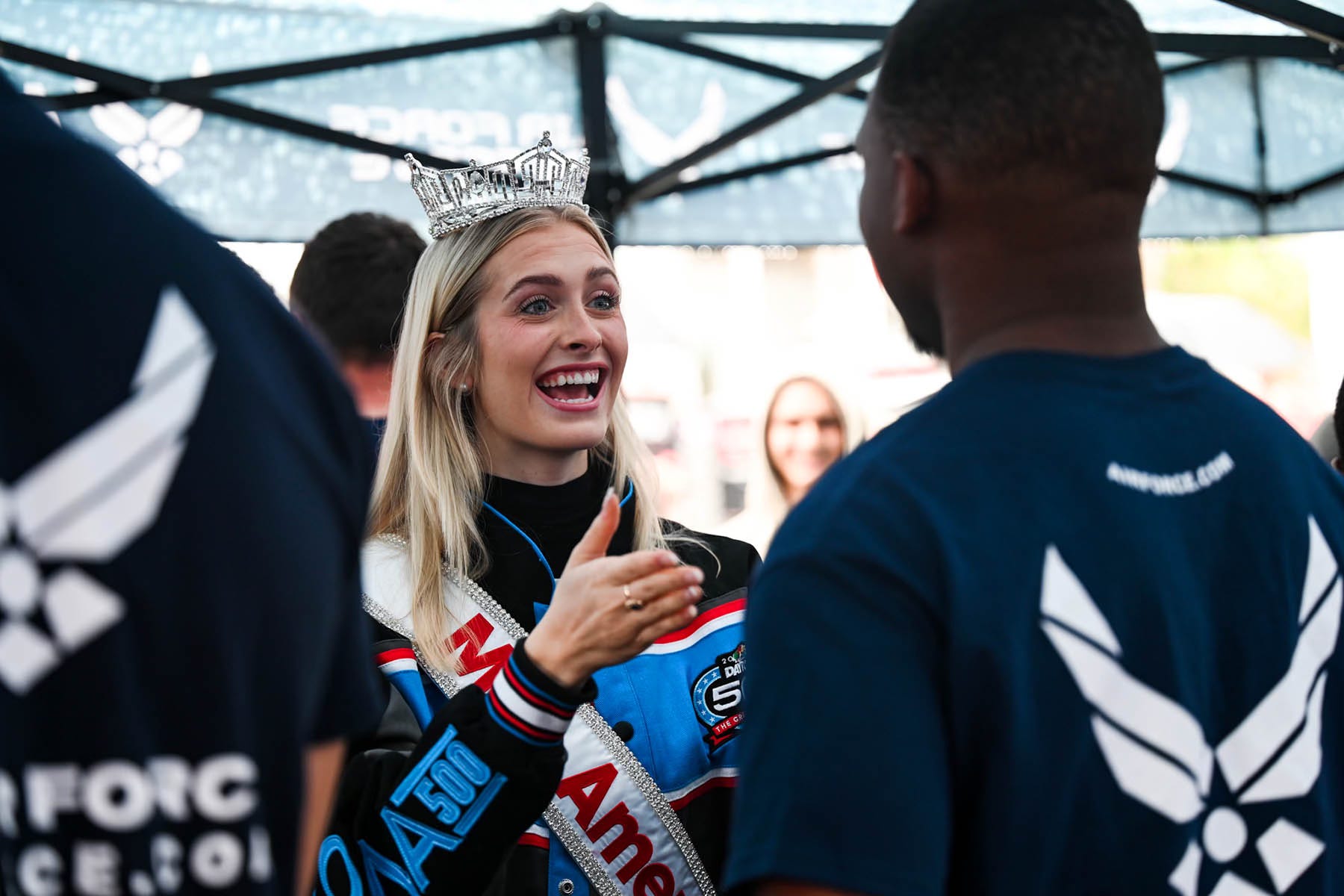
Back in January at CNN, I noted this headline: US Air Force officer crowned as 2024 Miss America.
Miss America, 2Lt Madison Marsh (from the AF Website). Taken at the Daytona 500 Speedway, where she was engaged in recruitment and PR
This truly must be a first. Both Miss USA and Miss America are serving U.S. military officers. My only question is this: What’s wrong with the Navy? How come the Army and the Air Force are dominating the beauty pageants?
In all seriousness, public relations teams for the U.S. military must think this is a major coup, but it seems so strange to me to mix beauty pageants with military service. I recently caught Miss America on NESN (New England Sports Network) doing an on-air interview wearing mufti and a tiara. She attended the Air Force Academy, where I taught for six years. She’s smart, ambitious, accomplished, and obviously pretty.
She may yet fulfill her dream of becoming an Air Force pilot. Will she then launch missiles and drop bombs, perhaps on whatever country is threatening Israel in the Middle East? At least those on the receiving end of those missiles and bombs can say they were killed by a former Miss America.
Empty Boasts of Having the “World’s Best” Military Hide Rot, Waste, and Stupidity
Sixteen years ago, I made a plea to my fellow citizens to banish the word “warfighter” from our vocabulary. I asked that we stop referring to the U.S. military as the “world’s best,” an empty boast then and, after twin disasters in Iraq and Afghanistan, an emptier one today. (If something can indeed be “emptier,” it’s certainly bellicose boasts of alleged military brilliance.) Today’s military is overstretched, busy guaranteeing Israel’s security as the Israeli Defense Forces demolish and depopulate Gaza. Facing recruiting shortfalls, open-ended imperial commitments across the globe, and fears of hostilities with Russia, China, Iran, or an almost unimaginable and certainly unbeatable combination of the three, the U.S. military faces grim times. If leaders like President Biden truly want to protect “our” troops, they should look not to God but in the mirror. They should pursue peace through diplomacy while downsizing an unsustainable empire. Isn’t it finally time for “Generation Warfighter” to come to an end before the U.S. military is utterly hollowed out — and America with it?
Having the “Best Military” Is Not Always a Good Thing Reclaiming Our Citizen-Soldier Heritage By William J. Astore
[Originally posted at TomDispatch in July of 2008]
When did American troops become “warfighters” — members of “Generation Kill” — instead of citizen-soldiers? And when did we become so proud of declaring our military to be “the world’s best”? These are neither frivolous nor rhetorical questions. Open up any national defense publication today and you can’t miss the ads from defense contractors, all eagerly touting the ways they “serve” America’s “warfighters.” Listen to the politicians, and you’ll hear the obligatory incantation about our military being “the world’s best.”
All this is, by now, so often repeated — so eagerly accepted — that few of us seem to recall how against the American grain it really is. If anything — and I saw this in studying German military history — it’s far more in keeping with the bellicose traditions and bumptious rhetoric of Imperial Germany under Kaiser Wilhelm II than of an American republic that began its march to independence with patriotic Minutemen in revolt against King George.
So consider this a modest proposal from a retired citizen-airman: A small but meaningful act against the creeping militarism of the Bush years would be to collectively repudiate our “world’s best warfighter” rhetoric and re-embrace instead a tradition of reluctant but resolute citizen-soldiers.
Becoming Warfighters
I first noticed the term “warfighter” in 2002. Like many a field-grade staff officer, I spent a lot of time crafting PowerPoint briefings, trying to sell senior officers and the Pentagon on my particular unit’s importance to the President’s new Global War on Terrorism. The more briefings I saw, the more often I came across references to “serving the warfighter.” It was, I suppose, an obvious selling point, once we were at war in Afghanistan and gearing up for “regime-change” in Iraq. And I was probably typical in that I, too, grabbed the term for my briefings. After all, who wants to be left behind when it comes to supporting the troops “at the pointy end of the spear” (to borrow another military trope)?
But I wasn’t comfortable with the term then, and today it tastes bitter in my mouth. Until recent times, the American military was justly proud of being a force of citizen-soldiers. It didn’t matter whether you were talking about those famed Revolutionary War Minutemen, courageous Civil War volunteers, or the “Greatest Generation” conscripts of World War II. After all, Americans had a long tradition of being distrustful of the very idea of a large, permanent army, as well as of giving potentially disruptive authority to generals.
Our tradition of citizen-soldiery was (and could still be) one of the great strengths of this country. Let me give you two examples of such citizen-soldiers, well known within military circles because they wrote especially powerful memoirs. Eugene B. Sledge served in the U.S. Marines during World War II, surviving two unimaginably brutal campaigns on the islands of Peleliu and Okinawa. His memoir With the Old Breed is arguably the best account of ground warfare in the Pacific. After three years of selfless, heroic service to his country, Sledge gladly returned to civilian life, eventually becoming a professor of biology. His conclusion — that “war is brutish, inglorious, and a terrible waste” — is one seconded by many a combat veteran.
Richard (Dick) Winters is better known because his exploits were captured in the HBO series Band of Brothers. He rose from platoon commander to battalion commander, serving in the elite 101st Airborne Division during World War II. A hero beloved by his men, Winters wanted nothing more than to quit the military and return to the civilian world. After the war, he lived a quiet life as a businessman in Pennsylvania, rarely mentioning his service and refusing to use his military rank for personal gratification. In Beyond Band of Brothers, he recounts both his service and his ideas on leadership. It’s a book to put in the hands of any young American who wishes to understand the noble ideas of service and sacrifice.
Sledge and Winters were regular guys who answered their country’s call. What comes across in their memoirs, as well as in the many letters I’ve read from World War II soldiers, was the desire of the average dogface to win the war, return home, hang up the uniform, and never again fire a shot in anger. These men were war-enders, not warfighters. Indeed, they would’ve been sickened by the very idea of being “warfighters.”
The term “warfighter” — a combination, I suppose, of “warrior” and “war fighting” — suggests a person who lives for war, who spoils for a fight. Certainly, the United States has fought its share of ruthless wars. But traditionally our soldiers have thought of themselves as civilians first, soldiers second. Equally as important, the American people thought of their troops that way.
Why are we now, with so little debate, casting aside an ethos that served us well for two centuries for one that straightforwardly embraces war and killing? Possibly because we’ve invented a distinctly American product: sanitized militarism. I bumped into it last week at a most unlikely place.
Visiting Gettysburg
Last week, I finally made it to Gettysburg, site of the great three-day battle between Union and Confederate forces in July 1863 that ended with the defeat of General Robert E. Lee’s army. Walking the battlefield was a sobering experience. I found myself on Little Round Topat 5:00 PM, just about the time of day that Union generals rushed men to reinforce the hill against a determined Confederate assault at the close of the battle’s second day. Earlier, I was at the Angle, just when, almost a century and a half ago, Pickett’s Charge failed to pierce the Union center, sealing Lee’s fate on the third day.
The Devil’s Den at Gettysburg
As these events played through my mind, I marveled that I had the battlefield largely to myself. Not that I was alone, mind you. Tour buses circled; cars, trucks, and SUVs whizzed about, but many, perhaps most, Americans who visit Gettysburg get surprisingly little tactile or sensory experience of its difficult topography. Yes, a few kids (and fewer adults) joined me in clambering about the huge, claustrophobically placed boulders of Devil’s Den, and I did spy a couple of guided tour groups on foot. But at the site of a bloodcurdling, distinctly septic nineteenth century battle, most visitors were clearly having a distinctly bloodless, even antiseptic, twenty-first century experience.
That day, I learned a lot about Gettysburg the battle — and maybe a little about us as well. As surely as my fellow tourists were staying in their cars and buses, we, as a people, are distancing ourselves from the realities of war. As we seal ourselves away from war’s horrors, we’re correspondingly finding it easier to speak of “warfighters” and to boast of having the world’s best military.
As we catch a glimpse, from the comfort of our living rooms, of a suicide bombing in Iraq or an American outpost attacked, then abandoned, in Afghanistan, are we not like those tourists in buses at Gettysburg, listening to sanitized recordings telling us what to see and think about the (expurgated) reality in front of us? And who dares challenge the “expert” commentary? Who dares turn off the canned talking heads and stare into the face of war?
But if we are to end our militaristic, yet curiously sanitized, “warfighter” moment, if we are ever to return to our citizen-soldier ethos and heritage, this is just what we must do.
After all, it’s later than you think. Our military now relies not only on a volunteer (if, at times, “stop-lossed”) Army, but increasingly on tens of thousands of hired guns, consultants, interrogators, interpreters, and other paramilitary camp followers. Private, for-profit “security contractors” — companies like Blackwater and Triple Canopy — give a disturbing new meaning to our “warfighter” terminology and the rhetoric that marches in step with it. As even casual students of history will recall, a clear sign of the Roman Empire’s decline was its shift from citizen-soldiers motivated by duty to mercenaries motivated by profit.
Replacing “warfighters” with true citizen-soldiers in the mold of Sledge and Winters would hardly be a solve-all solution at this late date, but it might be a step in the right direction — however unlikely it is to happen. For when we look at our troops, if we don’t see ourselves, then we see aliens or, worse yet, superiors (“warfighters”) in need of “support.” And that’s a clear sign of trouble for the republic.
Want to Be in the “World’s Best Military”? Ask German Veterans
It may come as a shock to some, but the American army wasn’t the best in the field in World War I, or World War II either. And thank heavens for that.
The distinction falls to the Kaiser Wilhelm’s army in 1914, and to Hitler’s Wehrmacht in 1941. Even toward the end of World War II, the American army was still often outmaneuvered and outclassed by its German foe. Because victory has a way of papering over faults and altering memories, few but professional historians today recall the many shortcomings of our military in both world wars.
But that’s precisely the point: The American military made mistakes because it was often ill-trained, rushed into combat too quickly, and handled by officers lacking in experience. Put simply, in both World Wars it lacked the tactical virtuosity of its German counterpart.
But here’s the question to ponder: At what price virtuosity? In World War I and World War II, the Germans were the best soldiers because they had trained and fought the most, because their societies were geared, mentally and in most other ways, for war, because they celebrated and valued feats of arms above all other contributions one could make to society and culture.
Being “the best soldiers” meant that senior German leaders — whether the Kaiser, Field Marshal Paul von Hindenburg, that Teutonic titan of World War I, or Hitler — always expected them to prevail. The mentality was: “We’re number one. How can we possibly lose unless we quit — or those [fill in your civilian quislings of choice] stab us in the back?”
If this mentality sounds increasingly familiar, it’s because it’s the one we ourselves have internalized in these last years. German warfighters and their leaders knew no limitations until it was too late for them to recover from ceaseless combat, imperial overstretch, and economic collapse.
Today, the U.S. military, and by extension American culture, is caught in a similar bind. After all, if we truly believe ours to be “the world’s best military” (and, judging by how often the claim is repeated in the echo chamber of our media, we evidently do), how can we possibly be losing in Iraq or Afghanistan? And, if the “impossible” somehow happens, how can our military be to blame? If our “warfighters” are indeed “the best,” someone else must have betrayed them — appeasing politicians, lily-livered liberals, duplicitous and weak-willed allies like the increasingly recalcitrant Iraqis, you name it.
Today, our military is arguably the world’s best. Certainly, it’s the world’s most powerful in its advanced armaments and its ability to destroy. But what does it say about our leaders that they are so taken with this form of power? And why exactly is it so good to be the “best” at this? Just ask a German military veteran — among the few who survived, that is — in a warrior-state that went berserk in a febrile quest for “full spectrum dominance.”
Fighting to End Wars
Words matter. Let’s start by banishing the word “warfighter,” and, while we’re at it, let’s toss out that “world’s best” boast as well. Boasting about military prowess is more Spartan than Athenian, more Second and Third Reich Germany than republican and democratic America.
Indeed, imagine, for a moment, a world in which the U.S. is no longer “number one” in military might (and, at the same time, no longer fighting endless wars in the Middle East and Central Asia). Would we then be weak and vulnerable? Or would we become stronger precisely because we stopped boasting about our ability as “warfighters” to dominate far from our shores and instead redirected our resources to developing alternative energy, bolstering our education system, reviving American industry, and focusing on other “soft power” alternatives to weapons and warriors? In other words, alternatives we can actually boast about with the pride of accomplishment.
Think about it: Must our military forever remain “second to none” for you to feel safe? Our national traditions suggest otherwise. In fact, if we no longer had the world’s strongest military, perhaps we would be more reluctant to tap its strength — and more hesitant to send our citizen-soldiers into harm’s way. And while we’re at it, perhaps we’d also learn to boast about a new kind of “warfighter” — not one who fights our wars, but one who fights against them.
Perpetual War Abroad Is the Most Insidious Enemy to Liberty and Freedom at Home
I wrote my first article for TomDispatch in 2007, two years after I’d retired from the military. That article was highly critical of the U.S. military and its disastrous war in Iraq. I wrote that we, the citizens of America, had to save the military from itself and its worst excesses. Sadly, we the people have been demobilized; we have no say about “our” military and its wars.
In fact, while the Iraq and Afghan Wars are now officially over, both lost at enormous cost, we the people are still issuing blank checks to a Pentagon that is wildly if not fatally deluded and delusional.
Much like a black hole, the Pentagon keeps sucking in everything around it, especially taxpayer dollars
Back in 2018, Tom Engelhardt, the creator, editor, and prime mover of TomDispatch, asked me to write a new introduction to my article from 2007. Here’s that intro as I wrote it back then:
Retiring from the U.S. military liberated my tongue, but I quickly learned few people were interested in what I had to say. In 2007, I was outraged by the way the Bush administration hid behind the richly bemedaled chest of General David Petraeus, using his testimony before a spineless Congress to evade responsibility for the catastrophic war in Iraq. I wrote an op-ed about how ‘my’ military was deluding itself not only into believing that it was the ‘greatest’ but that it could somehow find a formula to win an unwinnable war. I sent it to the usual suspects, newspapers like the New York Times and Boston Globe, with no response. A friend then mentioned a website I’d never heard of, TomDispatch.com, and I found a man there who would listen: today’s equivalent of I.F. Stone, Tom Engelhardt. What started as a one-off article led to 55 more ‘Tomgrams‘ over the last decade.
In that very first post, I asked, ‘How can you win someone else’s civil war?’ It’s a question the U.S. military still avoids asking, let alone answering. Indeed, a state of what I then called ‘ongoing self-delusion’ about war persists in that military and American society as a whole. More than a decade later, its commanders continue to mislead themselves and the rest of us by speaking about ‘new’ approaches that promise ‘progress’ in places like Afghanistan.
Who will teach the Pentagon that wars that never should have been fought cannot be won? Who will remind the American people that perpetual war abroad is the most insidious enemy to liberty and freedom at home? Members of the military, active duty and retired, need to speak up. Our oath to the Constitution was never about saluting smartly and following blindly, but about allegiance to the noble ideals expressed in that document. William J. Astore, May 2018
Since 2018, I’ve written another fifty or so articles for TomDispatch, nearly all of them focusing on U.S. military folly and fallacies. It hasn’t mattered. Both parties, Republicans and Democrats, profess their unconditional love of “our” troops, even as they’ve shoved and shoveled trillions of dollars to the military-industrial-congressional complex, the all-powerful MICIMATT* that increasingly infects our lives and infests our society and culture.
This November provides us another opportunity to go to the polls and allegedly vote for what we want. Most people want peace. The Republicans and Democrats offer us more war. Might I suggest that we vote for a person or party that actually seeks peace?
It’s highly unlikely we’re going to vote ourselves out of the mess we’re in. Look at the mainstream candidates! But at least we shouldn’t vote for yet more insanity.
*MICIMATT: military industrial congressional intelligence media academe think tank complex. To that you can now add Hollywood and the world of sports as well. Hercules had a much easier time vanquishing the hydra. It only had seven heads.
And reflecting on notes I made in the margins forty years ago
In college, I majored in mechanical engineering but also took courses in U.S. history and philosophy. I kept most of my college textbooks for a couple of decades, books on statics, dynamics, strength of materials, fluid mechanics and dynamics, thermodynamics, heat transfer, vibrations, along with calculus, physics, chemistry, and the like. But there came a time when these books seemed not only obsolete but a burden of sorts, so I brought them to various used bookstores for trade.
One book I didn’t trade in was a slim volume: John Stuart Mill’s “On Liberty.” It cost me the princely sum of $5.75 in 1983, and I read it for a course in political philosophy. The theme of liberty seemed timeless to me, always pertinent and worth pondering, so I kept the book.
Yesterday, I was shifting some books around and spied my copy among my small collection on philosophy. I opened it and came across a long passage I wrote in the margins back when I first read it in college in 1983. This “marginalia” struck me as a somewhat interesting window into America in 1983 and what I was thinking about as I tried to apply Mill’s insights to American culture.
My college copy of Mill’s “On Liberty” with my marginalia
My marginal comment came as Mill discussed liberty and when people are warranted “in interfering with the liberty of action of any of their number.” Self-protection, Mill wrote, was the only purpose sufficiently compelling here to exercise power to abridge liberty. Preventing harm. It’s insufficient and wrong, Mill added, to act to abridge someone’s liberty because you think it would be better for them, wiser for them, as well as being better for society at large. If the person isn’t harming others, if their actions aren’t “calculated to produce evil to someone else,” those actions shouldn’t be interfered with.
Now, here’s the example that popped into my head back in 1983, which I wrote in the margin:
Note [the] case of homosexuals wanting to go to the prom. Mill says they should have the liberty to do this. One can advise them not to [go], i.e. they will be chastised, outcast, uncomfortable. But one cannot prevent them from going, since they are not harming others.
Back in 1983, before LGBTQ+, in the era of the Reagan revolution in which real men didn’t eat quiche, the idea of homosexuals taking same-sex (or non-binary) dates to the high school prom was more than controversial. It must have been “in the news” for that example to have popped into my head.
It’s interesting how times have changed in forty years. Personal liberty for the LGBTQ+ communities is, I think, far less restricted by the “tyranny of the majority” than it used to be. We have Pride month, Pride celebrations, rainbow flags, and the like. I assume it’s now unremarkable when LGBTQ+ members attend proms with same-sex (or non-binary) dates. And that reflects greater diversity and tolerance within our society along with more liberty, which John Stuart Mill would applaud.
Mill’s message is a good one. We should strive as a society and culture to maximize personal liberty. We should be very careful indeed in exercising power to abridge liberty, especially in the cause of “helping” the other person. As Mill writes, quite powerfully, “Over himself, over his own body and mind, the individual is sovereign.”
Which, to put it in non-gendered language: Over themselves, over their own bodies and minds, individuals are sovereign.
Sometimes, old college textbooks are worth keeping around.
Readers, is there an old high school or college textbook you’ve never parted with, and why?
Are you feeling “Kamalove” for Kamala Harris? Are you gaga for MAGA and Donald Trump? Or maybe you’re angry J.D. Vance once made a comment about “childless cat ladies.” This is the preferred narrative being pushed by the great CON, the corporate-owned news.*
It wasn’t that long ago that, thanks to Bernie Sanders, among others, Americans were talking about real issues. Affordable health care for all. A $15 federal minimum wage. Sweeping student loan debt relief. Tax reforms that would favor the working classes rather than the richest among us. Campaign finance reform that would get “big money” out of politics.
This is the madness of war. (Mourners from the Druze minority carry the coffins of some of the 12 children and teenagers killed in the rocket strike in the village of Majdal Shams. Photograph: Léo Corrêa/AP)
Another vital issue, of course, is America’s seemingly permanent state of war and its slavish support of Israel in its ongoing demolition of Gaza. As expected, that genocidal act is beginning to spin out of control as it appears Israel is preparing to strike Hezbollah in Lebanon in the aftermath of a deadly missile strike on the Israeli-occupied Golan Heights.
When will the madness of war in the Middle East end? And is it the intent of the U.S. government to continue to provide all the weapons Israel needs to continue its campaign of mass killing? (Always done in the name of “defense” and “security,” naturally.)
In his recent address to America, President Biden declared that under him U.S. troops weren’t at war for the first time this century. His exact words were: “I’m the first president in this century to report to the American people that the United States is not at war anywhere in the world.” This boast came as U.S. forces were bombing Yemen in support of Israel’s operations in Gaza. Meanwhile, America leads the world in selling weapons and spends more on its military than the next ten countries combined, most of those being U.S. allies.
When does the U.S. get to become a normal country in normal times, rather than a nation permanently at war and forever preparing for it, even for nuclear Armageddon? Why are we spending possibly as much as $2 trillion on “modernizing” a nuclear triad that, if used, could easily destroy life on earth as well as several other earth-sized planets? When are we going to end this insanity?
We need to challenge Democrats and Republicans as well as the media to cover real issues, issues of life and death, rather than writing puff pieces about Kamalove and MAGA.
Soon after Joe Biden took office as president in 2021, I remember hearing that his VP, Kamala Harris, was put in charge of immigration, informally known as the “border czar.” Yesterday, the House passed a resolution condemning Harris for her handling of the border crisis. Yet I’ve also been hearing from Democrats and the media that Harris never was the border czar, even as there’s plenty of video evidence of networks like ABC, CBS, and NBC referring to her using that term.
Denying that Harris was the border czar is a fairly small lie immersed in much larger sea of lies, and of course it’s a bipartisan effort. Donald Trump exaggerates and lies just to stay in shape. Democrats love to attack Trump for lying even as they lie themselves. Truly, it’s hard to run a government and a country when lies confuse every issue.
Another lie being told about Kamala Harris is that her candidacy is the result of democracy in action. She’s the people’s choice! Except almost nobody voted for her as a presidential candidate. She’s been elevated and selected by the DNC and the donor class. She is a packaged product of the so-called elites within the party, the very opposite of a candidate chosen by the people. And yet I’m told this packaged product is going to “save democracy” from Trump, who was actually selected as a candidate in a more democratic process.
Of course, there are far bigger and more serious lies than whether Harris was the border czar or whether she’s the people’s choice as the savior of democracy. U.S. troops’ deadliest enemies, I’d argue, are most often the lies told by the U.S. government, abetted and amplified by senior officers in the military. Think here of Iraq and Afghanistan, or go back further to Vietnam.
Daniel Ellsberg, truth-teller about the Vietnam War and so many other things
Knowing (or sensing/feeling) you killed for lies, or knowing your friends died for lies, is surely a contributing cause to a rash of suicides in the U.S. military today. The sacrifices and horrors of war may be eased by a “just” war, like World War II, but they are aggravated by unjust wars. And they are further aggravated when you try to get help through the VA only to be turned away or stonewalled.
All this is prologue to a note I received from a regular reader of Bracing Views about lies in America. I’ve decided to retain the profanity because it’s more than appropriate:
I don’t know about you, but I find it quite amazing that, despite decades of bold-faced lying about US wars, all of it proven and even reported in the NYT and other mainstream media, the narrative of the each subsequent war is always accepted as true, until it too is exposed as being nothing but lies.
Let’s look at the recent record:
1) Vietnam–exposed as nothing but lies by the Pentagon Papers.
2) Iraq–exposed as lies when the infamous WMD were never found and there was nothing found to back up the claim of links to Al Qaeda.
3) Afghanistan–exposed as pure fiction as revealed by the Washington Post “Afghanistan Papers” which said that “senior U.S. officials failed to tell the truth about the war in Afghanistan throughout the 18-year campaign, making rosy pronouncements they knew to be false and hiding unmistakable evidence the war had become unwinnable.”
Add to the above list the fact that the Mueller report investigating the Russiagate hoax came up with nothing, ZERO.
Currently, there are a couple of new false narratives duly reported by the mainstream media and, for the most part, swallowed by most people. First is the false narrative about the US war in Ukraine, that NATO expansion has nothing to do with it but rather was caused by naked Russian aggression and Putin’s plans to re-create the Soviet Union and take over the rest of Eastern Europe. Second, the false narrative that Israel is just defending itself against Palestinian terrorism rather than committing grotesque war crimes, completely ignoring the fact that the Israelis have been keeping the Palestinians under illegal occupation for over 50 years, since June 1967.
Lie after lie after lie after lie. And yet none of it matters. It is all sent down the memory hole as if it never happened. And then it is on to the next war, when the official narrative spewed out by the DC blob will once again be swallowed hook, line and sinker. It appears to be never ending. No matter how much lying is exposed, it simply does not matter.
I think it is pretty fucking amazing. What will it take to get people to come out of their coma and realize what the fuck is going on?
And keep in mind…..it has nothing to do with party affiliation. The lying is endemic, it’s in the DNA of the National Security State. Presidents come and go, but the lying for war-making never stops. And no one is ever held accountable either.
It’s pretty fucking impressive, when you think about it.
Keep this is in mind……one would think that, after this abhorrent track record, the appropriate response would be to assume that the narrative justifying the new war of the moment was not true and nothing but more of the same lying. But that NEVER happens. NEVER.
How is that possible? Is it just a serious form of denial? Is it due to mental illness? Is it just some perverted form of patriotism? In what other realm is it possible to lie non-stop and never be held accountable? Even worse, to continue to have credibility despite a track record of pathological lying?
A friend of mine pointed out that, in the old USSR, people knew that the official news on their TV every night was nothing but lies.
So, this begs the question: Which system is more pernicious and has more effectively brainwashed its people? The one where people are controlled but they are aware that they are being fed nothing but lies, or the one that is constantly lied to but the people still believe they are being told the truth?
To those keen insights, I made this reply:
Our [American] system of lying is better! We have state/corporate media too, it’s just more subtle and advertised as “free.” We have our own “Pravda” except it rarely tells the truth, unless that “truth” is in the interests of the powerful.
To which our BV keen reader replied:
Exactly. But to suggest that we have our own version of “Pravda,” only worse because it has the cover of supposedly being “free,” is tantamount to treason, you realize.
This is the reason why Julian Assange/Wikileaks was such a threat…for actually challenging the right of the National Security State to lie non-stop about its war making and never be exposed for its lying or held accountable.
Of course, that is exactly why Assange was locked away in prison for so long and tortured, not because he was spreading lies but because he was revealing truths.
And we can’t have that in America!
*My hearty thanks to this Bracing Views keen reader for allowing me to cite this. I always say I learn so much from my readers, and I mean it.
A Grim Day in Washington, DC, and Across the World
I was wrong about Congress and its subservience to Bibi Netanyahu. I had set the over/under at 50 for the number of ovations he would receive, and 25 as the number of standing ovations. Apparently, he received 58 standing ovations in his address to Congress yesterday. Though not every member of Congress joined the orgy.
With respect to what Netanyahu said, Caitlin Johnstone covers it well. I’m less interested in what he said than what the orgy of applause says about America. Stormy applause for a foreign leader engaged in a genocide in Gaza: you can draw your own conclusions here. I’m sure it has nothing to do with the power of AIPAC and similar Zionist lobbies.
At 8:00PM EST, my wife and I tuned in to President Biden’s first speech since his surprise withdrawal by tweet from the 2024 campaign. I sure wish politicians could speak simply, clearly, and sincerely. How about a short speech like this?
My fellow Americans, thank you for your confidence in me, thank you for allowing me to serve for more than fifty years, and thank you for your patience as I recovered from COVID. After much reflection, I’ve decided I’m simply too old, too compromised, to be president after my current term ends in January 2025. In my stead, I heartily endorse my vice president and running mate, Kamala Harris. I have complete confidence in her. With that said, I want to thank everyone watching, here and around the world, for the best wishes you’ve shared with me. I will continue to work tirelessly for peace and for the betterment of the human condition everywhere, not forgetting the health of our environment as well. Thank you all again, and good night.
A person can dream, right?
Instead, Biden plodded through a speech that lasted about fifteen minutes but which seemed much longer. I was a bit surprised at how long it took him to mention Kamala Harris by name. There were the usual blessings extended to America and the troops, and the usual rhetoric that nothing is impossible to America and Americans, though I’m not sure of that. High-speed rail seems impossible, to cite one example.
All in all, the Congressional orgy for Bibi together with Biden’s sad withdrawal speech made for a very grim day in Washington, D.C. and indeed across the globe. For what happens here in America doesn’t stay here. It ripples to places like Gaza, Russia, China, powerfully and unpredictably.
As I said, yesterday was grim, and the prospect of a Trump/Harris race makes the future even grimmer for meaningful change toward a less militaristic and more peaceful world.
Amazingly, it remains unclear whether Joe Biden dropped out of the 2024 race on his own initiative, or whether he was dropkicked out by various DNC and DC swamp creatures.
When LBJ said he wouldn’t run for the presidency again in 1968, he gave a speech to that effect to the American people. Biden (apparently) tweeted a letter that wasn’t on White House stationery. Even the signature on the letter looks a bit dodgy.
As late as Sunday morning, members of the Biden team were insisting he was staying in the race. Biden campaign events were being planned for this week. Then, apparently, a sudden change of heart by Biden, captured in the aforementioned letter. Meanwhile, Biden remains in seclusion (or isolation), recovering, it is said, from COVID.
Fading into the background
I happen to think Biden reached the right decision, but that’s assuming it was really his decision. I can see where he may have dug in his heels, refusing to drop out, hence a palace coup. I’m guessing (and I stress here that this is a guess) that if you put Biden before a camera right now, he might say he’s still running in 2024.
Replying to a comment I made on Chris Hedges’s site, one reader put it well:
He was absolutely kicked out, delusional right up to the very last minute on Sunday morning. The last straw was the donors refusing him more money.
Another savvy reader replied that:
[This is] A message to anyone still foolish enough to think the D party can be reformed or do anything contrary to the wishes of its donors and the DNC ruling elite. Bad enough what was done to Bernie, but he was an outsider to them. This is explicitly about who rules; even conformist figureheads aren’t exempt. The Democratic party ceased to be democratic decades ago.
Remember how Democrats kept repeating “democracy is on the ballot” this fall? The hasty coronation of Kamala Harris as the Democratic candidate for POTUS, after the rigged primary anointment of Joe Biden as that candidate, is decidedly undemocratic.
I wonder what the DNC will force Joe Biden to read from the teleprompter when he finally returns from Delaware. Perhaps a deal was struck for Biden to remain president for the rest of his term, which would allow him to pardon his son, Hunter. Somewhere, Jill Biden is unleashing primal screams.
Say what you will of the Republicans and Trump, but they managed to hold a contested primary where Trump beat a serious challenger, Nikki Haley, followed by a national convention that was “normal” for what passes as our democratic political process.
Interestingly, some commentators have suggested Kamala Harris won’t be the Democratic candidate, that someone else will emerge from whatever sham convention the DNC manages to throw together. But I think Harris has a hammerlock on the campaign funds, plus she’s pliable and therefore easily manipulable by the powerbrokers who surround her.
If Democrats are fated to lose this fall, why not with Kamala, who will be sold, of course, as the first Black and South Asian woman to run as president. Her loss can always be blamed on voter racism and misogyny, and, if that proves unconvincing, there’s always Putin.
I just saw that President Joe Biden has dropped out of the presidential campaign for 2024. He has endorsed his vice president, Kamala Harris.
Biden made the only sensible decision.
In dropping out, Biden has done the right thing. Given the clear signs of his physical and mental decline, there was no way he could serve in office as POTUS from 2025 to early 2029. I’m not entirely certain he should be POTUS for what remains of his current term.
What I’m left with is lies. All the lies told by the corporate media and the yes men and yes women surrounding Biden that he was perfectly OK, indeed never better. That he was absolutely fit as a fiddle and both ready and able to serve until his 86th birthday.
Attention will now turn to Kamala Harris. Like most VPs (Dick Cheney being a notable exception), Harris has largely been sidelined. Now she’s front and center, with a chance to shine—or to fade into the background.
I haven’t been impressed by Harris’s political instincts. Her record is undistinguished. Her speaking ability is average at best. But perhaps she will show a capacity for growth. It’s not encouraging, however, that’s she’s basically a Hillary Clinton protégé.
Kamala Harris is an establishment figure at a time when Americans are unhappy with the establishment. She has a tough road ahead of her with many treacherous obstacles. They will severely test her mettle.