I recently checked in with HAL 9000, actually ChatGPT and DeepSeek, to see what AI says about my writing on military policy. I’ll let ChatGPT go first:
William Astore, a retired U.S. Air Force lieutenant colonel and historian, has emerged as a prominent voice critiquing America’s militaristic culture and its pervasive influence on domestic and foreign policy. Through his essays on platforms like TomDispatch and Truthdig, Astore offers a candid examination of how militarism has become deeply embedded in American society, often to its detriment.
The Militarization of American Society
Astore argues that the United States has transitioned from a nation with a military to a militarized nation. He contends that this shift is not marked by overt displays of military power but by a subtle, pervasive presence of militaristic values in everyday life. This includes the normalization of war, the glorification of military service, and the integration of military imagery into civilian spaces. He warns that such normalization desensitizes the public to the realities of war and erodes democratic values.
The Business of War
In his critique of the military-industrial complex, Astore highlights how war has become a profitable enterprise for a select few. He references General Smedley Butler’s assertion that “war is a racket,” emphasizing that the true beneficiaries of war are often corporations and political elites, rather than the general populace. Astore suggests that this profit-driven approach to war leads to prolonged conflicts with little regard for their human or financial costs.
The Disconnect Between Military and Society
Astore points out the growing divide between the military and civilian sectors. He notes that the all-volunteer force, while composed of individuals who choose to serve, often does so out of limited economic opportunities rather than a deep-seated desire to fight. This creates a situation where the broader public remains detached from the consequences of war, leading to a lack of accountability and understanding.
A Call for Reflection and Change
Throughout his writings, Astore advocates for a return to a more restrained and reflective approach to military engagement. He urges Americans to critically assess the true costs of war and to reconsider the glorification of militarism in public life. By fostering a more informed and engaged citizenry, Astore believes the U.S. can move towards a foreign policy that prioritizes diplomacy and peace over conflict.
Astore’s insights challenge readers to confront the complexities of American militarism and its implications for both domestic society and international relations. His work serves as a reminder of the importance of maintaining a vigilant and informed public to ensure that the nation’s military endeavors align with its democratic ideals.
*****
That’s a fair assessment, I’d say. I do believe America is too war- and profit-driven, too adulatory toward the military, and also too disconnected from the grim realities of war. And I have called for a recommitment to and renewal of diplomacy. A “vigilant and informed public” is exactly what Ike called for in 1961 when he said that only an alert and knowledgeable citizenry could keep the military-industrial-congressional complex in check. I suppose that’s why the MICC works to keep Americans isolated from and ignorant about war. The last thing the MICC wants is alert and knowledgeable citizens who challenge it.
HAL 9000 (from the movie “2001”)
Let’s turn to DeepSeek and its summary, which isn’t quite as comprehensive as ChatGPT:
William Astore, a retired U.S. Air Force lieutenant colonel and historian, is a vocal critic of U.S. military policy and militarism. His key arguments include:
Excessive Militarization. Astore argues that the U.S. has become overly reliant on military solutions to geopolitical problems, leading to endless wars and bloated defense budgets. He critiques the “military-industrial complex” (a term popularized by Eisenhower) for perpetuating this cycle.
Militarism in Society. He highlights how militarism has seeped into American culture, with the glorification of the military. pervasive defense contracting, and the influence of retired generals in media and politics.
Failed Wars & Lack of Accountability. Astore condemns U.S. interventions (e.g. Iraq, Afghanistan) as costly failures, driven by hubris and flawed assumptions, with little accountability for policymakers.
Erosion of Democracy. He warns that unchecked militarism undermines democratic values, as vast resources are diverted to the military while domestic needs (education, healthcare, infrastructure) are neglected.
Need for Reform. Astore advocates for a more restrained foreign policy, reduced defense spending, and greater public skepticism toward military leaders and war propaganda.
*****
Again, I think that’s a fair summary. I like the emphasis on lack of accountability. So-called experts are never called to account for advocating for disastrous wars; indeed, they’re usually promoted to higher positions. You can never go wrong by going “strong,” at least rhetorically. The worst thing in America is to argue for diplomacy and peace and being proven right, for you were right “for the wrong reasons,” i.e. sure, Iraq and Afghanistan were disastrous wars that killed, wounded, and displaced millions, but it would have been pusillanimous and “weak” of America not to slap around a few countries in the aftermath of 9/11. So put on your “big boy” warrior fatigues and start kicking ass, because that’s what real Americans do.
It’s interesting that AI programs probably wouldn’t write that last sentence but they can “write” sober and rational prose rather effectively.
ChatGPT and DeepSeek can be useful tools, I think, if used judiciously. I worry, however, about AI programs being used for decision-making, especially decisions related to life and death in war. So, for example, I’ve read about AI programs being used for target selection in places like Gaza. Just what we need—ever-more automated death.
Israel has dropped more than 100,000 tons of bombs on Gaza. That’s 100+ kilotons. The Hiroshima bomb was roughly 15 kilotons. That means the small area of Gaza has been punished by bombing that is the equivalent in explosive force to seven Hiroshimas.
More than 60,000 Palestinians in Gaza are confirmed dead; the actual number of dead may be twice or three times that number. The number of wounded is likely more than 100,000. (Who can say, exactly, given the level of destruction and disruption in Gaza?)
How is this level of destruction in any way justifiable or defensible?
Gaza is already almost destroyed. The Israeli government’s intent is clear: after rendering Gaza uninhabitable, the Palestinians remaining there will be pushed out, displaced, removed. Or they will die, in place, from more bombing as well as starvation and disease.
The U.S. government has enabled this by supplying Israel all the bombs it needs to pulverize Gaza. The U.S. government has also provided diplomatic cover as well as military protection as Israel implements its final solution to the Gaza question.
Some claim this isn’t genocide because Israel isn’t marching Palestinians to gas chambers. But there are many forms of genocide, many ways to kill massive numbers of people.
In The History and Sociology on Genocide (1990), Frank Chalk and Kurt Jonassohn define genocide as “a form of one-sided mass killing in which a state or other authority intends to destroy a group, as that group and membership in it are defined by the perpetrator.”
One-sided mass killing: yes.
Intent to destroy a group: yes.
Gaza and its people are being destroyed before our very eyes. A large part of the effort is being funded directly or indirectly by U.S. taxpayers. Yet we are told it is all the fault of Hamas. That Hamas is making the Israeli government kill and wound hundreds of thousands of people.
One thing is certain: The Israeli government couldn’t perpetrate this genocide without massive military support from the United States.
Perhaps one day, as Omar El Akkad wrote, “everyone will have always been against this” [the ongoing genocide in Gaza]. The question remains: Why now are so many, especially in the Israeli and U.S. governments, still eagerly perpetrating and defending this?
During World War II, the Nazi system of extermination camps was fairly efficient. Relatively small death camps like Belzec, Sobibor, and Treblinka killed an astonishing number of people, more than 1.6 million and nearly all Jews, quickly and efficiently. If there were a Nazi DOGE, I suppose these death camps may have won “efficiency” awards from it. They stripped the incoming victims of all their valuables and then killed virtually all of them. The loot stolen by the SS was then distributed, again fairly efficiently.
Yet, conducting a genocide, a mass murder, a horrendous atrocity, efficiently is nothing to praise. Right?
Today, America doesn’t need a government that wages wars more efficiently around the globe. We don’t need more efficient genocidal nuclear ICBMs. We don’t need more efficient weapons delivery to Israel so that Gaza can be leveled and its people murdered or displaced from their land.
What we need is an effective government that does the right thing.
The DOGE associated with Elon Musk can’t seem to recognize that you can’t do a wrong thing the right way. If you’re doing a wrong thing, you must stop doing it. Period.
Genocidal nuclear missiles are wrong. Stop building them.
Genocide in Gaza is wrong. Stop supplying Israel with weapons.
Waging war for peace is wrong. Stop doing it.
That said, efficiency does have some relevance. Consider the Pentagon. It has failed seven audits in a row. It is grossly inefficient even as it continues to be ineffective. How do you rein in a vast government bureaucracy that lacks both efficiency and effectiveness?
You don’t do it by rewarding it with more money. But that’s exactly what President Trump, Elon Musk, and Congress are doing. They all seek a trillion dollar war budget. They all want the Pentagon to grow and then grow some more.
If a sprawling bureaucracy is out of control, you must cut its budget in a big way, forcing it to confront its own waste, fraud, abuse, and related forms of corruption. That said, efficiency is again less important than effectiveness. Is the Pentagon effectively defending America? If not, how do you make it more effective?
Pentagon misadventures around the world are making Americans less safe. Incessant warfare is strengthening authoritarianism and militarism in America while weakening democracy and hollowing out infrastructure and finances.
A more effective Pentagon is one that would focus strictly on defending America proper while upholding the U.S. Constitution and the rule of law. After achieving that, one could then focus on efficiency. A Pentagon budget cut roughly in half would lead to a more effective defense of America. A much smaller Pentagon budget could then be more easily audited, leading to greater efficiency.
Committing murderous wrongs in an efficient way is nothing to celebrate. Didn’t the Nazis already provide us with the most horrifying example of this?
Replacing an older suicide vest with a newer one is not a sound plan
We are losing the struggle for the heart and soul of our country.
That much is apparent by the government’s embrace of genocide in Gaza, its boasts of trillion dollar war budgets, and its pride in global weapons sales, which the U.S. dominates (more than 40% of the global arms trade consists of weapons made in the USA).
I’ve been involved in efforts to criticize America’s “merchants of death” and to challenge America’s love affair with the military-industrial complex (MIC), but seemingly nothing we say or do changes the abusive and sociopathic power structure in DC. I suppose that’s none too surprising, given the power of the MICIMATT and the persuasiveness of propaganda.
Still, we must persist in these efforts, bringing a positive message, which I think should focus on the revival of democracy by reinvesting in America while rejecting militarism and restoring peace. Peace should be America’s normal, not war and constant preparations for the same. Yet “peace” seems to be the hardest word, one that’s rarely spoken in the halls of power.
Anyhow, in 2022 I wrote the following email to likeminded colleagues; I hope it’s worth sharing. As I think about it, three years later, I marvel at the death of idealism in America and the triumph of militarism. When more than half of the federal government’s discretionary spending goes to the military and weaponry, despite the Pentagon’s failure to pass audit after audit for seven years running, we must conclude we are one sick society.
The question is: How do we restore ourselves to health? Because I for one do not believe that war is the health of the state.
*****
Written in 2022 to colleagues seeking to reform the military-industrial complex (MIC).
When I was a college student in the early 1980s, and in Air Force ROTC, I wrote against the Reagan “defense” buildup. Caspar Weinberger, he of the “Cap the knife” handle for cost-cutting, became “Cap the ladle” as Reagan’s SecDef, ladling money in huge amounts to the Pentagon. History is repeating itself again as the Biden administration prepares to ladle $813 billion (and more) to the Pentagon.
How do we stop this? Of course, we must recognize (as I’m sure we all do) what we’re up against. Both political parties are pro-military and, in the main, pro-war. Our economy is based on a militarized Keynesianism and our culture is increasingly militarized. Mainstream Democrats, seemingly forever afraid of being labeled “weak” on defense, are at pains to be more pro-military than the Republicans. Biden, in Poland, echoed the words of Obama and other past presidents, declaring the U.S. military to be “the finest fighting force” in history. Think about that boast. Think about how Biden added that the nation owes the troops big. This is a sign of a sick culture.
Ike gave his MIC speech in 1961, and for 61 years the MIC has been winning. Even after the collapse of the Soviet Union in the early ‘90s, the MIC held its own; after 9/11, it went into warp speed and is accelerating. To cite Scotty from Star Trek: “And at Warp 10, we’re going nowhere mighty fast.”
We need a reformation of our institutions; we need a restoration of our democracy; we need a reaffirmation of the U.S. Constitution; we need to remember who we are, or perhaps who we want to be, as a people.
Do we really want to be the world’s largest dealer of arms? Do we really want to spend a trillion or more dollars, each and every year, on wars and weapons, more than the next dozen or so countries combined, most of which are allies of ours? (“Yes” is seemingly the answer here, for both Democrats and Republicans.) Is that really the best way to serve the American people? Humanity itself?
Consider plans to “invest” in “modernizing” America’s nuclear triad. (Notice the words used here by the MIC.) What does this really mean? To me, it means we plan on spending nearly $2 trillion over the next 30 years to replace an older suicide vest with a newer one, except this suicide vest will take out humanity itself, as well as most other life forms on our planet.
As Ike said in 1953, “This is not a way of life at all … it is humanity hanging from a cross of iron.”
We will need the broadest possible coalition to tackle this outrage against civilization and humanity. That’s why I applaud these efforts, even as I encourage all of us to enlist and recruit more people to join our ranks.
My father enlisted in the Civilian Conservation Corps in 1935 to do his bit for his family and his nation. He fought forest fires in Oregon and later became a firefighter after serving in the Army during World War II. That was the last formally declared war that America fought. It was arguably the last morally justifiable war this country has fought, waged by citizens who donned a uniform, not “warriors” who are told that the nation owes them big.
In “It’s A Wonderful Life,” Jimmy Stewart, a true war hero, played a man who never fought in WW2, who stayed at home and helped ordinary people even as his younger brother Harry went off to war and earned the Medal of Honor. Yet the movie doesn’t celebrate Harry’s war heroism; it celebrates the nobility, decency, and humility of George Bailey.
How do we get back to that America? The America from before the MIC, that celebrated decency and kindness and humanitarianism?
Yes, I know. It’s just a Frank Capra movie, and America has never been a perfect shining city. All I’m saying is we need more of that spirit if we are to prevail.
I was going through old notes and came across emails written to me from 2009 in response to an article I wrote for TomDispatch about militarism in America and its many dangers. (When I tell readers that I often learn as much from them as they do from me, I mean it.)
Without further ado, four “letters” from readers, vintage 2009:
I enjoyed very much your article on patriots and the flag. Out here in Wyoming we get a real dose of it. It bothers me a great deal to see political candidates wrap themselves in the flag and even use the flag as advertising items. Many people have a flag on their driveway that hangs there until it falls apart and they are proclaiming they are patriots. I served in the army and the Wyoming National Guard and I feel that I do not need my motives scrutinized. I feel that my saying “bring the troops home” is supporting them and not wanting any other young people maimed or killed should speak for itself. Keep up the good work.
The next letter highlighted the “cult of hyper-patriotism” that Bush/Cheney in particular were cultivating:
Suffice it to say that you have touched on a number of issues that I strongly agree with. The cult of hyper-patriotism that seems to have sprung up since the early to mid 80s seems to sucking the marrow from America’s bones, rather than strengthening and replenishing it. Too many of our fellow citizens are only familiar with the first half of Carl Schurz’s quote: “My country, right or wrong; if right, to be kept right; and if wrong, to be set right.”
Another reader, an Army veteran, questioned all the “thank you for your service” hoopla:
I cannot say how we arrived at the point we are today, regarding some of the issues you raised, but we have reached a point that I think is not right. And, unfortunately, raising questions about this draws rapid condemnation.
The extra thing, that your article did not mention, which I find unsettling, is that we seem to have become a citizenry of gestures, rather than resolve (and Gary Cooper was all about being resolute). As if plastering the trunk lid of one’s car with yellow ribbon magnets and ‘Freedom isn’t free’ stickers is somehow just as valid as actually serving the country. As if the ostentatious example of thanking soldiers one coincidentally meets in the airport for their service makes up for staying home oneself. I volunteered and served my three years in the Army (and didn’t like military life at all, so left when my enlistment was up), but can’t imagine why anyone would thank me for simply doing my duty, and without knowing whether I did my duty well.
In one of my favorite letters, a reader noted the melding of sports and the military along with Hollywood’s predilection for big men with even bigger guns:
I just read your essay “What Happened to Gary Cooper” on Middle East Online and loved it. As a screenwriter in California, I’m often in meetings where some twenty something “exec” speaks lovingly about big men with big guns. I try to steer the discussion to a different kind of hero, the reluctant kind that solve their problems with keen insight instead of quick trigger fingers. I’m sure you can imagine how those suggestions are treated.
And also, as a former professional football player and lifelong sports fan, I’m also very interested in the melding of military and sports cultures. Watch an NFL game and it’s readily apparent. Pregame shows with military guards, monstrous flags, reverential tributes to the troops overseas, etc.
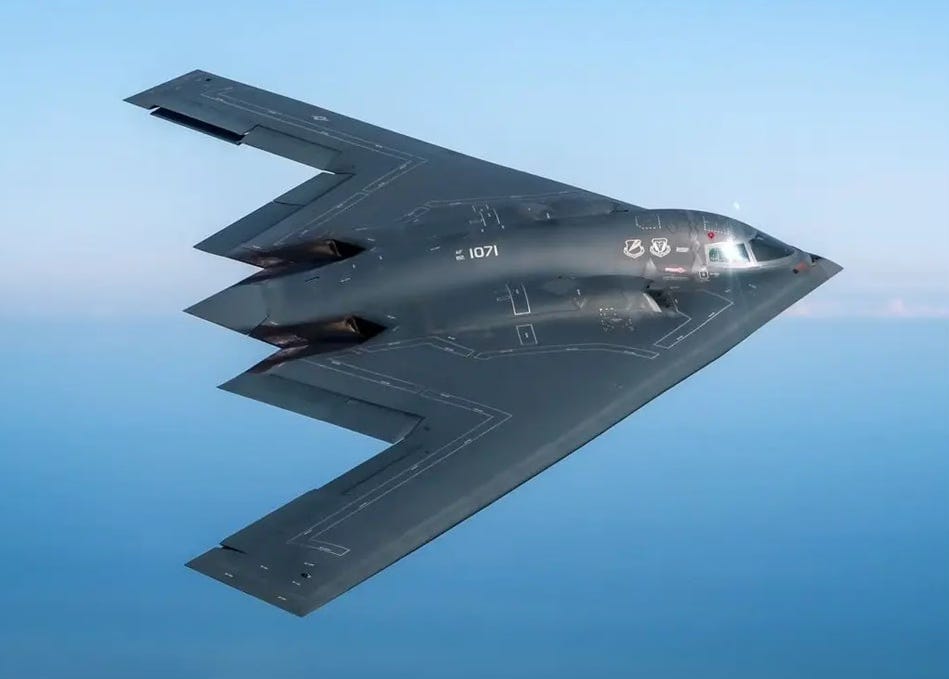
And always the flyovers! A few years back I was at an Angels World Series game with a friend. A stealth bomber thundered overhead right before the first pitch and the crowd went wild. My friend said he had tears in his eyes, and I said, just think how many tears are shed by the people whose countries those things flyover every single day. He thought I was joking. I wasn’t.
These reader comments from 2009 could have been made yesterday—or today. Steroidal displays of hyper-patriotism and exotic weaponry continue apace in allegedly peace-loving America as the president boasts of trillion-dollar war budgets.
A final comment from another reader:
I served in the US Coast Guard back when it wasn’t fashionable to be in the military. I remember having garbage thrown at me from passing cars when on liberty from the Academy. I don’t desire a return to those days but I firmly believe that the pendulum has gone too far the other way.
I love my country as much as anyone but I really wish that they’d stop singing ‘God Bless America’ during the 7th inning stretch and replace it with “America the Beautiful”, prefereably all verses but at least the first two. For the past 8 years, I’ve been moved to tears when singing te second verse as it ends,
“America! America! God mend thine ev’ry flaw;
Confirm thy soul in self control, thy liberty in law! “
We could use a bit more self control.
These comments come from men who at first glance might be seen as “conservative” or even as “deplorable” by some sectors of society. This is deeply unfortunate. I’m not sure how else to put this, so I’ll just say it: these men would not be out of step with the efforts of groups like Code Pink. We need to come together.
In America there is a “silent majority” who are tired of vapid patriotism, rabid nationalism, and endless wars. How we activate that silent majority—how we get them to stand up, to march, to declare “Enough is enough!” is a question for the ages.
A few months ago, I sorted through some old pennies. I know: Who does this anymore? Aren’t pennies obsolete? Does anybody still bend down to pick up pennies?
I found an old Lincoln “wheat” penny from 1944 (I used to see a lot more “wheat” pennies when I was young), and somehow, somewhere, I picked up an Indian head penny from 1888 (in fair condition at best). But the one that most surprised me was a Canadian penny from 1943 featuring King George VI.
My King George VI penny had this inscription on the front: GEORGIUS VI D:G: REX ET IND IMP. I confess I had to look that up. What it means is this:
George VI, by the grace of God, King and Emperor of India
And it immediately occurred to me that this is the type of coin Trump would want, though of course I doubt Trump would want his profile on a penny. Anyhow, I could imagine a big Trump coin (gold, naturally), with an inscription like this:
Trumpus I, by the grace of God, King and Emperor of Canada, Greenland, and the Panama Canal
It got me to laughing as a way to hide my tears.
Anyhow, just four years after my George VI penny was minted, India was on its way to independence, recognizing it didn’t need a British monarch to rule over it. Who knew India would gain its independence so quickly after World War II? Certainly not the British monarchy.
History is full of surprises, and events can often move far more quickly than we think possible. I hope that means that America will free itself of Trump as quickly as India sloughed off George VI. Who needs a wannabe monarch like Trump?
Let’s hope Trump’s image never adorns official U.S. coinage. After all, his image is already on far too many “commemorative” coins that he sells to his admirers and followers.
You can buy ten of these “coins” at Amazon for $16.99. Good grief!
Are we living through a nightmarish simulacrum of reality, a Hollywood without happy endings? If so, let’s call it “Trumpwood.”
You may know that Donald Trump, who’s appeared in movies and had his own popular TV show, The Apprentice (where his signature line was, “You’re fired!”), has his very own star on Hollywood’s walk of fame (and shame). It’s rather amazing to recall that Trump was once seen as an entertaining billionaire buffoon, a friend to the Clintons, among other liberal A-listers. The relatable billionaire, so to speak, whose vulgar tastes ran to golden toilets. As they say, who cares if it’s true—go with the legend!
He’s a star! A star!
Trumpwood, I’d argue, is a twisted and bizarre version of Hollywood, where the Oval Office is just a set to him, where the world is just a stage where he manifests all his hatred and trauma and egotism. The rest of us are just bit players (or scenery, easily changeable and discardable) in his psychodrama.
It’s all show business to The Donald, all centered on himself, where he is (at least in his own mind) the ultimate A-lister. He is the “very stable genius,” the most powerful man in the world with the biggest nuclear button, the man who craves attention but who also demands obedience. Adoration is what fuels him. Without adoring masses, without his trumped-up towers to himself, he would wither away.
Trump is the ultimate taker, feeding off the adoration as well as the hatred of the rest of us. I wish we could ignore him, but he is the president, after all, so we can’t just wish him into the cornfield.
Perhaps in 2028, assuming we last that long, Americans might care to elect a public servant rather than a self-centered scene-stealing “star” as president. A man can dream.
P.S. Check out Tom Engelhardt’s latest at TomDispatch, which helped to inspire these thoughts of mine.
I read the news today, oh boy. About a lucky man named Elon Musk. But he lost out on one thing: he didn’t get a top secret briefing on Pentagon war plans for China. And the news people breathed a sigh of relief.
With apologies to John Lennon and The Beatles, a day in the life is getting increasingly tough to take here in the land of the free. I’m meant to be reassured that Musk didn’t get to see America’s top-secret plans for — yes! — going to war with China, even as I’m meant to ignore the constant drumbeat of propaganda, the incessant military marches that form America’s background music, conveying the message that America must have war plans for China, that indeed war in or around China is possible, even probable, in the next decade. Maybe in 2027?
My fellow Americans, we should be far more alarmed by such secret U.S. war plans, along with those “pivots” to Asia and the Indo-Pacific, and the military base-building efforts in the Philippines, than reassured by the “good news” that Comrade Billionaire Musk was denied access to the war room, meaning (for Dr. Strangelove fans) he didn’t get to see “the big board.”
It’s war, war, everywhere in America. We do indeed have a strange love for it. I’ve been writing for TomDispatch for 18 years now — this is my 111th essay (the other 110 are in a new book of mine) — most of them focusing on militarism in this country, as well as our disastrous wars in Iraq, Afghanistan, and elsewhere, the ruinous weapons systems we continue to fund (including new apocalyptic nuclear weapons), and the war song that seems to remain ever the same.
A few recent examples of what I mean: President Trump has already bombed Yemen more than once. He’s already threatening Iran. He’s sending Israel all the explosives, all the weaponry it needs to annihilate the Palestinians in Gaza (so too, of course, did Joe Biden). He’s boasting of building new weapons systems like the Air Force’s much-hyped F-47 fighter jet, the “47” designation being an apparent homage by its builder, Boeing, to Trump himself, the 47th president. He and his “defense” secretary, Pete Hegseth, continually boast of “peace through strength,” an Orwellian construction that differs little from “war is peace.” And I could, of course, go on and on and on and on…
Occasionally, Trump sounds a different note. When Tulsi Gabbard became the director of national intelligence, he sang a dissonant note about a “warmongering military-industrial complex.” And however haphazardly, he does seem to be working for some form of peace with respect to the Russia-Ukraine War. He also talks about his fear of a cataclysmic nuclear war. Yet, if you judge him by deeds rather than words, he’s just another U.S. commander-in-chief enamored of the military and military force (whatever the cost, human or financial).
Consider here the much-hyped Department of Government Efficiency (DOGE) led by that lucky man Elon Musk. Even as it dismantles various government agencies like the Department of Education and USAID, it has — no surprise here! — barely touched the Pentagon and its vast, nearly trillion-dollar budget. In fact, if a Republican-controlled Congress has any say in the matter, the Pentagon budget will likely be boosted significantly for Fiscal Year 2026 and thereafter. As inefficient as the Pentagon may be (and we really don’t know just how inefficient it is, since the bean counters there keep failing audit after audit, seven yearsrunning), targeted DOGE Pentagon cuts have been tiny. That means there’s little incentive for the generals to change, streamline their operations, or even rethink in any significant fashion. It’s just spend, spend, spend until the money runs out, which I suppose it will eventually, as the national debt soars toward $37 trillion and climbing.
Even grimmer than that, possibly, is America’s state of mind, our collective zeitgeist, the spirit of this country. That spirit is one in which a constant state of war (and preparations for more of the same) is accepted as normal. War, to put it bluntly, is our default state. It’s been that way since 9/11, if not before then. As a military historian, I’m well aware that the United States is, in a sense, a country made by war. It’s just that today we seem even more accepting of that reality, or resigned to it, than we’ve ever been. What gives?
The Face of War: Confederate Dead at Antietam (Matthew Brady)
Remember when, in 1963, Alabama Governor George Wallace said, “Segregation now, segregation tomorrow, and segregation forever”? Fortunately, after much struggle and bloodshed, he was proven wrong. So, can we change the essential American refrain of war now, war tomorrow, and war forever? Can we render that obsolete? Or is that too much to hope for or ask of America’s “exceptional” democracy?
Taking on the MICIMATT(SH)
Former CIA analyst Ray McGovern did America a great service when he came up with the acronym MICIMATT, or the Military-Industrial-Congressional-Intelligence-Media-Academia-Think-Tank complex, an extension of President Dwight D. Eisenhower’s military-industrial complex, or MIC (from his farewell speech in 1961). Along with the military and industry (weapons makers like Boeing and Lockheed Martin), the MICIMATT adds Congress (which Eisenhower had in his original draft speech but deleted in the interest of comity), the intelligence “community” (18 different agencies), the media (generally highly supportive of wars and weapons spending), academia (which profits greatly from federal contracts, especially research and development efforts for yet more destructive weaponry), and think tanks (which happily lap up Pentagon dollars to tell us the “smart” position is always to prepare for yet more war).
You’ll note, however, that I’ve added a parenthetical SH to McGovern’s telling acronym. The S is for America’s sporting world, which eternally gushes about how it supports and honors America’s military, and Hollywood, which happily sells war as entertainment (perhaps the best known and most recent film being Tom Cruise’s Top Gun: Maverick, in which an unnamed country that everyone knows is Iran gets its nuclear ambitions spanked by a plucky team of U.S. Naval pilots). A macho catchphrase from the original Top Gun was “I feel the need — the need for speed!” It may as well have been: I feel the need — the need for pro-war propaganda!
Yes, MICIMATT(SH) is an awkward acronym, yet it has the virtue of capturing some of the still-growing power, reach, and cultural penetration of Ike’s old MIC. It should remind us that it’s not just the military and the weapons-makers who are deeply invested in war and — yes! — militarism. It’s Congress; the CIA; related intel “community” members; the mainstream media (which often relies on retired generals and admirals for “unbiased” pro-war commentary); academia (consider how quickly institutions like Columbia University have bent the knee to Trump); and think tanks — in fact, all those “best and brightest” who advocate for war with China, the never-ending war on terror, war everywhere.
But perhaps the “soft power” of the sporting world and Hollywood is even more effective at selling war than the hard power of bombs and bullets. National Football League coaches patrol the sidelines wearing camouflage, allegedly to salute the troops. Military flyovers at games celebrate America’s latest death-dealing machinery. Hollywood movies are made with U.S. military cooperation and that military often has veto power over scripts. To cite only one example, the war movie 12 Strong (2018) turned the disastrous Afghan War that lasted two horrendous decades into a stunningly quick American victory, all too literally won by U.S. troops riding horses. (If only the famed cowboy actor John Wayne had still been alive to star in it!)
The MICIMATT(SH), employing millions of Americans, consuming trillions of dollars, and churning through tens of thousands of body bags for U.S. troops over the years, while killing millions of people abroad, is an almost irresistible force. And right now, it seems like there’s no unmovable object to blunt it.
Believe me, I’ve tried. I’ve written dozens of “Tomgrams” suggesting steps America could take to reverse militarism and warmongering. As I look over those essays, I see what still seem to me sensible ideas, but they die quick deaths in the face of, if not withering fire from the MICIMATT(SH), then being completely ignored by those who matter.
And while this country has a department of war (disguised as a department of defense), it has no department of peace. There’s no budget anywhere for making peace, either. We do have a colossal Pentagon that houses 30,000 workers, feverishly making war plans they won’t let Elon Musk (or any of us) see. It’s for their eyes only, not yours, though they may well ask you or your kids to serve in the military, because the best-laid plans of those war-men do need lots of warm bodies, even if those very plans almost invariably (Vietnam, Afghanistan, Iraq, etc.) go astray.
So, to repeat myself, how do you take on the MICIMATT(SH)? The short answer: It’s not easy, but I know of a few people who had some inspirational ideas.
On Listening to Ike, JFK, MLK, and, Yes, Madison, Too
Militarism isn’t exactly a new problem in America. Consider Randolph Bourne’s 1918 critique of war as “the health of the state,” or General Smedley Butler’s confession in the 1930s that “war is a racket” run by the “gangsters of capitalism.” In fact, many Americans have, over the years, spoken out eloquently against war and militarism. Many beautiful and moving songs have asked us to smile on your brother and “love one another right now.” War, as Edwin Starr sang so powerfully once upon a time, is good for “absolutely nothin’,” though obviously a lot of people disagree and indeed are making a living by killing and preparing for yet more of it.
And that is indeed the problem. Too many people are making too much money off of war. As Smedley Butler wrote so long ago: “Capital won’t permit the taking of the profit out of war until the people — those who do the suffering and still pay the price — make up their minds that those they elect to office shall do their bidding, and not that of the profiteers.” Pretty simple, right? Until you realize that those whom we elect are largely obedient to the moneyed class because the highest court in our land has declared that money is speech. Again, I didn’t say it was going to be easy. Nor did Butler.
As a retired lieutenant colonel in the U.S. Air Force, I want to end my 111th piece at TomDispatch by focusing on the words of Ike, John F. Kennedy (JFK), Martin Luther King, Jr. (MLK), and James Madison. And I want to redefine what words like duty, honor, country, and patriotism should mean. Those powerful words and sentiments should be centered on peace, on the preservation and enrichment of life, on tapping “the better angels of our nature,” as Abraham Lincoln wrote so long ago in his First Inaugural Address.
Why do we serve? What does our oath of office really mean? For it’s not just military members who take that oath but also members of Congress and indeed the president himself. We raise our right hands and swear to support and defend the U.S. Constitution against all enemies, foreign and domestic, to bear true faith and allegiance to the same.
There’s nothing in that oath about warriors and warfighters, but there is a compelling call for all of us, as citizens, to be supporters and defenders of representative democracy, while promoting the general welfare (not warfare), and all the noble sentiments contained in that Constitution. If we’re not seeking a better and more peaceful future, one in which freedom may expand and thrive, we’re betraying our oath.
If so, we have met the enemy — and he is us.
Ike told us in 1953 that constant warfare is no way of life at all, that it is (as he put it), humanity crucifying itself on a cross of iron. In 1961, he told us democracy was threatened by an emerging military-industrial complex and that we, as citizens, had to be both alert and knowledgeable enough to bring it to heel. Two years later, JFK told us that peace — even at the height of the Cold War — was possible, not just peace in our time, but peace for all time. However, it would, he assured us, require sacrifice, wisdom, and commitment.
How, in fact, can I improve on these words that JFK uttered in 1963, just a few months before he was assassinated?
What kind of peace do we seek? Not a Pax Americana enforced on the world by American weapons of war. Not the peace of the grave or the security of the slave. I am talking about genuine peace, the kind of peace that makes life on earth worth living…
I speak of peace because of the new face of war. Total war makes no sense in an age… when the deadly poisons produced by a nuclear exchange would be carried by wind and water and soil and seed to the far corners of the globe and to generations yet unborn… surely the acquisition of such idle [nuclear] stockpiles — which can only destroy and never create — is not the only, much less the most efficient, means of assuring peace.
I speak of peace, therefore, as the necessary rational end of rational men. I realize that the pursuit of peace is not as dramatic as the pursuit of war — and frequently the words of the pursuer fall on deaf ears. But we have no more urgent task.
Are we ready to be urgently rational, America? Are we ready to be blessed as peacemakers? Or are we going to continue to suffer from what MLK described in 1967 as our very own “spiritual death” due to the embrace of militarism, war, empire, and racism?
Of course, MLK wasn’t perfect, nor for that matter was JFK, who was far too enamored of the Green Berets and too wedded to a new strategy of “flexible response” to make a clean break in Vietnam before he was killed. Yet those men bravely and outspokenly promoted peace, something uncommonly rare in their time — and even more so in ours.
More than 200 years ago, James Madison warned us that continual warfare is the single most corrosive force to the integrity of representative democracy. No other practice, no other societal force is more favorable to the rise of authoritarianism and the rule of tyrants than pernicious war. Wage war long and it’s likely you can kiss your democracy, your rights, and just maybe your ass goodbye.
America, from visionaries and prophets like MLK, we have our marching orders. They are not to invest yet more in preparations for war, whether with China or any other country. Rather, they are to gather in the streets and otherwise raise our voices against the scourge of war. If we are ever to beat our swords into plowshares and our spears into pruning hooks and make war no more, something must be done.
Let’s put an end to militarism in America. Let’s be urgently rational. To cite John Lennon yet again: You may say I’m a dreamer, but I’m not the only one. Together, let’s imagine and create a better world.
Meanwhile, Institute of War Is Going Full Throttle
Surprise! America’s Institute of Peace (USIP), admittedly a think tank that is neither that peaceful nor successful, is being shut down by the Trump administration. Meanwhile, the Institute of and for War, otherwise known as the Pentagon, is going full throttle and likely getting even more money to crank up conflict around the globe.
The symbolism here is almost too obvious for words. The budget for the Peace Institute is roughly $55 million. The budget for the War Institute (Pentagon) is roughly $900 billion. That means America spends 16,000 times as much money preparing for war than it does thinking about peace. That might be one reason why we always get war—we get what we pay for.
For the yearly budget of the USIP, we could buy roughly one-half of an F-35 fighter jet. Now there’s some meaningful cost savings.
A Reminder: My new book, American Militarism on Steroids, goes live on Amazon Kindle tomorrow. It gathers all the essays I’ve written for TomDispatch, which amazingly add up to over 230,000 words. Prolix? Prolific? Profane? It must be profane if it criticizes our beloved Institute of War. Available for downloading for $7.50 at this link. Thank you.
In “The Matrix,” Agent Smith asks humanity’s hero, Neo, “What good is a phone call if you’re unable to speak?” It’s a powerful scene and perhaps the creepiest in the film.
What good is democracy, America, if you’re unable to speak? If your opposition to genocide in Gaza leads to you being labeled a terrorist and sent away to a place where your voice won’t be heard. If your shouts for peace, for greater fairness, for real change are simply drowned out by the “speech” of those with vastly more money than you, thus vastly bigger and louder megaphones.
Who does Donald Trump listen to, small donors who send him $20 or $200 or Miriam Adelson who gave him $100 million? Who would you listen to if you were Trump? Small wonder he’s Making Israel Great Again (MIGA).
Broadly speaking, Americans don’t want a war with Yemen. They don’t support Israel’s annihilation of Gaza. Yet your wants simply don’t matter. You have no say. Not when billionaires and powerful corporations have already bought “your” president and “your” representatives.
Public funding of elections is absolutely essential to curbing this corruption. Despite what the Supreme Court claims, money isn’t speech, and corporations are not citizens. Money is money, and those with the most money shouldn’t be allowed to use that money to drown out the voices of everyone else.
Oh, in the scene above, you’ll note that Neo is “bugged.” We’re all bugged as well. It’s called a Smart phone.