In Praise of Whistleblowers

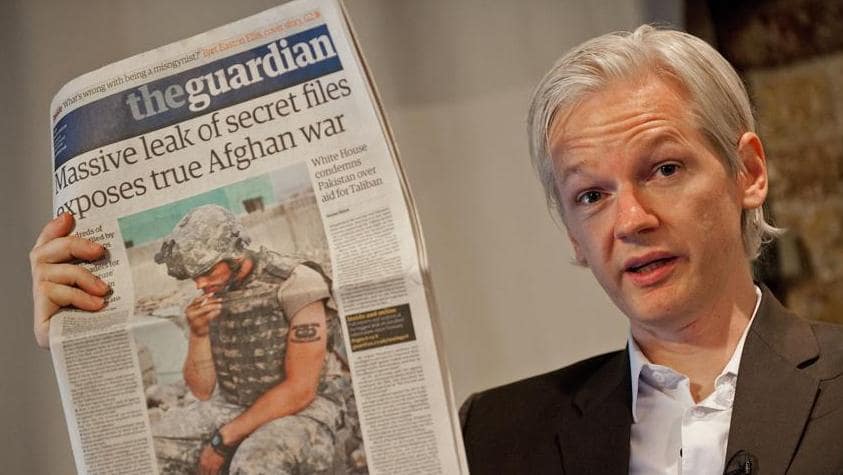
Julian Assange. The “true” Afghan War was not for us to see, but the truth will out, at least in this case, as total defeat in war is hard to hide

W.J. Astore

Edward Snowden. Daniel Hale. Chelsea Manning. Julian Assange. And of course Daniel Ellsberg. These and other whistleblowers courageously spoke out to reveal the lies the government feeds us to keep us pacified and compliant.

What do whistleblowers do? Some might say they speak truth to power. But power already knows the truth, indeed the powerful manufacture the truth, and they like their near-monopoly on truth and its creation and distribution.

What whistleblowers really do is speak truth to the powerless. They speak truth to us, and their version of the truth is one that reveals the manipulation and mendacity of the powerful. It exposes power to the light, revealing the rot, the greed, the lies, and for this act of defiance and of patriotism, the whistleblower must be punished.

Snowden was forced into exile in Russia. Hale was recently imprisoned for up to four years. Manning spent years in prison under humiliating conditions that included solitary confinement. Assange is still in prison, and the U.S. government still seeks to extradite him and punish him under an espionage act that shouldn’t even apply to a citizen of another country (not to mention a journalist who should be protected in a democracy that allegedly reveres the freedom of the press).

It’s not that the American people can’t handle the truth, to cite the words of Colonel Jessup as played by Jack Nicholson. It’s that the American people can handle the truth, that the truth would empower us while weakening the powers-that-be and their various plots and privileges. That’s why the truth is such a scarce commodity in Washington, D.C. It must be guarded while being massaged and manipulated before its fed to the masses as formless, often truthless, pabulum.

America’s punishment of principled whistleblowers is yet another sign of the death of democracy in America. If President Biden wanted to do something important, something inspiring, something meaningful, he’d permit Snowden to return with no charges, he’d pardon Hale, and he’d stop pursuing the extradition of Assange. But Biden will do none of these. Whistleblowers must be persecuted, must be punished, not because they’ve done something wrong, but because they’ve done something right, something that embarrasses the powerful. And that simply cannot be tolerated.

After all, if Americans in positions to know start speaking the truth to their fellow Americans, where will that end? We might see a resurgence of accountability, of justice, even of democracy in America. And we can’t have that.

Addendum: For a terrific book on whistleblowing that will make you angry indeed, check out Tom Mueller’s “Crisis of Conscience: Whistleblowing In An Age of Fraud” (New York, Riverhead Books, 2019).

The Pentagon Gets More Money

W.J. Astore

Imagine you’re a parent with a difficult son. You send him to the most expensive schools, you give him prodigious sums of money, but when Johnny comes home from school with his report card, you see he got an “F” in Afghanistan, an “F” in Iraq, and an “F” in Libya, among other “classes.” Projects he’s working on, like the F-35 jet fighter or Ford-class carriers, are also proving to be expensive failures. Even in deportment he’s receiving an “F,” with the teachers telling you he’s prone to bullying his fellow students as he boasts of being the most exceptional student in the world.

How would you handle Johnny? Well, our collective Johnny is the Pentagon and the National Security State, and our government’s way of handling him is to shove more money his way, another $24 billion or so, with more promised in the future.

Is it any wonder why Johnny Pentagon never changes its behavior?

That’s the subject of my latest article at TomDispatch.com. Here’s the first half of the article; please go to TomDispatch.com to read the rest. Many thanks!

William Astore, A Bright Future for Weapons and War

Yoda, the Jedi Master in the Star Wars films, once pointed out that the future is all too difficult to see and it’s hard to deny his insight. Yet I’d argue that, when it comes to the U.S. military and its wars, Yoda was just plain wrong. That part of the future is all too easy to imagine. It involves, you won’t be shocked to know, more budget-busting weaponry for the Pentagon and more military meddling across the globe, perhaps this time against “near-peer” rivals China and Russia, and a global war on terror that will never end. What’s even easier to see is that peace will be given no chance at all. Why? Because it’s just not in the interests of America’s deeply influential military-congressional-industrial complex.

When that vast complex, which President Dwight Eisenhower warned us about six decades ago, comes to my mind, I can’t help thinking of a song from the last years of the then seemingly endless Cold War. (How typical, by the way, that when the Soviet Union finally imploded in 1991, it barely affected Pentagon funding.)

“The future’s so bright (I gotta wear shades)” was that 1986 song’s title. And I always wonder whether that future could indeed be nuclear-war bright, given our military’s affection for such weaponry. I once heard the saying, “The [nuclear] triad is not the Trinity,” which resonated with me given my Catholic upbringing. Still, it’s apparently holy enough at the Pentagon or why would the high command there already be planning to fund the so-called modernization of the American nuclear arsenal to the tune of at least $1.7 trillion over the next 30 years? Given this nation’s actual needs, that figure blows me away (though not literally, I hope).

What is that “triad” the complex treats as a holy trinity? It consists of land-based intercontinental ballistic missiles, or ICBMs; nuclear-weapons-capable bombers like the B-1, B-2, and the venerable B-52; and submarine-launched ballistic missiles, or SLBMs. Given our present vast nuclear arsenal, there’s no strategic need for building new ICBMs at a price beyond compare. In fact, as the most vulnerable “leg” of the triad, the ones the Air Force currently has should be decommissioned.

Nor is there a strategic need for an ultra-expensive new bomber like the Air Force’s proposed B-21 Raider (basically, an updated version of the B-2 Spirit “stealth” bomber that’s most frequently used these days for flyovers at big college and Super Bowl football games). America’s Ohio-class nuclear submarines that still wander the world’s oceans armed with Trident missiles are more than capable of “deterring” any conceivable opponent into the distant future, even if they also offer humanity a solid shot at wholesale suicide via a future nuclear winter. But reason not the need, as Shakespeare once had King Lear say. Focus instead on the profits to be made (he might have added, had he lived in our time and our land) by building “modernized” nukes.

As my old service, the Air Force, clamors for new nuclear missiles and bombers, there’s also the persistent quest for yet more fighter jets, including overpriced, distinctly underperforming ones like the F-35, the “Ferrari” of fighter planes according to the Air Force chief of staff. If the military gets all the F-35s it wants, add another $1.7 trillion to the cost of national “defense.” At the same time, that service is seeking a new, “lower-cost” (but don’t count on it) multirole fighter — what the F-35 was supposed to be once upon a time — even as it pursues the idea of a “6th-generation” fighter even more advanced (read: pricier) than 5th-generation models like the F-22 and F-35.

I could go on similarly about the Navy (more Ford-class aircraft carriers and new nuclear-armed submarines) or the Army (modernized Abrams tanks; a new infantry fighting vehicle), but you get the idea. If Congress and the president keep shoveling trillions of dollars down the military’s gullet and those of its camp followers (otherwise known as “defense” contractors), count on one thing: they’ll find ever newer ways of spending that dough on anything from space weaponry to robot “companions.”

Indeed, I asked a friend who’s still intimate with the military-industrial complex what’s up with its dreams and schemes. The military’s latest Joint Warfighting Concept, he told me, “is all about building Systems of Systems based in AI [artificial intelligence] and quantum computing.” Then he added: “All it will do is give us more sophisticated ways to lose wars.” (You can see why he’s my friend.) The point is that AI and quantum computing sound futuristically super-sexy, which is why they’ll doubtless be used to justify super-expensive future budgetary requests by the Pentagon.

In that context, don’t you find it staggering how much the military spent in Afghanistan fighting and losing all too modernistically to small, under-armed units of the Taliban? Two trillion-plus dollars to wage a counterinsurgency campaign that failed dismally. Imagine if, in the next decade or two, the U.S. truly had to fight a near-peer rival like China. Even if the U.S. military somehow won the battles, this nation would undoubtedly collapse into bankruptcy and financial ruin (and it would be a catastrophe for the whole endangered planet of ours). It could get so bad that even Jeff Bezos and Elon Musk might have to pay higher taxes, if, that is, they haven’t already slipped the surly bonds of Earth to mingle with the twinkling stars.

If America’s post-9/11 war-on-terror military spending, including for the Afghan and Iraq wars, has indeed reached the unimaginable sum of $8 trillion, as Brown University’s Costs of War Project estimates, imagine how much a real war, a “conventional” war, featuring the air force, the fleet, big battalions, and major battles, would cost this country. Again, the mind (mine at least) boggles at the prospect. Which is not to say that the U.S. military won’t fight for every penny so that it’s over-prepared to wage just such a war (and worse).

The idea that this country faces a perilous new cold war that could grow hot at any moment, this time with China, crops up in unusual places. Consider this passage by Dexter Filkins, a well-known war reporter, that appeared recently in the New Yorker:

“We’ve spent decades fighting asymmetrical wars, but now there’s a symmetrical one looming. The United States has never faced an adversary of China’s power: China’s G.D.P. is, by some measures, greater than ours, its active-duty military is larger than ours, and its weapon systems are rapidly expanding. China appears determined to challenge the status quo, not just the territorial one but the scaffolding of international laws that govern much of the world’s diplomatic and economic relations. If two forever wars are finally coming to an end, a new Cold War may await.”

A new war is “looming.” Our adversary has more money and more troops than us and is seeking better weaponry. Its leadership wants to challenge a “status quo” (that favors America) and international laws (which this country already routinely breaks when our leaders feel in the mood).

Why are so many otherwise sane people, including Joe Biden’s foreign policy team, already rattling sabers in preparation for a new faceoff with China, one that would be eminently avoidable with judicious diplomacy and an urge to cooperate on this embattled planet of ours?

Why indeed? Please read the rest of my article at TomDispatch.com.

AOC’s “Radical” Gown

W.J. Astore

AOC got a lot of attention wearing a gown to the Met Gala that read, “tax the rich.” Here’s a fetching image:

Of course, this is hardly a radical message. Firstly, the rich are already taxed. Secondly, something like 70% of Americans, and perhaps more, agree that the richest Americans should pay more taxes. Thirdly, attendees of the Met Gala are, though rich, generally supportive of liberal causes, if not of true leftist agendas, so her message was hardly offensive to most of the people there.

Many people have pointed out AOC’s hypocrisy, such as her lack of action on issues like health care for all or a $15 minimum wage. Her gown was basically an exercise in performative theater. It garnered “hits” and “likes” as well as fury, but in the end it signified nothing.

Actions speak louder than words, even on gowns, but I can imagine more powerful words for her to have worn, if she’d really wanted to send a subversive message. Examples that occur to me:

EAT THE RICH. Much more amusing and to the point.

END THE WARS. Why not focus on America’s forever wars that have (or will) cost us $8 trillion?

HELP THE POOR. Why not remind the rich at the gala that there is such a thing as poor people in America?

GREED IS BAD. The anti-Gordon Gekko message.

CLASS WAR: Why not go all Marxian on them?

NO MORE NUKES: Why not remind Americans that the Pentagon plans to spend as much as $1.7 trillion on new ICBMs, bombers, and nuclear submarines, when the “old” ones we have are already capable of ending most life on Earth?

OK: Wearing what amounts to a bumper sticker on a gown isn’t going to change the world. It’s a stunt to grab attention, with an element of narcissism to it. But if you’re going to pull a stunt like this, why not go big? Why not be radical?

One more thought: If you watched the Met Gala and all the celebrities showing off their gowns and outfits, and you’ve also read “The Hunger Games” or saw the movies, you couldn’t help but recall the scenes of the decadent few in The Capitol, thoroughly enjoying life as all the proles in the Districts suffer to serve their prodigal and hedonistic lifestyle.

Something tells me AOC is very much a Capitol creature. She’s no Katniss Everdeen, no matter what she puts on her gown.

Readers: What message would you dare to wear on your gown or suit to show your “betters” you mean business? Have some fun in the comments section, but let’s keep it rated “R,” not “X.” And short!

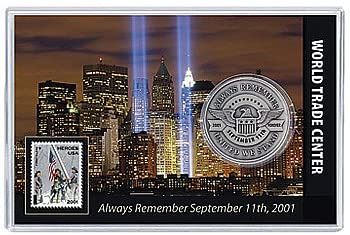
Never Forget — What?

W.J. Astore

The 20th anniversary of the 9/11 attacks has come and gone. The theme I often heard was “never forget.” Never forget what, exactly? That we were attacked? All of us of a certain age remember 9/11. We remember where we were when we first heard the news. We remember the shock, the confusion, the sense of loss. We really don’t need to be reminded to “never forget.”

A similar phrase is “always remember.” Like “never forget,” it’s remarkably labile, much like Obama’s slogans of “hope” and “change.” And that’s the point. It’s vague while being emotive. It plays on our emotions without encouraging us to think.

So, let’s think critically for a moment. What should we “never forget”? We should never forget the victims, of course. The heroes. The first responders who gave their lives. And, by the way, why is Congress always so reluctant to provide health care to those first responders who worked so tirelessly in the dangerously unhealthy rubble of the Twin Towers? Let’s not forget them in their moments of need.

But what else shouldn’t we forget and “always remember”? I think we should remember the colossal failure of the Bush/Cheney administration to act on intelligence that indicated Al Qaeda was determined to strike in the U.S. We should remember the chaos generated by those attacks, and how our government responded so slowly, and with a measure of panic. And we should remember how quickly men like Bush and Cheney and Rumsfeld deflected any blame and took no responsibility for what can only be described as a massive defeat.

Also, it’s important to recall that 15 of the 19 hijackers were Saudi nationals, yet America’s leaders chose to invade Afghanistan and Iraq after announcing a global war on terror. In short, they used 9/11 as a pretext to embark on wars that they wanted to fight, wars of choice that proved disastrous, and for which they’ve largely evaded responsibility.

As a military historian, I’m also taken aback by our leaders choosing to rebrand 9/11 as “Patriot Day.” When the Japanese attacked Pearl Harbor on December 7th, 1941, America’s leaders didn’t rebrand that day as an occasion for patriotism. They recognized it was a date of infamy and declared war on the attacker.

It’s almost as if 9/11 has become a date of victimhood for the U.S. An old Air Force buddy of mine put it well recently in a message to me:

“It felt like it wasn’t about remembrance as much as just wallowing in self-pity. Interesting you bring up Pearl Harbor. Back then we went off and fought a 4-year war, beat our enemy, and helped them rebuild. For 9/11, we went off and fought a 20-year war, came home with our tails between our legs, and left our enemy more empowered. A celebration of victimhood, but not of honor.”

I like my friend’s appeal to honor. It’s an old-fashioned word that you hear rarely in America’s offices and corridors of power. Where is the honor in turning the 9/11 calamity into some kind of celebration of victimhood and patriotism?

As a historian, of course I want 9/11 to be remembered. But let’s not allow propaganda and cheap sentiment to shape our memories. And let’s “never forget” the failures of our leaders both before and after that date of infamy.

Ten Reasons Why America’s Afghan War Lasted So Long and Ended So Disastrously

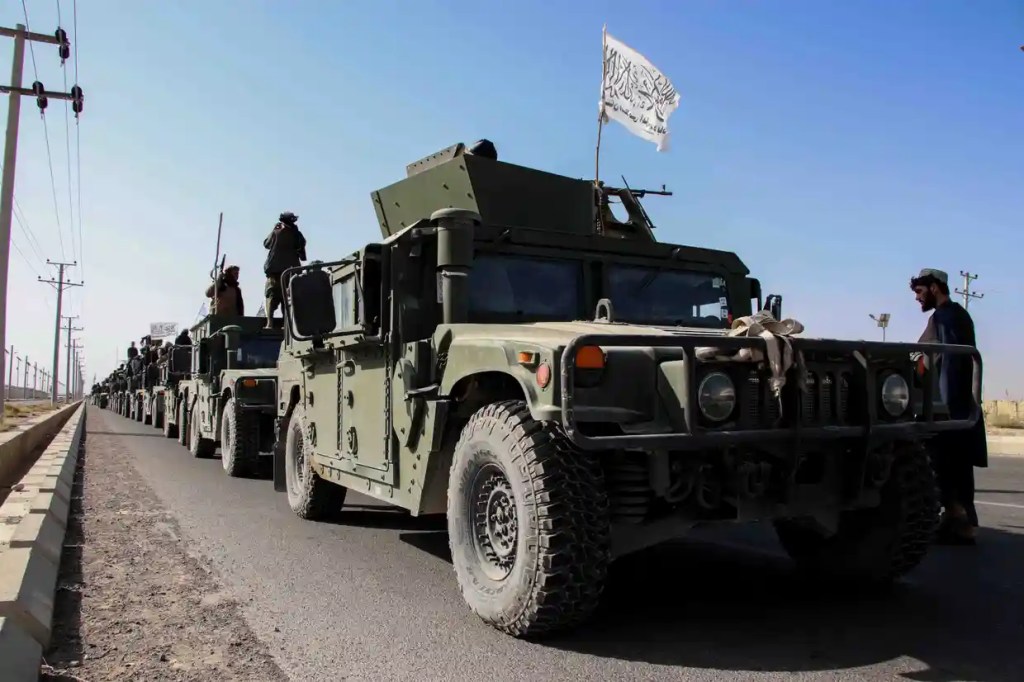
One thing is certain: The U.S. military succeeded in arming the Taliban (captured military equipment; photo from The Guardian)

W.J. Astore

The headlines claim America’s war in Afghanistan has finally ended, but of course no war ends just because someone claims it to be so. The Afghan people will be living with the chaos and destruction of this war for decades to come, even as mainstream media pundits in the USA and at the Pentagon pivot quickly to new wars or rumors of war in China, Africa, Iran, and elsewhere.

The Afghan War, I’ve argued, was never America’s to win. The U.S. military had the watches but the Afghan people had the time, as the saying goes, and unless U.S. forces stayed there forever (as retired General David Petraeus advised with his empty talk of “sustainable, sustained commitment”), the Taliban or indigenous forces like them were always going to prevail. After all, it’s their country, their culture, their people, and they want to live their way, free of foreign interference, whether it’s British or Russian or American.

That said, why did America persist in a lost cause for two decades? What explains this debacle? If we can explain it, perhaps we can avoid similar catastrophes in the future. 

In that spirit of optimism, here are ten reasons why America’s Afghan War lasted so long and ended so disastrously:

  1. Lack of a military draft in the USA. No, I’m not advocating for a return of the draft. But because there is no draft, because America allegedly has an “all-volunteer” military, most Americans pay it little mind, including the wars it fights, no matter how long they last.
  2. Related to (1) is the Pentagon’s practice of isolating Americans from the true costs of war. Elsewhere, I’ve called it the new American isolationism. We are simply encouraged not to look at the true face of war and its many horrors. Isolation from wars’ costs, I’d argue, acts to prolong the killing and dying.
  3. Related to (1) and (2) is the lack of a sustained anti-war movement in America. When there’s no draft and little exposure to war’s horrors, there is neither the cause nor the outrage needed to generate a significant anti-war movement. The lack of a strong anti-war movement serves to prolong Pentagon folly, which is fine with the Pentagon, as long as budgets for war continue to increase.
  4. Related to (2) and (3) is extensive Pentagon lying, which is abetted by mainstream media propaganda. The Afghan Papers in 2019 revealed how the American people had been lied to repeatedly about “progress” in Afghanistan, but those revelations came late, and most Americans, isolated from the war, paid them little mind anyway.
  5. Politics. It seems like every decision about Afghanistan was driven more by U.S. domestic politics than by realities on the ground. Firstly, the U.S. invaded as revenge for 9/11, even though the Taliban wasn’t responsible for that attack. Attempts by the Taliban to surrender or to turn over Osama bin Laden were rebuffed. Later, Barack Obama and the Democrats cynically turned the Afghan War into the “good” war as opposed to the badly botched Iraq War of Bush/Cheney. Obama persisted in fighting the Afghan War partly as a way of showing his “seriousness” as U.S. President. Trump inherited the war, thought about ending it, then decided he’d prosecute it even more vigorously than Obama did, after which he decided to negotiate with the Taliban without bringing the war to a conclusive end. Biden inherited that mess, a mess he’d helped to create as Obama’s Vice President, and is now being blamed for a chaotic withdrawal, even as he tried to tie the war’s conclusion to the 20th anniversary of 9/11. It’s a sordid record with plenty of cynical manipulation by Democrats and Republicans alike. In Washington, the war became a political football, tossed about willy-nilly with plenty of unforced fumbles resulting. 
  6. Solipsism.  Everywhere we go, there we are. Did the Afghan people even exist in the minds of Washington officials?
  7. Profit. Endless wars generate boundless profits for a select few. As General Smedley Butler noted in the 1930s, war is a racket. Many warrior-corporations got very rich off the Afghan War. Most in Congress willingly went along with this: they were getting paid too. Hence Dwight D. Eisenhower’s warning about the military-industrial-Congressional complex as a vastly powerful entity. It only gains strength as war is prolonged.
  8. Poor strategy. You simply can’t deliver a “government in a box” to Afghan peoples destabilized by decades of war exacerbated by foreign meddling and manipulation. Creating well-armed “national” police and security forces, meanwhile, is a great way to build an authoritarian police state, but not a participatory democracy. Did the U.S. spend so much time creating police and military forces in Afghanistan because that is what the Pentagon and its various mercenary camp followers understood best? If so, the effort still failed spectacularly.
  9. Dereliction of duty. The U.S. military knew it was losing the war. It hid the truth by massaging metrics and by lying repeatedly, including to Congress. Senior commanders were never held accountable for these lies. Indeed, the two most famous U.S. commanders, David Petraeus and Stanley McChrystal, were fired from their jobs for reasons unrelated to lies and lack of progress in this war.
  10.  Too many guns brought to a knife fight.  The U.S. military used massive firepower in the cause of limiting American casualties. Afghan casualties didn’t matter. But every time a drone strike hit a wedding party, or a Hellfire missile generated “collateral damage,” more Afghans turned against America and its military occupation.

Looking at these ten reasons, facing them squarely, is tougher than it sounds. Addressing them is even tougher. Some suggested reforms:

  1. A return to a military draft that picks the most privileged sons and daughters of America first. Start with the families of Members of Congress and the Executive Branch. Fill out the ranks with anyone attending the Ivy League and all private prep schools. And fight no war without a Congressional declaration of the same. (If this all sounds like nonsense, because you “know” the rich and privileged won’t allow their sons and daughters to be drafted and to serve in harm’s way, then you should also know from this that America’s wars since 1945 are dishonest as well as avoidable.)
  2. Face the true costs of war. Any expenditures on war should result in an immediate tax hike on the richest Americans (those in the top 10% of wealth). Casualties of war, whether of U.S. troops or foreign innocents, should be aired on national media in a manner similar to the New York Times’ coverage of 9/11 victims in 2001.
  3. Anti-war voices deserve at least an equal hearing in the mainstream media as pro-war ones. Indeed, anti-war voices should be amplified to provide a humane balance to pro-war ones.
  4. Given the evidence of consistent Pentagon mendacity, whether in Vietnam or Iraq or Afghanistan and elsewhere, the default position of the mainstream media should be supreme skepticism. At the same time, information about war should be declassified and shared with the American people so that informed decisions can be made about the war’s true course and progress toward victory (or lack thereof).
  5. War, the Prussian military theorist Carl von Clausewitz said, is the continuation of politics by other means. By this he didn’t mean that war should be defined and driven by an internal politics focused tightly on partisan advantage. War may be too important to be left to generals; it is also most assuredly too important (and deadly) to be left to partisan politicians striking tough guy poses.  Coda: Any politician making noises about putting on “big boy pants” and similar bellicose nonsense shall be handed a rifle and deployed immediately to the front.
  6. Before waging war with or against a people, those people should be recognized as, well, people, possessing their own unique culture, mindsets, and abilities.
  7. Taking the profit out of war is perhaps the best way of ending it. If America must wage war, it should be a non-profit operation.
  8. Strategy at the highest level should be agreed upon by the American people and be explicable by the same. Americans should be able to explain “why we fight,” with clear ideas about ending the war quickly, i.e., an exit strategy.
  9. Military officials caught lying to the American people, whether before Congress or elsewhere, demonstrate a lack of integrity and should be fired with loss of all future benefits. More serious lies shall result in prison sentences.
  10. Any war that requires U.S. military forces to use massive firepower merely to tread water against much weaker enemies is a lost war from day one. Using sledgehammers to kill gnats is never wise, no matter how much Americans like to sling sledgehammers. 

For any self-avowed democracy, a politics based on honesty, equity of burden-sharing, and humane values among citizens is a must. If America is to wage war, which I would prefer it not do, except in those rarest of cases when America is directly attacked or imminently in danger, that war’s causes and goals should be debated honestly and fully, with the burden of warfighting shared fairly.  A quick cessation of hostilities should be the goal.

Ultimately, you wage war long, you wage it wrong, should become the byword of U.S. policy now and forever.

Words and War, Hawks and Doves

W.J. Astore

Two of my colleagues at the Eisenhower Media Network, Danny Sjursen and Matthew Hoh, recently gave the best interview I’ve heard on America’s failed wars in Iraq and Afghanistan. You can watch it here.

They were described as anti-war veterans, which is true enough. But it did get me thinking about the words we use to describe war in America, or just words in general that we apply to military actions and the broader military world.

For example, instead of describing Sjursen and Hoh as “anti-war,” why not say they’re “pro-peace” or “pro-sanity” or “pro-humanity” or even “pro-using-history-to-avoid-expensive-and-deadly-quagmire-wars”? OK — that last one may be too long, but I often find pro-peace activists being described as critics, i.e. as malcontents.

Another example might be “think tank.” So many of the thinks tanks within the Beltway in DC are fronts for warrior corporations like Boeing, Raytheon, Lockheed Martin, and so on. Are they really “thinking” freely? And that “tank” word might be more descriptive than they realize, given they always “think” of expensive weaponry like main battle tanks as the solution to everything. (If memory serves, not only did we use the M1 Abrams tank in Iraq; we also tried a few in Afghanistan; similarly, during the Vietnam War, the U.S. Army deployed tanks in jungle areas that were designed to battle their Soviet counterparts on the plains of Germany.)

So maybe “think tank” should mean: “Thinks always of tanks and other ultra-expensive weaponry.”

Here’s a heretical thought: Why are pro-war voices in the establishment referred to as “hawks”? As if they’re noble birds of prey?

I feel sorry for all the real hawks in nature (red-shouldered hawk, Audubon Society photo)

Meanwhile, pro-peace voices are dismissed as passive cooing “doves.” More than a few peace activists have all the energy and tenacity of hawks, and most of the pro-war ones are more likely to be cooing like doves in the ears of their bosses about the wisdom and wonders of going to war and staying there.

I suppose you could call pro-war voices “vultures” or “jackals” or perhaps “ticks” or some other parasite on the body politic, but I’d feel like I’m insulting the tick, which just does what it needs to do to survive. It’s not like ticks have think tanks where they can weigh their choices.

Readers, have a little fun with this. What military/Washington Beltway term annoys you, and how would you define it, in plainspeak? Have at it in the comments section, and many thanks, as always, for reading my posts.

P.S. No one, of course, can beat Orwell and the “war is peace” formulation. And Ambrose Bierce was a master of exposing cant and hypocrisy and dishonesty in his “Devil’s Dictionary.” In their spirit, have at it!

In A Functioning Democracy, What Would War Look Like?

W.J. Astore

In a functioning democracy, which the USA decidedly isn’t, what would be the features of a necessary war, as in a war fought for defensive (and for defensible) reasons and purposes? Here are ten features that occur to me:

  1. A necessary war would readily gain the approval of Congress, and indeed there would be a formal declaration of war issued by Congress.
  2. National mobilization would be required to win as swiftly as possible.
  3. All Americans could clearly state the reasons for the war and the end goals.
  4. Americans would reject, as much as possible, a long and open-ended war, knowing that long wars are the enemy of democracy.
  5. Nearly all sectors of society would share the war’s burdens. (Think here of celebrities like Jimmy Stewart and sports stars like Ted Williams, among so many others, doing their bit for the war effort in World War II.)
  6. Sacrifices would be made on a national scale, including rationing of materials needed for the war effort.
  7. Taxes would go up to pay for the war effort. War bonds might be sold as well. Deficit spending wouldn’t be used to hide the costs of the war.
  8. Civilian leaders would be in control of the war effort. Military leaders who failed to produce results would be reassigned, demoted, or fired.
  9. As much as possible, freedom of the press would be encouraged so that Americans knew the true course and costs of war.
  10. When the war ended, again as quickly as possible, the nation would return to its default state of peace; military establishments bolstered during wartime would be demobilized.

Now let’s consider every U.S. war since World War II. Let’s focus especially on Iraq and Afghanistan. How many of these ten features would apply to these wars?

I’d argue that none of them apply.

That’s how you know these wars are not in the service of democracy, whether at home or overseas. They are also not defensive wars, nor are they defensible in ways that pass rigorous and honest debate among the people. (This is precisely why none of them came with Congressional declarations of war.)

I know my “top ten” list isn’t all-inclusive, but I think it’s a reasonable guide to whether the next war (and I’m sure more are coming) will be necessary and justifiable. It’s a safe bet it won’t be.

Readers, can you think of other ways we can tell whether war is truly justifiable? History teaches us that most wars are unjustifiable, offensive in nature, and therefore crimes against humanity.

In fact, since 1945 it’s often been America’s putative “enemies” who are more likely to be fighting a necessary war — it’s perhaps the chief reason why they so often win.

In sum, war is the enemy of democracy. You wage war long, you wage it wrong, assuming you want to keep a democracy. That so many American “thought-leaders” are still advocating for more war in Afghanistan is a clear sign that our country’s operating system is infected by malware that promotes militarism and war.

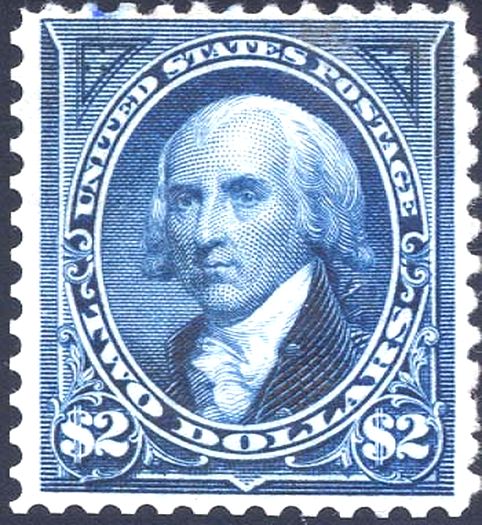
James Madison: No nation can preserve its freedom in the midst of continual warfare

Slinking Away from Afghanistan

W.J. Astore

I retired from the U.S. military in 2005. I had no direct role in America’s Afghan war, which means I have no personal stake in trying to justify it or defend it. I never understood how invading and occupying portions of Afghanistan made any sense.

In re-reading a few of my articles against the Afghan war, I came across this email from a dear friend who put it better than I ever could:

I feel sometimes like our military leaders don’t really think of the human cost [of war], even today. I went to church today and I wiped away many tears as they told the story of a member’s son whose legs were recently blown off in Afghanistan, and of a chaplain in Iraq who was there with dying soldiers. These stories, and working and living with military families for all these years has really humanized war and made it so personal to me — but I don’t think most Americans have this personal connection.

Personal email to author, 2012.

For me, my friend’s words sum up the great tragedy of this war. So many lives lost or damaged, most of them not American, and for what? What were America’s leaders thinking? What were they feeling, or failing to feel?

Obviously, the Afghan war was never America’s to win. Young troops were sent there on a fool’s errand. They may have tried hard — real hard — but they failed. Yet that failure wasn’t their fault. That failure was Bush’s and Obama’s and Trump’s. That failure was shared by a Congress that refused to exercise true oversight. That failure was aggravated by all those who profited from a doomed effort. Small wonder that Americans put so little faith and trust in their government today. We’ve been lied to so often by callous politicians with no skin in the game.

As the Taliban consolidates its control over much of Afghanistan, the entire U.S. and Coalition war effort stands in high relief as a debacle and disaster. Just as South Vietnam’s quick fall in 1975 revealed the dishonesty of U.S. government officials (along with the Pentagon Papers, Watergate, and so many other events), the ongoing collapse of America’s position in Afghanistan highlights a system that lacks integrity and honesty.

We lose because we’re craven and dishonest. We lose because we forget the personal costs of war. We lose because we fail to pay attention. We lose because we’re greedy and stupid.

Yes, I’m angry. I’ve written far too many articles against America’s Afghan war. Of course, they changed nothing. Even now, as the evidence is all around us of how much we’ve been lied to about “progress” in Afghanistan, there are still officials who argue we should stay and fight. For what reasons? To what end?

As journalist Megan Stack put it in a recent article in The New Yorker,

As the United States rushes to remove its troops from Afghanistan this summer, the Pentagon has imposed a de-facto press blackout on their departure. The military has ignored requests for embeds, denied pleas for even perfunctory interviews with troops, and generally worked to obstruct the public’s view of the United States pulling up stakes … the obfuscation was predictable. Leaving a country that many expect will now collapse into civil war, the United States has no victory to declare; it can only acknowledge the reality of relinquishment and retreat … [T]he outcome in Afghanistan was ignominious. The conflict will cost taxpayers more than two trillion dollars, including veteran care and interest on war borrowing, according to the Costs of War project at Brown University, which also estimates that more than a hundred and seventy thousand people died in the conflict, counting Afghan forces, Taliban fighters, and contractors. That figure includes twenty-four hundred U.S. troops and forty-seven thousand civilians who died in a project that failed at its most basic goal of defeating the Taliban, who are now surging back to seize control of districts and, according to human-rights groups, carrying out organized revenge killings.

Will anyone in the U.S. government be held accountable for this “ignominious” debacle? This disaster?

Isn’t it sad that we already know that “Not only no, but hell no!” is the answer here?

Update: For what it’s worth, this was my original opening to this article: As the Taliban quickly expands its control over Afghanistan, the dishonesty of the U.S. military and government is revealed. More than a trillion dollars spent over two decades, all those reports of progress in creating Afghan security forces and a centralized government, all the lives lost, and for what?

Before #MeToo – The Price of Silence

What would America be like if men got pregnant instead of women? It seems a silly question, but I’d argue it isn’t. My guess is that abortion would not only be legal under all conditions but that it would be readily available to all (men). The same for contraception: cheap and readily available. I was raised Catholic; consider if the Catholic clergy, all male of course, got pregnant, had to carry babies to term, and then had to care for them. Somehow I think that church teachings on abortion and contraception would be different.

But men don’t get pregnant. And men have full control over their bodies. It’s far different for women in America (and across most of the globe). Women are not only victims of sexual violence: they are increasingly being told they have no other option than to carry a baby to term, even if they were victims of rape or incest. The legislatures making these decisions (no surprise) are predominantly male, and they love to pose as pro-life.

In her memoir, Meredith Keller reminds us of the high price women have paid in America when laws are made by men for men, where women are often an afterthought, if that, and when so-called religious teachings are elevated above empathy and compassion and understanding. W.J. Astore

Before #MeToo – The Price of Silence

Meredith Keller

Now in retirement, I am anticipating a quiet afternoon in my art studio when I check mail in my rural box. Roosters are crowing. I hear clanking sounds of tractors discing and smell the musty soil being turned. I sort through the junk mail when my eye lands on a hand addressed letter. I tear it open to find the shocking words:

I think you might be my grandmother.

My body goes rigid as the thought of reliving a shattering period of my past sends waves of shock reverberating through my body. All those feelings of shame long buried were about to boil up again. If I answered the letter, all would be revealed.

Would I dare? Did I want to go down that path and relive the scenes of a rape and resulting pregnancy, opening the scars of a long buried episode that began on a college campus in 1962? Would this young writer, my granddaughter, be able to comprehend how the moral arbiters of society held us in their grip?

Sexual harassment, rape and intimidation have shadowed and haunted women through the ages. Where were their stories? Buried, like mine, in shame, layered under decades of angst. In my day single women with unintended pregnancies were forced into hiding. From the end of WWII until the passage of Roe v. Wade in 1973, unmarried pregnant women and their families faced shame and insufferable choices.

The alternatives were dismal. One solution was to visit abortionists, in many cases unqualified, who, to protect their own identities, blindfolded women during the procedure.  In 1962, sixteen hundred women, forced into illegal terminations, were admitted to Harlem Hospital Center in New York City due to botched or incomplete abortions. Society had women, especially poor women, in a vise.

Others had no choice but to carry a child to term. They quietly disappeared, spirited away while the stigma of “illegitimacy” hung over them. Shrouded in secrecy, with their identities erased, they were groomed to hand over their babies for adoption and return to society as though nothing had happened. It was known as the Baby Scoop Era when the dominant view was that unmarried women were unfit mothers and needed to acknowledge their guilt and shame and give up their babies for adoption. From 1945 to 1973 it is estimated that four million parents in the United States had children placed for adoption. Four million sad stories like mine went undocumented.

The Unraveling – The Price of Silence, my memoir, puts a spotlight on what it was like to have to weather the paralyzing trauma of rape and then go through the devastating severance of handing a child over to adoption. No one can imagine the gravity and deep sadness of that moment you give away your own child. It caused a quake deep in my soul. Is this what our legislators wish to return to when they not only write restrictive abortion laws, but also deny women health coverage for contraception under the guise of “freedom of religion”?

Feel what it was like to struggle through those times before Roe as I dredge up shattering memories that haunted me for 52 years. I fiercely fought for the dignity that was swiftly erased one night on a college campus. I had to jump hurdles to re-define myself, bury the past and muster the grit to have a successful career beginning as Food Editor of a leading restaurant magazine at age 23.  

The scars from my early life remained and memories lingered until that letter arrived in my mailbox. What would I respond? How could I adequately explain an era long forgotten? That granddaughter had not lived through those restrictive times of shame and humiliation. I unraveled my story for her and all young women so they can feel what it was like when women’s reproductive rights were emphatically denied. It is a struggle we are facing yet again. And yet, there was one champion in our corner, a little known lawyer at the time, and she had this to say:

The decision whether or not to bear a child is central to a woman’s life, to her well-being and dignity. When the government controls that decision for her, she is being treated as less than a fully adult human responsible for her own choices.

Ruth Bader Ginsburg

Keller’s memoir, The Unraveling, is available in paperback, hardback, and electronically from popular outlets such as Amazon and Powell’s. The book’s cover art, reproduced above, is her original work.

This story was first posted at The Contrary Perspective.

Imagine If America Had A Real Department of Defense

W.J. Astore

In my latest article for TomDispatch.com, I ask a simple question: What would real national defense look like? Here are some answers.

What would real national defense for this country look like?  Rarely do any of us pose this question, no less examine what it might truly mean.  Rarely do we think about all the changes we’d have to make as a nation and a people if we were to put defense first, second, and last, while leaving behind both our imperial wars and domestic militarism.

I know what it wouldn’t look like.  It wouldn’t look like today’s grossly inflated military.  A true Department of Defense wouldn’t need 800 foreign military bases, nor would the national security state need a budget that routinely exceeds a trillion dollars annually.  We wouldn’t need a huge, mechanized army, a navy built around aircraft carriers, or an air force that boasts of its global reach and global power, all of it created not for defense but for offense — for destruction, anytime, anywhere.

As a country, we would need to imagine a new “people’s” military as a force that could truly defend the American republic. That would obviously mean one focused above all on supporting the Constitution and the rights we (at least theoretically) hold sacred like freedom of speech, the press, and assembly, the right to privacy and due process, and of course the right to justice for all, not just for the highest bidder or those with the deepest pockets.

What might such a new military look like?  First, it would be much smaller.  America’s current military, including troops on active duty, reservists, and members of the National Guard, consists of roughly 2.4 million men and women.  Those numbers should gradually be cut at least in half.  Second, its budget should similarly be dramatically cut, the end goal being to have it 50% lower than next year’s proposed budget of $715 billion.  Third, it wouldn’t be based and deployed around the world. As a republican force (note the lower-case “r”), it would instead serve democratic ends rather than imperial ones.  It would certainly need far fewer generals and admirals.  Its mission wouldn’t involve “global reach,” but would be defensive, focused on our borders and this hemisphere.

Buy the Book

A friend of mine, a Navy veteran of the Vietnam War, speaks of a military that would consist of a Coast Guard, “militias” (that is, the National Guard) for each of the fifty states, and little else.  Yes, in this America, that sounds beyond extreme, but he has a point.  Consider our unique advantages in terms of geography.  Our continent is protected by two vast oceans.  We share a long and peaceful border with Canada.  While the border with Mexico is certainly troubled, we’re talking about unarmed, desperate migrants, not a military invasion flooding into Texas to retake the Alamo. 

Here, then, are just 10 ways America’s military could change under a vision that would put the defense of America first and free up some genuine funds for domestic needs as well:

  1. No more new nuclear weapons.  It’s time to stop “modernizing” that arsenal to the tune of possibly $1.7 trillion over the next three decades.  Land-based intercontinental ballistic missiles like the Ground Based Strategic Deterrent, expected to cost more than $264 billion during its lifetime, and “strategic” (nuclear) bombers like the Air Force’s proposed B-21 Raider should be eliminated.  The Trident submarine force should also be made smaller, with limited modernization to improve its survivability.
  2. All Army divisions should be reduced to cadres (smaller units capable of expansion in times of war), except the 82nd and 101st Airborne Divisions and the 10th Mountain Division.
  3. The Navy should largely be redeployed to our hemisphere, while aircraft carriers and related major surface ships are significantly reduced in number.
  4. The Air Force should be redesigned around the defense of America’s air space, rather than attacking others across the planet at any time.  Meanwhile, costly offensive fighter-bombers like the F-35, itself a potential $1.7 trillion boondoggle, should simply be eliminated and the habit of committing drone assassinations across the planet ended. Similarly, the separate space force created by President Trump should be folded back into a much-reduced Air Force.
  5. The training of foreign militaries and police forces in places like Iraq and Afghanistan should be stopped.  The utter collapse of the U.S.-trained forces in Iraqin the face of the Islamic State in 2014 and the ongoing collapse of the U.S.-trained Afghan military today have made a mockery of this whole process.
  6. Military missions launched by intelligence agencies like the CIA, including those drone assassination programs overseas, should be halted and the urge to intervene secretly in the political and military lives of so many other countries finally brought under some kind of control.
  7. The “industrial” part of the military-industrial complex should also be brought under control, so that taxpayer dollars don’t go to fabulously expensive, largely useless weaponry. At the same time, the U.S. government should stop promoting the products of our major weapons makers around the planet.
  8. Above all, in a democracy like ours, a future defensive military should only fight in a war when Congress, as the Constitution demands, formally declares one.
  9. The military draft should be restored.  With a far smaller force, such a draft should have a limited impact, but it would ensure that the working classes of America, which have historically shouldered a heavy burden in military service, will no longer do so alone. In the future America of my military dreams, a draft would take the eligible sons and daughters of our politicians first, followed by all eligible students enrolled in elite prep schools and private colleges and universities, beginning with the Ivy League.  After all, America’s best and brightest will surely want to serve in a military devoted to defending their way of life.
  10. Finally, there should be only one four-star general or admiral in each of the three services. Currently, believe it or not, there are an astonishing 44 four-star generals and admirals in America’s imperial forces. There are also hundreds of one-star, two-star, and three-star officers.  This top-heavy structure inhibits reform even as the highest-ranking officers never take responsibility for America’s lost wars.

Pivoting to America

Perhaps you’ve heard of the “pivot to Asia” under the Obama administration — the idea of redeploying U.S. military forces from the Greater Middle East and elsewhere in response to perceived threats from China.  As it happened, it took the new Biden administration to begin to pull off that particular pivot, but America’s imperial military regularly seems to be pivoting somewhere or other.  It’s time to pivot to this country instead.

Echoing the words of George McGovern, a highly decorated World War II bomber pilot who unsuccessfully ran for president against Richard Nixon in 1972, “Come home, America.” Close all those foreign military bases.  Redirect resources from wars and weapons to peace and prosperity.  Focus on restoring the republic.  That’s how Americans working together could truly defend ourselves, not only from our “enemies” overseas, almost always much exaggerated, but from ourselves, the military-industrial-congressional complex, and all our fears.

Please read all of this article at TomDispatch.com.