Two news items this morning caught my eye. The first involves Edward Snowden, the security contractor who revealed massive (and ongoing) spying by the National Security Agency (NSA), much of it illegal. Snowden says he will consider returning to the United States if he is given a fair trial (he is currently in Russia, where he’s been granted asylum and a residency permit for three years).
Watching the Citizenfour documentary (which I recommend highly), it’s apparent that Snowden revealed the sweeping extent of the NSA’s spying not out of malice, not for money, and not out of disloyalty, but rather because he wanted to serve the people by shedding light on the dangerous activities of powerful governmental agencies. Snowden, in short, was motivated by patriotism. He saw how power was corrupting governmental agencies like the NSA, he recognized the dangers of that power to democracy, and he acted to warn the people of the possibility of this power ending in tyranny.
If he returns to the USA, how should he be punished? May I suggest that he receive the same penalty as General David Petraeus, who also leaked highly classified information? That penalty would be two years’ probation and a $40,000 fine.
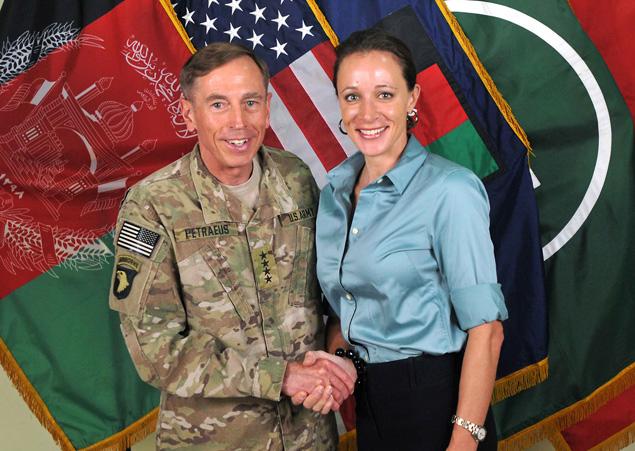
Actually, that penalty wouldn’t be fair to Snowden, since Petraeus’s motivation for leaking classified information was personal. According to the New York Times, Petraeus shared his “black book” notes, much of the content highly classified, freely to Paula Broadwell, his lover and biographer. He apparently did so in order that she could write a more glowing account of his life. It’s also possible that this was part of the seduction process between the two: the sharing of those “sexy,” highly classified notes in exchange for further intimacies exchanged between the sheets (or under the desk).
Petraeus and Broadwell: “All In”
So, Paula Broadwell gained access to “classified notes about official meetings, war strategy, intelligence capabilities and the names of covert officers.” Later, Petraeus lied to the FBI about the sharing of those notes. And for these transgressions, he remains at liberty, with a lucrative deal at a private equity firm, teaching at Harvard University and walking the halls of power as an ascetic “hero” of the Surge in Iraq (2007).
Meanwhile, Snowden, who has been very careful not to compromise covert assets, remains in exile, vilified by many as a traitor to his country.
That’s the American moment for you. A general with powerful friends gets a slap on the wrist for leaking highly classified material to his mistress and lying about it to the FBI, and a young patriot who acts to shed light on the growing power of governmental agencies to spy on the people and to violate their liberties is hounded into exile and denounced as a traitor.
And justice for all, America?
Update (3/5/15):
Glenn Greenwald notes that Snowden’s desire to return to the U.S. is nothing new (and not news). The main obstacle is that U.S. law prohibits Snowden from using the defense that the documents/information he leaked should never have been classified to begin with. In other words, in a democracy, government should be transparent and accountable to the people, rather than being shrouded in secrecy and unaccountable to the people. Imagine that!
Greenwald’s article, of course, changes nothing that I wrote above about the two-track justice system in the U.S. If only Snowden had been a military general and ex-chief of the CIA before he became a whistleblower! But, sadly, he was just a young man inspired by idealism and fired up about the dangers of the total surveillance state.
Idealism driven by concerns about the overweening powers of the national security state: We can’t have that in America. Hang Snowden! Opportunism and deceit by a powerful man who ran a key component of that state (the CIA) and who should definitely have known better about violating security and lying to investigators? Well, that’s OK, “hero” Petraeus. Pay a token fine — and here’s your “Get out of jail free” card.
I read old stuff. Heck, I’m a historian: that’s what I’m supposed to do. So I was reading an old pamphlet on “The Indiana World War Memorial” (circa 1940) and came across the Pledge of Allegiance as it was recited before McCarthyism reared its ugly head in the 1950s:
I pledge allegiance to the flag of the United States and to the Republic for which it stands, one nation, indivisible with liberty and justice for all.
You’ll notice what’s missing: that whole idea of “under God.” Those words were added in the early 1950s as a way of contrasting God-fearing (and God-favored, if you’ll recall American exceptionalism) Americans to the godless Communists.
You’ll recall, of course, that our nation was founded in part on religious freedom. The idea you could worship any god or gods you wanted to, or none at all. We should return to the original “godless” pledge. It served us quite well in World War II; it would serve us quite well today.
After all, Americans have no monopoly on God. Furthermore, God does not uniquely bless us. To believe that is to violate the real Ten Commandments, for to believe you are uniquely blessed by God is tantamount to raising yourself to the level of God. No — as Abraham Lincoln wisely said, we must not assume that God is on our side; we must pray that we are on His side.
Speaking of the Ten Commandments, Tom Engelhardt at TomDispatch.com has a compelling list of his “ten commandments” in America’s ongoing war on terror. Like Lincoln, Engelhardt is wise enough not to assume that God is always chanting “USA! USA!”
Here are Engelhardt’s “ten commandments” for America and for a better world. I urge you to read the rest of his article at this link:
1. Thou shalt not torture: Torture of every horrific sort in these years seems to have been remarkably ineffective in producing useful information for the state. Even if it were proved effective in breaking up al-Qaeda plots, however, it would still have been both a desperately illegal (if unpunished) act and a foreign policy disaster of the first order.
2. Thou shalt not send drones to assassinate anyone, American or not: The ongoing U.S. drone assassination campaigns, while killing individual terrorists, have driven significant numbers of people in the backlands of the planet into the arms of terror outfits and so only increased their size and appeal. Without a doubt, such drone strikes represent a global war of, not on, terror. In the process, they have turned the president into our assassin-in-chief and us into an assassin nation.
3. Thou shalt not invade another country: D’oh!
4. Thou shalt not occupy another country: By the way, how did that work out the last two times the U.S. tried it?
5. Thou shalt not upgrade thy nuclear arsenal: The U.S. has now committed itself to a trillion-dollar, decades-long upgrade of its vast arsenal. If any significant portion of it were ever used, it would end human life as we know it on this planet and so should be considered a singular prospective crime against humanity. After years in which the only American nuclear focus was on a country — Iran — with no nuclear weapons, that this has happened without serious debate or discussion is in itself criminal.
6.Thou shalt not intercept the communications of thy citizens or others all over the world or pursue the elaboration of a global surveillance state based on criminal acts: There seems to be no place the NSA has been unwilling to break into in order to surveil the planet. For unimaginable reams of information that have seemingly been of next to no actual use, the NSA and the national security state have essentially outlawed privacy and cracked open various amendments to the Constitution. No information is worth such a price.
7. Thou shalt not be free of punishment for crimes of state: In these years of genuine criminality, official Washington has become a crime-free zone. No matter the seriousness of the act, none — not one committed in the name of the state in the post-9/11 era, no matter how heinous — has been brought into a courtroom.
8. Thou shalt not use a massive system of secret classification to deprive Americans of all real knowledge of acts of state: In 2011, the U.S. classified 92 million documents and the shroud of secrecy over the business of the “people’s” government has only grown worse in the years since. Increasingly, for our own “safety” we are only supposed to know what the government prefers us to know. This represents, of course, a crime against democracy.
9. Thou shalt not act punitively toward those who want to let Americans in on what the national security state is doing in their name: The fierce and draconian campaign the Obama administration has launched against leakers and whistleblowers is unprecedented in our history. It is a growing challenge to freedom of the press and to the citizen’s right to know.
10. Thou shalt not infringe on the rights of the citizenry to life, liberty, and the pursuit of happiness: Need I even explain?”
Why not make a pledge, America, to these “commandments”? For they will help us to ensure liberty and justice for all.
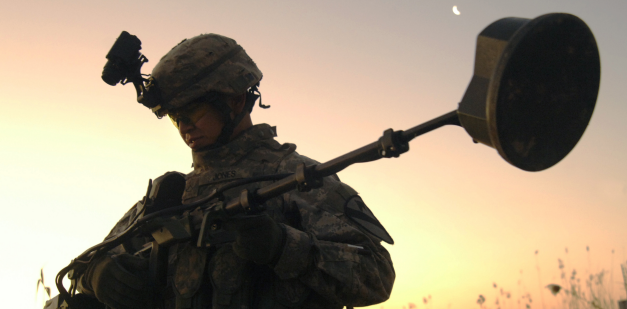
PFC Jones with Mine-Detector. Want to talk about fear?
W.J. Astore
Why, looky here, another article in the New York Times that examines the Republican “hawks” posturing for a presidential run in 2016. As the article blurb states, “Republicans are scrambling to outmuscle one another on national security issues.” It’s all about looking tough and calling for more boots on the ground in battles against ISIS and terror everywhere.
Here’s the money quote:
“There’s a lot of fear out there,” said Katon Dawson, a former chairman of the South Carolina Republican Party, noting that the Islamic State, also known as ISIS or ISIL, had become a regular topic of discussion at his regular breakfast spot in Columbia, the Lizard’s Thicket. “The waitresses and managers and everybody there has a notion about ISIL. People understand who this group is now.”
I should think the waitresses at “Lizard’s Thicket” would be more fearful of paying their weekly and monthly bills, given the low wages earned by wait staff in America. Or that they and their customers would be more fearful of their sons and daughters in uniform being deployed to Iraq to showcase those “muscles” that Republican politicians are always trying to flex. (Don’t worry: No politicians, Republican or Democrat, are eager to send their own sons and daughters overseas to fight.)
Once again, Republican politicians are banging the drums of fear – and as my dad always said, the empty barrel makes the most noise. The music is as tragic as it is predictable: endless war in the name of looking tough and defeating terror. And anyone who dares to suggest the folly of this risks being tarred as an appeaser to ISIS and its ilk.
What burns my butt is that none of these blowhard politicians has any skin in the game. They risk nothing in bleating for war. It’s not their sons and daughters who are being deployed to the front lines.
The other day, I was talking to a young woman at my eye doctor’s office. Her brother is in the Army. She told me he’s an EOD, an explosive ordnance disposal specialist. A risky job, I said, to which she replied, “He volunteered for the extra money,” money that the Army has yet to pay him. He’s got a four-year commitment and is due to be deployed after his training is completed.
So, as they seek to “outmuscle” their political rivals, how many politicians’ sons are in the Army right now, training for EOD duty and risking their lives for the extra money that comes with this hazardous duty? My educated guess: none. Absolutely none.
It’s easy to flex (and to risk) the muscles of others, America. Stop listening to politicians and their fear-mongering. No foreign terrorist is coming to get you as you enjoy your coffee and hash browns at “Lizard’s Thicket.” No – the biggest risk is blowhard politicians who are so, so, eager to send your sons and daughters off to yet more wars in the cause of outmuscling their rivals for political office.
Like so many bloated Hollywood movies nowadays, America’s wars may bomb, but they always produce their own sequels.
Look at the latest news from Iraq and Afghanistan. These wars have persisted for more than a decade, with several re-releases to include “surges” and repeats. The latest from Iraq is preparations to retake the city of Mosul from ISIS, which promises a repeat of the level of destruction visited upon Fallujah in 2004. In this there are echoes of Vietnam: in Mosul, we may have to destroy the city to save it. Five Iraqi brigades, most likely supported by American airpower and some American troops on the ground (air controllers and Special Forces), are poised to strike as early as April. Doubtless they’ll prevail, at least for the moment, as the city and its civilians pay a price so dear as to be indistinguishable from defeat. Mosul will be “liberated,” but just look what happened to Fallujah, which after the American “victory” in 2004 is now a devastated city retaken by elements of al-Qaeda in 2014.
(As an aside, it’s interesting that the New York Times uses the word “epic” to describe the Battle of Fallujah from 2004. Surely a better word is “catastrophic.” What is epic about a battle that destroys a city, a battle that is ultimately inconclusive? Check out Bing West’s book about Fallujah, whose title, “No True Glory,” captures the frustrations and contradictions of that battle, mainly from the American perspective.)
Moving to Afghanistan, the latest is that American troops may stay longer than expected (surprise!). Despite all the talk of “progress” in Afghanistan, the takeaway is the following section, from Secretary of Defense Ash Carter’s recent visit to Afghanistan:
“Despite the aid of American air power, 2014 was the deadliest year for Afghan forces since the start of the war in 2001, and many Afghan and Western officials in Kabul believe that 2015 will likely be worse, particularly with less support from Western allies. That has begun to change the conversation about the possibility of slowing down in the [American] withdrawal.”
In other words, expect more micro-surges of American troops and assets in the coming years, as well as more reports of “progress,” however temporary or illusory (at least America’s best and brightest learned from Vietnam not to talk of seeing light at the end of tunnels).
America’s wars are much like the “Transformers” franchise of movies: thrilling and seemingly conclusive at first, with much talk of missions being accomplished, followed by sequel after sequel of repetitive battles, increasingly loud and destructive, signifying vapidity and intellectual bankruptcy even as a few profit greatly from them.
And no one (certainly none of the producers at the Pentagon) seems to be able to pull the plug on green-lighting ever more sequels to these wars. Even when they bomb.
(For a different perspective on how recent Hollywood movies support American warmaking through myth-making, see Peter Van Buren’s insightful article “War Porn” at TomDispatch.com.)
Privatization of war is making it far easier for America’s imperial state to wage endless war throughout the world. Consider the case of Afghanistan. The U.S. military is allegedly leaving that country, turning the fight over to the Afghan military, trained and equipped largely by America.
Ashton Carter, ready and willing to send in the Mercs — there ought to be Mercs — don’t bother, they’re here
But the truth is different: the U.S. has simply privatized the Afghan War, turning it over to military contractors, secretive Special Forces, and the CIA, as reported in this article by Tim Shorrock, in which you’ll find the following quote:
“If you define combat mission as only having large numbers of US combat troops in the field, doing patrols, and engaging the Taliban, then, yes, it [the Afghan War] is coming to an end,” says David Isenberg, a Navy veteran and author who has been researching private security and military contractors since the early 1990s. “But if you define it as continuing to attack and degrade those you consider hostile, via drone or Special Forces or CIA paramilitaries, all of which are supported by contractors, then not so much.”
Not so much, indeed. The future is indeed bright for privatized military contractors. So much so that I have a slogan to offer the next Blackwater/Xe/Academi, the next DynCorp, the next Triple Canopy, the next global mercenary outfit:
My Slogan: Your Wish Is My Commando
Your imperial wish is also my profit, but we won’t mention that fact too loudly.
America was not supposed to go to war like this. Remember our Founders and their ideas on war? War was supposed to be a terrible decision, hotly contested among the people by their duly elected representatives in Congress. It wasn’t supposed to be an easy choice made by presidents, with no real input or debate by that Congress. It was supposed to involve citizen-soldiers motivated to defend the Constitution and sacred freedoms, not pay-for-hire mercenaries motivated by profit and spoils.
But our imperial state knows that it can’t fool all of the people all of the time on the need for endless wars in places like Iraq and Afghanistan, hence the recourse to wars fought largely in secret by hired guns and CIA/paramilitaries. The mainstream media, of course, is owned by some of the same corporations that profit from weapons sales overseas, so don’t expect push-back from them. No — the push-back will have to come from us. We will have to use all the tools at our disposal to fight for enduring peace.
One thing I know: Without our push-back, enduring (as in endless) war is a certainty for America’s future.
Bonus Lesson: Isn’t it nice to know that this is Ashton Carter’s first day on the job as Secretary of Defense? And that he’s open to sending more American troops to Afghanistan? Just the man we needed at the Pentagon. No wonder he was confirmed 93-5 by the Senate.
Christian G. Appy, professor of history at U-Mass Amherst, has written a new and telling book on the Vietnam War: American Reckoning: The Vietnam War and Our National Identity (New York, Viking Press). Reading his book made me realize a key reason why the U.S. lost the war: for U.S. leaders it was never about Vietnam and the Vietnamese people. Rather, for these men the war was always about something else, a “something else” that constantly shifted and changed. Whereas for North Vietnam and its leaders, the goal was simple and unchanging: expel the foreign intruder, whether it was the Japanese or the French or the Americans, and unify Vietnam, no matter the cost.
Appy’s account is outstanding in showing the shifting goals of U.S. foreign policy vis-à-vis Vietnam. In the aftermath of World War II, the U.S. first supported the French in their attempts to reassert control over their former colony. When the French failed, the U.S. saw Vietnam through a thoroughly red-tinted lens. The “fall” of a newly created South Vietnam was seen as the first domino in a series of potential Communist victories in Asia. Vietnam itself meant little economically to American interests, but U.S. leaders were concerned about Malaysia and Indonesia and their resources. So to stop that first domino from falling, the U.S. intervened to prop up a “democratic” government in South Vietnam that was never democratic, a client state whose staying power rested entirely on U.S. “advisers” (troops) and weapons and aid.
Again, as Appy convincingly demonstrates, for U.S. leaders the war was never about Vietnam. Under Eisenhower, it was about stopping the first domino from falling; under Kennedy, it was a test case for U.S. military counterinsurgency tactics and Flexible Response; under Johnson, it was a test of American resolve and credibility and “balls”; and under Nixon, it was the pursuit of “peace with honor” (honor, that is, for the Nixon Administration). And this remained true even after South Vietnam collapsed in 1975. Then the Vietnam War, as Appy shows, was reinterpreted as a uniquely American tragedy. Rather than a full accounting of the war and America’s mistakes and crimes in it, the focus was on recovering American pride, to be accomplished in part by righting an alleged betrayal of America’s Vietnam veterans.
In the Reagan years, as Appy writes, American veterans, not the Vietnamese people, were:
portrayed as the primary victims of the Vietnam War. The long, complex history of the war was typically reduced to a set of stock images that highlighted the hardships faced by U.S. combat soldiers—snake-infested jungles, terrifying ambushes, elusive guerrillas, inscrutable civilians, invisible booby traps, hostile antiwar activists. Few reports informed readers that at least four of five American troops in Vietnam carried out noncombat duties on large bases far away from those snake-infested jungles. Nor did they focus sustained attention on the Vietnamese victims of U.S. warfare. By the 1980s, mainstream culture and politics promoted the idea that the deepest shame related to the Vietnam War was not the war itself, but America’s failure to embrace its military veterans.” (p. 241)
Again, the Vietnam War for U.S. leaders was never truly about Vietnam. It was about them. This is powerfully shown by LBJ’s crude comments and gestures about the war. Johnson acted to protect his Great Society initiatives; he didn’t want to suffer the political consequences of having been seen as having “lost” Vietnam to communism; but he also saw Vietnam as a straightforward test of his manhood. When asked by reporters why he continued to wage war in Vietnam, what it was really all about, LBJ unzipped his pants, pulled out his penis, and declared, “This is why!” (p. 82).
Withdrawal, of course, was never an option. As Appy insightfully notes,
LBJ and most of the other key Vietnam policymakers never imagined that withdrawal from Vietnam would be an act of courage. In one sense this moral blindness is baffling because these same men prided themselves on their pragmatic, hardheaded realism, their ability to cut through sentiment and softhearted idealism to face the most difficult realities of foreign affairs. They could see that the war was failing. But they could not pull out. A deeper set of values trumped their most coherent understandings of the war. They simply could not accept being viewed as losers. A ‘manly man’ must always keep fighting.” (p. 84)
A few pages later, Appy cites Nixon’s speech on the bombing of Cambodia, when Nixon insisted the U.S. must not stand by “like a pitiful, helpless giant,” as further evidence of this “primal” fear of presidential impotence and defeat.
Even when defeat stared American leaders in the face, they blinked, then closed their eyes and denied what they had seen. Beginning with Gerald Ford in 1975, America shifted the blame for defeat onto the South Vietnamese, with some responsibility being assigned to allegedly traitorous elements on the homefront, such as “Hanoi Jane” (Fonda). As Appy writes, “Instead of calling for a great national reckoning of U.S. responsibility in Vietnam, Ford called for a ‘great national reconciliation.’ It was really a call for a national forgetting, a willful amnesia.” (p. 224)
As a result of this “willful amnesia,” most Americans never fully faced the murderous legacies of the Vietnam War, especially the cost to the peoples of Vietnam, Laos, and Cambodia. Instead, our leaders and government encouraged us to focus on America’s suffering. They told us to look forward, not backward, while keeping faith in America as the exceptional nation.
Appy notes in his introduction that America needs “an honest accounting of our history” if we are “to reject—fully and finally—the stubborn insistence that our nation has been a unique and unrivaled force for good in the world.” (p. xix) American Reckoning provides such an honest accounting. But are Americans truly ready and willing to put aside national pride, nurtured by a willed amnesia and government propaganda, to confront the limits as well as the horrors of American power as it is exercised in foreign lands?
Evidence from recent wars and military interventions in Iraq, Afghanistan, and elsewhere still suggests that Americans prefer amnesia, or to see other peoples through a tightly restricted field of view. Far too often, that field of view is a thoroughly militarized one, most recently captured in the crosshairs of an American sniper’s scope. Appy challenges us to broaden that view while removing those crosshairs.
In America’s war on terror, the groundhog always sees its own shadow, meaning six (or more) years of additional war. War is indeed the new normal in America, as I argue in this article today for TomDispatch.com.
War Is the New Normal Seven Deadly Reasons Why America’s Wars Persist
By William J. Astore
It was launched immediately after the 9/11 attacks, when I was still in the military, and almost immediately became known as the Global War on Terror, or GWOT. Pentagon insiders called it “the long war,” an open-ended, perhaps unending, conflict against nations and terror networks mainly of a radical Islamist bent. It saw the revival of counterinsurgency doctrine, buried in the aftermath of defeat in Vietnam, and a reinterpretation of that disaster as well. Over the years, its chief characteristic became ever clearer: a “Groundhog Day” kind of repetition. Just when you thought it was over (Iraq, Afghanistan), just after victory (of a sort) was declared, it began again.
Now, as we find ourselves enmeshed in Iraq War 3.0, what better way to memorialize the post-9/11 American way of war than through repetition. Back in July 2010, I wrote an article for TomDispatch on the seven reasonswhy America can’t stop making war. More than four years later, with the war on terror still ongoing, with the mission eternally unaccomplished, here’s a fresh take on the top seven reasons why never-ending war is the new normal in America. In this sequel, I make only one promise: no declarations of victory (and mark it on your calendars, I’m planning to be back with seven new reasons in 2019).
1. The privatization of war: The U.S. military’s recourse to private contractors has strengthened the profit motive for war-making and prolonged wars as well. Unlike the citizen-soldiers of past eras, the mobilized warrior corporations of America’s new mercenary moment — the Halliburton/KBRs (nearly $40 billion in contracts for the Iraq War alone), the DynCorps ($4.1 billion to train 150,000 Iraqi police), and the Blackwater/Xe/Academis ($1.3 billion in Iraq, along with boatloads of controversy) — have no incentive to demobilize. Like most corporations, their business model is based on profit through growth, and growth is most rapid when wars and preparations for more of them are the favored options in Washington.
“Freedom isn’t free,” as a popular conservative bumper sticker puts it, and neither is war. My father liked the saying, “He who pays the piper calls the tune,” and today’s mercenary corporations have been calling for a lot of military marches piping in $138 billion in contracts for Iraq alone, according to the Financial Times. And if you think that the privatization of war must at least reduce government waste, think again: the Commission on Wartime Contracting in Iraq and Afghanistan estimated in 2011 that fraud, waste, and abuse accounted for up to $60 billion of the money spent in Iraq alone.
To corral American-style war, the mercenaries must be defanged or deflated. European rulers learned this the hard way during the Thirty Years’ War of the seventeenth century. At that time, powerful mercenary captains like Albrecht von Wallenstein ran amok. Only Wallenstein’s assassination and the assertion of near absolutist powers by monarchs bent on curbing war before they went bankrupt finally brought the mercenaries to heel, a victory as hard won as it was essential to Europe’s survival and eventual expansion. (Europeans then exported their wars to foreign shores, but that’s another story.)
2. The embrace of the national security state by both major parties:Jimmy Carter was the last president to attempt to exercise any kind of control over the national security state. A former Navy nuclear engineer who had served under the demanding Admiral Hyman Rickover, Carter cancelled the B-1 bomber and fought for a U.S. foreign policy based on human rights. Widely pilloried for talking about nuclear war with his young daughter Amy, Carter was further attacked for being “weak” on defense. His defeat by Ronald Reagan in 1980 inaugurated 12 years of dominance by Republican presidents that opened the financial floodgates for the Department of Defense. That taught Bill Clinton and the Democratic Leadership Council a lesson when it came to the wisdom of wrapping the national security state in a welcoming embrace, which they did, however uncomfortably. This expedient turn to the right by the Democrats in the Clinton years served as a temporary booster shot when it came to charges of being “soft” on defense — until Republicans upped the ante by going “all-in” on military crusades in the aftermath of 9/11.
Since his election in 2008, Barack Obama has done little to alter the course set by his predecessors. He, too, has chosen not to challenge Washington’s prevailing catechism of war. Republicans have responded, however, not by muting their criticism, but by upping the ante yet again. How else to explain House Speaker John Boehner’s invitation to Israeli Prime Minister Benjamin Netanyahu to address a joint session of Congress in March? That address promises to be a pep talk for the Republicans, as well as a smack down of the Obama administration and its “appeasenik” policies toward Iran and Islamic radicalism.
Serious oversight, let alone opposition to the national security state by Congress or a mainstream political party, has been missing in action for years and must now, in the wake of the Senate Torture Report fiasco (from which the CIAemerged stronger, not weaker), be presumed dead. The recent midterm election triumph of Republican war hawks and the prospective lineup of candidates for president in 2016 does not bode well when it comes to reining in the national security state in any foreseeable future.
3. “Support Our Troops” as a substitute for thought. You’ve seen them everywhere: “Support Our Troops” stickers. In fact, the “support” in that slogan generally means acquiescence when it comes to American-style war. The truth is that we’ve turned the all-volunteer military into something like aforeign legion, deploying it again and again to our distant battle zones and driving it into the ground in wars that amount to strategic folly. Instead of admitting their mistakes, America’s leaders have worked to obscure them by endlessly overpraising our “warriors” as so many universal heroes. This may salve our collective national conscience, but it’s a form of cheap grace that saves no lives — and wins no wars.
Instead, this country needs to listen more carefully to its troops, especially the war critics who have risked their lives while fighting overseas. Organizations like Iraq Veterans Against the War and Veterans for Peace are good places to start.
4. Fighting a redacted war. War, like the recent Senate torture report, is redacted in America. Its horrors and mistakes are suppressed, its patriotic whistleblowers punished, even as the American people are kept in a demobilized state. The act of going to war no longer represents the will of the people, as represented by formal Congressional declarations of war as the U.S. Constitution demands. Instead, in these years, Americans were told togo to Disney World (as George W. Bush suggested in the wake of 9/11) and keep shopping. They’re encouraged not to pay too much attention to war’s casualties and costs, especially when those costs involve foreigners with funny-sounding names (after all, they are, as American sniper Chris Kyle so indelicately put it in his book, just “savages”).
Redacted war hides the true cost of a permanent state of killing from the American people, if not from foreign observers. Ignorance and apathy reign, even as a national security state that is essentially a shadow governmentequates its growth with your safety.
5. Threat inflation: There’s nothing new about threat inflation. We saw plenty of it during the Cold War (nonexistent missile and bomber gaps, for example). Fear sells and we’ve had quite a dose of it in the twenty-first century, from ISIS to Ebola. But a more important truth is that fear is a mind-killer, a debate-stifler.
Back in September, for example, Senator Lindsey Graham warned that ISIS and its radical Islamic army was coming to America to kill us all. ISIS, of course, is a regional power with no ability to mount significant operations against the United States. But fear is so commonplace, so effectively stoked in this country that Americans routinely and wildly exaggerate the threat posed by al-Qaeda or ISIS or the bogeyman du jour.
Decades ago, as a young lieutenant in the Air Force, I was hunkered down inCheyenne Mountain during the Cold War. It was the ultimate citadel-cum-bomb-shelter, and those in it were believed to have a 70% likelihood of surviving a five-megaton nuclear blast. There, not surprisingly, I found myself contemplating the very real possibility of a thermonuclear exchange with the Soviet Union, a war that would have annihilated life as we knew it, indeed much of life on our planet thanks to the phenomenon of nuclear winter. You’ll excuse me for not shaking in my boots at the threat of ISIS coming to get me. Or of Sharia Law coming to my local town hall. With respect to such fears, America needs, as Hillary Clinton said in an admittedly different context, to “grow a pair.”
6. Defining the world as a global battlefield: In fortress America, all realms have by now become battle spheres. Not only much of the planet, the seas, air, and space, as well as the country’s borders and its increasingly up-armored police forces, but the world of thought, the insides of our minds. Think of the 17 intertwined intelligence outfits in “the U.S. Intelligence Community” and their ongoing “surge” for information dominance across every mode of human communication, as well as the surveillance of everything. And don’t forget the national security state’s leading role in making cyberwar a reality. (Indeed, Washington launched the first cyberwar in history by deploying the Stuxnet computer worm against Iran.)
Think of all this as a global matrix that rests on war, empowering disaster capitalism and the corporate complexes that have formed around the Pentagon, the Department of Homeland Security, and that intelligence community. A militarized matrix doesn’t blink at $1.45 trillion dollars devoted to the F-35, a single under-performing jet fighter, nor at projections of $355 billion over the next decade for “modernizing” the U.S. nuclear arsenal, weapons that Barack Obama vowed to abolish in 2009.
7. The new “normal” in America is war: The 9/11 attacks happened more than 13 years ago, which means that no teenagers in America can truly remember a time when the country was at peace. “War time” is their normal; peace, a fairy tale.
What’s truly “exceptional” in twenty-first-century America is any articulated vision of what a land at peace with itself and other nations might be like. Instead, war, backed by a diet of fear, is the backdrop against which the young have grown to adulthood. It’s the background noise of their world, so much a part of their lives that they hardly recognize it for what it is. And that’s the most insidious danger of them all.
How do we inoculate our children against such a permanent state of war and the war state itself? I have one simple suggestion: just stop it. All of it. Stop making war a never-ending part of our lives and stop celebrating it, too. War should be the realm of the extreme, of the abnormal. It should be the death of normalcy, not the dreary norm.
It’s never too soon, America, to enlist in that good fight!
William J. Astore, a retired lieutenant colonel (USAF), is a TomDispatch regular. His D.Phil. is in Modern History from the University of Oxford. He’s just plain tired of war and would like to see the next politician braying for it be deployed with a rifle to the front lines of battle. He edits the blog The Contrary Perspective.
Is the U.S. military doomed? I’d say yes. But it’s not because our troops are uncommitted, our weapons are bad, and our tactics are flawed. Rather it’s because of the conventional wisdom in Washington and the Pentagon that continues to commit our troops to unnecessary and unwinnable wars.
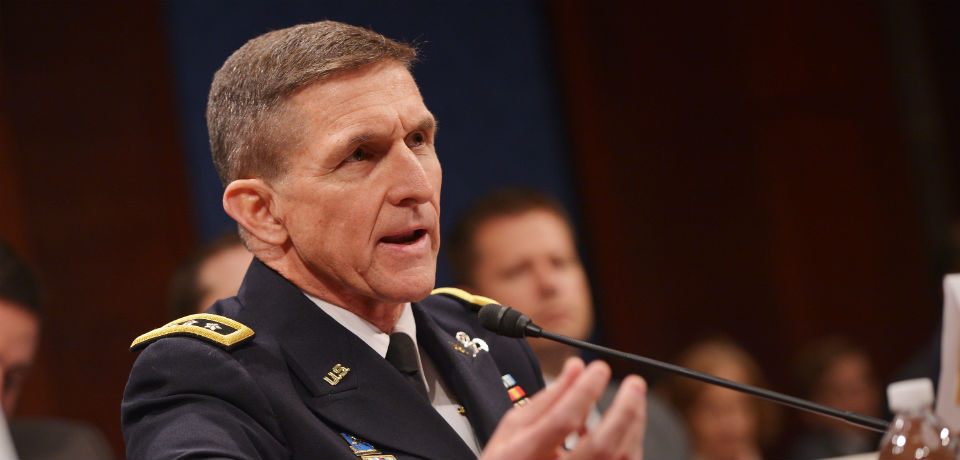
This conventional wisdom is perhaps best summed up in a speech by retired Lieutenant General Michael T. Flynn, the ex-chief of the Defense Intelligence Agency (DIA). It’s worth reading the speech in full, not because it’s especially original or insightful, but because it’s so unreflective and representative of Washington’s collective wisdom.
Here are General Flynn’s main points as I see them:
1. The American public must be committed to an open-ended ideological war “for decades.”
2. That war is against “grotesque” Islamic extremists who “hate our ideals” and who are “committed to the destruction of freedom and the American way of life.”
3. To win the war, America must be ready to use “overwhelming power” to defeat or deter the enemy, even if the U.S. must act alone.
4. Special Operations Forces (SOF) must be “well resourced” for this war, meaning they must be expanded even further and given even more money and latitude.
5. The model for this ideological war against extremist Islam is Ronald Reagan’s war against communism.
That is General Flynn’s strategic vision. It’s a vision widely shared within the Pentagon. And it’s a vision that dooms America to defeat.
Why? Mainly because radical Islam is a political/religious/social phenomenon. It is not amenable to military solutions. Indeed, the more America makes it into THE enemy, the more legitimacy organizations like ISIS gain within their communities and across the Muslim World.
Military force is a blunt instrument, even when it’s applied by the Special Ops community. Expanding the American SOF presence throughout the world is a recipe for more blowback, not more victories. Consider how well we’ve done so far in Afghanistan or Libya or Yemen. Or for that matter Iraq. Can anyone say that U.S. military intervention has produced stability in these countries? Has it contributed to the defeat of radical Islam? Indeed, in destabilizing Iraq and Libya and Yemen, has the U.S. not contributed to the spread of Islamic extremism?
Military professionals like General Flynn really know only one solution: “overwhelming power” applied “for decades.” And if you don’t accept their solution, they dismiss you as misguided (at best) or as arguing for “Retreat, retrenchment, and disarmament,” which “are historically a recipe for disaster,” according to General Flynn.
Well, I’m not aware of anyone seriously arguing for disarmament (fat chance of that happening in the USA!). I’m not aware of anyone arguing for “retreat,” as if this was the Chosin Reservoir in the Korean War. I’m not aware of anyone seriously working toward “retrenchment”; indeed, the SOF community keeps expanding, already mounting operations in 105 countries around the world in FY2015 (i.e., since October 2014). It’s easy to bayonet a straw man, general.
I have a few words for the general: Committing the American military to an ideological war “for decades” against radical Islam is pure folly. Chances are you won’t hammer it into non-existence: your blows will just spread it further, while wasting the energies of America and the lives of its troops.
Stop looking to Reagan and the collapse of communism for lessons and start looking at the actual results over the last 20-30 years of American meddling in Afghanistan, Iraq, Libya, and Yemen. And tell me: Is this what “victory” looks like? You want to double down on “overwhelming power” applied “for decades” as defending American “ideals” and “way of life”?
Which “ideals” are those, exactly? A permanent state of war in which military men are deferred to as the heroes and sages of the moment?
Former Army Ranger Rory Fanning has a thoughtful article at TomDispatch.com on why young men should not join the Army to fight the war on terror in distant lands.
Here’s an excerpt:
Believe me, it [the Afghan War] was ugly. We were often enough targeting innocent people based on bad intelligence and in some cases even seizing Afghans who had actually pledged allegiance to the U.S. mission… I know now that if our country’s leadership had truly had peace on its mind, it could have all been over in Afghanistan in early 2002.
If you are shipped off to Iraq for our latest war there, remember that the Sunni population you will be targeting is reacting to a U.S.-backed Shia regime in Baghdad that’s done them dirty for years. ISIS exists to a significant degree because the largely secular members of Saddam Hussein’s Ba’ath party were labeled the enemy as they tried to surrender after the U.S. invasion of 2003 … Given the reign of terror that followed, it’s hardly surprising to find former Baathist army officers in key positions in ISIS and the Sunnis choosing that grim outfit as the lesser of the two evils in its world. Again, the enemy you are being shipped off to fight is, at least in part, a product of your chain-of-command’s meddling in a sovereign country. And remember that, whatever its grim acts, this enemy presents no existential threat to American security, at least so says Vice President Joe Biden. Let that sink in for a while and then ask yourself whether you really can take your marching orders seriously.
Fanning makes persuasive points here: How the U.S. military bungled its wars of choice in Iraq and Afghanistan; how often Iraqi and Afghan innocents were killed due to bad intelligence and the usual deadly mistakes associated with war; how the wars fed, and continue to feed, a cycle of violence that is perpetuated by new U.S. troop deployments and weapons sales (with respect to weapons sales, see this excellent article by Peter Van Buren, which details how the U.S. is hawking M1 Abrams main battle tanks to the Iraqis).
Yet persuading young American men against joining the military, let alone convincing them not to strive to be elite Rangers, is not, sadly, an exercise in logic. In American society today, young men, especially from the working classes, seek an identity and a status that affirms masculinity. They want to earn the respect of their peers, parents, and prospective dates (and mates). American society provides few options for such men, especially if they’re living in straitened circumstances in dead-end jobs. Consider that many physical jobs, such as working in a warehouse, pay only slightly better than minimum wage, with weekly hours curtailed so that employers don’t have to provide health care.
Military service, which exudes masculinity while conveying societal respect (and free health care, among other benefits), is in many ways the most viable option for working-class men (and more than a few women, obviously). Like it or not, young men often aspire to being “the biggest and baddest,” or at least serving with a unit of such men. They seek community and a sense of belonging within unapologetically masculine settings. They may also have dreams of being heroes, or at least of proving themselves as capable within a community of likeminded tough guys.
American society bombards such impressionable young men with images of soldiers, often deified in movies like “Act of Valor” or “Lone Survivor.” Consider the popular success of “American Sniper,” with its depiction of the resolute sniper as avenger and punisher. Movies like this are powerful in persuading impressionable youth to sign on the dotted line as volunteers for military service.
Military service, which conveys personal dignity, adds a dash of grandeur. By joining the military, you become part of something much larger than yourself. A sense of masculine challenge, especially in elite units like the Army Rangers or Navy SEALs, combined with societal respectability prove alluring to young men. Sadly, no amount of logic about the lack of wisdom and efficacy of America’s war on terror will convince them otherwise.
Some will say there’s nothing wrong with this. Why not encourage young men to join the military and to fight in foreign lands? Yet if those fights serve fallacious causes that amount to strategic folly, our troops’ sacrifices amount to little.
One thing we can do: American society should provide more jobs for young men that convey respect within masculine codes but which don’t require donning a uniform and killing an enemy overseas.
For nearly a decade, I taught working-class students, mostly young men, in rural Pennsylvania. My students came to class wearing camo fatigues. Many looked like they had just climbed down from a tree stand in the woods (a big holiday for my students was the first day of rifle deer season). They drove pickup trucks, listened to country music, dipped Skoal or smoked Marlboros. They’re not guys who aspire to be metrosexuals sipping lattes at Starbucks. They’re looking for a job that screams “man,” and sometimes they find it: in welding, as a heavy equipment operator, in residential construction, and so on.
But for those who can’t find such “masculine” vocations that provide decent pay and benefits, military service is powerfully alluring, and almost impossible to resist, especially when there are so few alternatives.
In September 2008, I called for a revival of the Civilian Conservation Corps, national service that is dedicated to rebuilding America. We need to instill an ethic of national service that goes beyond war and killing. An ethic that inspires young men with patriotic pride and that conveys societal identities that appeal to them as men.
What we need, in short, are fewer “American snipers” and more American workers and builders.
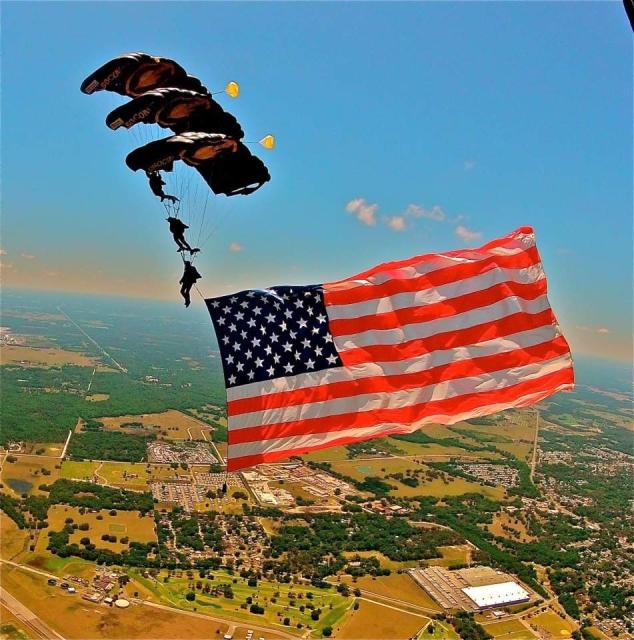
A Triple Stack of Special Ops with Flag — Hooah! (Photo Credit: SOCOM)
W.J. Astore
Nick Turse has a revealing new piece at TomDispatch.com on the rise of Special Forces and SOCOM (Special Ops Command) within the U.S. military. (For a telling critique of America’s excess of enthusiasm for Special Forces, see last year’s article here by Dan White for The Contrary Perspective.)
What are we to make of U.S. Special Forces being involved, in one way or another, in the affairs of 150 countries in the world over the last three years? And, as Turse points out, just 66 days into Fiscal Year 2015, U.S. Special Forces have already made their presence known in 105 countries, a presence that seems never to wane.
One historical analogy that occurs to me (which I’ve used before) is the rise of the Society of Jesus, the Jesuits, within an embattled Catholic Church during the Reformation. A besieged Church needed true believers to take the fight to heretical Protestants who were bent on the Church’s destruction. So along came Ignatius Loyola and his church militant of Jesuit priests, sworn to believe that black was white if the Holy Church deemed it so. Considered an elite within the Church, the Jesuits took the fight to the Protestants during the Catholic Counter Reformation in Europe and across the world. Jesuits were everywhere, from China in the Old World to nearly everywhere in the New World, crusading for the Church and against the incursions of Protestantism and its various sects.
So, how does the 16th century shed light on the 21st? America’s Vatican is obviously the Pentagon. Its primary methods are wars and weapons sales and military training. Its Loyola was until recently Admiral William McRaven, head of SOCOM. And its Jesuit priests are America’s Special Ops troops, true believers who are committed to defending the faith of America.
In the aftermath of 9/11, in a rare outburst of honesty, George W. Bush said America was on a crusade across the world. You might say against “protestants” and other heretics to the American way of life. And who are our crusaders? Who is being sent virtually everywhere (remember those 150 countries in three years?) on various “missions”?
Like it or not, America’s Special Forces are our lead missionaries, our Jesuits, our church militant.
The new head of SOCOM, General Joseph Votel III, West Point grad and Army Ranger, put it plainly back in August that America is witnessing “a golden age for special operations.” What a telling phrase. And indeed it’s getting increasingly difficult to recall “golden ages” in America’s past that weren’t linked to the military.
But that’s no accident when the national church is the Pentagon and its Special Ops troops are acclaimed as so many missionary heroes.









 Bracing Views