Ending America’s Wars

W.J. Astore

Yesterday, I went on Keeping Democracy Alive with Burt Cohen to discuss ways of ending America’s wars. Click on the link below for the podcast.

Can it Happen Now: Real National Security, an End to Endless Wars?

We discussed the Biden administration and its approach to foreign policy, the Afghan War, the legacy of the Vietnam War, the military-industrial-congressional complex, and similar subjects. That rare word, “peace,” and that rare politician, George McGovern, truly a man of vision and guts, also get a mention.

Ending war is all about getting the profit out of war. General Smedley Butler knew this — yet America’s generals today love their massive “defense” budgets, this year soaring to $740.5 billion.

Another point: Look at the ongoing crisis in Texas with its frozen and failing power grid, lack of potable water, and so on. Why is America building more nuclear weapons when it needs to be upgrading its power grids and related infrastructure?

I know: stop making sense!

Nothing will fundamentally change?

If Only Americans Followed Wars Like Sports

Score! Bobby Orr! One of my bedroom wall posters

W.J. Astore

I’m a big sports fan. I grew up in the Boston area and loved my local teams. When I was a kid, I had two big posters of Bobby Orr, the famed defenseman of the Boston Bruins, on my wall. I had a Boston Red Sox uniform. When I threw a baseball around, I imagined I was Luis Tiant, the mercurial and entertaining pitcher for the Red Sox, or Dwight Evans, the team’s rocket-armed right fielder. I collected baseball cards and studied the stats on the back for hours on end.

But I was also a kid who kept a scrapbook on the Yom Kippur War of 1973. I was ten years old yet I was attracted to war and its nitty-gritty details as much as I was to the sporting world. Who knows why. Temperament, I suppose. As I grew older, I built lots of military models and read more and more books about the military even as I kept an interest in sports (more as a fan than a participant, since my talent level was modest at best).

This was on my mind this AM as I read a detailed article on Red Sox second baseman Dustin Pedroia, whose stellar career was cut short by injuries. The article focused on whether Pedroia deserved election to the Baseball Hall of Fame.* Highly detailed, well written, and showing an estimable command of statistics, the article impressed me even as it got me to thinking. What if Americans examined wars like they studied sports? What if Afghanistan was covered with the same detail as the forthcoming NFL draft? What if there was a channel like ESPN devoted to wars 24/7 rather than to sports? And what if the reporting was objective and honest?

You can’t fool a sophisticated sports fan with a bunch of home-team boosterism that’s disconnected from the facts on the ground (or on the baseball diamond, the football field, the ice hockey rink, etc.). Why are so many people so easily fooled about the need to continue the Afghan War, which is now in its 20th year and where the U.S.-led coalition is losing more than ever?

If the Afghan War were a U.S. sports team, it would be a team that spent more money than any other team even as it lost more games, cycling through a new losing coach every year and an unmemorable cast of players that changed each season. Despite the hiring of much-hyped “coaches” like David Petraeus and Stanley McChrystal, despite promises of pennant-winning “surges” by team presidents like Barack Obama, our imaginary Afghan War sports team was and remains a cellar dweller, forever mired in last place.

What red-blooded American sports fan would tolerate more of the same from such a loser team? What fan would keep cheering for such a team? What fan would say, “let’s stay the course,” even as more and more losses piled up?

Consider this article from yesterday’s New York Times:

*****

The Taliban Close In on Afghan Cities, Pushing the Country to the Brink

The Taliban have positioned themselves around several major population centers, including the capital of Kandahar Province, as the Biden administration weighs whether to withdraw or to stay.

*****

What should Team Biden do? “To stay” is to stay on the same losing course we’ve been on for 20 years. “To withdraw” is a new course that has the virtue of ending the bleeding (at least for the U.S.). Which action would you choose?

Any sports fan worth his or her salt would know the answer here. Call withdrawal a “rebuilding” year and most sports fans would accept it. It’s a far better choice than staying and losing with the same old tactics and cast of characters.

Just about every American sports fan has heard the saying: Winning isn’t everything–it’s the only thing. Well, we’re not winning in Afghanistan and we never will. So the only smart thing left to do is to leave.

*Pedroia gets my vote for the Hall of Fame. It’s not simply about stats. Pedey was a winner, a leader, a gutsy overachiever who played the game the right way. Rookie of the year, MVP, World Series winner, he gave it his all on every play. Sometimes, the so-called intangibles matter.

Brief Reflections on Trump, War, and Militarism

Trump’s motto: In generals I trust. It didn’t work out so well for him. Or the country.

W.J. Astore

As the Senate prepares to acquit Donald Trump in his second impeachment trial, I thought it would be a good time for a quick look at his legacy on war and militarism. Trump’s fans like to say he started no new wars. But he was hardly a man of peace, and his legacy on war and militarism is almost entirely negative. Here, in no particular order, are my quick thoughts on this subject:

  1. He boosted military spending and weapons sales. Trump basically bought off the military-industrial-congressional complex by throwing scores of billions of dollars its way while selling weapons around the world. It’s an old formula for U.S. presidents and it worked.
  2. He boosted a militant nationalism vis-a-vis rivals and even traditional allies. Trump was no friend to Russia and aggravated relations with China. Relations with NATO allies were also aggravated as he pressured them to spend more on weapons and wars.
  3. He boosted militarism at home and specifically with police forces. Trump supported and encouraged violent police crackdowns of BLM activists. He called for the deployment of active duty military in the streets of Washington, DC. He even called for a massive military parade (which never happened).
  4. He boosted overseas bombing and drone strikes. Recall the use of MOAB in Afghanistan, or Trump’s missile strike against Syria, and increased bombing in Afghanistan.
  5. He boosted tensions with Iran nearly to the breaking point. Trump’s drone strike against Iranian general Qasem Soleimani was an act of war; harsh economic sanctions and withdrawal from the Obama-era nuclear treaty with Iran also heightened tensions.
  6. He boosted the chances of nuclear war in the future. Trump was a fan of nuclear weapons; he seems to think of them simply as bigger, mightier bombs. His pursuit of “smaller” tactical nuclear warheads and their deployment on Trident-class nuclear submarines increase the possibility of nuclear war in the future.
  7. He boosted economic sanctions against Venezuela while pursuing a coup. Trump knows Venezuela has vast oil reserves. Why not overthrow their government and take their oil? That was Trump’s policy, more or less. (It doesn’t appear to have changed under Joe Biden.)
  8. Creation of a Space Force. Yet another military competitor for U.S. taxpayer dollars, even as space itself becomes another sphere for the U.S. military to “dominate.”
  9. Failure to end wars that he promised to end. Trump was talked out of ending the war in Afghanistan by generals like James Mattis and H.R. McMaster. Ending such wars was a promise Trump foolishly abandoned.
  10. Reliance on Generals as wise men. Trump, overall a weak and vainglorious man, surrounded himself with generals like Mattis, McMaster, John Kelly, and (briefly) Michael Flynn. Thus he got narrow-minded war-mongering advice.
  11. Seeing the world as a zero-sum game of winners and losers and debasing the art of diplomacy. Putting Mike Pompeo in charge of the State Department was a new low in the pursuit of peace through diplomacy.
  12. Aiding genocide in Yemen while kowtowing to Israel and Saudi Arabia: Trump was a willing participant to genocide in Yemen while pursuing a “peace” plan with Israel that was totally one-sided vis-a-vis the status and rights of Palestinians.

Off the top of my head, that’s my top twelve of Trump’s legacies in this arena. What do you think, readers? Can you think of others? And will any of this really change under Joe Biden?

Send in the Bombers!

W.J. Astore

A B-2, a B-1, and a B-52. And I’m proud to be an American …

It’s Super Bowl Sunday — time to gather together and party responsibly, i.e. don’t turn your party into a Covid super-spreader event.

You can always learn a lot about America by watching the Super Bowl — and I’m not talking about football. Pregame ceremonies are telling, as are the elaborate halftime shows. This year, I noted how the Air Force is selling the story of a female pilot, Captain Sarah Kociuba, who will pilot a B-2 stealth bomber to open the festivities. She’ll be joined by a B-1B Lancer and a B-52 Stratofortress. The message, of course, is “pride” in America.

And I thought only the quarterbacks would be throwing bombs.

Seriously, these bombers are all about mass destruction. Possibly even nuclear mass destruction. Why I should feel “pride” in weapons of mass destruction (WMD) is beyond me.

Look! Up in the sky! It’s American-made WMD. Led by a highly-qualified female pilot. Diversity! America!

Enjoy the game.

Ten Ways to Work Toward Peace

W.J. Astore

I came across this quotation yesterday: “I am worried about the state of the readiness of the nuclear triad,” Deputy SecDef nominee Kath Hicks tells the Senate Armed Services Committee this morning, “and, if confirmed, that is an area I would want to get my team in place and start to look at right away.”

The U.S. military plans to spend well over a trillion dollars over the next thirty years to “modernize” the nuclear triad of land-based ICBMs, nuclear-capable bombers, and sub-launched ballistic missiles. Long ago, I remember reading (from December 1982) that Charles Bennet, a Democratic Congressman, had said “The triad is not the Trinity.” But the Pentagon treats it as if it is a (un)Holy Trinity, shoveling money to build even more nuclear weapons to devastate and destroy humanity. I don’t use the concept of evil lightly, but I can’t think of policies much more evil than developing yet more genocidal weaponry at enormous cost.

We desperately need new thinking in America, which is why I wrote the following article for TomDispatch. Maybe some of these are pipe dreams; then again, maybe we should all be smoking peace pipes more often.

The Power of America’s Example

When it comes to war, if personnel is policy, America is yet again in deep trouble.

As retired Army Major Danny Sjursen recently pointed out at TomDispatch, when it comes to foreign policy, President Joe Biden’s new cabinet and advisers are well stocked with retired generalsreconstituted neoconsunapologetic hawks, and similar war enthusiasts. Biden himself has taken to asking God to protect the troops whenever he makes a major speech. (How about protecting them by bringing them home from our pointless wars?) “Defense” spending, as war spending is generally known in this country, remains at record levels at $740.5 billion for fiscal year 2021. Talk of a new cold war with Russia or China (or both) paradoxically warms Pentagon offices and corridors with yet more funds. The only visible dove of peace at Biden’s inaugural was the giant golden brooch worn by Lady Gaga. So what exactly is to be done?

Peace-driven progressive policies will not emerge easily from the rainbow kettle of hawks Biden has so far assembled, but his inaugural speech did mention leading and inspiring others globally “not merely by the example of our power but by the power of our example.” It would have been an apt rhetorical flourish indeed, if not for this country’s “forever wars” in Afghanistan, Iraq, Libya, Syria, Yemen, and elsewhere across the Greater Middle East and Africa. America’s harsh war-fighting reality suggests that “the example of our power” still remains standard operating procedure inside the Washington Beltway. How could this possibly be changed?

I have a few ideas for Biden — a 10-point plan, in fact, for turning his softball rhetoric into hardball reality. Consider, Mr. President, the following powerful examples you could set as America’s latest commander-in-chief:

1. Stop the U.S. from building new generations of nuclear weapons and downsize the vast existing American arsenal, while launching global negotiations to work toward the elimination of all such arsenals. The U.S. military is set to spend well over a trillion dollars in the coming decades to “modernize” its nuclear triad of bombers and land-based and submarine-launched missiles. Such a staggering “investment” can only move the world closer to nuclear Armageddon. If America is to lead by example when it comes to the ultimate power on this planet, why not begin by cancelling this trillion-dollar-nightmare as part of a new global anti-nuclear initiative? Why not commit us, long term, to the elimination of all nuclear weapons everywhere, while moving to adopt a “no-first-use” policy?

2. When it comes to President Biden’s commitment to slow climate change and clean up the environment, why not do something in military terms? America’s armed forces have an enormous appetite for fossil fuels. The Pentagon also has a sordid record when it comes to the poisoning of the environment. (Consider the legacy of Agent Orange in Vietnam, or the military’s burn pits in Iraq and Afghanistan, or the birth defects and severe health problems that were linked to the munitions its forces used in assaulting the Iraqi city of Fallujah in 2004.) If the president wants to set an example when it comes to demilitarizing this over-armed, over-polluted planet of ours, reducing both the military’s fossil-fuel emissions and its poisonous munitions would be a powerful way to start.

3. End this century’s forever wars and radically downsize this country’s unprecedented global network of military bases. Driving the colossal size of today’s military is what my old service, the Air Force, likes to call its “global reach, global power” mission. At least in theory, that mission, in turn, helps justify the sprawling network of 800 or so overseas bases, a network that costs more than $100 billion a year to maintain. Such bases not only consume resources needed here in the U.S. and help stoke those forever wars, but they present high-value targets to opponents and incite ill-feeling and resistance from “host” countries. So, downsizing that global base structure would be an act of peace — and fiscal sanity.

4. Make major cuts in the country’s war budget. Fewer bases and fewer or no wars should translate into a far lower defense budget. Somewhere in the neighborhood of $400 billion annually to defend this country and cover its real “national security” interests seems reasonable for the self-styled lone superpower. The money saved (roughly $340 billion based on this year’s budget) could then perhaps be partly rebated directly to American families in need in this pandemic. Perhaps every American family earning less than $50,000 a year could see a rebate on their taxes directly attributable to downsizing that budget and America’s imperial footprint overseas. Taking a page from Donald Trump, President Biden, as America’s thrifty and giving commander-in-chief, could even have his name put on those rebate checks. Call it a long-delayed peace dividend. Regular Americans, after all, need such “dividends” far more than giant defense contractors like Boeing or Raytheon. And don’t get me started on the need to invest in rebuilding this nation’s infrastructure at a moment when the extremities associated with climate change threaten to devastate parts of the country.

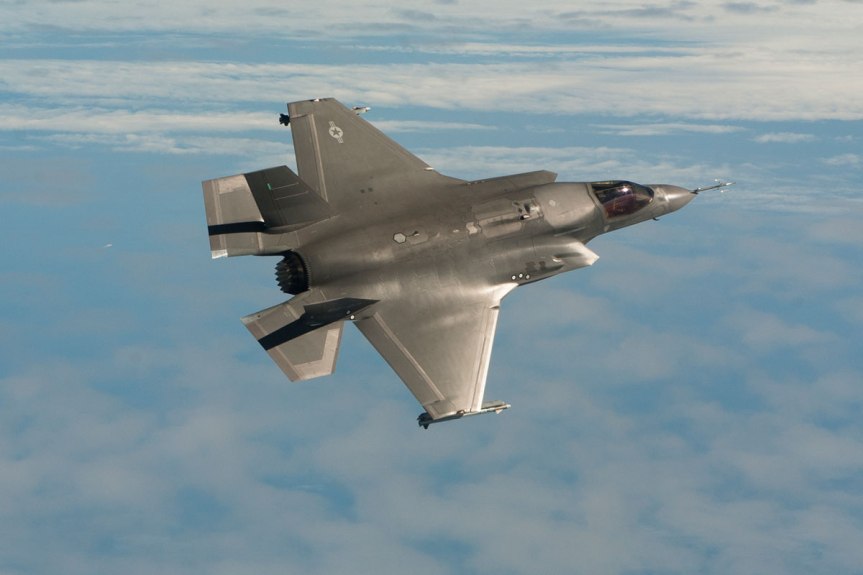
5. Create a Department of Peace (here’s looking at you, Dennis Kucinich) with influence at least approaching that of the so-called Department of Defense. Currently, the U.S. military is all about power projection, domination of the global battlespace, and similar buzzwords that add up to exporting violence abroad, special op by special op, drone by drone. You are what you do and the U.S. military does permanent war with plenty of “collateral damage.” (Picture mutilated black and brown bodies and flattened and poisoned cities and towns.) If the U.S. government can create a Space Force just to fulfill the fantasies of Donald Trump, then why not a peace force, too? (America’s current, humble Peace Corps asked for $401 million for Fiscal Year 2021, roughly the cost of four underperforming F-35 jet fighters.) Peace, much like war, doesn’t just happen. You have to work at it — and that would be precisely the mission of the Department of Peace.

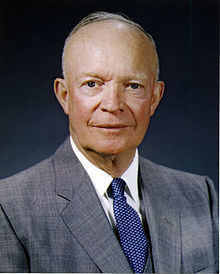
6. Pay attention, for once, to President Dwight D. Eisenhower’s 1961 farewell address and exert rigorous oversight and zealous control over the military-industrial complex. That means ending the 2001 AUMF, the authorization for use of military force that Congress passed in a climate of panic and revenge in the immediate aftermath of 9/11 (though it was only to be against those associated in some fashion with those terror attacks), and the second one Congress authorized in 2002 in preparation for the Bush administration’s invasion of Iraq. They have been misused and abused by presidents ever since. Furthermore, end any conflict that hasn’t been authorized by a direct Congressional declaration of war. That means withdrawing all U.S. troops from Iraq, Afghanistan, Syria, and elsewhere across the Greater Middle East and Africa. America’s security is not, in fact, directly threatened by those countries. As a self-declared democracy, the United States should set an example by not fighting wars disconnected from the people’s will and the true needs of national defense.

7. And speaking of President Eisenhower, America needs to embrace his lesson that military spending represents a theft from Americans who are hungry, sick, and need help. For its “national security,” this country needs more hospitals, better education, safer food, a cleaner environment, and, most of all, clean water and fresh air. Eisenhower knew that warships and warplanes were simply not the answer to the American people’s real and pressing needs.

8. Reject threat inflation, including the heightening talk of a “new cold war” with Russia or China or of an ongoing “generational” war on terror. Eliminate talk of a new Red Menace, of likely wars with Iran or North Korea, or of America’s backwardness in cyberwarfare research and development. Terrorism is nothing new and will always be with us in one form or another (including, vis-a-vis the Capitol on January 6th, domestic terrorism). Indeed, since war is terror, a war on terror should truly be considered an oxymoron. Terrorist acts are mostly the recourse of the weak when taking on the strong. The United States isn’t going to stop them by getting stronger yet. Nor are China and Russia about to invade this country. (This isn’t Red Dawn.) Iran is not coming to impose Sharia law and North Korea is not about to launch nukes against us. As for cyber-attacks, don’t worry: no matter what you’ve heard, no country does cyberwarfare better than the U.S.A.

9. End the practice of foreign aid taking the form of military aid. When taxpayers give aid to foreign countries, it should be in the form of food, medicine, and other essentials, not cluster bombs, F-16s, and Hellfire missiles.

10. Learn from Abraham Lincoln. In President Biden’s recent Inaugural Address, as a call to national unity, he made reference to Lincoln’s initial inaugural appeal to “the better angels of our nature.” But he should have focused on Lincoln’s Second Inaugural Address, the finest speech ever given by any president. As Lincoln put it then, when it came to ending the American Civil War:

“With malice toward none; with charity for all; with firmness in the right, as God gives us to see the right, let us strive on to finish the work we are in; to bind up the nation’s wounds; to care for him who shall have borne the battle, and for his widow, and his orphan — to do all which may achieve and cherish a just, and lasting peace, among ourselves, and with all nations.”

Lincoln was unafraid of speaking of and seeking a just and lasting peace. In this century, until at least the Trump years, Americans often heard their leaders speak of this nation’s “exceptional” nature. What could be more exceptional, more laudable, than seeking a lasting global peace?

Biden, like me, is Roman Catholic. My Catholic bible (Matthew 5:9) tells me that Christ said, “Blessed are the peacemakers, for they shall be called children of God.” Instead of beseeching God to protect the troops that American presidents have continually sent into harm’s way, Joe Biden might ask for blessings for America’s peace activists. To echo Lincoln again, that would indeed be a case of right making might, instead of the might-making-right vision that a militaristic America has grown far too comfortable with.

An Alert and Knowledgeable Citizenry

So long ago, President Eisenhower spoke of the importance of having an “alert and knowledgeable citizenry.” Isn’t it time for mainstream media outlets to foster real, critical, investigative journalism that would truly inform those very citizens about America’s wanton military spending and endless wars, while providing educators with crucial material to teach their students about the horrific costs of militarism? This country needs to free its collective mind from the prevailing forever-war narrative. To paraphrase Crosby, Stills, and Nash, if we teach the children well, perhaps they won’t repeat their father’s hell.

In his song “Imagine,” John Lennon asked us all to imagine a different world and said that it’s easy if you try. Lennon got the first and most important part right, but the second part sadly doesn’t apply, at least to this country in this century. Nowadays, Americans are so immersed in a culture driven by war, profit, and exploitation that it’s no longer easy to imagine anything but war. If Americans truly paid attention to war, up close and as personal as they could get, they’d begin to grasp the folly and wickedness of it and so perhaps relinquish what I’ve come to think of as their prisoner-of-war mentality in relation to it. They might actually begin breaking down mental barriers to peace.

Buy the Book

Don’t count on Congress doing it, though. Congress is incestuously part of what should be renamed the military-industrial-congressional complex. Don’t count on the military doing it either. Its most senior men and women have been carefully selected, groomed, and promoted because they believe in the system, which includes incessant lobbying for more weaponry and exaggerating the threats to this country to get it. They exist to wage war; the rest of us should be willing to fight for peace.

Change, if and when it comes, will have to be driven by people like us.

It won’t be easy, but it is necessary for America’s survival. And it’s unlikely to come without campaign finance reform and the public funding of elections. In a “pay-to-play” oligarchy disguised as a democracy, the giant weapons-making corporations simply pay much more than you do and so speak through megaphones, leaving you with a dead mic. Unless the corporate dominance of our politics is curtailed, ordinary Americans will continue to be outshouted and overwhelmed by the bellicose and the greedy, leaving the country forever at war.

It won’t be easy to work for peace, but it sure is worth the try. It sure as hell beats the alternative of guns, bombs, and missiles being produced like so many sausages in a militaristic country that ever more resembles George Orwell’s nightmarish image of the future as “a boot stamping on a human face — forever.”

America’s new president has called for us to lead with the power of our example rather than just the example of our power. I can’t think of anything more exemplary and powerful than a strong commitment to making war no more.

Copyright 2021 William J. Astore

War and Meaninglessness in America

W.J. Astore

Joe Biden is America’s new president, but nothing has changed on the war front. In Iraq, a U.S. airstrike has killed the top leader of the Islamic State, notes today’s New York Times. The paper notes that “the United States has about 2,500 troops left on three Iraqi military bases. While Iraqi capability in fighting the Islamic State group has improved, the country still relies on intelligence, surveillance assets and air support from the US-led coalition.”

Remember when U.S. forces pulled out of Iraq at the end of 2011? Of course, despite all the military training and equipment the U.S. showered on a new Iraqi military, that military totally collapsed in 2014 under pressure from the Islamic State. Naturally, the U.S. military took no blame, even as the collapse opened a door for more U.S. military intervention. And so the fighting persists, but at a low-enough level that it stays off of most American radar screens.

Revealingly, this is how the Iraqi parliament responded to the latest U.S. “victory” on terror: “After the drone strike, the Iraqi parliament passed a resolution demanding the government expel US forces from Iraq, a move that has not been implemented.”

Do you think President Biden will listen to the Iraqi parliament and withdraw U.S. troops once and for all?

War has been made much too easy in America. Imagine if Joe Biden, or Donald Trump, or Barack Obama, or George W. Bush, actually had to lead troops from the front, exposing themselves to potential harm as they waged America’s wars overseas. It’s easy to sit in the Oval Office and push paper that translates into killing people. I’m not getting nostalgic for the age of Napoleon or the time of kings and queens, but there’s something to be said for physical and moral courage and a willingness to sacrifice oneself for what one believes.

This put me to mind of a passage from Tana French’s novel, “The Likeness,” from 2008. French writes the following “rant” for one of her characters:

“Look at the old wars, centuries ago: the king led his men into battle.  Always.  That was what the ruler was: both on a practical level and on a mystical one, he was the one who stepped forwards to lead his tribe, put his life at stake for them, become the sacrifice for their safety.  If he had refused to do that most crucial thing at that most crucial moment, they would have ripped him apart—and rightly so: he would have shown himself to be an impostor, with no right to the throne.  The king was the country; how could he possibly expect it to go into battle without him?  But now…Can you see any modern president or prime minister on the front line, leading his men into the war he’s started?  And once that physical and mystical link is broken, once the ruler is no longer willing to be the sacrifice for his people, he becomes not a leader but a leech, forcing others to take his risks while he sits in safety and battens on their losses.  War becomes a hideous abstraction, a game for bureaucrats to play on paper; soldiers and civilians become mere pawns, to be sacrificed by the thousands for reasons that have no roots in any reality.  As soon as rulers mean nothing, war means nothing; human life means nothing.  We’re ruled by venal little usurpers, all of us, and they make meaninglessness everywhere they go.” (pages 320-21, emphasis added)

Tana French

It’s a powerful passage that has much to say about America’s seemingly eternal wars against someone somewhere.

For America’s rulers, war has largely become “kinetic action” at an entirely safe distance, so far away as to become almost an imaginary construct, except for the vast profits earned from it. To most Americans, as French suggests, it has become an exercise in meaninglessness. And whatever else war is or should be, it should have meaning, otherwise it’s just killing for nothing.

A Very American Coup

W.J. Astore

All this talk of coups, and U.S. military veterans’ involvement in the same, reminds me of an article I wrote for TomDispatch.com exactly eleven years ago in 2010. In the article, I suggested the possibility of “a very American coup” in 2016, and I wrote that “A military that’s being used to fight unwinnable wars is a military prone to return home disaffected and with scores to settle.” Recent events at the U.S. Capitol suggest that many Americans do have scores to settle, and some of them are disaffected veterans.

Of course, my vintage 2010 crystal ball wasn’t completely clear, but I think I got a few things more or less right, especially my prescriptions for preventing coups, which still apply today, I’d argue. What do you think, readers?

A Very American Coup
Coming Soon to a Hometown Near You
By William J. Astore

(Originally posted on January 19, 2010)

The wars in distant lands were always going to come home, but not this way.

It’s September 2016, year 15 of America’s “Long War” against terror.  As weary troops return to the homeland, a bitter reality assails them: despite their sacrifices, America is losing.

Iraq is increasingly hostile to remaining occupation forces.  Afghanistan is a riddle that remains unsolved: its army and police forces are untrustworthy, its government corrupt, and its tribal leaders unsympathetic to the vagaries of U.S. intervention.  Since the Obama surge of 2010, a trillion more dollars have been devoted to Afghanistan, Iraq, Pakistan, and other countries in the vast shatter zone that is central Asia, without measurable returns; nothing, that is, except the prolongation of America’s Great Recession, now entering its tenth year without a sustained recovery in sight.

Disillusioned veterans are unable to find decent jobs in a crumbling economy.  Scarred by the physical and psychological violence of war, fed up with the happy talk of duplicitous politicians who only speak of shared sacrifices, they begin to organize.  Their motto: take America back.

Meanwhile, a lame duck presidency, choking on foreign policy failures, finds itself attacked even for its putative successes.  Health-care reform is now seen to have combined the inefficiency and inconsistency of government with the naked greed and exploitative talents of corporations.  Medical rationing is a fact of life confronting anyone on the high side of 50.  Presidential rhetoric that offered hope and change has lost all resonance.  Mainstream media outlets are discredited and disintegrating, resulting in new levels of information anarchy.

Protest, whether electronic or in the streets, has become more common — and the protestors in those streets increasingly carry guns, though as yet armed violence is minimal.  A panicked administration responds with overlapping executive orders and legislation that is widely perceived as an attack on basic freedoms.

Tapping the frustration of protesters — including a renascent and mainstreamed “tea bag” movement — the former captains and sergeants, the ex-CIA operatives and out-of-work private mercenaries of the War on Terror take action.  Conflict and confrontation they seek; laws and orders they increasingly ignore.  As riot police are deployed in the streets, they face a grim choice: where to point their guns?  Not at veterans, they decide, not at America’s erstwhile heroes.

A dwindling middle-class, still waving the flag and determined to keep its sliver-sized portion of the American dream, throws its support to the agitators.  Wages shrinking, savings exhausted, bills rising, the sober middle can no longer hold.  It vents its fear and rage by calling for a decisive leader and the overthrow of a can’t-do Congress.

Savvy members of traditional Washington elites are only too happy to oblige.  They too crave order and can-do decisiveness — on their terms.  Where better to find that than in the ranks of America’s most respected institution: the military?

A retired senior officer who led America’s heroes in central Asia is anointed.  His creed: end public disorder, fight the War on Terror to a victorious finish, put America back on top.  The United States, he says, is the land of winners, and winners accept no substitute for victory.  Nominated on September 11, 2016, Patriot Day, he marches to an overwhelming victory that November, embraced in the streets by an American version of the post-World War I German Freikorps and the police who refuse to suppress them.  A concerned minority is left to wonder (and tremble) at the de facto military coup that occurred so quickly, and yet so silently, in their midst.

It Can Happen Here, Unless We Act

Yes, it can happen here.  In some ways, it’s already happening.  But the key question is: at this late date, how can it be stopped?  Here are some vectors for a change in course, and in mindset as well, if we are to avoid our own stealth coup:

1. Somehow, we need to begin to reverse the ongoing militarization of this country, especially our ever-rising “defense” budgets.  The most recent of these, we’ve just learned, is a staggering $708 billion for fiscal year 2011 — and that doesn’t even include the $33 billion President Obama has requested for his latest surge in Afghanistan.  We also need to get rid of the idea that anyone who suggests even minor cuts in defense spending is either hopelessly naïve or a terrorist sympathizer.  It’s time as well to call a halt to the privatization of military activity and so halt the rise of security contractors like Xe (formerly Blackwater), thereby weakening the corporate profit motive that supports and underpins the American version of perpetual war.  It’s time to begin feeling chastened, not proud, that we’re by far the number one country in the world in arms manufacturing and the global arms trade.

2. Let’s downsize our global mission rather than endlessly expanding our military footprint.  It’s time to have a military capable of defending this country, not fighting endless wars in distant lands while garrisoning the globe

3. Let’s stop paying attention to major TV and cable networks that rely on retired senior military officers, most of whom have ties both to the Pentagon and military contractors, for “unbiased” commentary on our wars.  If we insist on fighting our perpetual “frontier” wars, let’s start insisting as well that they be covered in all their bitter reality: the death, the mayhem, the waste, the prisons, and the torture.  Why is our war coverage invariably sanitized to “PG” or even “G,” when we can go to the movies anytime and see “R” rated, pornographically violent films?  And by the way, it’s time to be more critical of the government’s and the media’s use of language and propaganda.  Mindlessly parroting the Patriot Act doesn’t make you patriotic.

4. It’s time to elect a president who doesn’t surround himself with senior “civilian” advisors and ambassadors who are actually retired military generals and admirals, one who won’t accept a Nobel Peace Prize by defending war in theory and escalating it in practice.

5. Let’s toughen up.  Let’s stop deferring to authority figures who promise to “protect” us while abridging our rights.  Let’s stop bowing down before men and women in uniform, before they start thinking that it’s their right to be worshipped and act accordingly.

6. Let’s act now to relieve the sort of desperation bred by joblessness and hopelessness that could lead many — notably male workers suffering from the “He-Cession” — to see a militarized solution in “the homeland” as a credible last resort.  It’s the economy, stupid, but with Main Street’s health, not Wall Street’s, in our focus.

7. Let’s take Sarah Palin and her followers seriously.  They’re tapping into anger that’s real and spreading.  Don’t let them become the voices of the angry working (and increasingly unemployed) classes.

8. Recognize that we face real enemies in our world, the most powerful of which aren’t in distant Afghanistan or Yemen but here at home.  The essence of our struggle to sustain our faltering democracy should not be against “terrorists,” with their shoe and crotch bombs, but against various powerful, perfectly legal groups here whose interests lie in a Pentagon that only grows ever stronger.

9. Stop thinking the U.S. is uniquely privileged.  Don’t take it on faith that God is on our side.  Forget about God blessing America.  If you believe in God, get out there and start trying to earn His blessing through deeds.

10. And, most important of all, remember that fear is the mind-killer that makes militarism possible.  Ramping up “terror” is an amazingly effective way of shredding our Constitution.  Putting our “safety” above all else is asking for trouble.  The only way we’ll be completely safe from the big bad terrorists, after all, is when we’re all living in a maximum security state.  Think of walking down the street while always being subject to a “full-body scan.”    

That’s my top 10 things we need to do.  It’s a daunting list and I’m sure you have a few ideas of your own.  But have faith.  Ultimately, it all boils down to Franklin Delano Roosevelt’s words to a nation suffering through the Great Depression: the only thing we have to fear is fear itself.  These words came to mind recently as I read the following missive from a friend and World War II veteran who’s seen tough times: 

“It’s very hard for me to accept how soft the American people have become. In 1941, with the western world under assault by powerful and deadly forces, and a large armada of ships and planes attacking us directly, I never heard a word of fear as we faced three powerful nations as enemies. Sixteen million of us went into the military with the very real possibility of death and I never once heard of fear, except from those exposed to danger. Now, our people let [their leaders] terrify them into accepting the destruction of our economy, our image in the world, and our democracy… All this over a small group of religious fanatics [mostly] from Saudi Arabia whom we kowtow to so we can drive 8-cylinder SUV’s.  Pathetic!”

“How many times have I stood in ‘security lines’ at airports and when I complained of the indignity of taking off shoes and not having water and the manhandling of passengers, have well educated people smugly said to me, ‘Well, they’re just keeping us safe.’ I look at the airport bullshit as a training ground to turn Americans into docile sheep in a totalitarian state.”

A public conditioned to act like sheep, to “support our troops” no matter what, to cower before the idea of terrorism, is a public ready to be herded.  A military that’s being used to fight unwinnable wars is a military prone to return home disaffected and with scores to settle.

Angry and desperate veterans and mercenaries already conditioned to violence, merging with “tea baggers” and other alienated groups, could one day form our own Freikorps units, rioting for violent solutions to national decline.  Recall that the Nazi movement ultimately succeeded in the early 1930s because so many middle-class Germans were scared as they saw their wealth, standard of living, and status all threatened by the Great Depression.

If our Great Recession continues, if decent jobs remain scarce, if the mainstream media continue to foster fear and hatred, if returning troops are disaffected and their leaders blame politicians for “not being tough enough,” if one or two more terrorist attacks succeed on U.S. soil, wouldn’t this country be well primed for a coup by any other name?

Don’t expect a “Seven Days in May” scenario.  No American Caesar will return to Washington with his legions to decapitate governmental authority.  Why not?  Because he won’t have to. 

As long as we continue to live in perpetual fear in an increasingly militarized state, we establish the preconditions under which Americans will be nailed to, and crucified on, a cross of iron.

William J. Astore teaches History at the Pennsylvania College of Technology (wastore@pct.edu).  A retired lieutenant colonel (USAF), he has also taught at the U.S. Air Force Academy and the Naval Postgraduate School.  A TomDispatch regular, he is the author of Hindenburg: Icon of German Militarism.

Copyright 2010 William J. Astore

Monday Musings

An increasingly common sight. This image is from the BLM protests in June. Note the POW/MIA flag below the American flag.

W.J. Astore

Remember when Trump said he wanted a military parade on the streets of Washington, D.C.? Looks like his dream’s come true, as the streets of Washington are filled with troops in preparation for Biden’s inauguration.

Biden’s message is supposed to stress “unity.” But unity for what? For single-payer universal health care? For an end to wars in Afghanistan, Iraq, and elsewhere? For much higher wages for workers? For a Green New Deal? “Unity” for “normalcy” is empty rhetoric of the worst kind. We need unity for policies that help the most vulnerable among us.

Republicans play to and favor their base. Democrats demobilize and betray their base.

Those rioters who stormed the Capitol — are they all lost causes? What would have happened if Obama had actually been a Progressive in 2008? What would have happened if Sanders had run against Trump in 2016? What I mean is this: Trump is offering a vision (even though it’s a lie) to his followers that mobilizes them. They want to “take back America,” but for the wrong reasons. What if Obama or Sanders (or someone like them) had offered a Progressive vision to “take back America”? But of course any meaningful economic reforms are blocked by the owners and donors of both parties, hence protest and its energy can be seized and directed in dark channels by charlatans like Trump.

Remember the old days when rulers — at risk of being killed or captured — led their troops into combat? And, if they refused to lead, were dismissed as cowards? We’re not living in those days.

Trump is the kind of schoolyard bully who instigates a fight but then stands on the sidelines, cheering and sneering until the teacher comes, after which he smirks and says, “It wasn’t me.”

I know 74 million Americans voted for Trump. But not all of them voted for all of the Trump circus. Many Republicans and Democrats are tribal voters — they’ll vote for their candidate no matter who he is and what he’s done. And I don’t blame all Trump voters for sticking with him when I consider the alternative choice of Joe Biden, a career pol who failed so miserably when he ran for president back in 1988 that he became a laughingstock in his own party.

I can only hope that Biden has learned something since 1988, when he stole speeches from Neil Kinnock and Bobby Kennedy and bragged he graduated near the top of his class on a full scholarship while winning a political science award. Fact is, he graduated near the bottom of his class on a half scholarship and won no such award. He also boasted about his IQ. He further falsely claimed to have participated in civil rights demonstrations and activism in the 1960s. (Bernie Sanders, by contrast, was arrested for his civil rights activism in the 1960s.)

More recently, Biden falsely claimed he’d been arrested while trying to see Nelson Mandela. In short, “alternative facts” won’t die when Trump leaves office.

All this is to say that Joe Biden is a typical politician, only more so. As Jimmy Dore says, politicians are not your friends; they are supposed to be public servants. It’s up to us to hold them to account, not to cheer for them. And if the Democratic party refuses to serve the people — as it likely will — a third party may be the only alternative.

America as a POW Nation

The political button in question (Photo by Tori LaGarde)

W.J. Astore

I wrote my latest article for TomDispatch.com (below) before the Capitol riot, adding a quick reference to it at the last minute in the first paragraph. Events at the U.S. Capitol as well as other recent violent events in America lend credence to the idea we’re all prisoners of war of a sort. Global wars may be invisible to most Americans, but domestic ones are all too plain to see. How do we make our “great escape” from a culture of incessant violence and permanent war?

“POWs Never Have A Nice Day.”  That sentiment was captured on a button a friend of mine wore for our fourth grade class photo in 1972.  That prisoners of war could never have such a day was reinforced by the sad face on that button.  Soon after, American POWs would indeed be released by their North Vietnamese captors as the American war in Vietnam ended.  They came home the next year to a much-hyped heroes’ welcome orchestrated by the administration of President Richard Nixon, but the government would never actually retire its POW/MIA (missing-in-action) flags.  Today, almost half a century later, they continue to fly at federal installations, including the U.S. Capitol as it was breached and briefly besieged last week by a mob incited by this country’s lame-duck president, ostensibly to honor all U.S. veterans who were either POWs or never returned because their bodies were never recovered.

Remembering the sacrifices of our veterans is fitting and proper; it’s why we set aside Memorial Day in May and Veterans Day in November.  In thinking about those POWs and the dark legacy of this country’s conflicts since World War II, however, I’ve come to a realization.  In the ensuing years, we Americans have all, in some sense, become prisoners of war.  We’re all part of a culture that continues to esteem warembrace militarism, and devote more than half of federal discretionary spending to wars, weaponry, and the militarization of American culture.  We live in a country that leads the world in the export of murderous munitions to the grimmest, most violent hotspots on the planet, enabling, for example, a genocidal conflict in Yemen, among other conflicts.

True, in a draft-less country, few enough Americans actually don a military uniform these days.  As 2021 begins, most of us have never carried a military identification card that mentions the Geneva Convention on the proper and legal treatment of POWs, as I did when I wore a uniform long ago.  So, when I say that all Americans are essentially POWs, I’m obviously using that acronym not in a legal or formal way, but in the colloquial sense of being captured by some phenomenon, held by it, subjected to it in a fashion that tends to restrict, if not eliminate, freedom of thought and action and so compromises this country’s belief in sacred individual liberties.  In this colloquial sense, it seems to me that all Americans have in some fashion become prisoners of war, even those few “prisoners” among us who have worked so bravely and tirelessly to resist the phenomenon.

Ask yourself this question: During a deadly pandemic, as the American death toll approaches 400,000 while still accelerating, what unites “our” representatives in Congress?  What is the only act that draws wide and fervent bipartisan support, not to speak of a unique override of a Trump presidential veto in these last four years?  It certainly isn’t providing health care for all or giving struggling families checks for $2,000 to ensure that food will be on American tables or that millions of us won’t be evicted from our homes in the middle of a pandemic.  No, what unites “our” representatives is funding the military-industrial complex to the tune of $740.5 billion in fiscal year 2021 (though the real amount spent on what passes for “national security” each year regularly exceeds a trillion dollars).  Still, that figure of $740.5 billion in itself is already higher than the combined military spending of the next 10 countries, including Russia and China as well as U.S. allies like France, Germany, and the United Kingdom.

Not only that, but Congress added language to the latest defense bill that effectively blocked efforts by President Trump before he leaves office on January 20th to mandate the withdrawal of all troops from Afghanistan (and some troops from Germany).  Though it’s doubtful he would have accomplished such goals anyway, given his irresolute nature, that Congress worked to block him tells you what you need to know about “our” representatives and their allegiance to the war complex.

That said, an irresolute Trump administration has been most resolute in just one area: selling advanced weaponry overseas. It’s been rushing to export American-made bombs, missiles, and jets to the Middle East before turning over government efforts to shill for America’s merchants of death to President Joe Biden and his crew of deskbound warriors.

Speaking of Biden, that he selected retired General Lloyd Austin III to be his secretary of defense sends the strongest possible signal of his own allegiance to the primacy of militarism and war in American culture.  After all, upon retiring, General Austin promptly cashed in by joining the board of directors of United Technologies from which he received $1.4 million in “stock and other compensation” before it merged with giant weapons-maker Raytheon and he ended up on the board of that company. (He holds roughly $500,000 in Raytheon stock, a nice supplement to his six-figure yearly military pension.) 

How better than selecting him as SecDef to ensure that the “military” and the “industrial” remain wedded in that famed complex?  America’s secretary of defense is, of course, supposed to be a civilian, someone who can exercise strong and independent oversight over America’s ever-growing war complex, not a lifelong military officer and general to boot, as well as an obvious war profiteer.

War Is Peace

As Quincy Institute President Andrew Bacevich so aptly put it, “many Americans have made their peace with endless war.”  Within America’s war culture, peace activists like Medea Benjamin and organizations like Veterans for Peace are seen as not just “radical,” but genuinely aberrant. Meanwhile, an unquestioning acceptance of the fact that this country is now eternally at war across significant parts of the planet is considered normal, even respectable.  Certainly, not something to put real time or thought into considering.

As a result, warmongers like former Trump National Security Advisor John Bolton are touted in some quarters as hard-headed realists. In seeing the world as a hostile place that Americans need to (but somehow, almost 20 years later, can’t) dominate means their heads are screwed on straight, unlike those screwy thinkers who advocate for peace.  But as Dorothy Day, the Catholic peace activist, once said: “Our problems stem from our acceptance of this filthy, rotten system.”  

That Americans mostly refuse to see permanent war as filthy and rotten, or to think much about it or the “defense” budget that goes with it showcases the triumph of a broader war culture here.  Whereas this country’s profligate and prodigal military complex has given us stunning failure after stunning failure overseas (just consider all those disastrous efforts to win “hearts and minds” from Vietnam to Afghanistan to Iraq and on and on), it has proved stunningly successful in winning — or at least taming — hearts and minds in the homeland.  How else to explain the way those trillion-dollar-plus “national security” budgets are routinely rubber-stamped by Congress with hardly a murmur of protest?

In the twenty-first century, Americans are suffering a form of cognitive capture in which war has become the new normal.  As an astute reader at my blog, Bracing Views, put it: “Our desire to live without war is held in a stockade, and every day that we wake up and walk out into the yard that understanding is being broken down by the powerful monied elites.”

In America’s collective stockade of the mind, activism for peace is an aberration, while acceptance of the war state is second nature.  Small wonder that Biden’s proposed cabinet and administration features so many neocon-style policymakers who made their peace with war, whether in Iraq and Afghanistan or Libya and Syria (Antony Blinken as secretary of state; Jake Sullivan as national security advisor; retired general Lloyd Austin as secretary of defense; and Avril Haines as director of national intelligence).  Biden’s hawkish picks avidly place their faith in U.S. military power.  And they will be advising a new president, who once supported war in Iraq himself and talks not of reducing “defense” spending but of boosting it.

Perhaps you’ve noticed, in fact, how every president from George W. Bush in 2001 on has been proud to pose at some point as a “wartime” president.  Perhaps you’ve noticed as well that this country can’t or won’t close Gitmo, the detention facility at Guantanamo Bay, Cuba, flooded with prisoners from the global war on terror beginning late in 2001, men who will likely be imprisoned until death does us part.

Perhaps this is why the U.S. government “tortured some folks,” as President Obama put it in 2014, and abused Iraqi prisoners at Abu Ghraib in Iraq.  (Avril Haines, Biden’s proposed national intelligence director, once helped suppress evidence of just such abuse and torture.)  Perhaps this is why every president starting with George W. Bush has unapologetically smited evildoers around the world via robotic assassin drones.  (Remember, the drone assassination of Iranian Major General Qasem Suleimani at Baghdad International Airport by one Donald J. Trump?)  Perhaps this is also why U.S. bombing never seems to stop and those wars never end, even when a president comes into office promising that they will.  After all, it’s so empowering to be a “wartime” president!

In his novel 1984, George Orwell put it simply enough when he coined the slogan “war is peace” for his fictional dystopian society. Randolph Bourne put it no less simply when, during World War I, he explained that “war is the health of the state.”  Rosa Brooks, who worked at the Pentagon, put it bluntly when she titled her 2016 book How Everything Became War and the Military Became Everything.  What we have in America today is warfare as welfare, a form of man-made disaster capitalism, profitable for a few at the expense of the many.

Say it again: We are all POWs now.

The Time I Met a Real POW       

In the early 1990s, when I was a young captain in the U.S. Air Force, I served as an escort officer for Brigadier General Robinson Risner.  It’s not too much to say that Risner is held in awe in the Air Force.  A skilled fighter pilot and Korean War ace, he was a colonel and on the cover of Time magazine in 1965, just as the Vietnam War was ramping up, after which he was shot down and became a POW.  He later wrote The Passing of the Night, a harrowing account of the seven years he spent as a prisoner in the “Hanoi Hilton,” the sardonic name American POWs gave North Vietnam’s Hoa Lo Prison.

What sustained Risner through torture and those years of captivity was his Christian faith and patriotism.  I vividly recall a talk he gave at the Air Force Academy about his experiences and how that faith of his had sustained him.  I’ve never heard a more vivid evocation of the spirit of duty, honor, and country sustained by faith in a higher power.  I was proud to have a photo taken with General Risner, as we stood next to the trophy named after him and annually awarded to the top graduate of the Air Force’s Weapons School, the AF’s Top Gun, so to speak.

Risner was gracious and compelling, and I was humbled to meet a POW who’d endured and overcome as much as he had.  Yet, back then (to be honest), I never gave a thought to his actions as a fighter pilot leading bombing missions during Operation Rolling Thunder in Vietnam.  Since the U.S. government had chosen not to officially declare war against North Vietnam, whether his missions were even legal should have been open to question.  Lacking such an official declaration, one could argue that Risner and U.S. POWs like him did not enjoy the legal protections of the Geneva Convention.  Using American terminology today, Risner might then have been termed an “enemy combatant” to be held indefinitely, as the U.S. today holds captives at Guantanamo Bay in Cuba, POWs who have little hope of ever being released.

To your average American captured by U.S. war culture, objections here are easy.  Of course, Risner’s bombing missions were legal.  Of course, he deserved to be recognized as a POW and treated decently.  America never goes to war without righteous cause, in this case the containment of Communism by any means short of nuclear weapons.  The North Vietnamese saw it differently, however, perhaps because it was they who were being bludgeoned and flattened by U.S. military power.

My point is neither to praise Risner nor to bury him.  Rather, it’s to bury war and the culture that breeds and then feeds on it.  The more Americans facilitate war (largely by ignoring it and so giving it our tacit approval), the more Washington funds it, the more other people die because of “our” wars and “our” weaponry, the more this country becomes a POW nation writ large.

My Friend’s Button Again

Remember my friend’s button, the one that insisted POWs never have a nice day?  As a POW nation writ large, it should apply to all of us.  America won’t have a nice day again until it extricates itself from war in all its manifestations.  There will be no nice day until Congress stops funding munitions makers and starts seeking peace and helping the sick and poor.  There will be no nice day until Americans hate war with all the passion now saved for “patriotic” flag waving.  There will be no nice day until presidents bless peacemakers instead of beseeching God to protect the troops

So, the next time you see a POW/MIA flag outside a federal building, don’t dismiss it as a relic of America’s past.  Think about its meaning and relevance in an era of constant global warfare and colossal military spending.  Then, if you dare, ask yourself if you, too, are a POW of sorts — not in the strictly legal sense that applies to formal militaries in declared wars, but in the sense of this country being captured by war in all its death, destruction, and despair.  And then ask yourself, what does America have to do, collectively, to break out of the POW camp in which it’s imprisoned itself?

Upon that question hinges the future of the American republic.

Copyright 2021 William J. Astore

Many thanks to UTEJACK for the “stockade” quote and the inspiration. Many thanks to Tori LaGarde for identifying the POW button in the 4th grade photo — and for the inspiration as well.

Telling War Stories

There I wasn’t: The Korengal Valley, Afghanistan, August 2009 (Wikipedia)

W.J. Astore

Combat myths matter to more than just military members. So do their ramifications.

I don’t have any personal war stories to tell.  In my twenty years in the U.S. Air Force, I never saw combat.  I started as a developmental engineer, working mainly on computer software, and morphed into a historian of science and technology who taught for six years at the USAF Academy.  I worked on software projects that helped pilots plan their missions and helped the world to keep track of objects in Earth orbit.  I taught military cadets who did see combat and served as the dean of students at the Defense Language Institute at the Presidio of Monterey, where I saw plenty of young troops cross the graduation stage with language skills in Arabic and Pashto and other languages as they prepared to deploy to Iraq, Afghanistan, and elsewhere.  But no combat for me.

I got lucky.  As one friend, an Army colonel, told me: any day you’re not being shot at is a good day in the Army.  The result, however, is that I can’t tell exciting war stories that begin: “There I was” in Baghdad, or Kandahar, or Fallujah, or the Korengal Valley.

But I was involved in computer simulations (“war games”) at Cheyenne Mountain in Colorado near the end of the Cold War.  The one I remember most vividly ended with a Soviet nuclear missile strike on the United States.  As I watched the (simulated) missile tracks emerge from Soviet territory, cross the Arctic circle, and terminate in American cities, I had a momentary glimpse of nuclear terror.  What if I ‘d just witnessed the death of millions of Americans on a monochrome computer screen?  That’s a “war story” that’s stayed with me, and so I’m a firm supporter of eliminating all nuclear weapons everywhere.

That’s my “there I sorta was” story.  Yet, whether you’ve served in the military or not, all Americans tell themselves war stories, or rather stories about America’s wars.  The basic story most tell themselves goes something like this:

America is a good and decent country, our troops are heroes, that we wage wars reluctantly and for noble causes, and that our wars are almost exclusively defensive or preventive.  We tell ourselves we don’t want to be bombing and killing in Afghanistan and Iraq and Somalia and Yemen and elsewhere, but we have to be.  Bad people are doing bad things, and we need to fight them over there else we’ll have to fight them right here.

Yet what if the stories we tell ourselves are all wrong?  What if we are the bad people, or at least the ones doing much of the bad things?  And, even if those stories aren’t always wrong and we aren’t always bad, what are the costs of permanent war – all those “bad things” associated with war – to our democracy, what’s left of it, that is? 

A book I return to is Every Man in this Village is a Liar: An Education in War, by Megan Stack.  Stack was a war correspondent who witnessed the effects of war in places like Iraq and Afghanistan.  She focuses not on strategy or tactics or weaponry or combat but on the impact of war on people.  And in her chapter on “Terrorism and Other Stories,” she reaches this powerful conclusion:

It matters, what you do at war.  It matters more than you ever want to know.  Because countries, like people, have collective consciences and memories and souls, and the violence we deliver in the name of our nation is pooled like sickly tar at the bottom of who we are.  The soldiers who don’t die for us come home again.  They bring with them the killers they became on our national behalf… 

We may wish it were not so, but action amounts to identity.  We become what we do.  You can tell yourself all the stories you want, but you can’t leave your actions over there … All of that poison seeps back into our soil.

Nothing has changed since Stack’s book was published a decade ago.  U.S. forces remain in Iraq and Afghanistan, still fighting that word, terrorism, even as there’s renewed talk within the Pentagon of a new cold war against Russia and China.  A reboot of that Cold War I thought I’d witnessed the end of thirty years ago.  (I even got a certificate signed by President George H.W. Bush thanking me for helping to win that war.) Could it be that real enemy doesn’t reside in Moscow or Beijing, but in us?  As Stack continued:

And it makes us lie to ourselves, precisely because we want to believe that we are good … we Americans tell ourselves that we are fighting tyranny and toppling dictators.  And we say this word, terrorism, because it has become the best excuse of all.  We push into other lands, we chase the ghosts of a concept, because it is too hard to admit that evil is already in our own hearts and blood is on our hands.

As Americans we need to stop telling ourselves self-serving war stories and start telling much tougher ones about working for peace.  We need to stop telling (and selling) stories about a new cold war and stop “investing” a trillion dollars in new nuclear bombers, missiles, and submarines.  I’ve seen those simulated nuclear missile tracks crossing the pole and ending in American cities; that was scary enough. The real thing would be unimaginably terrifying and would likely end life on our planet.

What mad story can we possibly tell ourselves to justify the continued building of more ecocidal and genocidal weapons?

We humans are great storytellers but we’re not smart ones.  Perhaps it’s the power of our stories that has led us to be the dominant and most destructive species on this planet.  The problem is that we still tell far too many war stories and value them far too highly.  Peace, meanwhile, if mentioned at all, is dismissed as fantasy, a tale to be told to children alongside stories of unicorns and fairies—which, to the first generation of voting age adults never to have known it, it sort of is.

Unless we smarten up and grow as a species, our collective war stories will likely be the death of us.

William Astore, a retired lieutenant colonel (USAF) and history professor, is a senior fellow at the Eisenhower Media Network (EMN), an organization of critical veteran military and national security professionals.