A golem to smite enemies; until it becomes the enemy
W.J. Astore
“Global reach, global power”: that was one motto of the U.S. Air Force when I was on active duty. “A global force for good”: that’s the new motto in advertisements for the U.S. Navy. Note that word: global. For the ambitions of the U.S. government and military transcend national security: they truly are global ambitions of dominance, which is exactly what Tom Engelhardt documents so fully in his new book, Shadow Government: Surveillance, Secret Wars, and a Global Security State in a Single-Superpower World (Haymarket Books).
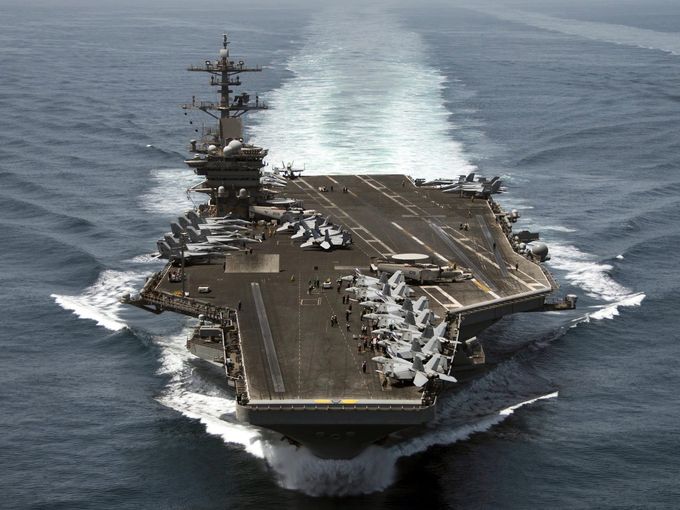
Engelhardt powerfully documents the growing power of a “shadow government,” a government shrouded in secrecy (and which routinely classifies 100 million documents per year), a government that relentlessly prosecutes anyone who tries to lift this shroud of secrecy, a government that continues to grow in size and power despite, or rather because of, its failures. It’s a government of intelligence agencies and Special Forces and drone strikes and private military contractors and a 1000+ military bases overseas and carrier task forces and rendition/black sites, a government that divides the globe into major military commands like CENTCOM and AFRICOM and NORTHCOM, a government that can’t think of the “homeland” without adding the word “security” and lots of guns and tanks.
This week, Engelhardt introduced his new book at TomDispatch with the following shocker:
“What are the odds? You put about $68 billion annually into a maze of 17 major intelligence outfits. You build them glorious headquarters. You create a global surveillance state for the ages. You listen in on your citizenry and gather their communications in staggering quantities. Your employees even morph into avatars and enter video-game landscapes, lest any Americans betray a penchant for evil deeds while in entertainment mode. You collect information on visits to porn sites just in case, one day, blackmail might be useful. You pass around naked photos of them just for… well, the salacious hell of it. Your employees even use aspects of the system you’ve created to stalk former lovers and, within your arcane world, that act of ‘spycraft’ gains its own name: LOVEINT.
“You listen in on foreign leaders and politicians across the planet. You bring on board hundreds of thousands of crony corporate employees, creating the sinews of an intelligence-corporate complex of the first order. You break into the ‘backdoors’ of the data centers of major Internet outfits to collect user accounts. You create new outfits within outfits, including an ever-expanding secret military and intelligence crew embedded inside the military itself (and not counted among those 17 agencies). Your leaders lie to Congress and the American people without, as far as we can tell, a flicker of self-doubt. Your acts are subject to secret courts, which only hear your versions of events and regularly rubberstamp them — and whose judgments and substantial body of lawmaking are far too secret for Americans to know about.”
And yet despite all the trillions invested in America’s global security state, we’re no safer today than we were before 9/11. Indeed, we’re less safe in a thoroughly militarized world in which Americans increasingly find their rights being abridged in the false name of security.
A painful irony is that however much they fail (like in their recent failure to predict the rise of ISIS), America’s global security state continues to grow. As Engelhardt notes:
“Keep in mind that the twenty-first-century version of intelligence began amid a catastrophic failure: much crucial information about the 9/11 hijackers and hijackings was ignored or simply lost in the labyrinth. That failure, of course, led to one of the great intelligence expansions, or even explosions, in history. (And mind you, no figure in authority in the national security world was axed, demoted, or penalized in any way for 9/11 and a number of them were later given awards and promoted.) However they may fail, when it comes to their budgets, their power, their reach, their secrecy, their careers, and their staying power, they have succeeded impressively.
“You could, of course, say that the world is simply a hard place to know and the future, with its eternal surprises, is one territory that no country, no military, no set of intelligence agencies can occupy, no matter how much they invest in doing so. An inability to predict the lay of tomorrow’s land may, in a way, be par for the course. If so, however, remind me: Why exactly are we supporting 17 versions of intelligence gathering to the tune of at least $68 billion a year?”
Good question. The more they fail, the more money and power they get.
In some ways, the U.S. global security state is like a Rube Goldberg machine, absurdly and immensely complicated, with many points of potential failure. Then again, Rube Goldberg might not be the best metaphor, since his devices actually worked. They accomplished a simple task in an absurdly and often amusingly complex way. But there’s nothing amusing about the U.S. global security machine, which can’t win its wars even as it succeeds in perpetuating its own growth.
What the global security state resembles most is a golem, a soulless monster of immense power. The government summoned it in the name of smiting enemies, but it has now grown so powerful that no one fully controls it. It continues to intervene powerfully and destructively, with wildly unpredictable results. Yet its creators are so simultaneously frightened of it and in awe of it that they continue to feed the beast while sending it forth to do battle.
The shadow government as golem: a shambling monster seeking vengeance but lacking a soul and without a hint of compassion. It’s a terrifying idea. After reading Engelhardt’s new book, you should indeed be terrified of what is lurking in the immense and menacing shadow cast by the global security state.
The three Afghan officers who went missing (Cape Cod Times)
W.J. Astore
Two Afghan stories this week suggest much about U.S. progress in winning hearts and minds there. The first involves Hamid Karzai. Afghanistan’s departing president, the “Mayor of Kabul,” Karzai asserted that “America did not want peace for Afghanistan, because it had its own agendas and goals here.” It’s easy to paint Karzai as a dissembling ingrate, which is exactly what the American ambassador to Afghanistan did in response. But it truly says something that Karzai, the recipient of more than $100 billion in developmental aid from the U.S. for Afghanistan (not including military aid!), portrays the U.S. as working against the interests of the Afghan people. There’s one heart and mind the U.S. plainly didn’t win.
The second story involves three Afghan officers, one major and two captains, on a training mission at Camp Edwards in Massachusetts. The three officers, carefully vetted by U.S. Central Command, decided they had had enough of working with America. They drove to New York and attempted to enter Canada at Niagara Falls, seeking asylum, or so it seems. There are three more hearts and minds the U.S. plainly didn’t win.
The details of this particular story are farcical. The night before their unauthorized trip to the Canadian border, they enjoyed the pleasures of a genuine American strip club, where they were reportedly “well behaved” according to the club owner. The next day, they were brought to an American shopping mall as part of their introduction to “the cultural aspects of American life.” At the mall, they gave their escort the slip and headed to Canada, where they were eventually intercepted at the border crossing at Niagara Falls. According to The Cape Cod Times, when the three Afghan officers went missing, among the first places the U.S. military looked for them was at the strip club.
Talk about an introduction to American culture! First a strip club on Friday night, then a shopping mall on the weekend, then an unscheduled road trip to a major tourist attraction. These Afghan officers may have absorbed too much of the American way.
In all seriousness, what does it say about the success of American efforts vis-a-vis Afghanistan when its former president denounces the U.S. and visiting Afghan officers, after sampling American fleshpots and temples to consumerism, attempt to flee to Canada?
There’s a lesson here about folly, if only we would care to draw it.
In April 2009, I wrote an article for TomDispatch.com recounting Mary McCarthy’s critique of the American experience in Vietnam, and how her lessons applied to President Obama’s “surge” in Afghanistan. A central lesson cited by McCarthy was the American desire never to be labeled a loser. That desire explains, at least in part, the persistence of folly within the Obama Administration today, as Peter Van Buren explains in his latest article for TomDispatch, “Apocalypse Now, Iraq Edition: Fighting in Iraq Until Hell Freezes Over.”
Here’s what McCarthy had to say in 1968 about the American moment and the Vietnam War:
The American so-called free-enterprise system, highly competitive, investment-conscious, expansionist, repels a loser policy by instinctive defense movements centering in the ganglia of the presidency. No matter what direction the incumbent, as candidate, was pointing in, he slowly pivots once he assumes office.
Obama campaigned in 2008 as a “hope” and “change” candidate who as president would end the war in Iraq (so he could prosecute the “better” war in Afghanistan). Yet the U.S. finds itself yet again bombing widely in Iraq (and now Syria) while deploying thousands of military “advisers” (combat troops in plain speak). And after six weeks of airstrikes in Iraq against ISIS, with indecisive results, how long before those U.S. “advisers” start taking the fight directly to the enemy on the ground?
The questions I posed for President Obama back in 2009 were these:
Have you, like Vietnam-era presidents, pivoted toward yet another surge simply to avoid the label of “loser” in Afghanistan? And if the cost of victory (however defined) is hundreds, or even thousands, more American military casualties, hundreds of billions of additional dollars spent, and extensive collateral damage and blowback, will this “victory” not be a pyrrhic one, achieved at a price so dear as to be indistinguishable from defeat?
Similar questions apply to our latest military operations in Iraq and Syria. Is the U.S. surging militarily just to avoid the label of “loser”? And even if the U.S. “wins” this latest round (whatever “win” means), won’t the price paid be indistinguishable from defeat?
In his article, Van Buren offers an excellent summary of the U.S. experience in Iraq since the overthrow of Saddam in 2003. In his words:
The staggering costs of all this — $25 billion to train the Iraqi Army, $60 billion for the reconstruction-that-wasn’t, $2 trillion for the overall war, almost 4,500 Americans dead and more than 32,000 wounded, and an Iraqi death toll of more than190,000 (though some estimates go as high as a million) — can now be measured against the results. The nine-year attempt to create an American client state in Iraq failed, tragically and completely. The proof of that is on today’s front pages.
According to the crudest possible calculation, we spent blood and got no oil. Instead, America’s war of terror resulted in the dissolution of a Middle Eastern post-Cold War stasis that, curiously enough, had been held together by Iraq’s previous autocratic ruler Saddam Hussein. We released a hornet’s nest of Islamic fervor, sectarianism, fundamentalism, and pan-nationalism. Islamic terror groups grew stronger and more diffuse by the year. That horrible lightning over the Middle East that’s left American foreign policy in such an ugly glare will last into our grandchildren’s days. There should have been so many futures. Now, there will be so few as the dead accumulate in the ruins of our hubris. That is all that we won.
Under a new president, elected in 2008 in part on his promise to end American military involvement in Iraq, Washington’s strategy morphed into the more media-palatable mantra of “no boots on the ground.” Instead, backed by aggressive intel and the “surgical” application of drone strikes and other kinds of air power, U.S. covert ops were to link up with the “moderate” elements in Islamic governments or among the rebels opposing them — depending on whether Washington was opting to support a thug government or thug fighters.
The results? Chaos in Libya, highlighted by the flow of advanced weaponry from the arsenals of the dead autocrat Muammar Gaddafi across the Middle East and significant parts of Africa, chaos in Yemen, chaos in Syria, chaos in Somalia, chaos in Kenya, chaos in South Sudan, and, of course, chaos in Iraq.
And then came the Islamic State (IS) and the new “caliphate,” the child born of a neglectful occupation and an autocratic Shia government out to put the Sunnis in their place once and for all. And suddenly we were heading back into Iraq. What, in August 2014, was initially promoted as a limited humanitarian effort to save the Yazidis, a small religious sect that no one in Washington or anywhere else in this country had previously heard of, quickly morphed into those 1,600 American troops back on the ground in Iraq and American planes in the skies from Kurdistan in the north to south of Baghdad. The Yazidis were either abandoned, or saved, or just not needed anymore. Who knows and who, by then, cared? They had, after all, served their purpose handsomely as the casus belli of this war. Their agony at least had a horrific reality, unlike the supposed attack in the Gulf of Tonkin that propelled a widening war in Vietnam in 1964 or the nonexistent Iraqi WMDs that were the excuse for the invasion of 2003.
And this is how Van Buren concludes his article:
We’ve been here before, as the failures of American policy and strategy in Vietnam metastasized into war in Cambodia and Laos to deny sanctuary to North Vietnamese forces. As with ISIS, we were told that they were barbarians who sought to impose an evil philosophy across an entire region. They, too, famously needed to be fought “over there” to prevent them from attacking us here. We didn’t say “the Homeland” back then, but you get the picture.
As the similarities with Vietnam are telling, so is the difference. When the reality of America’s failure in Vietnam finally became so clear that there was no one left to lie to, America’s war there ended and the troops came home. They never went back. America is now fighting the Iraq War for the third time, somehow madly expecting different results, while guaranteeing only failure. To paraphrase a young John Kerry, himself back from Vietnam, who’ll be the last to die for that endless mistake? It seems as if it will be many years before we know.
That is indeed the question. As Mary McCarthy noted about the Vietnam War, “The more troops and matériel committed to Vietnam, the more retreat appears to be cut off — not by an enemy, but by our own numbers. To call for withdrawal in the face of that commitment… is to seem to argue not against a policy, but against facts, which by their very nature are unanswerable.”
Back to 2014 and the present moment: The more troops committed against ISIS, the more bombing raids made, the more money spent, the more prestige put on the line, the fewer the options the United States has in the Middle East. Indeed, the only option that remains is “to win,” since losing is unacceptable for the reason Mary McCarthy indicated.
But as Michael Murry, a Vietnam Veteran and regular contributor to this site, noted about Vietnam (citing Bernard Fall’s classic book, Street Without Joy), “You can’t do a wrong thing the right way,” and “We lose the day we start (these stupid imperial wars) and we win the day we stop.” Put differently, just as with Vietnam, the Middle East is not an incredibly complex puzzle for us to solve; it’s simply an impossible situation. Impossible for us. Until we admit this, the U.S. can never “win”; it can only lose.
The U.S. finally “won” in Vietnam when we admitted defeat and left. How long before we come to this realization in the Middle East? Tragically, the persistence of American hubris, amplified by resistance to the very idea of being labeled a “loser,” suggests yet another long, bloody, learning curve.
Obama “consults” with Congress before ordering more bombing. Note the irony of George Washington’s portrait, the man who warned us to avoid foreign entanglements (Source: NYT)
W.J. Astore
President Obama’s speech tonight on the Islamic State (or ISIS) promises more military action. More airstrikes, more boots on the ground (mainly Special Forces), more training for the Iraqi military (who have endured more than a decade’s worth of U.S. military training, with indifferent results), and more weapons sales (which often end up in the hands of ISIS, thereby necessitating more U.S. airstrikes to destroy them).
All of this is sadly predictable. Call it the TINA militarized strategy, as in “There is no alternative” (TINA) but to call in the military.
There are three reasons for the TINA strategy. One is domestic politics. Facing elections in November, the Obama Administration and the Democrats must appear to be strong. They must take military action, at least in their eyes, else risk being painted by Republicans as terrorist-appeasers.
The second reason is also obvious: The military option is the only one the U.S. is heavily invested in; the only option we’re prepared, mentally as well as physically, to embrace. The U.S. is militarized; we see the military as offering quick results; indeed, the military promises such results; we’re impatient people; so we embrace the military.
Never mind the talk of another long war, perhaps of three years or longer. When they bother to pay attention, what most Americans see on their TV and computer screens is quick results, like the video released by Central Command showing the U.S. military blowing up ISIS equipment (often, U.S. military equipment provided to Iraq but appropriated by ISIS). And unlike those ISIS “medieval” beheadings, decapitation by laser-guided bomb is both unoffensive and justified.
And if we’re blowing things up with our 21st-century decapitation bombs, we must be winning — or, at least we’re doing something to avenge ISIS barbarism. Better to do something than nothing. Right?
The third reason is more subtle and it comes down to our embrace of “dominance” as our de facto military strategy. Allow me to explain. After World War II, the U.S. military embraced “containment” as the approach to the Soviet Union. “Parity” was the buzzword, at least in the nuclear realm, and “deterrence” was the goal. With the collapse of the Soviet Union, the U.S. did not become “a normal country in normal times,” nor did we cash in our peace dividends. Instead, the U.S. military saw a chance for “global reach, global power,” global dominance in other words. And that’s precisely the word the U.S. military uses: dominance (expanded sometimes to full spectrum dominance, as in land, sea, air, space, cyberspace, and who knows what else).
You can explain a lot of what’s happened since 9/11 with that single word: dominance. The attacks of 9/11 put the lie to U.S. efforts to dominate global security, which drove the Bush/Cheney Administration to double down on the military option as the one and only way of showing the world who’s boss. Clear failures of the military option in Iraq, Afghanistan, and elsewhere did not encourage soul-searching; rather, it simply drove Obama and his generals to promise that “this time, we’ll do it (bombing and raids and interventions) better and smarter” than the previous administration.
There’s simply no learning curve when your overall goal is to exercise dominance each and every time you’re challenged. Ask John McCain.
So as you listen to the president’s speech tonight, keep those three elements in mind: domestic politics, our enormous investment (cultural as well as financial) in the military and our preference for quick results at any price, and finally our desire to exercise dominance across the globe. It may help you to parse the president’s words more effectively. Perhaps it will also explain why our leaders never seem to learn. It’s not because they’re stupid: it’s because their careers and commitments require them not to learn.
Bombs away.
Update: There’s another aspect of our dominance that is fascinating to consider. The US sees its dominance as benevolent or benign, never as bellicose or baneful. This is reflected brilliantly in the US Navy’s current motto, “A global force for good.” Not to deny that the Navy does good work, but I’m not sure we’d applaud if F-18s were dropping laser-guided bombs on our troops. The point is that as a society we have a willed blindness to how our “dominance” plays out in the rest of the world. We only seem to care when that “dominance” comes to Main Street USA, as it did recently in Ferguson, Mo. (The ongoing militarization of police forces, and their aggressiveness toward ordinary people, are surely signs of “dominance,” but who wants to argue this is benevolent or benign in intent?)
If another country sought global reach/global power through military dominance, that country would be instantly denounced by US leaders as inherently hostile and treated as a major threat to world peace.
Update 2 (9/12/14): Dan Froomkin at The Intercepthas a stimulating round-up of criticism about Obama’s latest plans for war (courtesy of Tom Engelhardt at TomDispatch.com). A summary:
Yesterday, Dan Froomkin of the Intercept offered a fairly devastating round-up of news reports from the mainstream (finally coming in, after much deferential and semi-hysterical reportage!) suggesting just what a fool’s errand the latest expansion of the U.S. intervention in Iraq/Syria could be. (And today’s NY Times has more of the same.) Here are just some selections from his post. Tom Engelhardt
“President Obama’s plan to “degrade and destroy” the Islamic State counts on pretty much everything going right in a region of the world where pretty much anything the U.S. does always goes wrong. Our newspapers of record today finally remembered it’s their job to point stuff like that out.
“The New York Times, in particular, calls bullshit this morning — albeit without breaking from the classic detached Timesian tonelessness. Mark Mazzetti, Eric Schmitt and Mark Landler (with contributions from Matt Apuzzo and James Risen) start by pointing out the essential but often overlooked fact that ‘American intelligence agencies have concluded that [the Islamic State] poses no immediate threat to the United States.’
“And then, with the cover of ‘some officials and terrorism experts,’ they share a devastating analysis of all the coverage that has come before: ‘Some officials and terrorism experts believe that the actual danger posed by ISIS has been distorted in hours of television punditry and alarmist statements by politicians, and that there has been little substantive public debate about the unintended consequences of expanding American military action in the Middle East….’
“In the Washington Post this morning, Rajiv Chandrasekaran focuses on all the implausible things that have to go right beyond ‘U.S. bombs and missiles hitting their intended targets’: ‘In Iraq, dissolved elements of the army will have to regroup and fight with conviction. Political leaders will have to reach compromises on the allocation of power and money in ways that have eluded them for years. Disenfranchised Sunni tribesmen will have to muster the will to join the government’s battle. European and Arab allies will have to hang together, Washington will have to tolerate the resurgence of Iranian-backed Shiite militias it once fought, and U.S. commanders will have to orchestrate an air war without ground-level guidance from American combat forces…’
“The McClatchy Newspapers Washington bureau , finally no longer alone in expressing skepticism about Obama’s plans, goes all Buzzfeed with a Hannah Allam story: ‘5 potential pitfalls in Obama’s plan to combat the Islamic State’. Allam notes that Yemen and Somalia are hardly examples of success; that the new Iraqi government is hardly “inclusive”; that training of Iraqi soldiers hasn’t worked in the past; that in Syria it’s unclear which “opposition” Obama intends to support; and that it may be too late to cut off the flow of fighters and funds.”
Update 3 (9/12/14): US Army Colonel (ret.) Andrew Bacevich has a sound critique of the bankruptcy of Obama’s strategy. Here’s an excerpt:
Destroying what Obama calls the Islamic State of Iraq and the Levant won’t create an effective and legitimate Iraqi state. It won’t restore the possibility of a democratic Egypt. It won’t dissuade Saudi Arabia from funding jihadists. It won’t pull Libya back from the brink of anarchy. It won’t end the Syrian civil war. It won’t bring peace and harmony to Somalia and Yemen. It won’t persuade the Taliban to lay down their arms in Afghanistan. It won’t end the perpetual crisis of Pakistan. It certainly won’t resolve the Israeli-Palestinian conflict.
All the military power in the world won’t solve those problems. Obama knows that. Yet he is allowing himself to be drawn back into the very war that he once correctly denounced as stupid and unnecessary — mostly because he and his advisers don’t know what else to do. Bombing has become his administration’s default option.
Rudderless and without a compass, the American ship of state continues to drift, guns blazing.
Is this the leader of a “scourge” and an “abomination” and a “witch’s brew”?
W.J. Astore
General John Allen wants to “destroy the Islamic State now.” So he says in an article for Defense One. Allen, a retired Marine Corps general who led troops in Iraq and Afghanistan, is currently a distinguished fellow at the Brookings Institution. But what is distinguishing him in this article is his crusader-speak, a remarkable blend of religious extremism and chauvinistic parochialism.
Let’s tackle the latter first. For Allen, the good people of Iraq are “poor” and “benighted.” But some of them can serve as our “boots on the ground” in the region, i.e. they can serve as bullet magnets while the U.S. provides air support with impunity. It’s up to the U.S. to “orchestrate” their attacks against the Islamic State. As long as they follow our conductor’s baton, all will end well, perhaps with a crescendo of U.S. bombs. (As an aside, he describes the Taliban in Afghanistan as “cavemen” when compared to the new enemy in Iraq. Some of those “cavemen” did fairly well against the former Soviet Union, did they not?)
My charge that the general’s language is that of “religious extremism” may itself appear extreme, but take a close look at his article. The general refers to the Islamic State as a “scourge” and an “abomination.” (I’ve read my Bible and recognize the religious resonances here.) They are “beyond the pale of humanity” and must be “eradicated” because they are engaged in “total war” aided by a “witch’s brew” of foreign recruits.
In sum, General Allen has demonized the enemy while at the same time diminishing potential allies (those “poor benighted” people in need of an American conductor). The answer is eradication, i.e. extermination of that enemy. Now!
Remind me again: Which side is engaged in religious war here?
As Richard Nixon used to say, let me make one thing perfectly clear: I’m not in any way defending the murderous extremism of the Islamic State. What I’m saying is that the best solution is not to return the favor (unless you’re truly seeking a crusade). I’m also suggesting that the general’s article is (unintentionally) indicative of a mindset that explains much about why American efforts in Iraq and Afghanistan have failed.
When you do something again and again, placing great faith in it, investing enormous amounts of money in it, only to see indifferent or even negative results, you wouldn’t be entirely surprised if a neutral observer questioned your sanity or asked you if you were part of some cult. Yet few Americans question the sanity or cult-like behavior of American presidents as they continue to seek solutions to complex issues by bombing Iraq (as well as numerous other countries across the globe).
Poor Iraq. From Operation Desert Shield/Storm under George H.W. Bush to enforcing no-fly zones under Bill Clinton to Operation Iraqi Freedom under George W. Bush to the latest “humanitarian” bombing under Barack Obama, the one constant is American bombs bursting in Iraqi desert air. Yet despite this bombing — or rather in part because of it — Iraq is a devastated and destabilized country, slowly falling apart at seams that have been unraveling under almost a quarter-century of steady, at times relentless, pounding. “Shock and awe,” anyone?
Well, I confess to being shocked: that U.S. airpower assets, including strategic bombers like B-52s and B-1s, built during the Cold War to deter and, if necessary, attack that second planetary superpower, the Soviet Union, have routinely been used to attack countries that are essentially helpless to defend themselves from bombing.
In 1985, when I entered active duty as an Air Force lieutenant, if you had asked me which country the U.S. would “have” to bomb in four sustained aerial campaigns spanning three decades, among the last countries I would have suggested was Iraq. Heck, back then we were still helping Saddam Hussein in his war against Iran, sharing intelligence that aided his military in pinpointing (and using his chemical weapons against) Iranian troop concentrations. The Reagan administration had sent future Bush secretary of defense Donald Rumsfeld there to shake Saddam’s hand for a photo op. We even overlooked Iraq’s “accidental” bombing in 1987 of a American naval vessel, the USS Stark, that resulted in the death of 37 American sailors, all in the name of containing Iran (and Shia revolutionary fervor).
…
What we need in 2014 is a new expression that catches the essence of the cult of U.S. air power, something like: “The bomber will always get funded — and used.”
Let’s tackle the first half of that equation: the bomber will always get funded. Skeptical? What else captures the reality (as well as the folly) of dedicating more than $400 billion to the F-35 fighter-bomber program, a wildly over-budget and underperforming weapons system that may, in the end, cost the American taxpayer $1.5 trillion. Yes, you read that right. Or the persistence of U.S. plans to build yet another long-range “strike” bomber to augment and replace the B-1 and B-2 fleet? It’s a “must-have,” according to the Air Force, if the U.S. is to maintain its “full-spectrum dominance” on Planet Earth. Already pegged at an estimated price of $550 million per plane while still on the drawing boards, it’s just about guaranteed to replace the F-35 in the record books, when it comes to delays, cost overruns, and price. And if you don’t think it’ll get funded, you don’t know recent history.
Heck, I get it. I was a teenager once. In the 1970s, as an Air Force enthusiast and child of the Cold War, I hugged exotic and therefore pricey bomber jets to my chest. (Well, models of them, anyway.) I considered them to be both uniquely American and an absolute necessity when it came to defending our country against the lumbering (but nevertheless menacing) Soviet “bear.” As a result, I gasped in 1977 when President Jimmy Carter dared to cancel the B-1 bomber program. While I was a little young to pen my outrage, more mature critics than I quickly accused him of being soft on defense, of pursuing “unilateral disarmament.”
Back then, I’d built a model of the B-1 bomber. In my mind’s eye I still see its sexy white body and its rakish swing wings. No question that it was a man’s bomber. I recall attaching a firecracker to its body, lighting the wick, and dropping the plane from the third-floor porch. It exploded in mid-air, symbolic to me of the plane’s tragic fate at the hands of the pusillanimous Carter.
But I need not have feared for the B-1. In October 1981, as one of his first major acts in office, President Ronald Reagan rescinded Carter’s cancellation and revived the mothballed program. The Air Force eventually bought 100 of the planes for $28 billion, expensive at the time (and called a “turkey” by some), but a relative bargain in the present budgetary environment when it comes to bombers (but these days, little else).
At that point, I was a young lieutenant serving on active duty in the Air Force. I had by then come to learn that Carter, the peanut farmer (and former Navy nuclear engineer), was right. We really didn’t need the B-1 for our defense. In 1986, for a contest at Peterson Air Force Base where I was stationed, I wrote a paper against the B-1, terming the idea of a “penetrating strategic bomber” a “flawed strategy” in an era of long-range air-launched cruise missiles. It earned an honorable mention, the equivalent of drawing the “you have won second prize in a beauty contest” card in Monopoly, but without the compensatory $10.
That “penetrating,” by the way, meant being loaded with expensive avionics, nowadays augmented by budget-busting “stealth” features, so that a plane could theoretically penetrate enemy air defenses while eluding detection. If the idea of producing such a bomber was flawed in the 1980s, how much more is it today, in an age of remotely-piloted drones and missiles guided by GPS and in a world in which no country the U.S. chooses to bomb is likely to have air defenses of any sophistication? Yet the Air Force insists that it needs at least 100 of the next generation version of them at a cost of $55 billion. (Based on experience, especially with the F-35, you should automatically double or even triple that price tag, cost overruns and product development delays being a given in the process. So let’s say it’ll cost closer to $150 billion. Check back with me, God willing, in 2040 to see whether the Air Force’s figure or mine was closer to reality.)
Idols for Worship, Urges to Satisfy
Obviously, there are staggering amounts of money to be made by feeding America’s fetish for bombers. But the U.S. cult of air power and its wildly expensive persistence requires further explanation. On one level, exotic and expensive attack planes like the F-35 or the future “long range strike bomber” (LRS-B in bloodless acronym-speak) are the military equivalent of sacred cows. They are idols to be worshipped (and funded) without question. But they are also symptoms of a larger disease — the engorgement of the Department of Defense. In the post-9/11 world, this has become so pronounced that the military-industrial-congressional complex clearly believes it is entitled to a trough filled with money with virtually no accountability to the American taxpayer.
Add to that sense of entitlement the absurdist faith of administration after administration in the efficacy of bombing as a problem solver — despite overwhelming evidence to the contrary — and you have a truly lethal combo. Senator John McCain was widely mocked by progressives for his “bomb Iran” song, warbled during the 2008 presidential campaign to the tune of the Beach Boys’s “Barbara Ann.” In fact, his tuneless rendition captured perfectly Washington’s absolute faith in bombing as a solution to…whatever.
Even if the bombs bursting over Iraq or elsewhere don’t solve anything, even when they make things worse, they still make a president look, well, presidential. In America, land of warbirds, it is always better politically to pose as a hunting hawk than a helpless dove.
So don’t blame the Air Force for wanting more and deadlier bombers. Or don’t blame only them. Just as admirals want more ships, flyboys naturally want more planes, even when strategically obsolete from scratch and blazingly expensive. No military service has ever willingly given up even a tiny slice of its share of the prospective budgetary pie, especially if that slice cuts into the service’s core image. In this sense, the Air Force takes its motto from King Lear’s “Reason not the need!” and from Zack Mayo’s “I want to fly jets!” (memorably uttered by that great Shakespearean actor Richard Gere in An Officer and a Gentleman).
The sad truth runs deeper: Americans evidently want them, too. More bombers. More bombs. In the movie Top Gun, Tom Cruise’s Maverick got it all wrong. It’s not speed Americans feel a need for; they have an urge to bomb. When you refuse to reason, when you persist in investing ever more resources in ever more planes, use almost automatically follows.
In other words, fund it, build it, and, as promised in the second half of my equation, the bomber will always get used. Mock him all you want, but John McCain was on to something. It’s bomb, bomb, bomb, bomb bomb if not (yet) Iran… then Iraq, or Pakistan, or Libya, or Yemen, or (insert intransigent foreign country/peoples here).
And like cults everywhere, it’s best not to question the core belief and practices of its leaders — after all, bombs bursting in air is now as American as the “Star Spangled Banner.”
In April of 2009, I wrote the following article for TomDispatch.com on the situation in Afghanistan. During his 2008 campaign for President, Obama had claimed that Afghanistan was the right war to be fighting, and that Bush and Company had taken their eye off the Afghan ball when they chose to invade Iraq in 2003.
Here we are in August 2014 and the news from Afghanistan is about as grim as one could expect. This week has witnessed costly “insider” attacks that killed an American major general as well as eleven Afghan police officers. Progress toward democratic reforms and political stability remains elusive. U.S. efforts to reshape and rebuild Afghanistan have cost more than $100 billion, exceeding the Marshall Plan that rebuilt Europe after World War II, but without corresponding results.
Obama appears to be channeling Richard Nixon. Publicly, he’s seeking “peace with honor” in Afghanistan. Privately, he’s seeking a “decent interval” between when the U.S. exits Afghanistan for good and when Afghanistan returns to Taliban and tribal control, i.e. chaos, or at least that’s my guess. The “fall” of Afghanistan will then become a political football, with Republicans attempting to paint Democrats as being spineless in leaving Afghanistan, whereas the Democrats will likely paint Afghan leaders as corrupt and incompetent and ungrateful. Perhaps a Democratic candidate will emerge in 2020 to explain to Americans that our failed efforts in Afghanistan were nevertheless part of a “noble cause” in the global war on terror.
What follows is my article from April of 2009. I think lesson (2) below will be especially telling in the weeks and months ahead.
Mary McCarthy in Vietnam, Barack Obama in Afghanistan
Seven Lessons and Many Questions for the President
By William Astore
In 1967, outraged by the course of the Vietnam War, as well as her country’s role in prolonging and worsening it, Mary McCarthy, novelist, memoirist, and author of the bestseller The Group, went to Saigon, then the capital of South Vietnam, to judge the situation for herself. The next year, she went to the North Vietnamese capital, Hanoi. She wrote accounts of both journeys, published originally in pamphlet format as Vietnam (1967) and Hanoi (1968), and later gathered with her other writings on Vietnam as a book, The Seventeenth Degree (1974). As pamphlets, McCarthy’s accounts sold poorly and passed into obscurity; deservedly so, some would say.
Those who’d say this, however, would be wrong. McCarthy brought a novelist’s keen eye to America’s activities and its rhetoric in Vietnam. By no means a military expert, not even an expert on Vietnam — she only made a conscious decision to study the war in Vietnam after she returned from her trip to Saigon — her impressionistic writings were nevertheless insightful precisely because she had long been a critical thinker beholden to no authority.
Her insights into our approach to war-fighting and to foreign cultures are as telling today as they were 40 years ago, so much so that President Obama and his advisors might do well to add her unconventional lessons to their all-too-conventional thinking on our spreading war in Afghanistan and Pakistan.
What were those lessons? Here are seven of them, each followed by questions that, four decades later, someone at President Obama’s next press conference should consider asking him:
1. McCarthy’s most fundamental objection was to the way, in Vietnam, the U.S. government decided to apply “technology and a superior power to a political situation that will not yield to this.” At the very least, the United States was guilty of folly, but McCarthy went further. She condemned our technocentric and hegemonic form of warfare as “wicked” because of its “absolute indifference to the cost in human lives” to the Vietnamese people.
Even in 1967, the widespread, at times indiscriminate, nature of American killing was well known. For example, U.S. planes dropped roughly 7 million tons of bombs on Vietnam and parts of Laos and Cambodia during the war, nearly five times the tonnage used against Germany during World War II. The U.S. even waged war on the Vietnamese jungle and forest, which so effectively hid Vietnamese guerrilla forces, spraying roughly 20 million gallons of toxic herbicides (including the dioxin-contaminated Agent Orange) on it.
In her outrage, McCarthy dared to compare the seeming indifference of many of her fellow citizens toward the blunt-edged sword of technological destruction we had loosed on Vietnam to the moral obtuseness of ordinary Germans under Adolf Hitler.
Questions for President Obama: Aren’t we once again relying on the destructive power of technology to “solve” complex political and religious struggles? Aren’t we yet again showing indifference to the human costs of war, especially when borne by non-Americans? Even though we’re using far fewer bombs in the Af-Pak highlands than we did in Vietnam, aren’t we still morally culpable when these “precision-guided munitions” miss their targets and instead claim innocents, or hit suspected “terrorists” who suddenly morph into wedding parties? In those cases, do we not seek false comfort in the phrase, C’est la guerre, or at least that modern equivalent: unavoidable collateral damage?
2. As Richard Nixon campaigned for the presidency in 1968 by calling for “peace with honor” in Vietnam, McCarthy offered her own warning about the dangers that arose when the office of the presidency collided with an American desire never to be labeled a loser: “The American so-called free-enterprise system, highly competitive, investment-conscious, expansionist, repels a loser policy by instinctive defense movements centering in the ganglia of the presidency. No matter what direction the incumbent, as candidate, was pointing in, he slowly pivots once he assumes office.”
Questions for President Obama: Have you, like Vietnam-era presidents, pivoted toward yet another surge simply to avoid the label of “loser” in Afghanistan? And if the cost of victory (however defined) is hundreds, or even thousands, more American military casualties, hundreds of billions of additional dollars spent, and extensive collateral damage and blowback, will this “victory” not be a pyrrhic one, achieved at a price so dear as to be indistinguishable from defeat?
3. Though critical of the U.S. military in Vietnam, McCarthy was even more critical of American civilian officials there. “On the whole,” she wrote, they “behaved like a team of promoters with a dubious ‘growth’ stock they were brokering.” At least military men were often more forthright than the civilians, if not necessarily more self-aware, McCarthy noted, because they were part of the war — the product, so to speak — not its salesmen.
Questions for President Obama: In promising to send a new “surge” of State Department personnel and other civilians into Afghanistan, are you prepared as well to parse their words? Are you braced in case they sell you a false bill of goods, even if the sellers themselves, in their eagerness to speak fairy tales to power, continually ignore the Fantasyland nature of their tale?
4.Well before Bush administration officials boasted about creating their own reality and new “facts on the ground” in Iraq, Mary McCarthy recognized the danger of another type of “fact”: “The more troops and matériel committed to Vietnam, the more retreat appears to be cut off — not by an enemy, but by our own numbers. To call for withdrawal in the face of that commitment… is to seem to argue not against a policy, but against facts, which by their very nature are unanswerable.”
Questions for President Obama: If your surge in Afghanistan fails, will you be able to de-escalate as quickly as you escalated? Or will the fact that you’ve put more troops in harm’s way (with all their equipment and all the money that will go into new base and airfield and road construction), and committed more of your prestige to prevailing, make it even harder to consider leaving?
5.A cursory reading of The Pentagon Papers, the famously secret government documents on Vietnam leaked to the New York Times by Daniel Ellsberg, reveals how skeptical America’s top officials were, early on, in pursuing a military solution to the situation in South Vietnam. Nevertheless, knowing better, the “best and brightest,” as journalist David Halberstam termed them in his famous, ironic book title, still talked themselves into it; and they did so, as McCarthy noted, because they set seemingly meaningful goals (“metrics” or “benchmarks,” we’d say today), which they then convinced themselves they were actually achieving. When you trick yourself into believing that you’re meeting your goals, as Halberstam noted, there’s no reason to reexamine your course of action.
Questions for President Obama: Much has been written about an internal struggle within your administration over the wisdom of surging in Afghanistan. Now, you, too, have called for the setting of “benchmarks” for your new strategy’s success. Are you wise enough to set them to capture the complexities of political realities on the ground rather than playing to American strengths? Are you capable of re-examining them, even when your advisors assure you that they are being achieved?
6.In her day, Mary McCarthy recognized the inequities of burden-sharing at home when it came to the war in Vietnam: “Casualty figures, still low [in 1967], seldom strike home outside rural and low-income groups — the silent part of society. The absence of sacrifices [among the privileged classes] has had its effect on the opposition [to the war], which feels no need, on the whole, to turn away from its habitual standards and practices — what for? We have not withdrawn our sympathy from American power and from the way of life that is tied to it — a connection that is more evident to a low-grade G.I. in Vietnam than to most American intellectuals.”
Questions for President Obama: Are you willing to listen to the common G.I. as well as to the generals who have your ear? Are you willing to insist on greater equity in burden-sharing, since once again most of the burden of Iraq and Afghanistan has fallen on “the silent part of society”? Are you able to recognize that the “best and brightest” in the corridors of power may not be the wisest exactly because they have so little to lose (and perhaps much to gain) from our “overseas contingency operations”?
7.McCarthy was remarkably perceptive when it came to the seductiveness of American technological prowess. Our technological superiority, she wrote, was a large part of “our willingness to get into Vietnam and stay there… The technological gap between us and the North Vietnamese constituted, we thought, an advantage which obliged us not to quit.”
Questions for President Obama: Rather than providing us with a war-winning edge, might our robot drones, satellite imagery, and all our other gadgetry of war seduce us into believing that we can “prevail” at a reasonable and sustainable cost? Indeed, do we think we should prevail precisely because our high-tech military brags of “full spectrum dominance”?
One bonus lesson from Mary McCarthy before we take our leave of her: Even now, we speak too often of “Bush’s war” or, more recently, “Obama’s war.” Before we start chattering mindlessly about Iraq and Afghanistan as American tragedies, we would do well to recall what McCarthy had to say about the war in Vietnam: “There is something distasteful,” she wrote, “in the very notion of approaching [Vietnam] as an American tragedy, whose protagonist is a great suffering Texan [President Lyndon Baines Johnson].”
Yes, there is something distasteful about a media that blithely refers to Bush’s or Obama’s war as hundreds of thousands of Iraqis and Afghans suffer. For American troops, after all, are not the only ones paying the ultimate price when the U.S. fights foreign wars for ill-considered reasons and misguided goals.
This summer marks the 100th anniversary of World War I. Today in my daily “alert” from The New York Times, there are five articles related to the war. Steven Erlanger writes about how the war brought fundamental changes to the world; Jim Yardley writes about the Yanks in the Second Battle of the Marne in 1918; Alison Smale recounts the costs of German militarism, then and today; John F. Burns raises the specter of Gavrilo Princip’s assassination (on June 28th, 1914) of the Archduke Franz Ferdinand and its legacies in the Balkans and specifically in Bosnia; and Tim Arango recaptures the Gallipoli Campaign of 1915 and how it forged national identities among the Turks and Australians.
An immensely destructive war, World War I saw the full application of mass production and the machine age applied to warfare. Mass production enabled mass mobilization as well as mass destruction; the machine age enabled the machine gun and automated death on such a massive scale that bodies were collected in ossuaries, boneyards of doomed youth.
Four decades ago, Paul Fussell famously captured the loss of idealism that accompanied mass death on an industrial scale in his book The Great War and Modern Memory (1975). As Fussell noted in a separate essay on “The Fate of Chivalry,” idealistic codes of chivalry, popular in the Victorian age, became “ludicrously inappropriate” in World War I, defeated entirely by “poison gas, zeppelin raids on civilians, the machine gun, and unrestricted submarine warfare, not to mention such very unchivalric experiences as soldiers’ passively trembling under artillery shelling hour after hour or soiling their trousers for weeks with acute dysentery (sometimes requiring the cutting of large holes in the rear of their clothing), or milking down their penises monthly before the eyes of bored and contemptuous medical officers alert for unreported gonorrheal discharges.”
Wilfred Owen, a British officer and war poet, condemned the “old lie” of Horace, Dulce et decorum est pro patria mori (Sweet and fitting it is to die for one’s country), in his famous poem, which concludes:
If you could hear, at every jolt, the blood
Come gargling from the froth-corrupted lungs,
Obscene as cancer, bitter as the cud
Of vile, incurable sores on innocent tongues,
My friend, you would not tell with such high zest
To children ardent for some desperate glory,
The old Lie; Dulce et Decorum est
Pro patria mori.
Amazingly, the ideal of military service and war as ennobling, even liberating, survived World War I and is thriving today, most notably in the United States. The “doomed youth” of World War I, marching off to mass death, have become the universal heroes of the American moment, to be sent to places like Iraq as liberators.
We would do well to recall that World War I, a “war to end all wars,” has led only to new wars, with today’s unrest in the Middle East connected to the fall of the Ottoman Empire in 1918 and conflicting agreements made at the time by manipulative power players like Great Britain and France.
Once again, at least in the United States, the cry is for more military action in the Middle East – more killing – as a solution to complex political, social, economic, and religious problems. Those who are most strident in sending in more bombs, if not more troops, are usually those “donkeys” who are well past military age themselves, and most concerned about appearing tough and decisive. Great believers in the utility of war, they seem to have no regard for the big lesson of World War I: the utter unpredictability as well as the horrifying destructiveness of modern, machine-age war.
All sides marched to war in the summer of 1914 looking ahead to decisive victories. The fighting was supposed to be over by Christmas, and it was: well, not 1914, but 1918. The result? Four empires in ruin, ten million dead, and legacies of massive destruction and revolutionary change that we’re still coming to grips with.
And yet despite all this there are still those who call for more weapons and more war. In the U.S. they are held up as serious and respectable statesmen. Yet they are merely old men propagating old lies.
If they are so ardent for some desperate glory, let them take up the lance and charge forth in foreign fields. Until they do, let’s hear no talk of more weapons and more war.
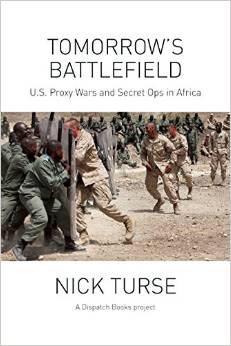
In Iraq, Afghanistan, and elsewhere, the U.S. military is fairly good at projecting power. Indeed, the military prides itself on “global reach, global power,” achieved through a worldwide system of bases and funded by enormous amounts of “defense” spending. What the U.S. military is not so good at is understanding foreign cultures. Often, it seems the number one goal of military interventions is selling weapons to armies in the countries in which the U.S. military intervenes, so-called foreign military sales or FMS for short. This is true of Iraq, Afghanistan, and now many countries in Africa, as Nick Turse has shown in several groundbreaking articles at TomDispatch.com.
The U.S. military is “can-do” when it comes to projecting power, and “can-do” when it comes to building host nation armies (of course, the reliability of those armies, such as the Afghan National Army, is often highly suspect, even after a decade of training and billions of dollars in weapons and related equipment). But what the military always gives short-shrift to is cultural understanding. Cultural gaps are either ignored or dismissed as irrelevant (“Grab them by the balls and their hearts and minds will follow”) or bridged in ways that ultimately reveal how little we know about the foreign peoples on the receiving end of American largesse.
I learned this firsthand about ten years ago when I was at the Defense Language Institute (DLI) in Monterey, California. Of all things my lesson came as the result of a Peter, Paul, and Mary song. While I was the Associate Provost at DLI, the school received an urgent request from a U.S. official working with Iraqi schools. The official wanted help translating the song, “Don’t Laugh At Me,” from English to Arabic. The song, which appears on the Peter, Paul, and Mary CD Songs of Conscience & Concern, is used in U.S. elementary schools to promote tolerance. Its first lines are “I’m a little boy with glasses/The one they call a geek/A little girl who never smiles/’Cause I have braces on my teeth.” The refrain urges: “Don’t laugh at me/Don’t call me names/Don’t get your pleasure from my pain/In God’s eyes we’re all the same.” Rather safe and innocuous lyrics, one might think.
Yet, translating this feel-good song of tolerance into Arabic was neither safe nor easy. After gathering our best Arabic translators, we quickly learned that even the simplest lyrics posed problems of translation. What about that geeky American boy with glasses, the one being taunted for being bookish? Our translators, many of whom hailed from Middle Eastern countries, explained that in Iraq he would most likely be admired and praised for his smarts. How about that American girl with braces, so reluctant to smile? Well, most Iraqi kids would be fortunate indeed to have access to orthodontia. In an Iraqi cultural context, laughing at geeks with glasses or girls with braces just didn’t translate.
And if such seemingly simple lines as these were untranslatable due to the culture gap, what about lines like “I’m gay, I’m lesbian, I’m American Indian,” or even more treacherously, “A single teenage mother/Tryin’ to overcome my past”? Best not go there, we concluded.
I learned a lot from this experience. If we can’t translate seemingly harmless song lyrics to promote diversity and tolerance, how do we expect to “translate” democracy?
It seems the military’s answer to this is to focus on what needs no translation: violence. So the goal is to build host armies and police forces and to sell them weapons while building fortress-like American embassies (in Iraq and Afghanistan) or American bases (which are mini-fortresses) to watch over the benighted buggers of the world.
Some might say that warm guns serve as universal translators. But a harsher conclusion is this: That we are indeed translating our culture overseas: a culture built less on tolerance than it is on violence.
There’s a new bear in the woods and his name is Vladimir Putin. Remember that Reagan campaign ad from 1984 that showed a menacing, obviously Soviet, bear patrolling the woods, with ominous music in the background? Fast-forward thirty years and a bare-chested Putin is that new bear, marauding in the Crimea and threatening Ukraine.
Our mainstream media has entered a time warp and we’re back to 1984. No, not the 1984 of George Orwell and of constant monitoring by Big Brother – our media is not concerned by that. Instead, they’re concerned with a revived Soviet Union, a new Cold War, and the notion that America is unprepared and weak.
The big winner of this collective (and selective) exercise in time travel is obvious: the U.S. Military-Industrial Complex as well as Big Oil and Gas. We can’t make significant cuts to “defense” spending now that the Russian bear is on the loose again. Right? And the best way to neutralize the bear’s threats of cutting off gas shipments to Europe is by surging oil and gas drilling in the U.S., chiefly by hydro-fracturing or fracking. Right?
Never mind concerns about rising CO2 levels and global warming. It’s 1984 again, not 2014. We need to corral that Russian bear before he emasculates us. Deploy our military! Drill baby drill! Show the Russkies who’s boss! Before they go all “Red Dawn” on us.
And when was the cheesy “Red Dawn” originally released? You guessed it: 1984.