On this 72nd anniversary of D-Day, the Allied invasion at Normandy in France during World War II, it’s high time we thought about what is truly weakness versus strength in U.S. foreign policy.
There’s no doubt that in World War II American leaders demonstrated strength. Nazi Germany and Imperial Japan had to be defeated, and the means had to be military. Our leaders mobilized the nation and the deed was done by men and women of my parent’s generation.
What about today? Is our nation truly mobilized for war? Are threats like ISIS truly the equivalent of militarized nation-states like Nazi Germany and Imperial Japan? Are we truly engaged in wars of necessity, in wars of self-defense, or are our wars those of choice? The lack of any Congressional declarations of war, of any effort at national mobilization or shared sacrifice, suggests the latter. Our leaders choose to wage them – a choice that showcases weakness rather than strength.
How so? “Strength” is shown not by committing troops to quagmires; not by escalating wars; not by buying, sending or selling more weaponry; not by more and more bombing; not by drone assassinations. Indeed, weakness is shown in embracing these steps as providing “solutions.”
How “tough” do you really have to be to commit other people’s sons and daughters to war? How tough do you have to be to bomb foreigners without risk to yourself, to buy and sell weapons at healthy profits, to send in the B-52s or the drones or the privatized militaries? For Washington today, these are the easy steps to take, the expected ones, the expedient ones, the predictable ones. They are not evidence of “toughness” — rather the reverse.
So, what is really “tough” for today’s DC crowd? Patient diplomacy, quiet resolve, a willingness to withdraw from unwinnable wars, the resolve to retrench and rethink militarized positions. Being a peacemaker instead of a war-bringer – that is what is really tough in today’s hyper-violent America. But in “exceptional” America, war means never having to say you’re sorry.
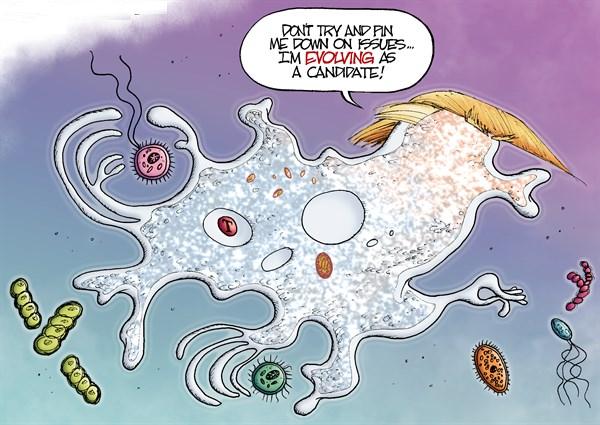
The corporate media also has its categories of “weakness” and “strength” exactly backwards, hence the praise of Hillary Clinton for her toughness. Her embrace of Henry Kissinger is generally applauded, and if Henry wasn’t so old, one could imagine the media applauding her if she made him her VP. Donald Trump, of course, is riding a wave of (trumped up) toughness. He’s presented as a “Go ahead—make my day” kind of guy, as if attacking marginalized groups for political advantage is the height of manly courage. In polarized America, how tough do you have to be to criticize Muslims, immigrants of color, and other victimized or vulnerable groups? Trump would be truly tough if he took on racism, if he fought for justice, if he adopted positions based on democratic principles rather than his own biases and resentments.
The ass backwards nature of “strength” versus “weakness” is mirrored in America’s movies and TV shows. In my dad’s day (the 1930s and 1940s), America’s good guys didn’t obsess about weapons. Generally, it was gangsters who relied on them. Men of weak character played with guns. Truly tough men duked it out with fists when they weren’t otherwise facing each other down. Think Humphrey Bogart, unarmed, facing down the gangster Johnny Rocco and his gun-toting stiffs in “Key Largo” (1948).
Think too of Gary Cooper in “High Noon” (1952). He’s not spoiling for a fight, but he’s ready to endure one if it’s unavoidable. His main “weapon” is his decency, his nerve, his courage, his character. Today’s “heroes” in movies and TV are all about kinetic action, amped-up violence, and big guns. Violence and mayhem dominate, just as in America’s overseas wars of choice. Art imitates life while reinforcing it. As a result, Americans don’t even blink when they hear about the latest drone assassination in Where–is-it-stan. It’s happening off-stage, so who cares?
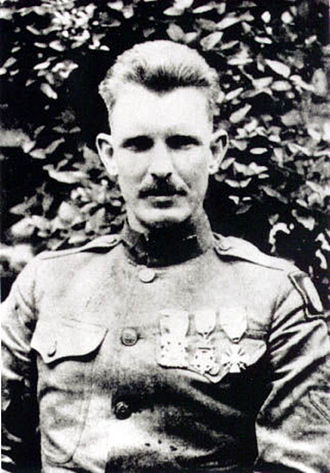
Even our war movies aren’t what they used to be. Think Gary Cooper (again) playing Sergeant Alvin C. York, the World War I hero who was a conscientious objector due to his religious views. Nowadays, our war movies celebrate gung-ho “American snipers” for their kill totals.
What is truly weakness and what is truly strength? And why are America’s leaders, leaders of the sole superpower with the self-avowed “best” military ever, so very, very afraid of being perceived as “weak”?
Wrapping herself in the flag: Hillary talks foreign policy in San Diego, Calif. (AP Photo/John Locher)
W.J. Astore
Yesterday, Hillary Clinton gave a foreign policy speech in San Diego that was notably flat and misleading. It’s been getting decent reviews in the mainstream media for the zingers she tossed at Donald Trump. But when you listen to the speech (you can watch it here) and think about it, you realize how insipid and unoriginal it really was.
Here are my thoughts on Clinton’s speech:
1. The speech featured the usual American exceptionalism, the usual fear that if America withdraws from the world stage, chaos will result. There was no sense that America’s wars of choice in Iraq, Afghanistan, Libya, etc. have greatly contributed to that chaos. Oh, there was also the usual boast that America has the greatest military. That’s what Imperial and Nazi Germany used to boast — until the Germans lost two world wars and smartened up.
2. Hillary mentioned we’re electing “our” next commander-in-chief. No, we’re not. The president is a public servant, not “our” commander-in-chief. The president serves as the civilian commander-in-chief of the military, and the military alone.
3. Hillary mentioned the US has a “moral obligation” to defend Israel. Why is this? Sure, Israel is an American ally, but why is Israel the one country we’re “morally” obligated to defend? There’s only one country we’re morally obligated to defend, and that’s the USA, assuming our government is actually honoring the US Constitution.
4. The speech had no new ideas. It was a laundry list of neo-conservative principles about making America stronger, safer, and so on. As a friend of mine put it, “Nothing that I heard her say deviated in any way from her hawkish record of recommending bombing at every opportunity.”
5. Hillary seems to have two speech-giving styles: a somewhat bored monotone and a somewhat agitated yell. A line like, “this isn’t reality TV, it’s reality,” should have been a big applause line, but her delivery was flat and her timing was off. In this case, style and substance met as one.
Hillary Clinton reminds me of the grey leaders in the USSR before Gorbachev. She’s like a Brezhnev or an Andropov. A cookie-cutter product of the system with no fresh ideas.
For many people who are leery of a Trump presidency, Hillary’s hawkish and colorless conformity to the Washington system is more than enough to qualify her. If she wins the presidency, she will be much like Brezhnev and Andropov, senior apparatchiks of an empire in denial of its own precipitous decline.
Donald Trump’s faults are legion. But which ones are truly awful?
A crass womanizer who brags about his penis. But wait a minute. Lyndon B. Johnson was vulgar and crude and crass and a womanizer – and LBJ was easily eclipsed as a womanizer by John F. Kennedy.
A bigot who attacks Mexican immigrants and Muslims among other “undesirables.” But wait a minute. Richard Nixon railed against the Blacks and the Jews, among other “enemies” of Nixon’s righteous “silent majority” of Americans.
An ignoramus who knows little of foreign policy. But wait a minute. Many presidential candidates have lacked foreign policy experience (Jimmy Carter and Barack Obama, to cite two recent examples).
A posturing tough-guy who supports torture for America’s enemies and the murder of terrorists’ families. But wait a minute. The Bush/Cheney administration freely used torture (they just called it “enhanced interrogation techniques”), and the Obama administration freely uses drones to “take out” terrorists and whoever may be with them (including innocent family members).
A serial liar who can’t be taken at his word. But wait a minute. Name any president, other than Jimmy Carter, who prioritized truth-telling.
A bully who bludgeons his opponents into submission. But wait a minute. Just think of LBJ, Nixon, and Dick Cheney (yes, he was a Vice President, but still). These men were all bullies.
A shameless showman who exploits the media while professing to hate it. But wait a minute. Nixon despised the media; the media colluded with Kennedy to hide his negative qualities; and Obama has cozied up to the corporate media even as he’s actively prosecuted whistleblowers.
Focusing on Trump’s many “awfuls” is not the best way to defeat him, since America’s presidents have hardly been choir boys. Put simply, Trump’s prejudicial attitudes toward women, minorities, and other groups or peoples he doesn’t like don’t mark him as exceptional, nor does his record of flip-flops on issues, as the American people have come to expect that politicians are basically liars.
Where Trump is vulnerable, I believe, is his tyrannical qualities. Trump’s past behavior suggests he sees himself as above the law. Put differently, he sees himself as a law unto himself. And if he wins the presidency I simply don’t believe he’ll honor his oath of office to the U.S. Constitution.
Remember during the Frost Interviews when Nixon said, If the president does it, that means it’s legal? That’s Trump in a nutshell. Recall during the Republican presidential debates when Trump said the U.S. military would obey his orders regardless of their legality under the U.S. Constitution. Yes, he later recanted that dictatorial position, but his initial answer revealed his essential nature: I’m in charge, I’ll do what I want, everyone else has to obey me.
Here “Star Trek” fans may recall an episode from the original series called “Space Seed,” featuring Ricardo Montalban as Khan. A tyrant from Earth’s past, Khan speaks of unifying humanity under a strong leader. Spock’s reply is telling: “Unify, sir? Like a team of animals under one whip?”
Khan then waxes about the wonders of one-man rule, eventually blurting out, “We offered the world order!” The Donald, today’s version of Khan, offers to make America great again.
Trump has the makings of a tyrant. His approach to the presidency is fundamentally undemocratic. His statements and behavior suggest if he becomes president he’ll do what he wants and expect others to fall into line, even the U.S. military, which swears its oath to the U.S. Constitution and not to any one leader. At a time when Congress has abdicated its responsibility to declare war or to check executive warmaking prerogatives, a tyrant like Trump is an especially dangerous prospect as president.
Because of this, Trump is truly an awful choice for president.
Now in its 15th year, the US war in Afghanistan continues to go poorly. The drug trade is up, the Taliban is resurgent, and Afghan security forces are weakening. Nevertheless, as Dan White notes below, Americans are told by their leaders in Washington that progress is steady, even if the usual Petraeus caveats (“fragile” and “reversible”) are thrown in about that “progress.” White recently had the chance to hear Said Jawad, Afghanistan’s former Ambassador to the US, speak about the war and his country’s relations with the US. What he heard was not encouraging. Sadly, the policy among America’s leaders is never to hear a discouraging word – or, never to share such a word with the American people.
Looming Failure in the Afghan War: It’s All Out in the Open
Dan White
A story from some actress about marriage and divorce always stuck with me, even if the actress’ name hasn’t. She talked about how if you are head over heels in love with someone, or if you are pissed off at them and divorcing them, you still see everything about the person, good and bad. Your vision doesn’t change with emotion, she said. The only thing that changes is which aspects of that person you bring into focus. Everything is out in the open for you to see, and you just choose what you want to focus on. She’s right about that. Not just in love, but in world events, too.
The Current Official Word (COW) from the Washington Beltway is that things are going as well as can be expected in Afghanistan. That’s the official spin, and it hasn’t changed since the war began. But other things are out there, in the open, and it’s high time we focused on them.
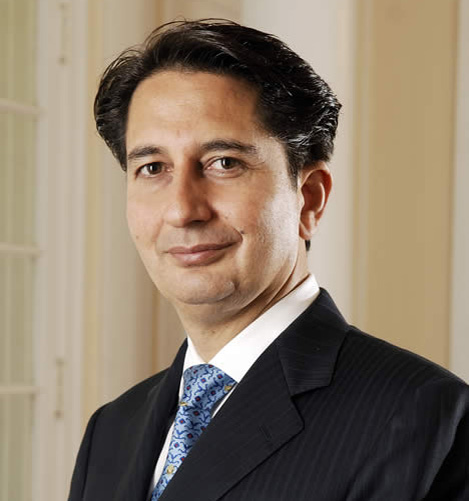
Afghanistan’s former Ambassador to the United States, Said Jawad, gave a speech on “America’s Longest War: The Afghan Perspective” on April 5th at UT-Austin, at a Strauss Center for International Relations/LBJ School event. Attendance at North America’s second-largest college campus for this event was about sixty; half the attendees were students while the rest were local residents, mostly affluent social security age or thereabouts. (Rather piss-poor attendance for a war America’s leaders are calling “generational.”)
I talked briefly to the Ambassador beforehand—he was friendly and approachable, always good for a diplomat. We talked about a book I was carrying, David Talbot’sThe War Without a Name, which is the best book written in English to date about the French counterinsurgency war in Algeria, 1954-62. This book was worth around $200 on Amazon back in 2004 or so, but I’d picked it up at the Half-Price slushpile for $2 the other day, and that fact probably showed something about how serious America was these days about wars, counterinsurgencies, and learning from history. Ambassador Jawad nodded politely. He declined my offer of the book as a gift; perhaps he knows the subject too well.
The Ambassador spoke for about 40 minutes. His PowerPoint presentation wasn’t working; it is somewhat disturbing that the Ambassador has become a slave to PowerPoint like everyone in the US government nowadays. I wasn’t expecting him to say much (the usual diplomatic discretion before an American audience combined with Beltway conformity). But if you were paying attention, the Ambassador let drop in the forefront, in easy camera range, some things that normally stay in the deep dark background.
Ambassador Jawad was as upfront as a diplomat can be about Afghanistan’s complete dependence on US military and political support and his expectations that it would continue at the current level for the next several years. This despite pronouncements from Official DC about our doing the contrary. He mentioned several times that ISIL pays its soldiers about three times what his government pays theirs, and how this was a major factor in ISIL’s success. Hmmm—I guess the three to one pay advantage trumps his army’s six to one numbers advantage. The former Ambassador also complained about Pakistan’s providing sanctuary for the enemy forces, and expressed a desire that the US would pressure Pakistan to stop doing so. Saudi Arabia came in for its licks too, and the Ambassador urged that the US pressure the Saudis into doing something to stop the financial support their citizens (and government too, Mr. Ambassador?) are giving to ISIS/ISIL. The Ambassador used the term ‘realistically’ several times about various actions Afghanistan or the United States could, and should, do.
One fact got dropped that I should have heard before, and that is that this past year was the bloodiest ever for the Afghan National Army and security forces. This was the first year ever that the war did not go into hibernation for the winter; it ran the whole year round. Ambassador Jawad said that there were 7000 government forces killed this past year and that current losses ran 16 KIA (killed in action) daily. I’d never heard this one before. 7000 KIA means a minimum of 21,000 WIA (wounded in action), a total of 28,000 casualties a year. The Afghan National Army has an official strength of around 150,000 (actual troop strength is a different smaller number due to potted plant soldiers) with roughly 150,000 auxiliary/police.
Losses at this level are militarily unsustainable for very long. I doubt anyone militarily knowledgeable would give the Afghan national forces more than two years before they collapse from losses at this rate. This means things are going to fall apart there in Afghanistan like they did in Iraq, and soon. There was not a sign of anyone in the audience catching this. If they did, they were too polite to say anything.
The Q&A came up, and again I wasn’t picked for a question (actually, I was ignored, a story for another day). Several faculty asked mostly pointless questions, and the student questions were wonkish policy-adjustment ruminations hewing to the Beltway line. No sign of intelligent life there, Scotty.
After the event, I spoke to the Ambassador again. He was apologetic about not selecting me for a question, delicately deferring blame, with much justification, to his host Robert Chesney. I dumped the question I had in mind to ask during the Q&A and instead I asked him this, something that had bubbled up from deep inside me:
Mr. Ambassador, I’ve already pointed out to you the story of this book and how its cratering in price shows something about how much interest the US has in its war in your country. Doesn’t this also show a distinct lack of competence in the US ruling elites, that they choose to remain ignorant about the biggest counterinsurgency war in the 20th Century, after this many years of failed wars?
And speaking of just how much real interest my country and countrymen have in your country and people, just look at the foreign aid amounts we’ve given to your country, a desperately poor country in dire need of everything, every last god-blasted handiwork of man there is, after four decades of war and devastation. It took us five years before we gave your country five billion dollars in aid. That’s peanuts and you know it. You also have to know that it took us another three years more before we hit ten billion dollars in aid. And certainly you have to know that aid like this is absolutely critically necessary and desperately time-sensitive for successful prosecution of a counter-insurgency, and doesn’t the fact that we cheaped out and didn’t deliver this militarily essential aid in anything near a timely fashion show again the incompetence of this country’s military and political ruling elites?
Doesn’t it also again show how little regard we here have for your fellow countrymen and their problems? Just look at our aid to Ukraine, instead. We officially spent five billion up front, unofficially twice that, on the latest color revolution there, and that was all money going to white European politicians for them to piss away on parties, bribes, and Swiss bank accounts. Doesn’t that show, decade and a half long war or not, just how little your country, its people, and our war there matter to the DC crowd?
Mr. Ambassador, you talked several times today about ‘realistic’ and ‘realistically’. Shouldn’t you be more realistic about the fact that there’s been a decade and a half for us to pressure the Saudis and Pakistanis to cooperate and we haven’t ever yet so realistically that just isn’t going to ever happen? Realistically shouldn’t you and your country adjust your policy plans and expectations to reflect this fact instead of calling still again for them? Shouldn’t you and your fellow countrymen be more realistic about this country of mine and its government and peoples and its profound indifference to you and your war and our rather gross and obvious failings as a nation and as a people by now?
The Former Ambassador listened to all this politely, and then gave a little speechette about how America was a great country full of great people who could do anything they put their minds to. I thanked him and left.
So just like that actress said, it’s all out in the open, and it’s just a question of if you want to focus on it and see it. We don’t, it doesn’t look like the Afghans do either, and we all will act surprised when the big crackup in Afghanistan happens soon. Our surprise will be genuine because our profound blindness certainly is.
Daniel N. White has lived in Austin, Texas, for a lot longer than he originally planned to. He reads a lot more than we are supposed to, particularly about topics that we really aren’t supposed to worry about. He works blue-collar for a living–you can be honest doing that–but is somewhat fed up with it right now. He will gladly respond to all comments that aren’t too insulting or dumb. He can be reached at Louis_14_le_roi_soleil@hotmail.com.
Should we enlarge the military, buy more weapons, or fight more wars? Heck, let’s do all three!
W.J. Astore
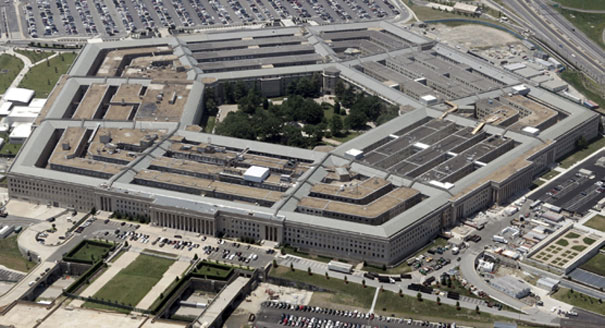
Inside the Washington beltway, the debate is never focused on making major cuts to the defense budget, then using that money to improve infrastructure, health care, education, and other projects that benefit all of us domestically. No: the debate is whether we should fight more wars overseas or buy more weapons and enlarge the military for those wars.
That is the lesson from the following summary at FP: Foreign Policy that I’m pasting below:
There’s a fight brewing over the 2017 Defense Department budget, and right in the middle of the scrum is how to use the $58 billion the White House has set aside to pay for military operations in Iraq, Syria, and Afghanistan. The House of Representatives votes this week on its version of the bill, which yanks $18 billion from that account and uses it to buy more ships, dozens of fighter jets, and adding about 50,000 more troops to the rolls.
The White House and Pentagon aren’t happy about the whole thing.
On Monday, the Office of Management and Budget released a memo threatening a presidential veto of the bill, calling the move a “gimmick.” The memo added, “shortchanging wartime operations by $18 billion and cutting off funding in the middle of the year introduces a dangerous level of uncertainty for our men and women in uniform carrying out missions in Afghanistan, Iraq, Syria, and elsewhere. ”
And there are lots of elsewheres. Yemen, Somalia, Libya, Cameroon, and the Central African Republic, just to name a few. On Thursday, the Senate Armed Services Committee passed its own version of the 2017 defense policy bill, which rejects the House funding plan. The entire defense bill is $610 billion.
Indeed, there are lots of “elsewheres.” And how are those “elsewhere” wars going for the United States? As Peter Van Buren wrote on Sunday at TomDispatch.com, those wars have been repetitive disasters.
Peter Van Buren
Van Buren, who learned firsthand about the folly and fruitlessness of US reconstruction efforts in Iraq while working for the State Department, writes that:
Starting wars under murky circumstances and then watching limited commitments expand exponentially is by now so ingrained in America’s global strategy that it’s barely noticed. Recall, for instance, those weapons of mass destruction that justified George W. Bush’s initial invasion of Iraq, the one that turned into eight years of occupation and “nation-building”? Or to step a couple of no-less-forgettable years further into the past, bring to mind the 2001 U.S. mission that was to quickly defeat the ragged Taliban and kill Osama bin Laden in Afghanistan. That’s now heading into its 16th year as the situation there only continues to disintegrate…
Or for those who like to look ahead, the U.S. has just put troops back on the ground in Yemen, part of what the Pentagon is describing as “limited support” for the U.S.-backed war the Saudis and the United Arab Emirates launched in that country.
The new story is also the old story: just as you can’t be a little pregnant, the mission never really turns out to be “limited,” and if Washington doesn’t know where the exit is, it’s going to be trapped yet again inside its own war, spinning in unpredictable and disturbing directions.
The baseball-philosopher Yogi Berra coined the motto for recent US military efforts in the Greater Middle East: It’s like deja-vu, all over again. The same saying applies to Pentagon budget “debates.” It’s never about how to save money, or what “defense” truly means to America. It’s always about how to get more money, and whether it should be spent on enlarging the military, buying more weapons, or fighting more wars. The perfect trifecta is doing all three. Perhaps that’s the true “triad” of US defense policy.
At Salon.com, Patrick Smith has a telling article on the Obama administration’s foreign policy. He details the way in which style has triumphed over substance, and how tightly the Obama administration controls the narrative in the mainstream media. Essentially, Smith provides more evidence of the way in which reporters and journalists serve as stenographers to the powerful.
Many journalists, notes Smith, are twenty-somethings who attempt to provide coverage of foreign affairs from inside the Washington Beltway. Under such conditions, even a diligent reporter has to rely far too heavily on official mouthpieces at the Pentagon, State Department, and similar governmental agencies. Those reporters who buck the system risk losing access; in short, they risk losing their privileges — and their jobs. Most end up conforming.
This is nothing new to anyone familiar with Stephen Colbert’s famous take-down of insider journalists at the Washington Correspondents’ Dinner in 2006. As Colbert said a decade ago:
But, listen, let’s review the rules. Here’s how it works. The President makes decisions. He’s the decider. The press secretary announces those decisions, and you people of the press type those decisions down. Make, announce, type. Just put ’em through a spell check and go home. Get to know your family again. Make love to your wife. Write that novel you got kicking around in your head. You know, the one about the intrepid Washington reporter with the courage to stand up to the administration? You know, fiction!
Along with that critique, Smith is excellent on critiquing the fundamental unoriginality, the militarized banality, of much of Obama’s foreign policy. As Smith notes:
There can be no radical shift in American conduct abroad, of course, until goals and purposes are addressed very forthrightly. This means taking on, in explicit fashion, our inherited tropes—our claims to exceptionalism and universalism—as well as the hegemonic ambitions the Pentagon shares with American corporations. It is a question, as noted in a previous column, of techne and telos, two words from ancient Greek. You can change the former—your method, your means—all you like, but it will matter little until you alter your telos, your aims, the ideal you strive for …
What is the new [Obama administration] narrative, then? May we know, please? I address the question to Ben Rhodes, David Samuels and Samuels’ editors at the Times Magazine. All this palaver about a brilliant foreign policy innovator and not one word about his masterstroke innovation, a reimagined frame for American conduct abroad?
The lapse is a symptom of the above-noted problem: style without substance, form without content. We cannot count even the openings to Iran and Cuba as any great departures, given Washington’s behavior since. There is no new narrative, only a new way of telling the old narrative.
Just so. Consider recent events. More U.S. “advisers” (troops) to Iraq. More foreign weapons sales. The commitment of ABM missiles to Romania. Sending B-52s (a symbol of the Cold War) to strike at ISIS. More talk of the dangers of a resurgent Russia. And (of course) more talk of enlarging the Pentagon and feeding it more money.
Yes, the Obama administration has been more reluctant than Bush/Cheney to commit big battalions of the regular army to overseas invasions and wars, but otherwise the foreign policy song has remained pretty much the same. Obama just prefers a smaller stage presence or “footprint,” as defined by Washington as drones and special ops, together with privatized militaries and extensive weapons sales, rather than big battalions.
That’s hardly a new narrative in U.S. foreign policy — precisely the point of Smith’s telling critique.
Send in the troops … there ought to be troops … don’t bother they’re here
W.J. Astore
I get a situation report (or SITREP) from FP: Foreign Policy. I’ve pasted it below. The gist of it is that Afghanistan is going poorly, therefore there’ll be no U.S. troop drawdown; and Iraq is going poorly, therefore the U.S. is sending more troops and money.
“Poorly” never seems to lead to the obvious conclusion: withdrawal. Rather it always leads to escalation: more troops and more money. So the U.S. always reinforces failure, exactly the opposite of sound military strategy.
The illogical nature of U.S. foreign policy would surely befuddle Mr. Spock. Put differently, U.S. foreign policy has a “logic” of its own. It goes something like this: Never admit mistakes. Domestic politics always come first, so never leave yourself open to charges of “cutting and running.” Never close an avenue to “influence” and future weapons sales, no matter if that avenue is a dead end.
No foreign policy update would be complete without a Republican charge of weakness or pusillanimity leveled against the Obama administration, hence the concluding comment by John McCain.
Here is the FP SITREP:
“The Institute for the Study of War recently released a map of Taliban strongholds throughout the country, showing the Taliban gains in the south.”
“A spokesman for the U.S. military command in Kabul tells SitRep that no U.S. servicemembers were caught up in the attack. In a statement, Gen. John Nicholson, head of U.S. and NATO troops in the country, said that the attack “shows the insurgents are unable to meet Afghan forces on the battlefield and must resort to these terrorist attacks.” Nicholson, who took command of America’s longest war last month, is still working to draw up a list of recommendations for what assets he’ll need. It’s expected he will ask that troop numbers remain at the current level of 9,800, and not drop to about 5,500 by the end of the year.”
“All eyes on Mosul. There are another 217 U.S. troops headed to Iraq to help security forces fight their way toward the ISIS-held city of Mosul, bringing the official number of American servicemembers there to just over 4,000. Hundreds more are in country but are not counted on the official rolls, meaning the real number is over 5,000, defense officials have said.”
“As part of the new aid package announced in Baghdad by Defense Secretary Ash Carteron Monday, the Pentagon will also start handing over $415 million to the Kurdish government to help pay their fighters, who have gone without pay amid a budget crunch due to falling oil prices.”
“The new troops will move out with Iraqi forces, advising local commanders at the battalion level, potentially putting them closer to the fight as the Iraqi army pushes north toward Mosul. Until this point, American advisors generally stayed at the division level or above. The new troops will also fly Apache helicopters that will strike ISIS fighters and man artillery systems, including the HIMARS (High Mobility Artillery Rocket System), which can fire multiple 200-lb. GPS-guided rockets over 40 miles. The HIMARS has already been used by U.S. forces to pound ISIS around Ramadi, and one U.S.-manned system has fired from Jordan into Syria in recent months. Sen. John McCain (R-Ariz.) called the new deployment the kind of ‘grudging incrementalism that rarely wins wars.'”
Hannah Arendt, cigarette in hand (Arendt Center, Bard College)
W.J. Astore
(This is part 2 of 2 of an essay dealing with lying, politics, and war, inspired by Hannah Arendt’s writings on The Pentagon Papers. For part 1, click here.)
After the Vietnam War, the U.S. government oversaw the creation of a post-democratic military, one that was less tied to the people, meaning that the government had even less cause to tell the truth about war. Unsurprisingly, then, the hubris witnessed in Vietnam was repeated with Iraq, together with an even more sweeping ability to deny or disregard facts, as showcased best in a statement by Karl Rove in 2004. The actions of the Bush/Cheney Administration, Rove suggested, bypassed the fact- or “reality-based” community of lesser humans precisely because their premises (the need to revolutionize the Middle East and to win the War on Terror through violence) were irrefutable and their motives unimpeachable. In Rove’s words:
We’re an empire now, and when we act, we create our own reality. And while you’re studying that reality—judiciously, as you will—we’ll act again, creating other new realities, which you can study too, and that’s how things will sort out. We’re history’s actors…and you, all of you, will be left to just study what we do.
So it was that the Bush/Cheney administration manufactured its own “facts” to create its own “reality,” as the Downing Street Memo revealed (according to a senior British official, U.S. intelligence was “fixed” in 2002 to justify a predetermined decision to invade Iraq in 2003). Dubious intelligence about yellowcake uranium from Africa and mobile biological weapons production facilities in Iraq (both later proved false) became “slam dunk” proof that Iraq had active programs of WMD development. These lies were then cited to justify a rapid invasion. That there were no active WMD programs in Iraq meant there could be no true “mission accomplished” moment to the war – a fact George W. Bush lampooned by pretending to “search” for WMD at the White House Correspondents’ Dinner in 2004. In this case, lies and self-deception coalesced in a wincing performance before chuckling Washington insiders that recalled the worst of vaudeville, except that Americans and Iraqis were dying for these lies.
Subsequent policy decisions in post-invasion Iraq didn’t fit the facts on the ground because those facts were simply denied. Then-Secretary of Defense Donald Rumsfeld said in July 2003 he didn’t do quagmires even as Iraq was becoming one for U.S. forces. Two years later, then-Vice President Cheney claimed the Iraq insurgency was “in the last throes” even as insurgent attacks began to accelerate. Lies and deception, to include self-deception, doomed the U.S. government to quagmire in Iraq, just as it had in Vietnam forty years earlier. Similar lies continue to bedevil U.S. efforts in Iraq today, as well as in Afghanistan and many other places.
Even as official lies and deception spread, whistleblowers who stepped forward were gagged and squashed. Chelsea Manning, Stephen Kim, and John Kiriakou were imprisoned; Edward Snowden was forced into permanent exile in Russia. Meanwhile, officials who toed the government line, who agreed to dissemble, were rewarded. Whether under Bush or Obama, government officials quickly learned that supporting the party line, no matter how fanciful, was and is rewarded – but that truth-telling would be punished severely.
Lying and Self-Deception Today
How are U.S. officials doing at truth-telling today? Consider the war in Afghanistan. Now in its 15th year, regress, not progress, is the reality on the ground. The Taliban controls more territory than ever, the drug trade is exploding, and Afghan forces remain unreliable. Yet the U.S. government continues to present the Afghan war as winnable and the situation as steadily improving.
Similarly, consider the war on terror, nowadays prosecuted mainly by drones and special ops. Even as the U.S. government boasts of terrorists killed and plots prevented, radical Islam as represented by ISIS and the like continues to spread. Indeed, as terrorism expert David Kilcullen recently admitted, ISIS didn’t exist until U.S. actions destabilized and radicalized Iraq after 2003. More than anything, U.S. intervention and blundering in Iraq created ISIS, just as ongoing drone strikes and special ops raids contribute to radicalization in the Islamic world.
Today’s generation of “best and brightest” problem-solvers believes U.S. forces cannot withdraw from Afghanistan without the Afghan government collapsing, hence the misleading statements about progress being made in that war. Radical Islamic terrorists, they believe, must be utterly destroyed by military means, hence deceptive statements about drone strikes and special ops raids as eliminating terrorism.
Accompanying lies and deception about progress being made in wars is image manipulation. Military action inoculates the Washington establishment, from President Obama on down, from (most) charges of being soft on terror (just as military action against North Vietnam inoculated John F. Kennedy and Lyndon B. Johnson against charges of being soft on communism). It also stokes the insatiable hunger of the military-industrial complex for bottomless resources and incessant action, a complex that the current crop of Republican and Democratic candidates for president (Bernie Sanders excepted) have vowed to feed and expand.
Whether in Vietnam, Iraq, or in the war on terror today, lying and self-deception have led to wrongheaded action and wrongful lessons. So, for example, rather than facing the quagmire of Afghanistan and extricating itself from it, Washington speaks of a generational war and staying the course until ultimate victory. Instead of seeing the often counterproductive nature of violent military strikes against radical Islam, Washington calls for more U.S. troops, more bombing, more “shock and awe,” the approach that bred the Islamic State in the first place.
One thing is certain: The U.S. desperately needs leaders whose judgment is informed by uncomfortable truths. Comfortable lies have been tried before, and look what they produced: lots of dead people, lost wars, and a crippling of America’s ability to govern itself as a democracy.
More than ever, hard facts are at a premium in U.S. politics. But the higher premium is the exorbitant costs we pay as a people, and the pain we inflict on others, when we allow leaders to make lies and deception the foundation of U.S. foreign policy.
In November 1971, the political philosopher Hannah Arendt published “Lying in Politics: Reflections on the Pentagon Papers” in the New York Review of Books. Earlier that year, Daniel Ellsberg had shared those highly classified government papers with the U.S. media. They revealed a persistent and systematic pattern of lying and deception by the government about U.S. progress in the Vietnam War. By undermining the people’s trust in government, lies and deception were destabilizing democracy in America, Arendt said. Furthermore, America was witnessing two new and related categories of lying. The first was lying as public relations, the creation and distribution of images substituting for facts and premised in human manipulability (a Madison Avenue approach to war and foreign policy). The second was lying tied to a country’s reputation as embraced by professional “problem-solvers” as the basis for political action. Both categories of lying constituted a crisis to the republic.
Widespread lying during the Vietnam War, Arendt explained, had not been aimed at the enemy, as lies often are in war. Rather, governmental lying had targeted Americans. The enemy could hardly be fooled, but most Americans could – at least for a time. Throughout the war, Arendt noted, senior U.S. government and military officials made decisions about Vietnam with the firm knowledge they could not be carried out, a form of self-deception facilitated by constant goal-shifting. As goals changed and chaos mounted, U.S. officials then became driven by concerns about saving face. Image-making and image-saving took precedence over reality. The truth about Vietnam – that the U.S. was losing the war – hurt, therefore it was denied, especially in public discourse.
Official lies can fool even the officials themselves, a fact Pulitzer prize-winning reporter David Halberstam noted in his prescient book, “The Making of a Quagmire,” published in 1965. With respect to the Kennedy Administration’s support of the corrupt Diem/Nhu government of South Vietnam, Halberstam wrote that:
Having failed to get [the Diem/Nhu regime to make needed] reforms, our officials said that these reforms were taking place; having failed to improve the demoralized state of the [South] Vietnamese Army, the Americans talked about a new enthusiasm in the Army; having failed to change the tactics of the [South Vietnamese] military, they talked about bold new tactics which were allegedly driving the Communists back. For the essence of our policy was: There is no place else to go.
When reporters began to file stories which tended to show that the [U.S.] policy was not working, its authors, President Kennedy and General [Maxwell] Taylor, clung to it stubbornly. At least part of the explanation for this apparent blindness is that although they knew things were going wrong, they felt that the alternatives were worse.
This “blindness,” a sustained willingness to deny harsh truths about the Vietnam War, persisted throughout the Kennedy, Johnson and Nixon administrations. U.S. leaders continued to package and sell a losing effort as a winning product. It helped, in Arendt’s words, that U.S. officials had “a truly amazing and entirely honest ignorance of the historically pertinent background” when it came to Vietnam. Their ignorance was “honest” in the sense they did not believe facts were all that important to success. What was needed, U.S. officials concluded, were not incontestable facts but the right premises, hypotheses, and theories (such as the infamous Domino Theory) to fit Vietnam within prevailing Cold War orthodoxies. Overwhelming applications of U.S. military power would serve to actuate these premises, facts be damned.
Upon taking power in 1969, the Nixon Administration, which had promised a quick and honorable end to the war, continued the lies of previous administrations. Even as Nixon and Henry Kissinger spoke publicly of peace with honor, they talked privately of a lost war. To shift the blame for defeat, they cast about for scapegoats (as corroborated recently in the HBO documentary, “Nixon by Nixon: In His Own Words”). Kissinger settled on South Vietnamese “incompetence” as the primary scapegoat. He reassured Nixon that, after a “decent interval” between U.S. withdrawal and the inevitable South Vietnamese collapse, most Americans would come to see Vietnam as a regrettable (and forgettable) “backwater.” Naturally, harsh facts such as these were ones Nixon and Kissinger refused to share with the American people.
For Hannah Arendt, truth as represented by verifiable facts is the chief stabilizing factor in politics. Lacking truths held in common, action is compromised, judgment is flawed, reality is denied. Deception feeds self-deception until politics is poisoned and collective action for the common good is disrupted. Yet lies cannot be eliminated simply by moral outrage, Arendt noted. Rather, truth must be fought for even as humility before truth must be cultivated.
The American people must fight for the truth: that is the lesson of Arendt’s essay.
Next Week: Part II: More Lies and Deception in the Iraq War of 2003
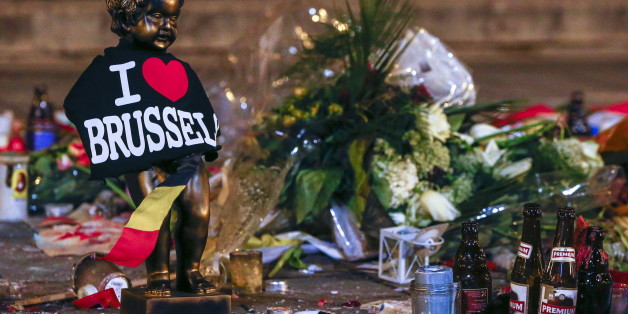
Replica of the Manneken-Pis statue, a major Brussels attraction, among flowers at a memorial for the victims of bomb attacks in Brussels. REUTERS/Yves Herman
W.J. Astore
I grew up during the Cold War when America’s rivalry with the Soviet Union posed a clear and present danger to our country’s very existence. Since the collapse of the USSR, or in other words the last 25 years, the U.S. has not faced an existential threat. Of course, the terrorist attacks on 9/11 were shocking and devastating, as were recent attacks in Paris and Brussels. But terrorism was and is nothing new. We faced it in the 1970s and 1980s, and indeed we will probably always face it. The question is how best to face it.
Stoking fear among the people is the wrong way to face it. Restricting liberty is the wrong way. An overly kinetic approach (i.e. lots of bombs and bullets) is the wrong way. Invading the Middle East (yet again) is the wrong way. Most of counter-terrorism, it seems to me, is an exercise in intelligence and policing (national and international). Yet we seem always to turn to our military to solve problems. The emphasis is relentlessly tactical/operational, stressing how many terrorists we kill in drone strikes and special ops raids (a version of the old “body count” from the Vietnam War era).
Military strikes and raids generate collateral damage and blowback, arguably creating more enemies than they kill. We’re helping to sustain a perpetual killing machine, a feedback loop. The more we “hit” various enemies while playing up the dangers of terrorism, especially in the media, the more they prosper in regards to attention (and recruits) they garner.
One of the first Rand primers I read as young Air Force lieutenant was “International Terrorism: The Other World War,” written by Brian M. Jenkins in 1985. Jenkins made many excellent points: that terrorists seek to instill fear, that their acts are mainly “aimed at the people watching,” that terrorism can’t be defeated like traditional (uniformed) enemies, that terrorists commit crimes for a larger political purpose (“causing widespread disorder, demoralizing society, and breaking down existing social and political order”), that terrorism is a form of political theater. As Jenkins notes:
“Terrorism attracts intense interest but produces little understanding. News coverage focuses on action not words. Terrorist incidents attract the media because they are genuine human dramas, different from ordinary murder and therefore newsworthy. “
Furthermore, “terrorists provide few lucrative targets for conventional military attack,” though this may be less true of state-sponsored terrorism.
What can we learn from Jenkins’s primer on terrorism? Three big lessons:
Deny the terrorists their victory by refusing to succumb to fear. In short, don’t panic. And don’t exaggerate the threat.
Don’t sensationalize the feats of terrorists in 24/7 media coverage of their attacks. That’s what the terrorists want. They want extensive media coverage, not only to shift public opinion and to spread fear, but also to recruit new members.
Finally, don’t change your way of life, your political system, your liberties, in response to terrorism. Abridging freedoms or marginalizing people (e.g. American Muslims) in the name of attacking terrorism is exactly what the terrorists want. They want to turn people against one another. To divide is to conquer.
The question is, when will Americans recognize the complexity of the terrorist threat while minimizing fear and over-reaction?
Terrorists need to be stopped, and that requires robust intelligence gathering, strong policing, and selective military action. But threat inflation, media hysteria, and militarized over-reaction simply play into the terrorists’ hands. Fear is the mind-killer, as Frank Herbert wrote. Let us always remember this as we face the terrorist threat with firmness and resolve.






 Bracing Views