The Ecology of War in Afghanistan

unnamed
Too often for Americans, Afghanistan is simply a war. Here’s a pacific slice of life. Donkeys and horses are the main source of transport in the mountains (Photo by Anna M.)

W.J. Astore

There are many ways of looking at war: as a continuation of politics by violent means, as a biological imperative, as the extreme end of a continuum of violence that defines human existence, morally as a sin that is only justified in self-defense, as a business in which profits are the main motive, as criminal activity writ large, as a response to human fears and memories of predation, as a mobilizing force that conveys meaning and a sense of belonging, as a practice that conveys masculinity, the list goes on.  War, in sum, is an ecology of death that is arguably as complex as the ecology of life.

But you wouldn’t know this from American commentators talking about war.  Consider the Afghan war, now in its sixteenth year and with no end in sight.  It’s termed a “generational” war by American generals, a long war, a war that may require a Korean-like commitment by the U.S. military, according to retired General David Petraeus.

A commitment to the “long war” in Afghanistan, seen by Washington as the height of sobriety, is taken apart by Major Danny Sjursen at TomDispatch.com.  MAJ Sjursen, who saw combat in Afghanistan, has this to say about the latest mini-surge being contemplated by Washington:

One look at U.S. military attempts at “nation-building” or post-conflict stabilization and pacification in Iraq, Libya, or — dare I say — Syria should settle the issue. It’s often said that the best predictor of future behavior is past behavior. Yet here we are, 14 years after the folly of invading Iraq and many of the same voices — inside and outside the administration — are clamoring for one more “surge” in Afghanistan (and, of course, will be clamoring for the predictable surges to follow across the Greater Middle East).

The very idea that the U.S. military had the ability to usher in a secure Afghanistan is grounded in a number of preconditions that proved to be little more than fantasies.  First, there would have to be a capable, reasonably corruption-free local governing partner and military.  That’s a nonstarter.  Afghanistan’s corrupt, unpopular national unity government is little better than the regime of Ngo Dinh Diem in South Vietnam in the 1960s and that American war didn’t turn out so well, did it?  Then there’s the question of longevity.  When it comes to the U.S. military presence there, soon to head into its 16th year, how long is long enough?  …

And what could a new surge actually do?  The U.S. presence in Afghanistan is essentially a fragmented series of self-contained bases, each of which needs to be supplied and secured.  In a country of its size, with a limited transportation infrastructure, even the 4,000-5,000 extra troops the Pentagon is reportedly considering sending right now won’t go very far. 

Now, zoom out again.  Apply the same calculus to the U.S. position across the Greater Middle East and you face what we might start calling the Afghan paradox, or my own quandary safeguarding five villages with only 82 men writ large.  Do the math.  The U.S. military is already struggling to keep up with its commitments.  At what point is Washington simply spinning its proverbial wheels?  I’ll tell you when — yesterday.

Yet U.S. military actions are worse than wheel-spinning.  To explain why, consider an article I wrote in 2014, when I called upon Charles Darwin’s wedge metaphor to explain how U.S. actions were hammering the “face of nature” of Afghan societal ecology, aggravating unrest and creating new enemies.

The U.S. military keeps hitting the terrorist “wedges” in Afghan society, without really thinking about the larger ecology and the ripple effects. In the violent struggle for existence in Afghanistan, the U.S. compounds the violence, serving to strengthen the very enemy we say we’re seeking to weaken. (Indeed, the Taliban is gaining strength, hence the call for more U.S. troops).  At the same time, the U.S. military’s foreign presence is serving to legitimate the indigenous enemy while simultaneously forcing it to learn and adapt.

By surging again and again, i.e. hitting the enemy harder, this is what the U.S. military has succeeded in doing:

1. The enemy has spread along new fault lines created by U.S. military-led hammer blows.
2. The enemy has adapted to force, becoming fitter in its struggle for existence against us.
3. The enemy has gained legitimacy from the struggle.
4. The wider societal ecology has become more radicalized as well as more unstable.
5. A complex and more chaotic ecology has become even less tractable in American hands.

Despite this, the U.S. military still thinks more hammer blows are the answer. The only answer that makes sense — withdrawal from Afghanistan — is the one that is not on that table in Washington where all options allegedly reside.

We’re already living in a new reality of alternative facts, so let’s just declare victory, America, and leave.  With or without the U.S. military, the Afghan people will find their own way.
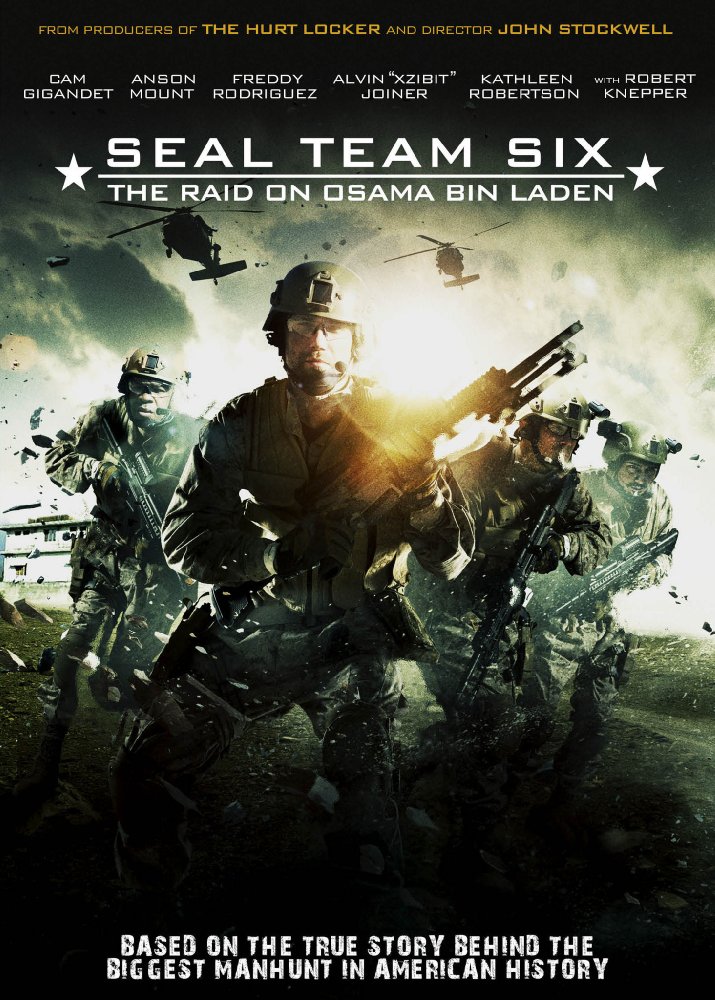
What’s So Special About Special Ops?

seal
Sexy? Yes.  But how effective over the long haul?

W.J. Astore

What’s so special about Special Ops?  It used to be that special operations troops were few in number.  You had Army Green Berets, Navy SEALs, mixed units like the Delta Force, and a few others, but nowadays U.S. Special Operations Command (SOCOM) consists of 70,000 troops, equivalent to five or six regular army divisions, a military within the military.

What’s truly elite about America’s special ops community, as Nick Turse shows in his latest article at TomDispatch.com, is their global reach and global power, to borrow an Air Force phrase.  Special ops forces have already been deployed to 137 countries in 2017, or 70% of the planet’s nations.  Talk about reach!  Yet enduring victories from past deployments, as Turse shows, have been surprisingly elusive.

Why is this?  Special ops forces are good at short-term kinetic actions (hit and run strikes, commando stuff), and they do their share of training and advising.  Yet their staying power, their persistence, their endurance, their ability to shift strategic winds in America’s favor, simply hasn’t been there.  Some would say that’s not their purpose, except that the U.S. military and government has been selling them as strategic game-changers, which they’re not.

As I’ve written before, I see America’s special ops forces as America’s global missionaries, our version of the Catholic Church’s Jesuit order during the Counter Reformation.  The Jesuits were soldiers of Christ, a militant order of highly trained missionaries, totally dedicated to upholding the one true faith (Catholicism, of course).  For many peoples around the world, Catholicism was the Jesuits.  And for many peoples around the world today (137 countries!), Americanism is a gun-toting special ops troop,

Coincidentally, I came across this report from FP: Foreign Policy this morning:

Pentagon taking lead in Africa makes some allies uneasy. At a recent summit meeting in Malawi attended by several U.S. generals and their African counterparts, some allies on the continent, while welcoming American attention, aren’t so sure they want it all from the Pentagon while the State Dept. is diminished.

“We have statements out of Washington about significant reductions in foreign aid,” Gen. Griffin Phiri, the commander of the Malawi Defense Forces, told the New York Times during the African Land Forces Summit, a conference between American Army officers and representatives from 40 African nations. “What I can tell you is that experience has shown us that diplomacy and security must come together.” He was unsure over the “mixed messages” coming out of Washington.

But is Washington’s message really mixed?  It seems clear.  Ever since 9/11, as Nick Turse has shown in several articles for TomDispatch.com, America has been downplaying diplomacy while ramping up “kinetic” strikes by special ops.  This trend has only accelerated under the leadership (if that’s the right word) of Donald Trump and Rex Tillerson at the State Department. When it comes to world affairs, Trump and Tillerson have often been AWOL, leaving the real action to Mattis and the Pentagon.

And nowadays the real action at the Pentagon is centered on SOCOM, the military within the military, America’s militant missionary order.

Even allies question America’s almost monomaniacal commitment to military action everywhere.  They’re right to do so.  For special ops aren’t so special when they’re deployed everywhere in dribs and drabs, parceled out on missions that lack achievable aims.

Finally, there’s this.  Say what you will of the Jesuits, they had faith.  A clear ideology.   Their faith, their devotion, was an inspiration to many. Even as their symbol was the cross, their skill-set was quite varied, e.g. they were often learned men, well ahead of their times in areas like science and mathematics.

Does Washington’s militant missionary order have a clear ideology?  A compelling symbol?  A varied skill-set?  Favorable and enduring results?  Evidence (so far) suggests otherwise.

Turning Temporary Problems Into Permanent Ones: America’s Real Military “Strategy”

Tom Engelhardt.  Introduction by W.J. Astore.

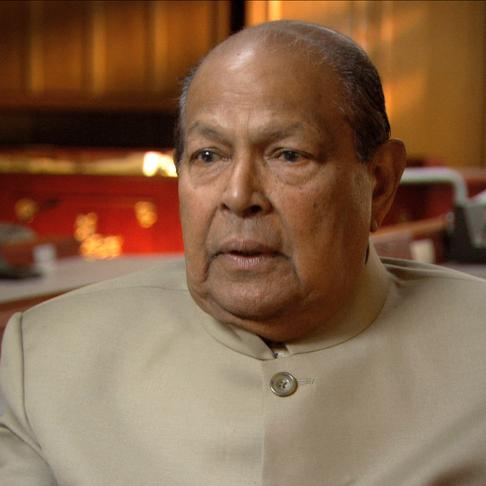
Readers of Bracing Views are familiar with Michael Murry’s frequent contributions to our site.  One of Mike’s more penetrating comments originated from a discussion he had with the late Sri Lankan Ambassador Ananda W. P. Guruge.  As Mike recently recounted, Guruge “certainly had it right when he told me once why his government had refused America’s offer of military aid against the Tamil insurgency in that little island country: If the Americans come, they will just draw an arbitrary line through a temporary problem and make it permanent.”

Guruge
Dr. Ananda W. P. Guruge. From closertotruth.com

Not many people have noticed how America’s wars, which used to have clear ending dates, like VE and VJ days in 1945 at the end of World War II, presently never seem to end.  In his introduction to Bill Hartung’s new article at TomDispatch.com, “Destabilizing the Middle East (Yet More),” Tom Engelhardt reminds us of how U.S. military interventions in Afghanistan, Iraq, Somalia, Yemen, and elsewhere simply never end.  Instead, they fester, they surge and shrink, they metastasize, they become, as Dr. Guruge noted, permanent.

That reality of permanent war is arguably the most insidious problem facing American democracy today.  I didn’t say it; James Madison did:

Of all the enemies of true liberty, war is, perhaps, the most to be dreaded, because it comprises and develops the germ of every other.  War is the parent of armies; from these proceed debt and taxes; and armies, and debts, and taxes are the known instruments for bringing the many under the domination of the few.  In war, too, the discretionary power of the Executive is extended; its influence in dealing out offices, honors and emoluments is multiplied; and all the means of seducing the minds, are added to those of subduing the force, of the people.  The same malignant aspect in republicanism may be traced in the inequality of fortunes, and the opportunities of fraud, growing out of a state of war, and in the degeneracy of manner and of morals, engendered in both.  No nation can preserve its freedom in the midst of continual warfare …

Why do so many Americans fail to see this?  Because believing is seeing.  I heard that line on “American Gods” recently, a compelling reversal of “seeing is believing.”  It applies here because America’s leaders believe in war, and Americans in general believe in their military, and believing is seeing.  A belief in the efficacy of war and the trustworthiness of the military drives America’s “kinetic” actions around the world, and that belief, that faith, serves to make wars permanent.

Believing is seeing.  It explains why our wars, despite catastrophic results that are so plainly in sight, persist without end.  W.J. Astore

America’s Endless Wars

Tom Engelhardt

Not that anyone in a position of power seems to notice, but there’s a simple rule for American military involvement in the Greater Middle East: once the U.S. gets in, no matter the country, it never truly gets out again.  Let’s start with Afghanistan. The U.S. first entered the fray there in 1979 via a massive CIA-led proxy war against the Soviets that lasted until the Red Army limped home in 1989. Washington then took more than a decade off until some of the extremists it had once supported launched the 9/11 attacks, after which the U.S. military took on the role abandoned by the Red Army and we all know where that’s ended — or rather not ended almost 16 years later. In the “longest war” in American history, the Pentagon, recently given a free hand by President Trump, is reportedly planning a new mini-surge of nearly 4,000 U.S. military personnel into that country to “break the stalemate” there.  Ever more air strikes and money will be part of the package. All told, we’re talking about a quarter-century of American war in Afghanistan that shows no sign of letting up (or of success). It may not yet be a “hundred-years’ war,” but the years are certainly piling up.

Then, of course, there’s Iraq where you could start counting the years as early as 1982, when President Ronald Reagan’s administration began giving autocrat Saddam Hussein’s military support in his war against Iran.  You could also start with the first Gulf War of 1990-1991 when, on the orders of President George H.W. Bush, the U.S. military triumphantly drove Saddam’s army out of Kuwait.  Years of desultory air strikes, sanctions, and other war-like acts ended in George W. Bush’s sweeping invasion and occupation of Iraq in the spring of 2003, a disaster of the first order.  It punched a hole in the oil heartlands of the Middle East and started us down the path to, among other things, ISIS and so to Iraq War 3.0 (or perhaps 4.0), which began as an air campaign in August 2014 and has yet to end.  In the process, Syria was pulled into the mix and U.S. efforts there are still ratcheting up almost two years later.  In the case of Iraq, we’re minimally talking about almost three decades of intermittent warfare, still ongoing.

And then, of course, there’s Somalia. You remember the Blackhawk Down incident in 1993, don’t you? That was a lesson for the ages, right? Well, in 2017, the Trump administration is sending more advisers and trainers to that land (and the U.S. military has recently suffered its first combat death there since 1993). U.S. military activities, including drone strikes, are visibly revving up at the moment. And don’t forget Libya, where the Obama administration (along with NATO) intervened in 2011 to overthrow autocrat Muammar Gaddafi and where the U.S. military is still involved more than six years later.

Last but hardly least is Yemen.  The first U.S. special ops and CIA personnel moved into a “counter-terrorism camp” there in late 2001, part of a $400 million deal with the government of then-strongman Ali Abdullah Saleh, and the CIA conducted its very first drone assassination in that country in November 2002. Almost 16 years later, as TomDispatch regular Bill Hartung reports, the U.S. is supporting a grim Saudi air and ground war of terror there, while its own drone strikes have risen to new highs.

It’s a remarkable record and one to keep in mind as you consider Hartung’s account of President Trump’s fervent decision to back the Saudis in a big league way not just in their disastrous Yemeni war, but in their increasingly bitter campaign against regional rival Iran.  After so many decades of nearly unending conflict leading only to more of the same and greater chaos, you might wonder whether an alarm bell will ever go off in Washington when it comes to the U.S. military and war in the Greater Middle East — or is Iran nextTom

To continue reading Bill Hartung’s article at TomDispatch.com, click here.

Are We the New “Evil Empire”?

russian bear
A common depiction of Russia as a hyper-aggressive bear.  But what is the United States?

W.J. Astore

In a recent article at TomDispatch.com, I argued that the United States, after defeating the former Soviet Union in the Cold War, seized upon its moment of “victory” and, in a fit of hubris, embraced an increasingly imperial and authoritarian destiny that echoed in many ways the worst attributes of the USSR.  You can read the entire article here.  What follows is an excerpt that details some of the ways the U.S. has come to echo or mirror certain features associated with the USSR, the “Evil Empire” of the Reagan years.

Also, for a podcast in which I discuss my article with Burt Cohen, follow this link or this address: http://keepingdemocracyalive.com/just-hacking-weve-become-like-soviets/

When I was a young lieutenant in the Air Force, in 1986 if memory serves, I attended a secret briefing on the Soviet Union. Ronald Reagan was president, and we had no clue that we were living through the waning years of the Cold War. Back then, believing that I should know my enemy, I was reading a lot about the Soviets in “open sources,” you know, books, magazines and newspapers.

The “secret” briefing I attended revealed little that was new to me. (Classified information is often overhyped.) I certainly heard no audacious predictions of a Soviet collapse in five years, though the Soviet Union would indeed implode in 1991. Like nearly everyone at the time, the briefers assumed the USSR would be our arch enemy for decades to come and it went without saying that the Berlin Wall was a permanent fixture in a divided Europe, a forever symbol of ruthless communist oppression.

Little did we know that, three years later, the Soviet military would stand aside as East Germans tore down that wall. And who then would have believed that a man might be elected president of the United States a generation later on the promise of building a “big, fat, beautiful wall” on our shared border with Mexico?

I wasn’t allowed to take notes during that briefing, but I remember the impression I was left with—that the USSR was deeply authoritarian, a grim surveillance state with an economy dependent on global weapons sales; that it was intent on nuclear domination; that it was imperialist and expansionist; that it persecuted its critics and dissidents; and that it had serious internal problems carefully suppressed in the cause of world mastery, including rampant alcohol and drug abuse, bad health care and declining longevity (notably for men), a poisoned environment, and an extensive prison system featuring gulags.

All of this was exacerbated by festering sores overseas, especially a costly and stalemated war in Afghanistan and client-states that absorbed its resources (think: Cuba) while offering little in return.

This list of Soviet problems, vintage 1986, should have a familiar ring to it, since it sounds uncannily like a description of what’s wrong with the United States today.

In case you think that’s an over-the-top statement, let’s take that list from the briefing—eight points in all—one item at a time.

1. An authoritarian, surveillance state. The last time the U.S. Congress formally declared war was in 1941. Since then, American presidents have embarked on foreign wars and interventions ever more often with ever less oversight from Congress. Power continues to grow and coalesce in the executive branch, strengthening an imperial presidency enhanced by staggering technologies of surveillance, greatly expanded in the aftermath of the 9/11 terrorist attacks.

Indeed, America now has 17 intelligence agencies with a combined yearly budget of $80 billion. Unsurprisingly, Americans are surveilled more than ever, allegedly for our safety even if such a system breeds meekness and stifles dissent.

2. An economy dependent on global weapons sales. The United States continues to dominate the global arms trade in a striking fashion. It was no mistake that a centerpiece of Pres. Trump’s recent trip was a $110 billion arms deal with Saudi Arabia. On the same trip, he told the Emir of Qatar that he was in the Middle East to facilitate “the purchase of lots of beautiful military equipment.” Now more than ever, beautiful weaponry made in the U.S.A. is a significant driver of domestic economic growth as well as of the country’s foreign policy.

3. Bent on nuclear domination. Continuing the policies of Pres. Barack Obama, the Trump administration envisions a massive modernization of America’s nuclear arsenal, to the tune of at least a trillion dollars over the next generation. Much like an old-guard Soviet premier, Trump has boasted that America will always remain at “the top of the pack” when it comes to nuclear weapons.

4. Imperialist and expansionist. Historians speak of America’s “informal” empire, by which they mean the U.S. is less hands-on than past imperial powers like the Romans and the British. But there’s nothing informal or hands-off about America’s 800 overseas military bases or the fact that its Special Operations forces are being deployed in 130 or more countries yearly.

When the U.S. military speaks of global reach, global power, and full-spectrum dominance, this is traditional imperialism cloaked in banal catchphrases. Put differently, Soviet imperialism, which American leaders always professed to fear, never had a reach of this sort.

 5. Persecutes critics and dissidents. Whether it’s been the use of the Patriot Act under George W. Bush’s presidency, the persecution of whistleblowers using the World War I-era Espionage Act under the Obama administration, or the vilification of the media by the new Trump administration, the United States is far less tolerant of dissent today than it was prior to the Soviet collapse.

As Homeland Security Secretary and retired four-star Marine Gen. John Kelly recently put it, speaking of news stories about the Trump administration based on anonymous intelligence sources, such leaks are “darn close to treason.” Add to such an atmosphere Trump’s attacks on the media as the “enemy” of the people and on critical news stories as “fake” and you have an environment ripe for the future suppression of dissent.

In the Soviet Union, political opponents were often threatened with jail or worse, and those threats were regularly enforced by men wearing military or secret police uniforms. In that context, let’s not forget the “lock her up!” chants led by retired Lt. Gen. Michael Flynn at the Republican National Convention and aimed at Donald Trump’s political opponent of that moment, Hillary Clinton.

Gary, Indiana. Lotzman/Flickr photo

6. Internal problems like drug abuse, inadequate health care and a poisoned environment. Alcoholism is still rife in Russia and environmental damage widespread, but consider the United States today. An opioid crisis is killing more than 30,000 people a year. Lead poisoning in places like Flint, Michigan, and New Orleans is causing irreparable harm to the young. The disposal of wastewater from fracking operations is generating earthquakes in Ohio and Oklahoma.

Even as environmental hazards proliferate, the Trump administration is gutting the Environmental Protection Agency. As health crises grow more serious, the Trump administration, abetted by a Republican-led Congress, is attempting to cut health-care coverage and benefits, as well as the funding that might protect Americans from deadly pathogens. Disturbingly, as with the Soviet Union in the era of its collapse, life expectancy among white men is declining, mainly due to drug abuse, suicide and other despair-driven problems.

7. Extensive prison systems. As a percentage of its population, no country imprisons more of its own people than the United States. While more than two million of their fellow citizens languish in prisons, Americans continue to see their nation as a beacon of freedom, ignoring Guantánamo Bay, Cuba. In addition, the country now has a president who believes in torture, who has called for the murder of terrorists’ families, and who wants to refill Guantánamo with prisoners. It also has an attorney general who wants to make prison terms for low-level drug offenders ever more draconian.

8. Stalemated wars. You have to hand it to the Soviets. They did at least exhibit a learning curve in their disastrous war in Afghanistan and so the Red Army finally left that country in 1989 after a decade of high casualties and frustration, even if its troops returned to a land on the verge of implosion. U.S. forces, on the other hand, have been in Afghanistan for 16 years, with the Taliban growing ever stronger, yet its military’s response has once again been to call for investing more money and sending in more troops to reverse the “stalemate” there.

Meanwhile, after 14 years, Iraq War 3.0 festers, bringing devastation to places like Mosul, even as its destabilizing results continue to manifest themselves in Syria and indeed throughout the greater Middle East. Despite or rather because of these disastrous results, U.S. leaders continue to over-deploy U.S. Special Operations forces, contributing to exhaustion and higher suicide rates in the ranks.

In light of these eight points, that lighthearted Beatles tune and relic of the Cold War, “Back in the USSR,” takes on a new, and far harsher, meaning.

To read the rest of this article, go to TomDispatch.com.  Thank you.

Base World: The Pentagon’s Profligate and Prodigious Presence

170511-F-RA202-008
USAF personnel train at Ramstein Air Base in Germany.  Because we won World War II.  (U.S. Air Force photo by Airman 1st Class Elizabeth Baker)

W.J. Astore

As President Trump heads off on an overseas trip, trailing Washington scandals in his wake, it’s worth reminding ourselves of America’s prodigious global presence and the profligate expense at which it comes.  As David Vine notes in his latest article for TomDispatch.com, the USA has something like 800 military bases overseas, which must be garrisoned and maintained at a cost of roughly $150 billion each and every year.  What exactly are we getting for this colossal global footprint?

Come to think of it, why do we need 800 overseas bases?  Our aircraft carriers are basically mobile American bases, and much of our weaponry (Tomahawk cruise missiles, long-range bombers, and Reaper drones, for example) obviates the need for physical bases in foreign lands.

Of course, there are many reasons why these bases persist.  One is the influence they give us (or that we think they give us) in places like Turkey and South Korea, for example.  Second is the fear American officials have of losing their leading roles on the world stage, i.e. the concern that, if we abandon “our” bases, other countries will take them over, and we will be shunted aside, losing our starring role in world affairs.

Indeed, you could say Americans are the divos and divas of the world stage, elbowing our way into operatic tragedy after operatic tragedy.

Third (always a consideration) is money.  There’s so much money to be made from these bases, and so many U.S. contractors involved in making it.  And fourth is intelligence.  Americans think these bases are essential to gathering intelligence, even as our “intelligence” routinely proves wrong or incomplete.

I spent three years in Britain at U.S. bases there (“Little Americas”), and could have been assigned to U.S. bases in Iceland and Turkey, but the latter never materialized.  It’s funny: When you’re in the military, you never give much thought to why we have bases in faraway places.  You just take it for granted; it’s the status quo for us.

(As an aside, think of the irony here of Trump’s border wall with Mexico.  Even as Americans are everywhere in the world, thrusting our way into foreign countries with our militarized bases, we boast of building walls to keep other peoples out of “Fortress USA.”  Only “exceptional” U.S. officials could see no contradiction here.)

Select foreign bases have some value, but the U.S. has far too many at far too high a cost.  We’d do well to stop investing in them and to start closing them.  American bases in Turkey, South Korea, Japan, and elsewhere are not the key to our security.  Our security begins right here at home.

Remember that saying, “Yankee go home”?  Why don’t we?

go_home_yankee_ghy_euro_oval_sticker
Yankee go home.  Why not?

Trump Shares Classified Material with Russia — Duck and Cover!

W.J. Astore

U.S. media outlets have been consumed by the story today that President Trump improperly or unwisely shared classified material on ISIS with the Russians, material that apparently came from Israel.  For its part, the Trump administration denies the charge that information was improperly or unwisely shared.

mcmaster
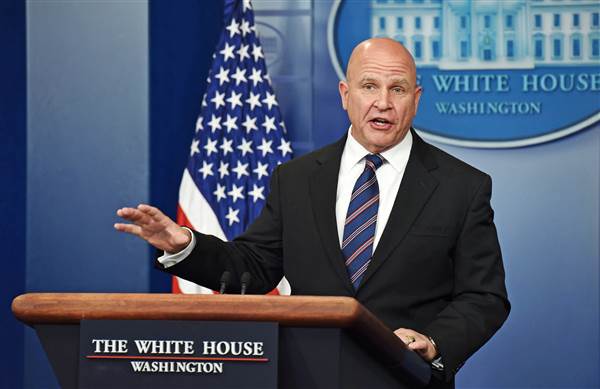
Today, National Security Adviser H.R. McMaster defends Trump’s decision to share classified information with the Russians

A couple of comments.  First, the president has broad powers of declassification and the discretion to share sensitive secrets with others.  Sharing classified information with the Russians, an ally of a sort in the struggle against ISIS, is not necessarily a bad idea. Trump seems to have decided it was a way to strengthen relations and build trust at high levels with the Russian government, a defensible position, in my view.

Second, I’ll repeat here what I said about classification and the Hillary Clinton email scandal: Far too much information is classified by the U.S. government.  Classification is vastly overused by our government to conceal many sins, blunders, nefarious designs, and who knows what else.  There’s nothing sacred about secrecy; indeed, a democracy should prefer transparency, rather than stamping everything “secret” or “top secret” and thereby keeping nearly all Americans in the dark.

Obviously, I’m not privy to the exact nature of the intelligence shared, the sensitivity and vulnerability of the source(s) and collection methods, and so on.  I’m not an intelligence trade-craft expert.  So far, Israeli operatives seem unconcerned, but whether their blase attitude is feigned or not is unknown.

Americans elected Trump because he promised to do things differently.  He campaigned on the idea of being unorthodox; indeed, he is unorthodox.  Surely no one should be surprised when he decides to speak in the clear to Russian government officials on matters concerning ISIS and terrorism.

Repeat after me, America: Secrecy is not sacred.  Transparency is desirable.  So too is building trust with rivals as well as friends.  Trump has his faults, major ones I believe, but this current controversy is a tempest in a teapot.

Memories of War

the-vietnam-memorial
Memories of War: So powerful yet often so fragmentary

W.J. Astore

Memories of war are powerful and fragmentary.  At a national level, we do best at remembering our own war dead while scarcely recognizing the damage to others.  This is one cost of nationalism.  Nationalism is violent, bigoted, and discriminatory.  It elevates a few at the expense of the many.  It fails fully to recognize common human experience, even one as shattering as war.

One example.  I’ve visited the Vietnam War Memorial in Washington, D.C.  In seeing all those names of American dead on the wall, I was moved to tears.  It’s a remarkable memorial, but what it fails to capture is any sense of the magnitude of death from that war visited upon Vietnam, Laos, and Cambodia.  As I wrote for Alternet, to visualize the extent of death from America’s war in Southeast Asia, the Vietnamese would need a wall that would be roughly 20 to 50 times as long as ours.

Think about that for a moment.  A wall perhaps 50 times as long as our Vietnam memorial wall.  It’s a staggering mental image.  Sadly, today in America the only wall garnering much media interest is Trump’s wall along our border with Mexico, yet another manifestation of nationalist bigotry and bias.

John Dower challenges us to think differently.  To explore our common humanity.  To remember the war dead of other nations and peoples, and to record the true cost of America’s wars, both to others and to ourselves.  His latest article at TomDispatch.com explores how Americans both remember and forget their wars.  Here’s an excerpt:

While it is natural for people and nations to focus on their own sacrifice and suffering rather than the death and destruction they themselves inflict, in the case of the United States such cognitive astigmatism is backlighted by the country’s abiding sense of being exceptional, not just in power but also in virtue. In paeans to “American exceptionalism,” it is an article of faith that the highest values of Western and Judeo-Christian civilization guide the nation’s conduct — to which Americans add their country’s purportedly unique embrace of democracy, respect for each and every individual, and stalwart defense of a “rules-based” international order.

Such self-congratulation requires and reinforces selective memory. “Terror,” for instance, has become a word applied to others, never to oneself. And yet during World War II, U.S. and British strategic-bombing planners explicitly regarded their firebombing of enemy cities as terror bombing, and identified destroying the morale of noncombatants in enemy territory as necessary and morally acceptable. Shortly after the Allied devastation of the German city of Dresden in February 1945, Winston Churchill, whose bust circulates in and out of the presidential Oval Office in Washington (it is currently in), referred to the “bombing of German cities simply for the sake of increasing the terror, though under other pretexts.”

Too often, Americans believe they’re waging a war on terror, forgetting that war itself is terror.  That war itself is evil.  That doesn’t mean that war is never justified, as it was, I believe, in the struggle against Nazi tyranny in World War II.  Even in justifiable wars, however, we need to recognize that war breeds corruption; that war, in essence, is corruption, a corruption of the human spirit, of a humanity which should be held in common and nourished, but which during war is degraded if not destroyed.

John Dower recognizes this.  It’s a theme he explores in his new book, The Violent American Century: War and Terror Since World War Two.  Consider it a primer on war’s many corruptions, and a precis of America’s tendency toward a nationalism of callous indifference when it comes to the damages we inflict on others.  It’s not happy reading, but then again wars shouldn’t be a subject for happiness.

71ebqVLTrbL
A remarkable primer and meditation on America’s endless wars

Wars and rumors of war seem always to be with us.  Some would say they’re an inevitable part of the human condition.  Our historical record seems to support that grim conclusion.  Yet there is another way, a more pacific path, a path toward peace.  But to walk that path, we must first fully recognize the tangled undergrowth of war that imperils our every footstep.  Dower’s latest book helps us to do just that.

The Only Way to Win America’s Wars Is to End Them

W.J. Astore

Today, I saw another article on why America is losing its wars in places like Iraq, Afghanistan, and elsewhere.  The gist of this and similar articles is that America’s wars are winnable.  That is, if we bomb more, or send more troops, or change our strategy, or alter our ROE (rules of engagement), or give more latitude to the generals, or use all the weapons at our disposal (to include nukes?), and so on, these wars will prove tractable and even winnable.  This jibes with President Trump’s promises about America winning again, everywhere, especially in wars.

vstory.bush.banner.afp
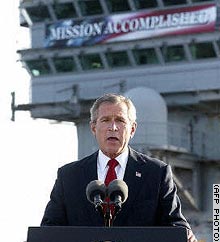
Sorry: The Missions Are Never Going to be “Accomplished”

Nonsense.  The U.S. military hasn’t won these wars since the wars themselves are unwinnable by U.S. military action.  Indeed, U.S. military action only makes them worse.

Consider Iraq.  Our invasion in 2003 and our toppling of Saddam kicked off a regional, religious, ethnic, and otherwise complicated civil war that is simply unwinnable by American troops.  Indeed, the presence of (and blunders made by) American troops in Iraq helped to produce ISIS, much-hyped as the current bane of American existence.

Consider Afghanistan.  Our invasion in 2001 toppled the Taliban, at least for a moment, but did not produce peace as various Afghan factions and tribes jostled for power.  Over time, the U.S. and NATO presence in the country produced instability rather than stability even as the Taliban proved both resilient and resurgent.  U.S. and NATO forces have simply become yet another faction in the Afghan power game, but unless we want to stay there permanently, we are not going to “win” by any reasonable definition of that word.

You could say the same of the U.S. military’s involvement in similar conflicts like Yemen or Syria (look at the mess we made of Libya).  We can kill a lot of “terrorists” and drop a lot of bombs, spreading our share of chaos, but we aren’t going to win, not in the sense of these wars ending on terms that enhance U.S. national security.

This hard reality is one that the U.S. military explains away by using jargon.  Military men talk of generational wars, of long wars, of fourth generation warfare, of gray zones, of military operations other than war (which has its own acronym, MOOTW), and so on. A friend of mine, an Air Force captain, once quipped: “You study long, you study wrong.” You can say something similar of war: “You wage war for long, you wage it wrong.”  This is especially true for a democracy.

America’s wars today are unwinnable.  They are unwinnable not only because they are not ours to win: they aren’t even ours.   We refuse to take ownership of them.  At the most fundamental level, we recognize they are not vital to us, since we don’t bother to unify as a country to declare war and to wage it.  Most Americans ignore them because we can ignore them.  The Afghans, the Iraqis, the Syrians, and so on don’t have the luxury of ignoring them.

Trump, with all his talk of winning, isn’t going to change this.  The more he expands the U.S. military, the more he leans on “his” generals for advice, the more he’s going to fail. Our new commander-in-chief needs to learn one lesson: The only way to win America’s wars is to end them.

Spin It to Win It: The High Cost of Trump’s Military “Strategy”

W.J. Astore

As the end of Trump’s first 100 days in office approaches, we can already see the novice commander-in-chief’s approach to military action.  The approach is to empower “his” generals.  And the results?  A triumph of image over substance.  “Spin it to win it” is the byword for Trump’s military “strategy.”

A few examples:

  1. The disastrous raid on Yemen that led to the death of a Navy SEAL as well as many civilians, including children, was spun by the Trump administration as a great success. At the same time, Trump pinned the death of the SEAL on his generals, saying “they” lost him.
  2. The launch of 59 expensive cruise missiles against a Syrian airfield did little to change the actions of the Assad government. Nor did it knockout the airfield.  Yet it was spun by Trump as a remarkable victory.  In his words, “We’ve just fired 59 missiles, all of which hit, by the way, unbelievable, from, you know, hundreds of miles away, all of which hit, amazing.  It’s so incredible.  It’s brilliant.  It’s genius.  Our technology, our equipment, is better than anybody by a factor of five.  I mean look, we have, in terms of technology, nobody can even come close to competing.”
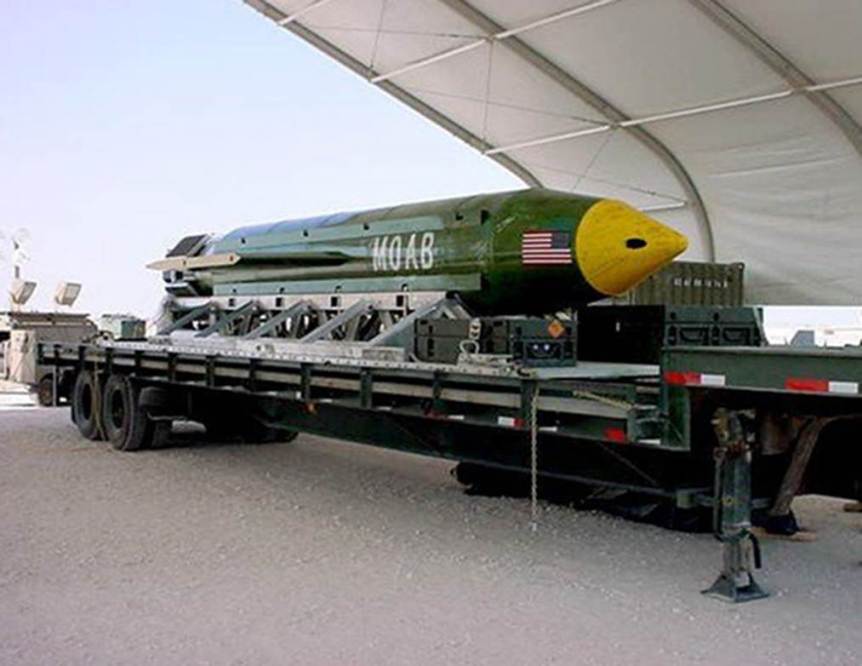
  3. The use of the “mother of all bombs” (MOAB) in Afghanistan was seized upon by Trump as an example of his toughness and decisiveness vis-à-vis the Obama administration’s use of force. Yet Trump didn’t even know about the bomb until after it was used.  Nevertheless, he boasted “If you look at what’s happened over the last eight weeks [of my administration] and compare that really to what’s happened over the past eight years, you’ll see there’s a tremendous difference, tremendous difference.” Dropping MOAB, Trump claimed on scant evidence, “was another very, very successful mission.”
  4. The Trump administration lost track of an aircraft carrier battle group, saying it was on its way as a show of force against North Korea even as it was headed in the opposite direction. This blunder was chalked up to a miscommunication between the White House and Pentagon, even as allies such as South Korea and Japan expressed concern about the credibility of U.S. support at a time of rising tensions.

As Tom Engelhardt notes in his latest must-read piece at TomDispatch.com:

President Trump did one thing decisively.  He empowered a set of generals or retired generals — James “Mad Dog” Mattis as secretary of defense, H.R. McMaster as national security adviser, and John Kelly as secretary of homeland security — men already deeply implicated in America’s failing wars across the Greater Middle East. Not being a details guy himself, he’s then left them to do their damnedest. “What I do is I authorize my military,” he told reporters recently. “We have given them total authorization and that’s what they’re doing and, frankly, that’s why they’ve been so successful lately.”

Have the generals really been “so successful lately,” President Trump?  The facts suggest otherwise.  Meanwhile, Trump has not yet learned that generals always want more – they believe they can win if they just get more troops, more money, more weaponry.  They’ll support Trump as long as he keeps funneling more of everything their way – and as long as he keeps spinning their blunders and missteps as victories.

170130-nora-anwar-al-awlaki
Is this the face of “success” in Yemen?  A little girl dead?

For the moment, Trump’s generals may love him for his “spin it to win it” boosterism and his blank checks of support.  But beware, men wearing stars.  Trump has already shown he prefers to delegate responsibility as well as authority when things go bad (recall the failed raid on Yemen and the dead SEAL).

Trump may not be a micro-manager, but that’s because he doesn’t know anything.  He just wants to spin military action as a win – for Trump.  If the generals keep losing, Trump will turn on them.  The question is, will they turn on him?

More disturbing still: When failed military actions are spun as alt-fact “victories,” the violence isn’t done simply to facts: it’s done to innocent people around the world.  It’s no game when innocent children die in the false name of “winning.”

From Deterrence to Doomsday?

moab
A harbinger of bigger bombs and missiles to come?

W.J. Astore

In my latest article for TomDispatch.com, I investigate what an “America first” foreign policy actually means in practice.  What follows is an extract from the article in which I consider whether the U.S. military has morphed from a deterrent force (at least in its own eyes) to a doomsday machine.  This idea is inspired in part by an article that Dennis Showalter, a fine historian and an even better friend, wrote back in 2000 about the German military prior to World War I.  Excerpt follows:

Deterring Our Way to Doomsday

Who put America’s oil under all those Middle Eastern deserts?  That was the question antiwar demonstrators asked with a certain grim humor before the invasion of Iraq.  In Trump’s oft-stated opinion, the U.S. should indeed have just taken Iraq’s oil after the 2003 invasion.  If nothing else, he said plainly what many Americans believed, and what various multinational oil companies were essentially seeking to do.

Consider here the plight of President Jimmy Carter.  Nearly 40 years ago, Carter urged Americans to scale back their appetites, start conserving energy, and free themselves from a crippling dependency on foreign oil and the unbridled consumption of material goods.  After critics termed it his “malaise” speech, Carter did an about-face, boosting military spending and establishing the Carter Doctrine to protect Persian Gulf oil as a vital U.S. national interest.  The American people responded by electing Ronald Reagan anyway.  As Americans continue to enjoy a consumption-driven lifestyle that gobbles up roughly 25% of the world’s production of fossil fuels (while representing only 3% of the world’s population), the smart money in the White House is working feverishly to open ever more fuel taps globally.  Trillions of dollars are at stake.

Small wonder that, on becoming president, Trump acted quickly to speed the building of new pipelines delayed or nixed by President Obama while ripping up environmental protections related to fossil fuel production.  Accelerated domestic production, along with cooperation from the Saudis — Trump’s recent Muslim bans carefully skipped targeting the one country that provided 15 of the 19 terrorists in the 9/11 attacks — should keep fuel flowing, profits growing, and world sea levels rising.

One data point here: The U.S. military alone guzzles more fossil fuel than the entire country of Sweden.  When it comes to energy consumption, our armed forces are truly second to none.

With its massive oil reserves, the Middle East remains a hotbed in the world’s ongoing resource wars, as well as its religious and ethnic conflicts, exacerbated by terrorism and the destabilizing attacks of the U.S. military.  Under the circumstances, when it comes to future global disaster, it’s not that hard to imagine that today’s Middle East could serve as the equivalent of the Balkans of World War I infamy.

If Gavrilo Princip, a Serbian “Black Hand” terrorist operating in a war-torn and much-disputed region, could set the world aflame in 1914, why not an ISIS terrorist just over a century later?  Consider the many fault lines today in that region and the forces involved, including Russia, Turkey, Iran, Israel, Saudi Arabia, and the United States, all ostensibly working together to combat terrorism even as they position themselves to maximize their own advantage and take down one another.  Under such circumstances, a political temblor followed by a geo-political earthquake seems unbearably possible.  And if not an ISIS temblor followed by major quake in the Middle East, there’s no shortage of other possible global fault lines in an increasingly edgy world — from saber-rattling contests with North Korea to jousting over Chinese-built artificial islands in the South China Sea.

As an historian, I’ve spent much time studying the twentieth-century German military.  In the years leading up to World War I, Germany was emerging as the superpower of its day, yet paradoxically it imagined itself as increasingly hemmed in by enemies, a nation surrounded and oppressed.  Its leaders especially feared a surging Russia.  This fear drove them to launch a preemptive war against that country.  (Admittedly, they attacked France first in 1914, but that’s another story.)  That incredibly risky and costly war, sparked in the Balkans, failed disastrously and yet it would only be repeated on an even more horrific level 25 years later.  The result: tens of millions of dead across the planet and a total defeat that finally put an end to German designs for global dominance.  The German military, praised as the “world’s best” by its leaders and sold to its people as a deterrent force, morphed during those two world wars into a doomsday machine that bled the country white, while ensuring the destruction of significant swaths of the planet.

Today, the U.S. military similarly praises itself as the “world’s best,” even as it imagines itself surrounded by powerful threats (China, Russia, a nuclear North Korea, and global terrorism, to start a list).  Sold to the American people during the Cold War as a deterrent force, a pillar of stability against communist domino-tippers, that military has by now morphed into a potential tipping force all its own.

Recall here that the Trump administration has reaffirmed America’s quest for overwhelming nuclear supremacy.  It has called for a “new approach” to North Korea and its nuclear weapons program.  (Whatever that may mean, it’s not a reference to diplomacy.) Even as nuclear buildups and brinksmanship loom, Washington continues to spread weaponry — it’s the greatest arms merchant of the twenty-first century by a wide mark — and chaos around the planet, spinning its efforts as a “war on terror” and selling them as the only way to “win.”

In May 1945, when the curtain fell on Germany’s last gasp for global dominance, the world was fortunately still innocent of nuclear weapons.  It’s different now.  Today’s planet is, if anything, over-endowed with potential doomsday machines — from those nukes to the greenhouse gas emissions that cause global warming.

That’s why it’s vitally important to recognize that President Trump’s “America-first” policies are anything but isolationist in the old twentieth century meaning of the term; that his talk of finally winning again is a recipe for prolonging wars guaranteed to create more chaos and more failed states in the Greater Middle East and possibly beyond; and that an already dangerous Cold War policy of “deterrence,” whether against conventional or nuclear attacks, may now have become a machine for perpetual war that could, given Trump’s bellicosity, explode into some version of doomsday.

Or, to put the matter another way, consider this question: Is North Korea’s Kim Jong-un the only unstable leader with unhinged nuclear ambitions currently at work on the world stage?