The Dogs of War Are Winning

W.J. Astore

Like a herd of cats, antiwar activists lack unity 

Clearly, on this 22nd anniversary of 9/11, the dogs of war have won and continue to win.

It hasn’t mattered that, over the last 16 years, after a 20-year military career, I’ve written hundreds of articles critical of the military-industrial-congressional complex (MICC) and in support of peacemaking and diplomacy rather than war making and gargantuan military expenditures. My writing hasn’t slowed America’s collective march toward nationalism, militarism, and war.

Lately, I’ve been working more closely with antiwar groups. They mean well. America needs them. But they are losing.

There are many reasons for this, the main one being the sheer size, reach, and power of the MICC. But there’s another reason that’s become apparent to me that’s perhaps best described in metaphorical terms.

The dogs of war run in packs obedient to the alphas. They know exactly what they want: power, profit, dominance. They are usually cocksure in their confidence and think of themselves as realists and patriots. They are rewarded with loads of money.

My cat. She does not back down to the dogs of war. But she’s territorial and doesn’t play well with others. She’s been known to show me who’s boss. 

Critics of war are more like cats. They tend to be territorial, prickly, and disobedient. They may be against war, but they are often at cross purposes on how best to resist it. They may be quick to take offense at perceived slights and don’t always play well together.  They also have a lot less money. They are likely to see themselves as idealists and to reject patriotism as “combustible rubbish” and “the last refuge of the scoundrel.”

America is a dog country. Cats are suspect, especially antiwar ones. Especially brave cats (Daniel Hale, Chelsea Manning) are locked away in cages. Meanwhile, the alpha dogs make billions barking and growling and howling for war and yet more war.

Until we change this dynamic, the alpha dogs will continue to spread havoc in America and indeed across the globe.

Come On, Ukraine, Learn from the U.S. Military

W.J. Astore

American experts have all the answers for Ukraine

In today’s New York Times send out, I saw the following story:

Ukraine’s Forces and Firepower Are Misallocated, U.S. Officials Say

American strategists say Ukraine’s troops are too spread out and need to concentrate along the counteroffensive’s main front in the south.

Listen to the U.S. military, Ukraine! Don’t be casualty-averse! Concentrate your forces. Take the fight to the Russian enemy. Use all those cluster munitions we’ve sent you. Commit your armored reserve and punch a hole in the Russian lines. Break through, break out, and drive toward Crimea. You know: just like Americans would do in your place.

One might forgive Ukrainians if they asked, When was the last war you “experts” won for America? Afghanistan? Iraq? Vietnam? Korea? What about ongoing military commitments to Syria and Somalia? If you’re so good at winning wars, how come the U.S. military didn’t win in Afghanistan, Iraq, and Vietnam where you had overwhelming materiel and firepower superiority?

With respect to why Ukraine has its forces “too spread out”: perhaps Ukraine needs to garrison its lines so that it can fend off Russian counterattacks? If Ukraine concentrates its strategic reserve and uses it in a big counteroffensive that stalls, what’s to stop Russia from a decisive riposte? Think of Kursk for Nazi Germany in 1943. Once that huge offensive failed for Germany, using up its strategic reserve, the Red Army seized the initiative on the eastern front and never lost it.

At Kursk in 1943, the Germans committed their reserves in a desperate gamble to seize the initiative from the Soviet Union. When the offensive failed, the Red Army counterattacked and proved unstoppable.

Headlines like the one posted above from the New York Times are intended to be exculpatory for the U.S. If the war turns worse for Ukraine, U.S. “experts” can point to articles like this, casting blame on the Ukrainians for not following sage American advice.

If “we” win in Ukraine, it will be because of generous U.S. aid and especially vaunted U.S. and NATO weaponry; but if they (the Ukrainians) lose, it’s all their fault for not following the advice of America’s master strategists. And, obviously, even if Ukraine loses, plenty of weapons manufacturers in the U.S. are winning and will continue to win. Indeed, a Russian victory could be just the thing to propel even more weapons spending by NATO countries as well as even larger and more monstrous Pentagon budgets.

Seven Reasons Why We Can’t Stop Making War (2010)

W.J. Astore

From Boots on the Ground to Robot Assassins in the Sky

I’m proud to say I’ve been writing for TomDispatch since 2007, posting more than 100 original articles at the site. Among the many features of that remarkable site, run by Tom Engelhardt, this generation’s I.F. Stone, is its reach across political spectrums, across America, and indeed across the globe. My most recent article, for example, was translated into Portuguese (for a Brazilian site) and Swedish. Tom and I usually aren’t contacted for permission; these translations and postings just happen.

Briefly in 2010, a few of my “tomgrams” broke through to the mainstream media, being reposted by CBS News. What follows is one of them, “Seven Reasons Why We Can’t Stop Making War,” in which I refer to a disaster of that day, the BP Deepwater Horizon oil spill.

Sadly, despite a little boost from CBS News, my critique went unheeded. Surprise! America is still making war (with certain entities profiting greatly from this), now with yet more robots even as U.S. boots on ground in direct combat are far fewer. It’s a formula for “low-cost” forever war that of course comes at a very high cost indeed, starting with a Pentagon budget soaring toward $900 billion a year, not including more than $120 billion already provided or promised to Ukraine for its war effort.

From CBS News in 2010, my article on why the U.S. can’t stop making war. The original title was “Operation Enduring War” at TomDispatch in July 2010.

If one quality characterizes our wars today, it’s their endurance.  They never seem to end. 

Though war itself may not be an American inevitability, these days many factors combine to make constant war an American near certainty.  Put metaphorically, our nation’s pursuit of war taps so many wellsprings of our behavior that a concerted effort to cap it would dwarf BP’s efforts in the Gulf of Mexico.

Our political leaders, the media, and the military interpret enduring war as a measure of our national fitness, our global power, our grit in the face of eternal danger, and our seriousness.  A desire to de-escalate and withdraw, on the other hand, is invariably seen as cut-and-run appeasement and discounted as weakness.  Withdrawal options are, in a pet phrase of Washington elites, invariably “off the table” when global policy is at stake, as was true during the Obama administration’s full-scale reconsideration of the Afghan war in the fall of 2009.  Viewed in this light, the president’s ultimate decision to surge in Afghanistan was not only predictable, but the only course considered suitable for an American war leader. Rather than the tough choice, it was the path of least resistance.

Why do our elites so readily and regularly give war, not peace, a chance?  What exactly are the wellsprings of Washington’s (and America’s) behavior when it comes to war and preparations for more of the same?

Consider these seven:

1.  We wage war because we think we’re good at it — and because, at a gut level, we’ve come to believe that American wars can bring good to others (hence our feel-good names for them, like Operations Enduring Freedom and Iraqi Freedom). Most Americans are not only convinced we have the best troops, the best training, and the most advanced weapons, but also the purest motives.  Unlike the bad guys and the barbarians out there in the global marketplace of death, our warriors and warfightersare seen as gift-givers and freedom-bringers, not as death-dealers and resource-exploiters.  Our illusions about the military we “support” serve as catalyst for, and apology for, the persistent war-making we condone.

2.  We wage war because we’ve already devoted so many of our resources to it.  It’s what we’re most prepared to do.  More than half of discretionary federal spending goes to fund our military and its war making or war preparations.  The military-industrial complex is a well-oiled, extremely profitable machine and the armed forces, our favorite child, the one we’ve lavished the most resources and praise upon.  It’s natural to give your favorite child free rein.

3.  We’ve managed to isolate war’s physical and emotional costs, leaving them on the shoulders of a tiny minority of Americans.  By eliminating the draft and relying ever more on for-profit private military contractors, we’ve made war a distant abstractionfor most Americans, who can choose to consume it as spectacle or simply tune it out as so much background noise.

4.  While war and its costs have, to date, been kept at arm’s length, American society has been militarizing fast.  Our media outlets, intelligence agencies, politicians, foreign policy establishment, and “homeland security” bureaucracy are so intertwined with military priorities and agendas as to be inseparable from them.  In militarized America, griping about soft-hearted tactics or the outspokenness of a certain general may be tolerated, but forceful criticism of our military or our wars is still treated as deviant and “un-American.”

5.  Our profligate, high-tech approach to war, including those Predator and Reaper drones armed with Hellfire missiles, has served to limit American casualties — and so has limited the anger over, and harsh questioning of, our wars that might go with them.  While the U.S. has had more than 1,000 troops killed in Afghanistan, over a similar period in Vietnam we lost more than 58,000 troops.  Improved medical evacuation and trauma care, greater reliance on standoff precision weaponry and similar “force multipliers,” stronger emphasis on “force protection” within American military units: all these and more have helped tamp down concern about the immeasurable and soaring costs of our wars.

It all seems so easy—even “clean”—from the sky. Not even a single U.S. pilot at risk.

6.  As we incessantly develop those force-multiplying weapons to give us our “edge” (though never an edge that leads to victory), it’s hardly surprising that the U.S. has come to dominate, if not quite monopolize, the global arms trade.  In these years, as American jobs were outsourced or simply disappeared in the Great Recession, armaments have been one of our few growth industries.  Endless war has proven endlessly profitable — not perhaps for all of us, but certainly for those in the business of war.

7.  And don’t forget the seductive power of beyond-worse-case, doomsday scenarios, of the prophecies of pundits and so-called experts, who regularly tell us that, bad as our wars may be, doing anything to end them would be far worse.  A typical scenario goes like this: If we withdraw from Afghanistan, the government of Hamid Karzai will collapse, the Taliban will surge to victory, al-Qaeda will pour into Afghan safe havens, and Pakistan will be further destabilized, its atomic bombs falling into the hands of terrorists out to destroy Peoria and Orlando.

Such fevered nightmares, impossible to disprove, may be conjured at any moment to scare critics into silence.  They are a convenient bogeyman, leaving us cowering as we send our superman military out to save us (and the world as well), while preserving our right to visit the mall and travel to Disney World without being nuked.

The truth is that no one really knows what would happen if the U.S. disengaged from Afghanistan.  But we do know what’s happening now, with us fully engaged: we’re pursuing a war that’s costing us nearly $7 billion a month that we’re not winning (and that’s arguably unwinnable), a war that may be increasing the chances of another 9/11, rather than decreasing them.

Capping the Wellsprings of War

Each one of these seven wellsprings feeding our enduring wars must be capped.  So here are seven suggestions for the sort of “caps” — hopefully more effective than BP’s flailing improvisations — we need to install:

1.  Let’s reject the idea that war is either admirable or good — and in the process, remind ourselves that others often see us as “the foreign fighters” and profligate war consumers who kill innocents (despite our efforts to apply deadly force in surgically precise ways reflecting “courageous restraint“).

2.  Let’s cut defense spending now, and reduce the global “mission” that goes with it.  Set a reasonable goal — a 6-8% reduction annually for the next 10 years, until levels of defense spending are at least back to where they were before 9/11 — and then stick to it.

3.  Let’s stop privatizing war.  Creating ever more profitable incentives for war was always a ludicrous idea.  It’s time to make war a non-profit, last-resort activity.  And let’s revive national service (including elective military service) for all young adults.  What we need is a revived civilian conservation corps, not a new civilian “expeditionary” force.

4. Let’s reverse the militarization of so many dimensions of our society.  To cite one example, it’s time to empower truly independent (non-embedded) journalists to cover our wars, and stop relying on retired generals and admirals who led our previous wars to be our media guides.  Men who are beholden to their former service branch or the current defense contractor who employs them can hardly be trusted to be critical and unbiased guides to future conflicts.

5.  Let’s recognize that expensive high-tech weapons systems are not war-winners.  They’ve kept us in the game without yielding decisive results — unless you measure “results” in terms of cost overruns and burgeoning federal budget deficits.

6.  Let’s retool our economy and reinvest our money, moving it out of the military-industrial complex and into strengthening our anemic system of mass transit, our crumbling infrastructure, and alternative energy technology.  We need high-speed rail, safer roads and bridges, and more wind turbines, not more overpriced jet fighters.

7.  Finally, let’s banish nightmare scenarios from our minds.  The world is scary enough without forever imagining smoking guns morphing into mushroom clouds.

There you have it: my seven “caps” to contain our gushing support for permanent war. 

No one said it would be easy.  Just ask BP how easy it is to cap one out-of-control gusher.

Nonetheless, if we as a society aren’t willing to work hard for actual change — indeed, to demand it — we’ll be on that military escalatory curve until we implode.  And that way madness lies.

The opinions expressed in this commentary are solely those of the author.

By William J. Astore (2010)

Bonus Lesson (2023): “Enduring war” is not consistent with “enduring freedom.” Who knew? And we do seem as a society to be closer to implosion, a prediction I very much hope I’m ultimately proven wrong about.

The False Comfort of Illusions

W.J. Astore

In the Russia-Ukraine War, what is the truth?

When others asked the truth of me, I was convinced it was not the truth they wanted, but an illusion they could bear to live with. — Anaïs Nin

War, among other things, is a place of illusion. With the Russia-Ukraine War, the illusions are many. For the mainstream media in America, the illusion promoted is this: Ukraine, a quasi-democratic country, is enduring an unprovoked invasion by authoritarian Russia, now in its 18th month. The freedom-fighters of Ukraine have been greatly assisted by benevolent military and economic aid freely offered and given by the Biden administration and NATO countries. Ukraine fights for a noble cause that the U.S. should and must support, since allowing Russia to prevail would lead to further unprovoked Russian invasions of other freedom-loving peoples in Europe.

It’s an illusion that’s comforting for Americans to live with, since it flatters us while vilifying an old enemy, the former Soviet Union and now Russia. It’s flattering to the Biden administration, which can pose as a stalwart defender of Ukraine, and certainly flattering to U.S. weapons makers, who can pose collectively as the new arsenal of democracy. It’s an illusion, moreover, that elides or disguises any economic motives the U.S. might have in supporting Ukraine so generously since the war began.

Even something as simple as smoke contains great complexity, as I recall from my fluid dynamics classes

The best illusions, the most seductive ones, have elements of truth to them. Yes, Russia did invade Ukraine; yes, Russia is authoritarian; yes, Ukraine has defied the odds and stymied Vladimir Putin’s designs; yes, NATO and U.S. weaponry has been important to Ukraine’s endurance. But partial facts are generally not impartial.

Briefly put, NATO expansion eastwards since the collapse of the Soviet Union is seen by Russia as provocative, constricting, and aggressive. Ukraine itself is very much an imperfect democracy, rating “high” on government corruption indices. U.S. meddling in Ukraine, especially in 2014, is most certainly problematic. The destruction of the Nordstream pipelines and subsequent profits by U.S.-based energy companies can’t be ignored. And, not surprisingly, U.S. weapons manufacturers are enjoying boom times. Not only does Ukraine need weaponry and ammunition, but U.S. and NATO stocks of the same must be replenished as arms and ammo are gifted to Ukrainian fighters. Nor is Ukraine completely free of neo-Nazi influences, which is to say that the situation is muddier and more complex than the comfortable illusion that’s so often sold by the mainstream media. 

Which brings me to CNN’s report today, that showed up in my morning email: 

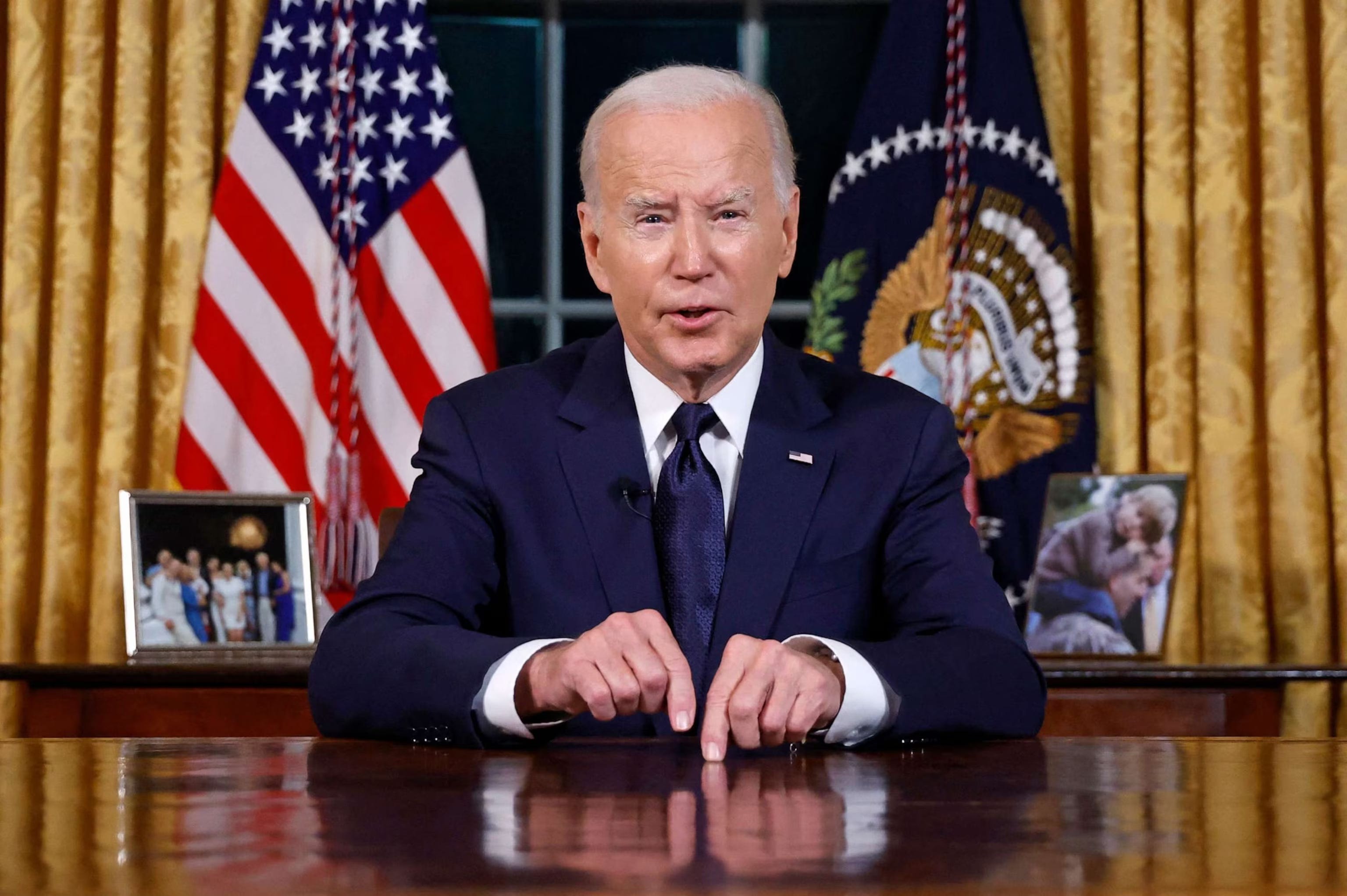
President Joe Biden is asking Congress for more than $24 billion in aid for Ukraine and other international needs as he works to sustain support for the war amid signs of softening support among Americans. The request — which includes more than $13 billion in security assistance and $7 billion for economic and humanitarian assistance for Ukraine — sets up a potential battle with Republicans in Congress. Biden has promised support will last “as long as it takes,” but an increasingly skeptical Republican Party has cast doubt on US involvement going forward. This comes after a CNN poll released last week found 55% of Americans believe Congress should not authorize additional funding to support Ukraine. 

As the Russia-Ukraine War drags on with neither side apparently having a quick victory in sight, questions accelerate. How much are Americans prepared to pay to Ukraine? Is an open-ended, “as long as it takes” commitment truly wise? What happens if the war escalates even further? And, perish the thought: What happens if someone uses a nuclear weapon or another form of WMD?

Many Americans today are in dire straits. Credit card debt for Americans recently exceeded $1 trillion and rising. The Biden administration has failed to provide promised and significant student debt relief; a public option for health care; a $15 federal minimum wage; while acting to break a railroad strike and promoting more fossil fuel drilling on fragile federal lands as well as offshore.

Americans are not stupid to wonder about the priorities of the Biden administration and why Ukraine gets a blank check as Americans continue to suffer. Illusions may be comfortable, but they don’t put food on the table or pay health care bills. And the price they come at may be high indeed, which is one reason, I think, a majority of Americans are none too comfortable with this illusion.

“The Greatest Fighting Force in Human History”

W.J. Astore

Militarized Hype Obscures Deep Rot in the American Empire

Also at TomDispatch.com.

In his message to the troops prior to the July 4th weekend, Secretary of Defense Lloyd Austin offered high praise indeed. “We have the greatest fighting force in human history,” he tweeted, connecting that claim to the U.S. having patriots of all colors, creeds, and backgrounds “who bravely volunteer to defend our country and our values.”

As a retired Air Force lieutenant colonel from a working-class background who volunteered to serve more than four decades ago, who am I to argue with Austin? Shouldn’t I just bask in the glow of his praise for today’s troops, reflecting on my own honorable service near the end of what now must be thought of as the First Cold War?

Yet I confess to having doubts. I’ve heard it all before. The hype. The hyperbole. I still remember how, soon after the 9/11 attacks, President George W. Bush boasted that this country had “the greatest force for human liberation the world has ever known.” I also remember how, in a pep talk given to U.S. troops in Afghanistan in 2010, President Barack Obama declared them “the finest fighting force that the world has ever known.” And yet, 15 years ago at TomDispatch, I was already wondering when Americans had first become so proud of, and insistent upon, declaring our military the world’s absolute best, a force beyond compare, and what that meant for a republic that once had viewed large standing armies and constant warfare as anathemas to freedom.

In retrospect, the answer is all too straightforward: we need something to boast about, don’t we? In the once-upon-a-time “exceptional nation,” what else is there to praise to the skies or consider our pride and joy these days except our heroes? After all, this country can no longer boast of having anything like the world’s best educational outcomes, or healthcare system, or the most advanced and safest infrastructure, or the best democratic politics, so we better damn well be able to boast about having “the greatest fighting force” ever.

Leaving that boast aside, Americans could certainly brag about one thing this country has beyond compare: the most expensive military around and possibly ever. No country even comes close to our commitment of funds to wars, weapons (including nuclear ones at the Department of Energy), and global dominance. Indeed, the Pentagon’s budget for “defense” in 2023 exceeds that of the next 10 countries (mostly allies!) combined.

And from all of this, it seems to me, two questions arise: Are we truly getting what we pay so dearly for — the bestest, finest, most exceptional military ever? And even if we are, should a self-proclaimed democracy really want such a thing?

The answer to both those questions is, of course, no. After all, America hasn’t won a war in a convincing fashion since 1945. If this country keeps losing wars routinely and often enough catastrophically, as it has in places like Vietnam, Afghanistan, and Iraq, how can we honestly say that we possess the world’s greatest fighting force? And if we nevertheless persist in such a boast, doesn’t that echo the rhetoric of militaristic empires of the past? (Remember when we used to think that only unhinged dictators like Adolf Hitler boasted of having peerless warriors in a megalomaniacal pursuit of global domination?)

Actually, I do believe the United States has the most exceptional military, just not in the way its boosters and cheerleaders like Austin, Bush, and Obama claimed. How is the U.S. military truly “exceptional”? Let me count the ways.

Yes, the Pentagon budget, enormous and still growing, is as large as the next ten countries in the world combined. We’re #1 in wars and weapons!

The Pentagon as a Budgetary Black Hole

In so many ways, the U.S. military is indeed exceptional. Let’s begin with its budget. At this very moment, Congress is debating a colossal “defense” budget of $886 billion for FY2024 (and all the debate is about issues that have little to do with the military). That defense spending bill, you may recall, was “only” $740 billion when President Joe Biden took office three years ago. In 2021, Biden withdrew U.S. forces from the disastrous war in Afghanistan, theoretically saving the taxpayer nearly $50 billion a year. Yet, in place of any sort of peace dividend, American taxpayers simply got an even higher bill as the Pentagon budget continued to soar.

Recall that, in his four years in office, Donald Trump increased military spending by 20%. Biden is now poised to achieve a similar 20% increase in just three years in office. And that increase largely doesn’t even include the cost of supporting Ukraine in its war with Russia — so far, somewhere between $120 billion and $200 billion and still rising.

Colossal budgets for weapons and war enjoy broad bipartisan support in Washington. It’s almost as if there were a military-industrial-congressional complex at work here! Where, in fact, did I ever hear a president warning us about that? Oh, perhaps I’m thinking of a certain farewell address by Dwight D. Eisenhower in 1961.

In all seriousness, there’s now a huge pentagonal-shaped black hole on the Potomac that’s devouring more than half of the federal discretionary budget annually. Even when Congress and the Pentagon allegedly try to enforce fiscal discipline, if not austerity elsewhere, the crushing gravitational pull of that hole just continues to suck in more money. Bet on that continuing as the Pentagon issues ever more warnings about a new cold war with China and Russia.

Given its money-sucking nature, perhaps you won’t be surprised to learn that the Pentagon is remarkably exceptional when it comes to failing fiscal audits — five of them in a row (the fifth failure being a “teachable moment,” according to its chief financial officer) — as its budget only continued to soar. Whether you’re talking about lost wars or failed audits, the Pentagon is eternally rewarded for its failures. Try running a “Mom and Pop” store on that basis and see how long you last.

Speaking of all those failed wars, perhaps you won’t be surprised to learn that they haven’t come cheaply. According to the Costs of War Project at Brown University, roughly 937,000 people have died since 9/11/2001 thanks to direct violence in this country’s “Global War on Terror” in Afghanistan, Iraq, Libya, and elsewhere. (And the deaths of another 3.6 to 3.7 million people may be indirectly attributable to those same post-9/11 conflicts.) The financial cost to the American taxpayer has been roughly $8 trillion and rising even as the U.S. military continues its counterterror preparations and activities in 85 countries.

No other nation in the world sees its military as (to borrow from a short-lived Navy slogan) “a global force for good.” No other nation divides the whole world into military commands like AFRICOM for Africa and CENTCOM for the Middle East and parts of Central and South Asia, headed up by four-star generals and admirals. No other nation has a network of 750 foreign bases scattered across the globe. No other nation strives for full-spectrum dominance through “all-domain operations,” meaning not only the control of traditional “domains” of combat — the land, sea, and air — but also of space and cyberspace. While other countries are focused mainly on national defense (or regional aggressions of one sort or another), the U.S. military strives for total global and spatial dominance. Truly exceptional!

Strangely, in this never-ending, unbounded pursuit of dominance, results simply don’t matter. The Afghan War? Bungled, botched, and lost. The Iraq War? Built on lies and lost. Libya? We came, we saw, Libya’s leader (and so many innocents) died. Yet no one at the Pentagon was punished for any of those failures. In fact, to this day, it remains an accountability-free zone, exempt from meaningful oversight. If you’re a “modern major general,” why not pursue wars when you know you’ll never be punished for losing them?

Indeed, the few “exceptions” within the military-industrial-congressional complex who stood up for accountability, people of principle like Daniel Hale, Chelsea Manning, and Edward Snowden, were imprisoned or exiled. In fact, the U.S. government has even conspired to imprison a foreign publisher and transparency activist, Julian Assange, who published the truth about the American war on terror, by using a World War I-era espionage clause that only applies to American citizens.

And the record is even grimmer than that. In our post-9/11 years at war, as President Barack Obama admitted, “We tortured some folks” — and the only person punished for that was another whistleblower, John Kiriakou, who did his best to bring those war crimes to our attention.

And speaking of war crimes, isn’t it “exceptional” that the U.S. military plans to spend upwards of $2 trillion in the coming decades on a new generation of genocidal nuclear weapons? Those include new stealth bombers and new intercontinental ballistic missiles (ICBMs) for the Air Force, as well as new nuclear-missile-firing submarines for the Navy. Worse yet, the U.S. continues to reserve the right to use nuclear weapons first, presumably in the name of protecting life, liberty, and the pursuit of happiness. And of course, despite the countries — nine! — that now possess nukes, the U.S. remains the only one to have used them in wartime, in the atomic bombings of Hiroshima and Nagasaki.

Finally, it turns out that the military is even immune from Supreme Court decisions! When SCOTUS recently overturned affirmative action for college admission, it carved out an exception for the military academies. Schools like West Point and Annapolis can still consider the race of their applicants, presumably to promote unit cohesionthrough proportional representation of minorities within the officer ranks, but our society at large apparently does not require racial equity for its cohesion.

A Most Exceptional Military Makes Its Wars and Their Ugliness Disappear

Here’s one of my favorite lines from the movie The Usual Suspects: “The greatest trick the devil ever pulled was convincing the world he did not exist.” The greatest trick the U.S. military ever pulled was essentially convincing us that its wars never existed. As Norman Solomon notes in his revealing book, War Made Invisible, the military-industrial-congressional complex has excelled at camouflaging the atrocious realitiesof war, rendering them almost entirely invisible to the American people. Call it the new American isolationism, only this time we’re isolated from the harrowing and horrific costs of war itself.

America is a nation perpetually at war, yet most of us live our lives with little or no perception of this. There is no longer a military draft. There are no war bond drives. You aren’t asked to make direct and personal sacrifices. You aren’t even asked to pay attention, let alone pay (except for those nearly trillion-dollar-a-year budgets and interest payments on a ballooning national debt, of course). You certainly aren’t asked for your permission for this country to fight its wars, as the Constitution demands. As President George W. Bush suggested after the 9/11 attacks, go visit Disneyworld! Enjoy life! Let America’s “best and brightest” handle the brutality, the degradation, and the ugliness of war, bright minds like former Vice President Dick (“So?”) Cheney and former Secretary of Defense Donald (“I don’t do quagmires”) Rumsfeld.

Did you hear something about the U.S. military being in Syria? In Somalia? Did you hear about the U.S. military supporting the Saudis in a brutal war of repression in Yemen? Did you notice how this country’s military interventions around the world kill, wound, and displace so many people of color, so much so that observers speak of the systemic racism of America’s wars? Is it truly progress that a more diverse military in terms of “color, creed, and background,” to use Secretary of Defense Austin’s words, has killed and is killing so many non-white peoples around the globe?

Praising the all-female-crewed flyover at the last Super Bowl or painting rainbow flags of inclusivity (or even blue and yellow flags for Ukraine) on cluster munitionswon’t soften the blows or quiet the screams. As one reader of my blog Bracing Viewsso aptly put it: “The diversity the war parties [Democrats and Republicans] will not tolerate is diversity of thought.”

Of course, the U.S. military isn’t solely to blame here. Senior officers will claim their duty is not to make policy at all but to salute smartly as the president and Congress order them about. The reality, however, is different. The military is, in fact, at the core of America’s shadow government with enormous influence over policymaking. It’s not merely an instrument of power; it is power — and exceptionally powerful at that. And that form of power simply isn’t conducive to liberty and freedom, whether inside America’s borders or beyond them.

Wait! What am I saying? Stop thinking about all that! America is, after all, the exceptional nation and its military, a band of freedom fighters. In Iraq, where war and sanctions killed untold numbers of Iraqi children in the 1990s, the sacrifice was “worth it,” as former Secretary of State Madeleine Albright once reassured Americans on 60 Minutes.

Even when government actions kill children, lots of children, it’s for the greater good. If this troubles you, go to Disney and take your kids with you. You don’t like Disney? Then, hark back to that old marching song of World War I and “pack up your troubles in your old kit-bag, and smile, smile, smile.” Remember, America’s troops are freedom-delivering heroes and your job is to smile and support them without question.

Have I made my point? I hope so. And yes, the U.S. military is indeed exceptional and being so, being #1 (or claiming you are anyway) means never having to say you’re sorry, no matter how many innocents you kill or maim, how many lives you disrupt and destroy, how many lies you tell.

I must admit, though, that, despite the endless celebration of our military’s exceptionalism and “greatness,” a fragment of scripture from my Catholic upbringing haunts me still: Pride goeth before destruction and a haughty spirit before a fall.

Copyright 2023 William J. Astore

A Famine of Peace

W.J. Astore

Pope Francis wants to stop the killing in Ukraine

There is a famine of peace in the world today. I came across that phrase, “famine of peace,” in an article in the New Yorker that reported on a papal envoy sent to advocate for a truce and diplomacy to President Joe Biden. Biden, a practicing Catholic, gave the envoy a hearing, but as yet I’ve heard no change from the White House with respect to sending more weapons to Ukraine and maximum support for the war effort.

Pope Francis, working for peace, is exactly what I’d expect from Christ’s representative here on earth. Indeed, it is what I’d expect from all Christians everywhere. Yet we continue to have a glut of war in the world, with plenty of war pigs feeding at the trough.

Cardinal Matteo Maria Zuppi brought a message of peace to President Biden.

I’m a lapsed Catholic, but I have nothing but respect when the Church does its best to embody, obey, and manifest Christ’s two commandments: love God, love thy neighbor. Being faithful to these commandments is everything for Christians.

War is a terrible sin that enables and empowers so many other sins. Meanwhile, a famine of peace and a glut of war means terrible suffering for the world’s most vulnerable. War is thus to be avoided or averted under nearly all circumstances; indeed, Christ implored us to turn the other cheek when we are struck.

I’ve read enough “just war” theory to see how almost any war can be twisted as “defensive” and “necessary.” And I believe in rare circumstances the evil of war may be necessary to stop or prevent even worse evils, e.g. World War II put a stop to Nazi domination and the enslavement and massacre of millions of people, most especially Jews and gypsies, among other “undesirables” and “lesser humans” according to Nazi ideology.

The Pope in those days, Pius XII, did not speak forcibly enough to condemn the crimes of the Nazis. In Francis it is good to have a pope who’s willing to speak of today’s famine of peace. All Christians everywhere should look within to consider why peace is dying and war is thriving. Under these conditions, if we fail to act, do we dare even call ourselves “Christian”?

The Russia-Ukraine War and the Management of Expectations

W.J. Astore

The U.S. Mainstream Media Finally Admits to a Costly Stalemate

It can’t be coincidence. In the past few days, I’ve seen articles at mainstream media outlets like the New York Times and Wall Street Journal that the much-hyped and much-delayed Ukrainian “spring” counteroffensive has stalled, and at high cost to Ukrainian troops. Here’s a quick online headline from the NYT on Monday:

The war is approaching a violent stalemate. Ukraine has made only marginal progress lately and is deploying less experienced soldiers after heavy casualties.

And here’s what the WSJ had to say (intro here from an article by Caitlin Johnstone):

In a new article titled “Ukraine’s Lack of Weaponry and Training Risks Stalemate in Fight With Russia,” the Wall Street Journal’s Daniel Michaels reports that western officials knew Ukrainian forces didn’t have the weapons and training necessary to succeed in their highly touted counteroffensive which was launched last month.

Michaels writes:

“When Ukraine launched its big counteroffensive this spring, Western military officials knew Kyiv didn’t have all the training or weapons — from shells to warplanes — that it needed to dislodge Russian forces. But they hoped Ukrainian courage and resourcefulness would carry the day.

“They haven’t. Deep and deadly minefields, extensive fortifications and Russian air power have combined to largely block significant advances by Ukrainian troops. Instead, the campaign risks descending into a stalemate with the potential to burn through lives and equipment without a major shift in momentum.”

So: We have both the NYT and WSJ admitting the war is likely to be stuck in a destructive stasis for the foreseeable future.  This isn’t that surprising.  Russia is deploying “defense in depth” tactics with minefields and other traps.  Ukrainian forces try bravely to advance, they get stuck, and Russia replies with withering artillery fire.

A destroyed Russian tank from March 2023, part of the poisonous detritus of war

There’s much of World War I here.  WWI only ended when Germany collapsed from exhaustion after four terribly long and incredibly costly years of war.

I don’t know if Russia or Ukraine will collapse first.  Certainly, Ukraine would collapse quickly without massive infusions of U.S./NATO aid.

What’s striking to me is how the MSM hyped the “decisive” spring counteroffensive, and how that narrative is now largely forgotten as a new narrative is rolled out, one where the course must be stayed until all those new U.S. weapons turn the tide, like M-1 tanks and F-16 jets.

Only time — and lots more dead — will tell. Supporters of Ukraine allege that progress is being made, that Russia is suffering more dearly, and that U.S./NATO aid must continue at the highest possible level to ensure that the forces of democracy will prevail against those of authoritarianism. These same supporters reject calls for diplomacy as misguided at best and at worst treasonous to Ukraine and appeasement to Putin. As long as Ukraine is apparently willing to fight to the last Ukrainian, the U.S./NATO should help them to do so.

I confess I don’t support this idea, which I hope doesn’t imply I’m a Putin puppet. Sorry, I don’t want to see Ukraine destroyed in a lengthy, murderous, and destructive war fought on their turf. Assuming this war is truly stalemated or otherwise bogged down, what better time for both sides to come together for a truce and some wheeling and dealing? The worst that could happen if talks bore no fruit, i.e. more killing, more war, is already happening and will continue to do so.

And indeed there are much worse things than a costly stalemate here: an expanded war that goes nuclear.

Interestingly, so far the mainstream sources I’ve read may be admitting to a stalemate but they’re not suggesting diplomacy in earnest. When they start doing that, I suppose that’ll mean things have truly gone bad for the embattled people of Ukraine.

The Circus Tiger Bit Back

W.J. Astore

Thoughts on the Ongoing Russia-Ukraine War

In 1998, as an Air Force major, I attended a military history symposium on coalition warfare that discussed the future of NATO.  One senior officer present, General Sir Anthony Farrar-Hockley, spoke bluntly in favor of NATO expansion.  From my notes taken in 1998:

Farrar-Hockley took the position that to forego expansion because of Russian concerns would be to grant Russia a continuing fiefdom in Eastern Europe.  Russia has nothing to fear from NATO, and besides, it can do nothing to prevent expansion.  If the Soviet Union was an anemic tiger, Russia is more like a circus tiger that may growl but won’t bite.

That sums up the Western position vis-a-vis NATO expansion and Russia: too bad.  You lost the Cold War. There’s nothing you can do.

Until the “circus tiger” finally bit back. 

The U.S. and NATO calculated that Russia, now led by Vladimir Putin, wouldn’t bite back.  It did so in 2022.

Even circus tigers may do more than growl

Now, you might argue it’s the tiger’s fault for biting; you might say Ukraine didn’t deserve to be bitten.  But I don’t think you can say that U.S. and NATO actions were entirely guiltless or blameless in provoking the tiger.  At the very least, the actions were misjudged (assuming there wasn’t a plot to provoke Putin and Russia into attacking).

Ukraine is central to Russia’s concerns.  Both countries share a long common border and an even longer history.  By comparison, Ukraine, I think, is peripheral to U.S. concerns, just as Afghanistan and Vietnam ultimately proved peripheral.  Here I recall the critique of political scientist Hannah Arendt that, with respect to America, the Vietnam War was a case of using “excessive means to achieve minor aims in a region of marginal interest.”  Whether in Vietnam or more recently in Afghanistan, the U.S. could always afford to accept defeat, if only tacitly, by withdrawing (even though die-hard types at the Pentagon always want to keep fighting).

All this is to say Russia’s will to prevail may prove more resilient than the current U.S. commitment to Ukraine of “blank check” support.

Ukraine resistance to Russia has indeed been strong, backed up as it has been by bountiful weapons and aid from the U.S. and NATO.  Faced by an invasion, they are defending their country.  But a clear victory for Ukraine is unlikely in the short term, and in the long term will likely prove pyrrhic if it is achieved.

No one in the U.S. thought that a punitive raid against the Taliban in 2001 would produce an Afghan War that would last for 20 years.  When the U.S. committed troops in big numbers to Vietnam beginning in 1965, most at the Pentagon thought the war would be over in a matter of months. How long is the U.S. and NATO truly prepared to support Ukraine in its war against Russia?

In the 17 months or so since the Russian invasion, the U.S. has already committed somewhere between $115-$200 billion to Ukraine and the war.  Should that commitment remain open-ended at that level until Ukraine “wins”?  What of legitimate fears of regional escalation or nightmare scenarios of nuclear exchanges?

Long wars usually don’t end with a healthier democracy.  Indeed, wars most often generate censorship, authoritarianism, suppression of dissent, and many other negative aspects.  Think of the enormous burden on Russia and Ukraine due to all the wounded survivors, the grieving families, the horrendous damage to the environment.  The longer the war lasts, the deeper the wounds to society.

Scorched by decades of war, areas of Afghanistan are wastelands.  Vietnam, Laos, and Cambodia are still recovering from America’s orgy of violence there.  What will Ukraine have to recover from, assuming it’s fortunate enough to “win”?

I don’t see a quick victory for either side in the immediate weeks and months ahead.  Channeling John F. Kennedy’s famous “peace” speech of June 10, 1963, I do believe that peace need not be impractical, and war need not be inevitable.  As JFK also cautioned, forcing a nuclear power into a humiliating retreat while offering no other option is dangerous indeed.

Recent attention has focused on the Biden administration’s decision to provide cluster munitions to Ukraine.  Russia can, and likely will, match Ukraine’s use of U.S.-provided cluster munitions.  Earlier, the U.S. claimed Russia was guilty of war crimes for using these munitions.  Now it’s all OK since Ukraine needs them.  When they kill Russians, they’re “good” bombs?

I also hear U.S. commentators speaking of “terror bombing campaigns” by Russia.  Perhaps so, but when U.S. commentators use that expression, they should fully acknowledge what the U.S. did in Japan, North Korea, Vietnam, Laos, Cambodia, Iraq, Afghanistan, and elsewhere.  No country in the world comes close to the number and amount of bombs, defoliants, cluster munitions, DU shells, and napalm that the U.S. has used in various wars in the last 80 years.  When it comes to terror bombing, the U.S. is truly the exceptional nation.

But can the U.S. be exceptional at peace?  The U.S. should and must wage diplomacy with the kind of fervor that it usually reserves for war.

Praise the Lord and Pass the Cluster Munitions

W.J. Astore

Let the Freedom Bomblets Ring!

A popular song of defiance that came soon after the Pearl Harbor attack on December 7, 1941 was “Praise the Lord and Pass the Ammunition.” Today, that song title must be amended: Praise the Lord and pass the cluster munitions.

From its stockpiles, the U.S. is providing cluster munitions to Ukraine, munitions that have been banned by more than 100 countries. It appears that Russia has already used cluster munitions in the war, which Biden administration spokesperson Jen Psaki denounced as a potential war crime. Ukraine, of course, will only use cluster munitions in a godly way, so no worries there. It’s a crime when Russia does it but they are freedom munitions when Ukraine uses them.

They’ll free you of your legs, your arms, and maybe your life

Naturally, Putin and the Russians have promised to respond with more of their own cluster munitions, assuming Ukraine uses its American-made bombs and bomblets. Basically, the Biden administration is sending cluster munitions as a stopgap since the U.S./NATO is running short of conventional high explosive (HE) artillery shells. HE shells are more effective against fixed fortifications and trenches than cluster shells (the latter is a higher-tech variant of shrapnel shells). But in the absence of HE shells, cluster munitions will have to do, even though the “dud” bomblets will persist in the environment for years, if not decades, killing and maiming anyone unlucky enough to come across them.

Supporters of sending cluster munitions to Ukraine, including most members of Congress, are essentially saying that just about any weapon of any brutality is OK if it theoretically helps Ukraine.  Short of poison gas and nuclear weapons, I’m not sure there are any weapons they wouldn’t send to Ukraine in the name of “democracy.”

With respect to progress in this war, I’ve read conflicting reports that say that Russia is winning by grinding up Ukrainian forces and vice-versa. I’ve read where Ukraine will soon reach a “tipping point” and breakthrough Russian defense lines, driving toward Crimea, but such optimism isn’t shared by some U.S. experts. For example, John Kirchhofer of the U.S. Defense Intelligence Agency recently said the war is “at a bit of a stalemate” and that “magical” weapons like Leopard and Challenger tanks are not “the holy grail that Ukraine is looking for” and that a breakthrough in the near-term is unlikely.

So, “praise the Lord and pass the cluster munitions” is likely to be a very long funereal dirge rather than an exultant victory anthem.

Higher Military Spending Will Save Democracy

W.J. Astore

So the “liberal” New York Times says

Four days ago, I got a story in my New York Times email feed on “A Turning Point in Military Spending.” The article celebrated the greater willingness of NATO members as well as countries like Japan to spend more on military weaponry, which, according to the “liberal” NYT, will help to preserve democracy. Interestingly, even as NATO members have started to spend more, the Pentagon is still demanding yet higher budgets, abetted by Congress. I thought if NATO spent more, the USA could finally spend less? 

No matter. Russia’s invasion of Ukraine, as well as the hyping of what used to be called the “Yellow Peril,” today read “China,” is ensuring record military spending in the USA as yearly Pentagon budgets approach $900 billion. That figure does not include the roughly $120 billion or more in aid already provided to Ukraine in its war with Russia. And since the Biden administration’s commitment to Ukraine remains open-ended, you can add scores of billion more to that sum if the war persists into the fall and winter.

Here’s an excerpt from the New York Times piece that I found especially humorous in a grim way:

[Admittedly,] The additional money that countries spend on defense is money they cannot spend on roads, child care, cancer research, refugee resettlement, public parks or clean energy, my colleague Patricia points out. One reason Macron has insisted on raising France’s retirement age despite widespread protests, analysts believe, is a need to leave more money for the military.

But the situation [in Europe of spending more on butter than guns] over the past few decades feels unsustainable. Some of the world’s richest countries were able to spend so much on social programs partly because another country — the U.S. — was paying for their defense. Those other countries, sensing a more threatening world, are now once again promising to pull their weight. They still need to demonstrate that they’ll follow through this time.

Yes, Europe could continue to invest in better roads, cleaner energy, and the like, but now it’s time to buckle down and build more weapons. Stop freeloading, Europe! Dammit, “pull your weight”! You’ve had better and cheaper health care than Americans, stellar educational systems, child care benefits galore, all sorts of social programs we Americans can only dream of, but that’s because we’ve been paying for it! Captain America’s shield has been protecting you on the cheap! Time to pay up, you Germans, you French, you Italians, and especially you cheap Spaniards.

Look at all those cheap Spaniards. They have good stuff because of Captain America. Freeloaders! (NYT Chart, 7/12/23)

As the NYT article says: NATO allies need to “follow through this time” on strengthening their militaries. Because strong militaries produce democracy. And European “investments” in arms will ensure more equitable burden sharing in funding stronger cages and higher barriers to deter a rampaging Russian bear.

Again, you Americans out there, that doesn’t mean we can spend less on “defense.” What it means is that the U.S. can “pivot to Asia” and spend more on weaponry to “deter” China. Because as many neocons say, the real threat is Xi, not Putin.

We have met the enemy, and he is us. That’s an old saying you won’t see in the “liberal” NYT.