Icons of American Militarism

W.J. Astore

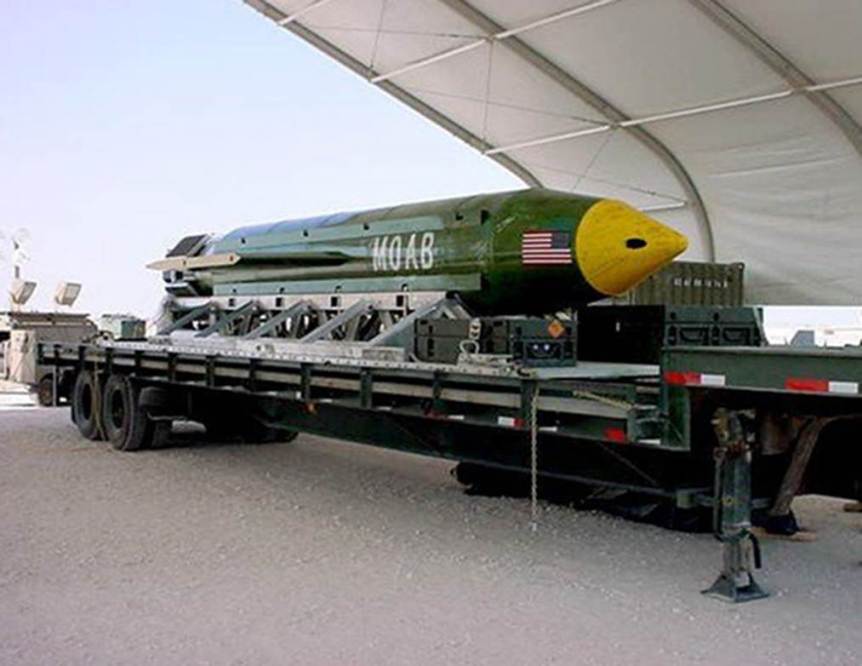
At this moment, it’s hard to think of a better symbol of American militarism than a giant bomb with a U.S. flag on it.  President Donald Trump touted the use of the “mother of all bombs” (MOAB) in Afghanistan as a “very, very successful mission” even though evidence of that success is scant.  He further cited MOAB as evidence of the “tremendous difference, tremendous difference” between his administration’s willingness to use force and Obama’s.  In short, Trump loved MOAB precisely because Obama didn’t use it.  To Trump, MOAB was a sort of penis extender and a big middle finger all-in-one.  Virility and vulgarity.
moab

MOAB is an icon of U.S. militarism, as are other weapons in the American arsenal.  Weapons like our warplanes, aircraft carriers, Predator and Reaper drones, and Tomahawk and Hellfire missiles.  U.S. foreign policy often hinges on or pivots about the deployment of these icons of power, whether it’s aircraft carriers and anti-missile systems being sent to Korea or more bombs and missiles being used in Iraq, Syria, and Afghanistan, among other countries.

Weapons sales further define U.S. foreign policy.  Witness the recent announcement of $100 billion in arms for the Saudis, soon to be confirmed by Trump in his forthcoming trip to Saudi Arabia.  This sale sets up even more military aid for Israel, in that Washington insists Israel must always maintain a qualitative edge in weaponry over its Arab rivals.

Unlike, say, Wilhelmine Germany, which elevated Field Marshal Paul von Hindenburg to iconic status during and after World War I, America today is lacking in winning generals.  Sure, there have been a few pretenders.  William Westmoreland in Vietnam, H. Norman Schwarzkopf in Desert Storm, Tommy Franks in Iraqi Freedom, and David Petraeus of “Surge” fame come to mind, but their “victories” were either illusory or lacking in staying power.  Since we can’t idolize our generals, we celebrate our weapons instead.

These weapons are indeed iconic symbols.  They capture an ideology of destruction.  A predilection for spreading misery worldwide, as Tom Engelhardt notes in his latest must-read article at TomDispatch.com.  As Engelhardt notes in his “send-out” message to his piece:

The first part of my latest post focuses on the now seven month-long U.S.-backed Iraqi military offensive against the city of Mosul, which shows little sign of ending and has reduced that city, like so many other places in the region, to ruins, if not rubble.  Mosul, in other words, has been on my mind, but perhaps not completely for the reason you might expect.  Its destruction (and the generation of yet more uprooted people and refugees) has led me to wonder what ever happened to the globalizers who for so many years told us about the wonders of tying the planet ever more tightly together and leveling all playing fields.  It seems obvious to me that war, American-style, these last 15 years, has played a distinctly globalizing role on this ever smaller planet of ours — just globalizing misery, not happy news.  In this piece I use the destruction of Mosul to lay out my thoughts on just what globalization really means in 2017, why the Trump presidency is linked to such grim events, and just why the globalizers have stopped talking about the phenomenon.

When I read Tom’s note above about the “leveling” of “playing fields,” my first thought was that America is indeed working to level the world — just not in the figurative sense of promoting economic equality, but in the literal sense of leveling areas with bombs, cities like Mosul, for example, or alleged training areas for terrorists in Afghanistan.  As Engelhardt himself notes in his article, U.S. military action isn’t making the world flatter in the sense of equitable globalization; it’s simply flattening areas with overwhelming explosive force.

Most Americans simply don’t know or care much about foreign cities being leveled/flattened by America’s icons of power.  You might say it’s not on our radar screens.  The media and our leaders do a very good job of keeping us divided, distracted, and downtrodden.  What American has time to worry about Mosul or some obscure region of Afghanistan?  Unless or until the leveling and flattening come our way, to our cities and valleys, but by that point it will be far too late to act.

With all our talk of MOAB and aircraft carriers and missiles and their “beauty” and “tremendous success,” are we that far away from the lost souls in the movie “Beneath the Planet of the Apes,” who elevated the atomic bomb as their false idol, their version of the Biblical golden calf?

beneath

The Threat of Nuclear Weapons to America

W.J. Astore

Did you know the U.S. has built nearly 70,000 nuclear weapons since 1945? Did you know the U.S. Air Force lost a B-52 and two hydrogen bombs in an accident over North Carolina in 1961, and that one of those H-bombs was a single safety-switch away from exploding with a blast equivalent to three or four million tons of TNT (roughly 200 Hiroshima-type bombs)?  Did you know a U.S. nuclear missile exploded in its silo in Arkansas in 1980, throwing its thermonuclear warhead into the countryside?

nuclear_explosion_AP
On more the one occasion, the U.S. has come close to nuking itself

That last accident is the subject of a PBS American Experience documentary that I watched last night, “Command and Control.”  I highly recommend it to all Americans, not just for what it reveals about nuclear accidents and the lack of safety, but for what it reveals about the U.S. military.

Here are a few things I learned about U.S. nuclear weapons and the military from the documentary:

  1. During the silo accident, the Strategic Air Command (SAC) general in charge of nuclear missiles was a pilot with no experience in missiles.  His order to activate a venting fan during a fuel leak led to the explosion that destroyed the missile and killed an airman. (Experts from Martin Marietta, the military contractor that built the Titan II missile, advised against such action.)
  2. Airmen who courageously tried against long odds to mitigate the accident, and who were wounded in the explosion, were subsequently punished by the Air Force.
  3. The Air Force refused to provide timely and reliable knowledge to local law enforcement as well as to the Arkansas governor (then Bill Clinton) and senators. Even Vice President Walter Mondale was denied a full and honest accounting of the accident.
  4. Nuclear safety experts concluded that “luck” played a role in the fact that the Titan’s warhead didn’t explode.  It was ejected from the silo without its power source, but if that power source had accompanied the warhead as it flew out of the silo, an explosion equivalent to two or three megatons could conceivably have happened.
  5. Finally, the number of accidents involving U.S. nuclear weapons is far greater than the military has previously reported.  Indeed, even the nation’s foremost expert in nuclear weapons development was not privy to all the data from these accidents.

In short, the U.S. has been very fortunate not to have nuked itself with multiple hydrogen bombs over the last 70 years.  Talk today of a threat from North Korea pales in comparison to the threat posed to the U.S. by its own nuclear weapons programs and their hair-raising record of serious accidents and safety violations.

Despite this record, President Obama and now President Trump have asked for nearly a trillion dollars over the next generation to modernize and improve U.S. nuclear forces. Talk about rewarding failure!

Threatening genocidal murder is what passes for “deterrence,” then and now. This madness will continue as long as people acquiesce to the idea the government knows best and can be trusted with nuclear weapons that can destroy vast areas of our own country, along with most of the world.

To end the insanity, we must commit to eliminating nuclear weapons. Ronald Reagan saw the wisdom of total nuclear disarmament.  So should we all.

An Addendum: In my Air Force career, I knew many missileers who worked in silos. They were dedicated professionals.  But accidents happen, and complex weapons systems fail often in complex and unpredictable ways.  Again, it’s nuclear experts themselves who say that luck has played a significant role in the fact that America hasn’t yet nuked itself.  (Of course, we performed a lot of above-ground nuclear testing in places like Nevada, making them “no-go” places to this day due to radiation.)

Update (4/27/17): I’d heard of Air Force plans to base nuclear weapons on the moon, but today I learned that a nuclear test was contemplated on or near the moon as a way of showcasing American might during the Cold War.  As the New York Times reported,  “Dr. [Leonard] Reiffel revealed that the Air Force had been interested in staging a surprise lunar explosion, and that its goal was propaganda. ‘The foremost intent was to impress the world with the prowess of the United States.’ It was a P.R. device, without question, in the minds of the people from the Air Force.”  Dr. Reiffel further noted that, “The cost to science of destroying the pristine lunar environment did not seem of concern to our sponsors [the U.S. military] — but it certainly was to us, as I made clear at the time.”

The U.S. military wasn’t just content to pollute the earth with nuclear radiation: they wanted to pollute space and the moon as well.  All in the name of “deterrence.”

Two pictures of above-ground nuclear testing in Nevada in 1955

Atom Bomb Blast

Atom Bomb Blast
Here’s a tip, ladies: Wear light-colored dresses during a nuclear war.  They absorb less heat

Splinterlands: A Dystopic Novel for Our Trumpian Age

splinter

W.J. Astore

Equal parts amusing and alarming, John Feffer’s dystopian novel, Splinterlands, begins with Hurricane Donald, which floods Washington DC only five years from now.  You may deny climate change, Feffer suggests, but Mother Nature will have the last word.  She will unleash catastrophes and chaos that, combined with political fragmentation driven by hyper-aggressive capitalism and myopic nationalism, lead to a truly New World (Dis)order, characterized by confessional wars, resource shortfalls, and, within two generations, the end of the world as we know it.

Can “prophets of disintegration” like Donald Trump, driven by “market authoritarianism” and their own hubris, remake the world in their own chaotic image?  Feffer makes a persuasive case that they can.  Instead of seeing “the end of history” as a triumph of liberal democracy and a beneficial global marketplace driven by efficiency and technology, Feffer sees the possibility of factionalism of all sorts, a rejection of tolerance and diversity and the embrace of intolerance, identity politics, and similar exclusionary constructs.

Coincidentally, a cautionary letter from the Oscar nominees for Best Foreign Film just crossed my desk; its words encapsulate what Feffer is warning us about.  The film directors denounced “the climate of fanaticism and nationalism we see today in the US and so many other countries.”  The letter goes on to say that:

“The fear generated by dividing us into genders, colors, religions and sexualities as a means to justify violence destroys the things that we depend on – not only as artists but as humans: the diversity of cultures, the chance to be enriched by something seemingly ‘foreign’ and the belief that human encounters can change us for the better. These divisive walls prevent people from experiencing something simple but fundamental: from discovering that we are all not so different.”

The problem, of course, is that many people prefer divisive walls, while finding meaning in fanaticism, nationalism, and the politics of difference.  We are now, Feffer writes, in a period of Great Polarization. His book is about what will happen if that polarization wins out.  He writes:

“The middle dropped out of the world.  Extremes of wealth and ideology flourished.  Political moderates became an endangered species and ‘compromise’ just another word for ‘appeasement.’  First came the disagreements over regulatory policy, then sharper political divides.  Finally, as the world quick-marched itself back through history, came the return of the war of all against all.  The EU, committed to the golden mean, had no way of surviving in such an environment without itself going to extremes.”

The result?  By the 2020s, the EU “evaporated like so much steam.” With Brexit ongoing, with the EU under increasing stress daily, Feffer’s scenario of an evaporating EU seems more than plausible.

Meanwhile, another breaking news item just crossed my desk: President Trump is seeking a $54 billion increase to America’s defense budget, to be funded by deep cuts to other federal agencies such as the EPA and Education.  Trump and his team see the world as a dangerous place, and the military as the best and only means to “protect” America, as in “America first.”  But by its nature the U.S. military is a global force, and more money for it means more military adventurism, driving further warfare, fragmentation, and chaos, consistent with Feffer’s vision of a future “splinterlands.”

As one of Feffer’s characters says, “There’s always been enormous profits in large-scale suffering.”  Feffer’s dystopic novel — like our real world today — features plenty of that. People suffer because of climate change.  Energy shortages.  Wars.  Water shortages.  Even technology serves to divide rather than to unite people, as many increasingly retreat into virtual “realities” that are far more pleasant than the real world that surrounds them.

Feffer’s book, in short, is provocative in the best sense.  But will it provoke us to make wiser, more inclusive, more compassionate, more humane choices?  That may be too much to ask of any book, but it’s not too much to ask of ourselves and our leaders.  The dystopic alternative, illustrated so powerfully in Feffer’s Splinterlands, provides us with powerful motivation to shape a better, less splintered, future.


The F-35 Fighter: Not Invisible to Trump’s Radar

a-10-thunderbolt-ii_001
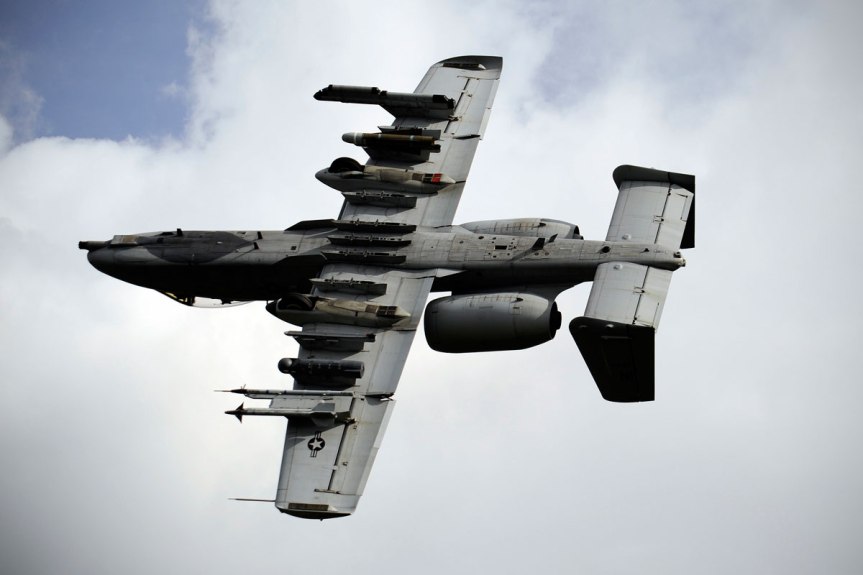
You can hang a lot more weaponry from an A-10 Warthog (vintage 1970s) than you can from a modern F-35

W.J. Astore

Is Donald Trump putting coal in Lockheed Martin’s Christmas stocking?

Trump has sent another tweet about the F-35 jet fighter (Lockheed Martin is the primary contractor), this time asking Boeing to price out a comparable F-18 Super Hornet as a possible replacement for that jet.  Trump’s tweet caused Lockheed Martin shares to dive even as Boeing shares climbed.

Trump is right to pressure Lockheed Martin on the F-35, though I’m not sure tweets are the best way to do this.  I remember planning for the F-35 twenty years ago when I was on active duty in the Air Force.  The F-35 Joint Strike Fighter was supposed to be a relatively low cost fighter/attack aircraft that would meet Air Force, Navy, and Marine needs.  Back then, the flyaway cost was estimated at $40 million per plane, more expensive than the F-16 but roughly equivalent to the F-15E “Strike Eagle.”  The current flyaway cost is roughly $200 million per plane,* and even higher for the Marine Corps version with its vertical landing/short takeoff capacity.

f-35
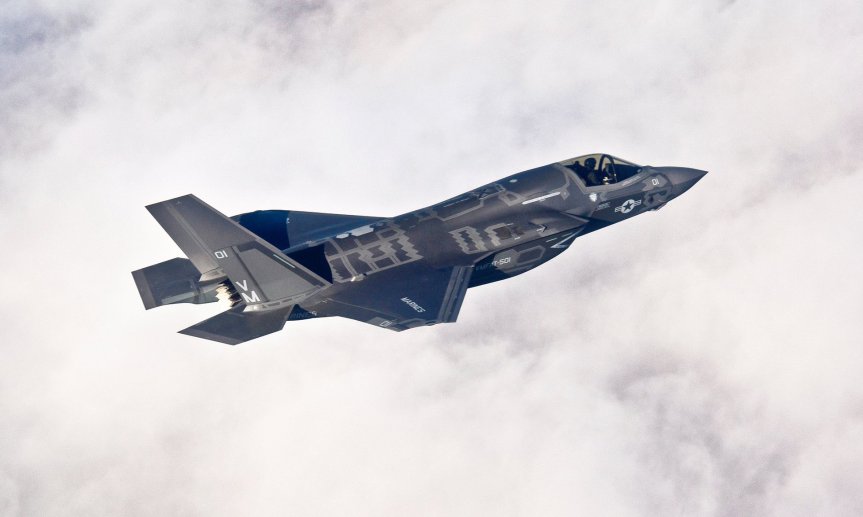
The F-35: Stealthy but expensive, with a long history of cost overruns

What happened?  Everything went wrong as each service piled requirements onto the F-35 and all kinds of exotic features were added to it.  Stealth capability.  Loads of special software featuring millions of lines of code.  Unique (and expensive) helmets for its pilots. Vertical landing/short takeoff capacity for the Marines, which drove an airframe configuration that made it less maneuverable for the Air Force.  In short, the F-35 became like a Swiss army knife, featuring lots of tools and moving parts.  Sure, in a pinch a Swiss army knife can be used as a screwdriver or what have you, but most of the time what you really need is the best screwdriver for the job.

The F-35 is reminiscent of another ill-fated effort to build a jet acceptable to all the services: the F-111 “swing-wing” program of the 1960s.

f111
Big and ungainly, the F-111 was mainly used as a bomber and electronics warfare plane

The Navy never deployed it, and the Air Force was never that happy with it, converting it to a fighter/bomber and an electronics warfare plane.  The Navy went on to build its own fighter jet, the F-14, even as the Air Force built its fighter jet, the F-15.  Then the Air Force and Navy got two decent fighter/attack jets, the F-16 and F-18, out of the lightweight fighter competition.**

Here’s the thing: Although jets like the F-15 and F-18 are not stealthy, they are very effective, especially when updated with the latest weaponry and avionics and flown by skilled pilots.  Meanwhile, highly effective UAVs (drones) have emerged, e.g. Predators and Reapers, with long loiter times and no risk of U.S. casualties.  To put it bluntly, does the U.S. really need the F-35, especially given its high cost and underwhelming performance?

Back to Donald Trump.  Is he bluffing when he threatens to buy Boeing-made F-18s instead of the F-35?  Is he posturing to get Lockheed Martin to cut the price of the F-35 (which, at this late stage of its development, may not even be possible)?  One thing is certain: A lot of good American jobs are riding on Trump’s tweets.  Expect Lockheed Martin to rally its Congressional allies to defend the program.  The plane’s multitude of contracts were deliberately spread throughout the 50 states to gain as much Congressional support as possible.

For a little fun, go to the Lockheed Martin website at the following link:

https://www.f35.com/about/economic-impact-map

Let’s put in Pennsylvania.  Here’s what you get: 41 supplier locations, 2100 jobs, $172.5M in economic impact.  How about New York?  77 suppliers, 8160 jobs, $695.2M in economic impact.  How about Bernie Sanders’s state of Vermont?  3 suppliers, 1410 jobs, $124.5 million in economic impact.  Small wonder that even Bernie Sanders during the campaign was an F-35 supporter.

One thing is certain: the stealthy F-35 has not evaded Trump’s radar.  Whether Trump will shoot it down or simply watch it as it soars on by while burning through piles of money remains to be seen.

Note: For a more detailed report on the F-35’s performance issues, see “The F-35 Stealth Fighter May Never Be Ready for Combat: Testing report contradicts the U.S. Air Force’s rosy pronouncements,” by DAN GRAZIER & MANDY SMITHBERGER, available at this link. In short, the plane’s “requirement” to be stealthy is driving higher costs and lower performance. The plane gobbles gas so it has limited combat endurance. It’s a step backwards in effectiveness, at a much higher cost to the American taxpayer than previous planes such as the F-15, F-16, and A-10.  Meanwhile, many of its missions are now filled by drones.

For a counterpoint in favor of the F-35, see this link.  The F-35 has unique capabilities; it should, given its price tag.  Leaving aside high cost and questionable performance, it’s vital to remember the mission.  Are there really missions that only the F-35 can do, or that no plane can do as effectively?  But the real case for the F-35 seems to come down to the fact that the program is simply too big to fail; the “sunk costs” are too high; its rivals are too old; and too many American jobs are dependent on it.  In short, the U.S. military is stuck with the plane — and the American taxpayer is stuck with the bill.

*Estimates vary about the final flyaway cost since it’s ultimately dependent on how many F-35s are produced.  Current estimates for the entire U.S. purchase are $400 billion, with another trillion dollars for maintenance and spares and related costs over the program’s lifetime.

**The most rugged and effective attack jet in the Air Force’s inventory, the A-10, was never much liked by the Air Force; generals have fought to eliminate it in favor of the much less effective F-35, but Congress has actually fought back to keep the A-10, affectionately known as the Warthog, a name and image contrary to the AF fighter pilot mystique of “eagles” and “fighting falcons.”

On Nuclear Weapons, Trump is Nightmarishly Scary

ohio6
An Ohio-class nuclear submarine

W.J. Astore

Much of the post-debate analysis I’ve read from last night’s presidential debate has focused on Donald Trump’s crudeness, his threat to prosecute and jail his political opponent, the way in which he stalked her on the stage, looming in the background and crowding her, and finally his non-apology apology about “locker room banter.”  Yes: Trump is most definitely lewd, crude, and socially unacceptable, but that’s hardly the worst of his qualities.

His worst quality?  His sweeping ignorance to the point of recklessness when it comes to matters of national defense, and specifically America’s nuclear arsenal.

This is what Trump had to say last night about the U.S. nuclear deterrent:

But our nuclear program has fallen way behind, and they’ve gone wild with their nuclear program. Not good. Our government shouldn’t have allowed that to happen. Russia is new in terms of nuclear. We are old. We’re tired. We’re exhausted in terms of nuclear. A very bad thing.

This is utter nonsense.  First off, nuclear weapons are not people.  They don’t get “tired” or “exhausted” or “old.”  Second, the U.S. nuclear program has not “fallen way behind” the programs of other nations, certainly not Russia’s.  Third, even if portions of Russia’s nuclear program are “new” (whatever that means), that’s not necessarily a bad thing for the United States.  “New” in this case may mean safer and more reliable systems that are less prone to catastrophic error.

Here’s an undeniable fact: The U.S. nuclear arsenal is by far the world’s most powerful and advanced.  The key aspect to nuclear capability is survivability, and nothing is more survivable than America’s force of Trident nuclear submarines.  Virtually impossible to detect, America’s Trident force is essentially capable of destroying the world.  One submarine carries enough missiles and warheads to devastate every major city in Russia (or any other country, for that matter).  What more is needed as a deterrent?

Specifically, an Ohio-class Trident submarine can carry up to 24 nuclear missiles, each with up to eight nuclear warheads, each warhead equivalent to roughly six Hiroshima bombs.  That represents a potential for hitting 192 targets, each with six times the impact of the atomic bomb dropped on Hiroshima in 1945 (which killed up to 200,000 people). That’s 1152 Hiroshimas from one submarine — a rough calculus, I know, but accurate enough to show the awesome might represented by a small portion of America’s nuclear force.

The Trident missiles are also incredibly accurate, with a circular error probability of less than 150 meters.  And the U.S. has 14 of these submarines.  (Not all are on patrol at any one time.) These highly sophisticated and ultra-powerful submarines are further augmented by land-based ICBMs (intercontinental ballistic missiles) and bomber planes (the “air-breathing” element), forming the other two legs of the American nuclear triad. Again, when it comes to redundancy, accuracy, and survivability, no other country comes close to America’s nuclear capability.

This awesome nuclear force is not a sign the U.S. is “old” and “tired” and “exhausted.” It’s a sign that the U.S. is incredibly powerful, and, if you’re a foreign leader, incredibly dangerous, especially if America’s next commander-in-chief is undisciplined, thin-skinned, and in possession of a scattershot knowledge of military matters.

Back in March of this year, Trump boasted at a debate that the U.S. military would follow his orders irrespective of their legality.  In this latest debate, he yet again revealed that he has no real knowledge of America’s nuclear capability and how modern and powerful (and scary) it truly is.

Sure, Trump is crude, lewd, and sexist, but those qualities won’t destroy the world as we know it.  Ignorance about nuclear weapons, combined with impetuosity and an avowed affection for he-man wild-card generals like George S. Patton and Douglas MacArthur, is a recipe for utter disaster.

Ignorance and Dishonesty: Trump, Hillary, and Nuclear Genocide

castle-romeo-573x720
Some honesty, please!

W.J. Astore

Should the United States reject the “first use” of nuclear weapons?  That question was put to Hillary Clinton and Donald Trump during their first debate.  Colonel (retired) Andrew Bacevich asks us to take their answers seriously in his latest insightful essay at TomDispatch.com, which I urge you to read here in full.

Trump was asked to respond first, and his rambling answer, I thought, showed the evidence of someone who had crammed for a test.  He was desperate to show he knew something – anything – about America’s nuclear forces (here some may recall how Trump obviously knew little about America’s nuclear triad during the Republican primary debates).  So Trump rambled on about obsolete B-52s flown by the sons and grandsons of previous pilots, a non sequitur since the B-52 has been continuously upgraded with new engines, advanced avionics, the latest in high-tech weaponry, and despite their age they’re still more than capable of doing the job.  But somebody must have told Trump to use the B-52’s age as a talking point, and he was determined to get it in.

As confused and incoherent as Trump’s reply was (read more about this at TomDispatch.com), at least he tried to grapple with the issue.  Trump did reject First Strike.  He did refer to the terror of nuclear war, even as he got lost in other talking points about North Korea, Iran, and allegations about how weak on national security Obama is.

By comparison, Clinton’s response was classic Hillary.  Avoid and evade.  Try to be all things to all voters.  Bloviate, in other words, as Warren G. Harding did in 1920.  In essence, Hillary ducked the question.  She refused to address the issue of first use of nuclear weapons; indeed, she didn’t address nuclear strategy and policy at all.  Instead, she drew a contrast between her experience and predictability versus Trump’s inexperience and unpredictability.  Her message was clear: I’m not talking about nuclear weapons or policy, except to say you shouldn’t trust Trump with the nuclear launch codes.

Who won on this question?  Bacevich is right to say neither candidate won, but it’s clear who lost: the American people.  And the world.

It’s shameful that this country hasn’t rejected the first use of nuclear weapons.  It’s also shameful that instead of working to eliminate nuclear weapons, the U.S. is actually planning to spend nearly a trillion dollars over the next 30 years to upgrade that arsenal.  For what possible strategic purpose, one must ask?  America’s current nuclear deterrent is the most powerful and survivable in the world.  No other country comes close.  There’s no rational reason to invest more money in nuclear weapons, unless you count the jobs and money related to building new nuclear submarines, weaponry, bombs, and all the other infrastructure related to America’s nuclear triad of Trident submarines, land-based bombers, and fixed missile silos.

Neither Trump nor Hillary addressed this issue.  Trump was simply ignorant.  Hillary was simply disingenuous.  Which candidate was worse?  When you’re talking about nuclear genocidal death, it surely does matter.  Ignorance is not bliss, nor is a lack of forthrightness and honesty.

Next time, Mr. Trump and Secretary Clinton, let’s have some rigor, some honesty, and some wisdom on the issue of nuclear weapons.  Not only America deserves it – the world does.

Send in the B-52s

Usaf.Boeing_B-52
Sixty Years of B-52s (U.S. Air Force photo)

W.J. Astore

Perhaps there should be a “new rule” on the American military scene: When the B-52s are called out (Vietnam, Iraq, Afghanistan), it means America has well and truly lost.

Unbeknownst to most Americans, since April of this year, B-52s flying out of “Al Udeid airbase in Qatar … have conducted more than 325 strikes in almost 270 sorties, using over 1,300 weapons” against ISIS and now in Afghanistan, notes Paul Rogers at Open Democracy.

For those of you unfamiliar with B-52s, they are huge long-range bombers, originally deployed in the 1950s to carry nuclear weapons against the Soviet Union.  In the 1960s and early 1970s, they were called upon to carry conventional bomb loads during the Vietnam War.  Their enormous bomb tonnages did not serve to win that war, however, nor has the subsequent use of B-52s in places like Iraq and Afghanistan served to win those wars.  They have become a sort of stop-gap weapon system, their ordnance called upon to stem the tide of American military reversals even as their presence is supposed to demonstrate American resolve.

In a way, America’s B-52s are like the Imperial Star Destroyers of the “Star Wars” universe.

ImperialstarDestroyer480ppx
An imperial star destroyer loses yet another chase

Big, lumbering ships that never seem to provide a winning edge vis-a-vis the smaller, “rebel” forces against which they’re deployed.  But the empire, which never seems to learn, keeps using them, even as it seeks even bigger, “Death Star” weaponry with which to annihilate the resistance.

Of course, when Americans think about air power, they don’t think of “Star Wars” battles or B-52s on bombing runs.  They think of audacious and cocky fighter pilots, like Tom Cruise’s “Maverick” in the highly popular movie, “Top Gun.” For me, the most telling scene in that movie is when the flashy, undisciplined, and self-centered Maverick puts his F-14 Tomcat jet into an irrecoverable flat spin. That wouldn’t be so bad, except Maverick has a backseater, “Goose,” who dies during the ejection.  Maverick, of course, ejects safely and lives to fight another day.

goose
It’s too late for Goose, but Tom Cruise lives on to make more bad movies

Again, most people probably remember the cheesy ending to this movie where Cruise is shooting down MiG after MiG.  But take another look at the flat spin scene.  America, like Maverick and Goose’s jet, is dropping from the sky, spinning wildly and uncontrollably all the way.  And while a few Mavericks may be lucky enough to get away unscathed, many Gooses in the process are going to end up dead.

Goose didn’t deserve to die in “Top Gun,” and neither do the many “gooses” around the world caught in the violent and all-too-real backwash of America’s jet-fueled wars.

Hillary and the Earth Wreckers

nothing
Nothing to see here … move along

W.J. Astore

News that Hillary Clinton has selected Ken Salazar to head her transition team should give pause to anyone who believes Hillary’s claim that she’s a “Progressive.”  Assuming Hillary wins the presidency, Salazar will chair the team that helps her to fill more than 4000 appointments.

What do we know about Salazar?  According to a report at The Intercept,

As a senator, Salazar was widely considered a reliable friend to the oil, gas, ranching and mining industries. As interior secretary, he opened the Arctic Ocean for oil drilling, and oversaw the botched response to the BP oil spill in the Gulf of Mexico. Since returning to the private sector, he has been an ardent supporter of the TPP, while pushing back against curbs on fracking….

“We know that, from everything we’ve seen, there’s not a single case where hydraulic fracking has created an environmental problem for anyone,” Salazar told the attendees, who included the vice president of BP America, another keynote speaker at the conference. “We need to make sure that story is told.”

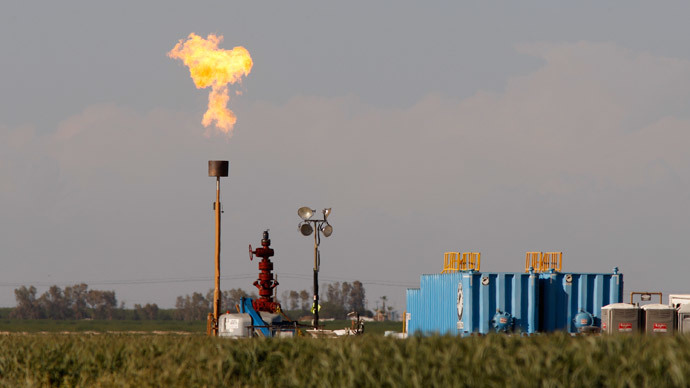
Really, Mr. Salazar?  I lived in Pennsylvania for nine years, during the height of the fracking boom.  A friend of mine lost his family farm and land due to poisoned water caused by fracking.  Earthquakes have been traced to fracking.  Methane seepage and burn-off contributes to global warming.  Fracking chemicals are highly toxic and wastewater from fracking is radioactive.  And these are just a few of the dangers associated with fracking.

It’s one thing to argue that fracking is hazardous but that those hazards can be controlled through rigorous practices that emphasize environmental safety.  It’s a defensible position, though I believe the hazards are not fully known, therefore they can’t be fully controlled, let alone minimized.  But Salazar is arguing fracking has not caused a single environmental problem!  For anyone!

Yes, Hillary now claims she’s against fracking (when she led the State Department, she was strongly for it).  But how does that flip-flop square with her decision to appoint yet another earth wrecker to a key position in her government-to-be?  Just what the planet needs: a pro-fracking, pro-industry, corporate shill who will help to ensure that people like himself will occupy key positions of authority in a Clinton government.

I’ve witnessed enough earth wrecking.  Count me out of Hillary 2016.

“People Who Cherish the Second Amendment”

dirty-harry
Worthy of being cherished?

W.J. Astore

The U.S. Constitution and especially the Bill of Rights is the foundation of our democracy.  If you had to pick a right to celebrate, perhaps even to cherish, which would it be?  There are so many important ones, such as freedom of speech, freedom of the press, freedom of assembly, freedom of religion, our right to privacy (the fourth amendment), and so on. There are other amendments that righted old wrongs, including prohibitions against slavery and the granting of the vote to Blacks and women.

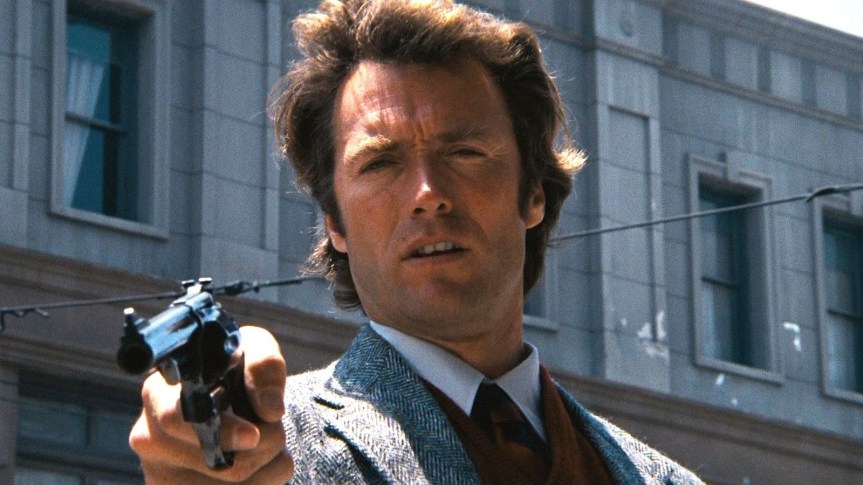
Yet which right/amendment is the best known in U.S. politics today?  The second amendment, or the right to bear arms, which Mike Pence referred to yesterday when he noted, “people who cherish the Second Amendment have a very clear choice in this election.”

Uneducated Voters

OK, I’ve owned guns and enjoy shooting, but I hardly “cherish” my right to spend thousands of dollars on lots of guns.  I have friends who hunt and friends who collect guns and I wouldn’t deny them their rights to do both, but again why is this the one right that deserves to be singled out as worthy of being “cherished” in a democracy?

I know: the NRA and its followers claim that an armed citizenry is the best guarantor of all the other rights, a position that is, quite frankly, ridiculous. Believe me, your personal collection of guns is not going to stop a trained military using tanks and artillery and all the other heavy weaponry of war. And no: this is not an argument for you to have the right to purchase your very own M-1 Abrams tank!

Look: No political candidate plans to take away anyone’s guns. Nevertheless, the NRA and Trump/Pence persist in scaring gun owners while encouraging a “cherishing” attitude toward guns.  And here’s the telling part: Even as the gun cherishers bloviate about the extreme importance of gun rights, they virtually ignore all the other rights that do need protecting in America, especially our rights to speech, assembly, and privacy.

Stop fixating on guns, America, and start cherishing what really matters: your rights as a citizen to have a real say in politics and the running of this country. Those are the rights that truly need protecting.


Noise, Noise, Noise!

United_States_Declaration_of_Independence
Words can be explosive too

W.J. Astore

People who don’t like noise get a bad rap in America. We once had neighbors in Colorado who used to ride off-road dirt bikes up and down the street. Someone complained about the noise and their response was, “Don’t like it? Move. This is America. We have freedom to make all the noise we want.”

Yesterday, my barber was talking about television. He was watching an “entertainment” show in which people were screaming, amplified by explosions, and he just couldn’t abide the noise. But he’s an old fuddy-duddy, like me, right?

When I watch baseball on TV, I keep the “mute” button very close by for the commercials. But even the commentators are getting noisy. Baseball used to be a fairly quiet game with two commentators in the booth, a play-by-play guy and a “color” guy (usually an ex-ballplayer).  Now there are often three people in the booth, with another one (or even two) on the sidelines. They all need to speak, of course, so baseball on TV has become a constant contest of endless chatter featuring mindless statistics.  There’s so much chatter that it’s difficult to hear the crack of a bat or the sound of a fastball smacking a catcher’s mitt.  Then there are the stadiums that feature lots of rock music, sound effects (like smashing glass for a foul ball), horns and pyrotechnics that go off when a player hits a home run, and all those video boards that order the fans to “Make Some Noise!”.

I know — I sound like an old fuddy-duddy again — sort of like the Grinch who stole Christmas because he was tired of all the noise, noise, noise of the Whos in Whoville.  And if the Grinch was bothered by Christmas festivities, just think of how he’d react to July 4th, America’s most pyrotechnic holiday. Prepare for bombs bursting in air, jets screaming overhead, and loud music everywhere.

Just so you know, I’ve been known to pump up the volume on my favorite songs; I’ve thrilled to fireworks exploding in the sky; I’ve watched my share of air shows; I’ve even been at the very front of rock concerts as “security” (I fondly recall a Warren Zevon concert at which I had to arrange the return of a leather coat loaned by a fan to Zevon, who donned it on stage to the delight of the fan).

But you might say those noise events were matters of personal choice.  Lately, noise in America seems pervasive, ubiquitous, almost unavoidable.  And noise isn’t simply about volume: it’s about persistence.  It’s about invasiveness.  Think of people who chatter away on Smart phones even as they’re out for a quiet walk along the beach or in the woods. How can you hear the waves or the birds if you’re screaming into a phone? Bits and pieces of conversations I’ve overheard are not about emergencies or even pressing matters; it’s more like, “Guess where I am?  I’m at the beach/concert/top of the mountain!”  Followed by selfies and postings and more calls or texts.

With all these forms of noise, it’s difficult to be in the moment.  It’s even difficult to find a moment.  Also, even in quiet times, people feel pressured to fill the silence with, well, something.  So unaccustomed to quiet are they that they reach for their Smart phones (perhaps to play a noisy video game), or they turn on the TV, or they chatter away even when they have nothing to say. Must avoid “uncomfortable” silences, so we’ve been told.

Part of this is cultural.  Today’s Americans are not about reflection; we’re about action. We’re not thinkers; we’re doers.  If I rest I rust is our motto.  Together with, Don’t just stand there — do something!  Preferably, something loud, splashy, noisy.

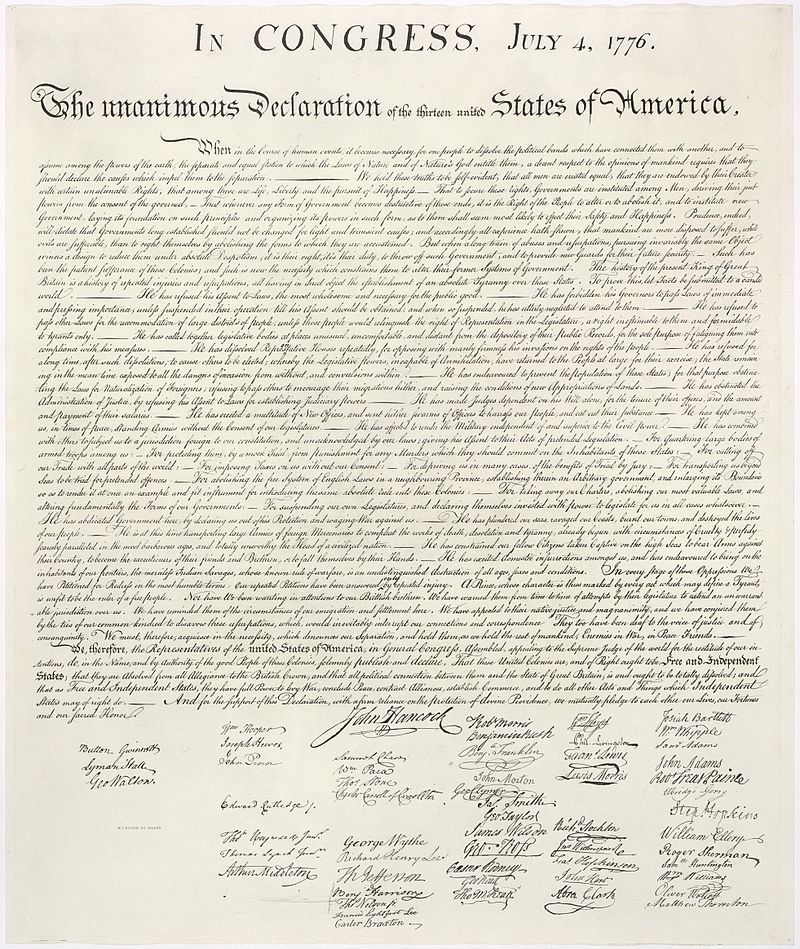
July 4th is a great holiday, but along with the fireworks and noise, perhaps we should celebrate the reflective thinkers of America, people like Thomas Jefferson who put the words to the noise of the American revolution in the Declaration of Independence. The quiet sound of a quill pen dipping in ink and scratching across parchment made a very big noise indeed in U.S. and World history.

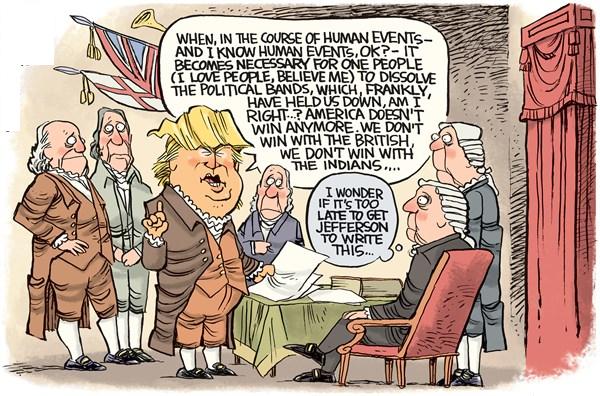
Trump Fourth of July

This weekend, it wouldn’t hurt to put down or turn off the mowers, blowers, fireworks, Smart phones, TVs, and all the rest of our noisemakers and listen to the birds and waves while reading a few passages from that Declaration of Independence.  For the right words can be explosive too.