A Letter to the Catholic Church

With Some Follow-on Thoughts

BILL ASTORE

OCT 14, 2025

Back in June of 2023, I wrote a letter to my archdiocese in response to a request for money. (I am a lapsed Catholic who has in the past given money to the Church.) Here is the letter I wrote, with some follow-on thoughts:

*****

June 2023

Most Reverend ***

Archdiocese of Boston

Dear Reverend ***

I received your Catholic Appeal funding letter dated June 1st. I won’t be contributing…

[Well into the 1990s,] I took my Catholic faith seriously; in fact, my master’s thesis at Johns Hopkins, which examined Catholic responses to science in the mid-19th century, especially Darwinism, geology, and polygenism, was published in the Catholic Historical Review. But scandals involving the Church drove me to question my commitment to Catholicism and especially its patriarchal hierarchy, which was so intimately involved in the coverups of crimes committed against innocents.

I grew up in Brockton, Mass., where the archdiocese assigned a predatory priest to our church of St. Patrick’s. His name was Robert F. Daly. He abused minors and was eventually defrocked by the Church, but far too late. (See the Boston Globe, 6/14/11.)

When I attended St. Patrick’s in the 1970s, Father Daly was teaching CCD. A sexual predator was attempting to teach young people the meaning of Christian love. He had a decent definition for love, something like “giving, without expecting anything in return.” Selfless love, I suppose. Tragically, he obviously failed catastrophically to practice what he preached.

Fortunately, I was never abused. I was supposed to have one meeting with him, alone, that was cancelled at the last minute. I’d like to imagine God was looking out for me on that day, but that’s absurd. Why wasn’t God looking out for all those children abused by Catholic clergy like Father Daly?

To be blunt, I am thoroughly disgusted by the moral cowardice of the archdiocese in confronting fully its painful legacy of failing to protect vulnerable children against predatory priests like Father Daly. Shame on the Church.

The Bible says that all sins may be forgiven except those against the Holy Spirit. This is supposed to refer to a stubborn form of blasphemy. Yet I truly can’t think of a worse sin committed by the Church than to allow innocent children to suffer at the hands of predators disguised as “fathers.”

I sincerely hope you are doing something to change the Church, to reform it, to save it. I fear the Church has not fully confessed its sins, and in that sense it truly does not deserve absolution from the laity. Far too often, the Church has placed its own survival ahead of Truth, ahead of Christ as the Way and the Truth, and thus the Church has washed its hands of its crimes, as Pontius Pilate did.

I am staggered by this betrayal.

Perhaps you have truly fought to reform the Church. If you have not yet done so, perhaps you will soon find the moral courage. I pass no judgment on you. Judge not, lest you be judged. But I do find the Church to be wanting.

Recalling scripture, if the Church does not abide in Christ, should it not be cast into the fire and be consumed?

I am sorry to share such a bleak message with you. I find the Church’s decline to be truly tragic because we need high moral standards now more than ever. Yet the Church is adrift, consumed by petty concerns and obedience to power. Just one example: The U.S. Church cannot even clearly condemn the moral depravity of genocidal nuclear weapons!

I realize I am seriously out of step with today’s Catholic church. I believe priests should be able to marry if they so choose. I believe women who have a calling should be ordained as priests. I believe the Church’s position on abortion is absolutist and wrong. More than anything, I believe the Church is too concerned with itself and its own survival and therefore is alienated from the true spirit of Christ, a spirit of compassion and love.

Unlike you, I cannot in good conscience claim to be “devotedly yours in Christ.” But I am sincere in wishing you the moral courage you will need to manifest your devotion in directions that will help the least of those among us the most. For I well recall the song we sang in our youth: Whatsoever you do for the least of my brothers, that you do unto Me.

Sincerely yours

*****

I’m happy to say I get a thoughtful response from a local bishop, who assured me the Church was serious about reform, was doing all that it could to eliminate pedophilia and to punish those who were guilty of it, and that therefore the Church no longer needed outside policing.

It was the last statement that puzzled me. The Church disgraced itself precisely because it had swept decades of crimes under the rug. Hadn’t the Church learned that earnest attempts at reform by insiders were necessary but not sufficient?

So I wrote back these comments to the bishop:

I will say this as well: I don’t think the Church can police itself from within. That’s what produced the scandals to begin with. It’s like asking the Pentagon to police itself, or police forces with their “internal affairs” departments.

The Church has to open itself to being accountable to the laity, not just to reformers like yourself. Thus the Church has to cede power and a certain measure of autonomy, and institutions are loath to do this, for obvious reasons. Meanwhile, the Church is being weakened by lawsuits, as people seek compensation (and perhaps a measure of vengeance) for sins of the past.

Skeptics would reply that it took a huge scandal with major financial implications to force the Church to do the right thing.

For too long, the Church tolerated these crimes. The Church is hardly unique here. Think of sexual assaults within the military (notably during basic training), or think of the Sandusky scandal at Penn State, where Joe Paterno clearly knew of (some) of Sandusky’s abuse, yet chose not to take adequate action. (I was at Penn College when that scandal broke.)

The challenge, as you know, is that the Church is supposed to be a role model, an exemplar of virtue. Priests hold a special place of trust within communities and are therefore held in especially high regard.
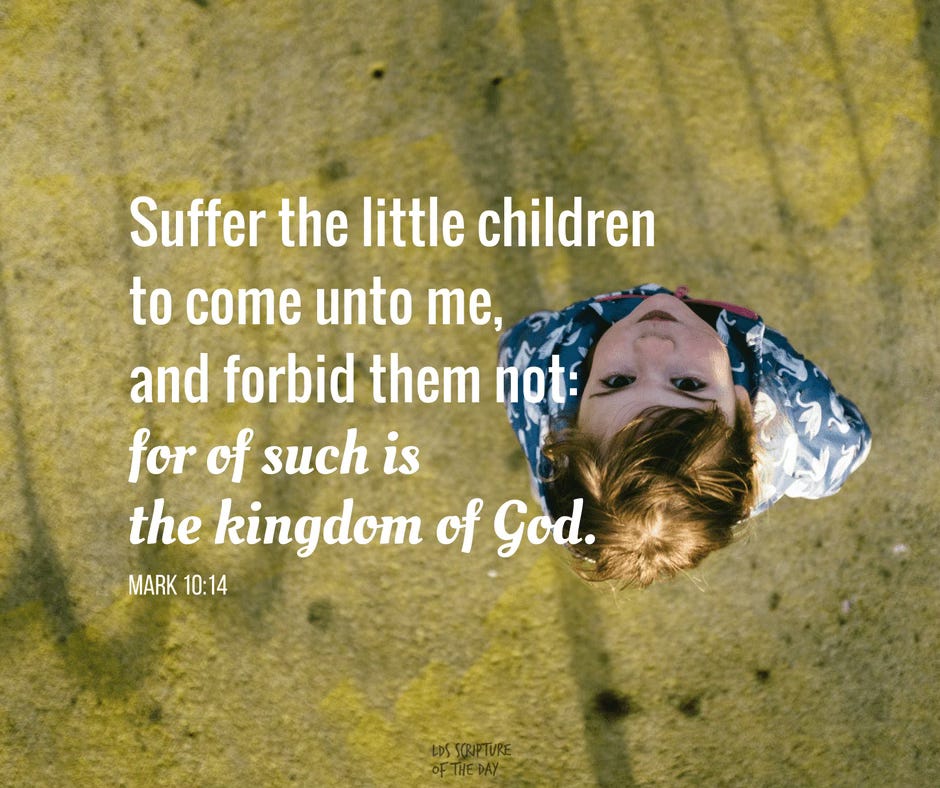
Image courtesy of the Mormon (LDS) Church

As my older brother-in-law explained to me, if a young boy or girl accused a priest of assault in the 1950s or 1960s, few if any people would have believed them. Indeed, the youngster was likely to be slapped by a parent for defaming a priest. That moral authority, that respect, was earned by so many priests who had done the right thing, set the right example. It was ruined by a minority of priests who became predators and a Church hierarchy that largely looked the other way, swept it under the rug, or otherwise failed to act quickly and decisively.

As you say, the Church has learned. It is now better at policing itself. The shame of it all is that it took so much suffering by innocents, and the revelations of the same and the moral outrage that followed, to get the Church to change.

*****

Friends of mine who are still firm believers tell me, correctly, that the Church is much more than the hierarchy. It certainly shouldn’t be defined by the grievous sins of a few. Still, I can’t bring myself to rejoin a Church that so grievously failed the most innocent among us.

There’s a passage in the New Testament where Christ says: “Suffer little children to come unto me.” As in, let the children come, I will bless them, for they in their innocence and humility are examples to us all. He didn’t teach, let the children suffer, molest them and exploit them, then cover it all up. 

I still have respect for priests who exhibit the true fruits of their calling. I still find the teachings of Christ to be foundational to my moral outlook. But I find the Church itself to be unnecessary to the practice of my faith, such as it is. I do hope the Church truly embraces transparency and service; I hope it recalls as well its need to preach life and love and peace, as we need these now more than ever.
Catastrophic Flooding in Texas

Just Don’t Mention Global Warming or Climate Change

BILL ASTORE

JUL 07, 2025

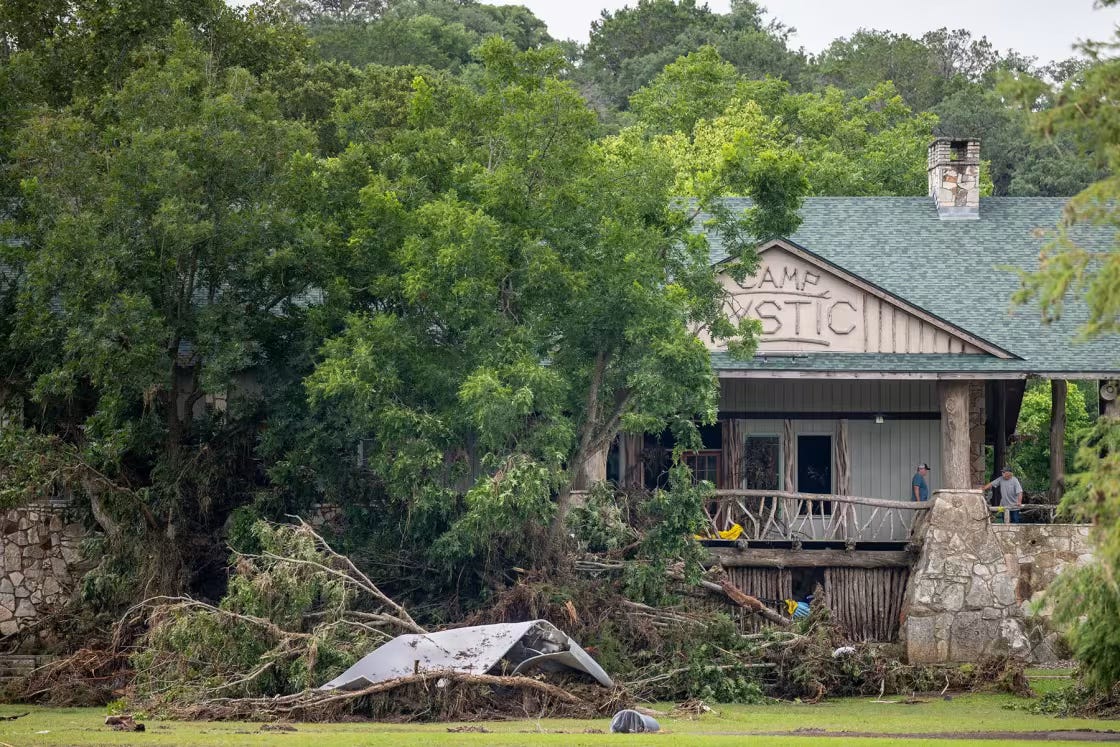
More than 100 people are already dead from catastrophic flooding in Texas. The “blame game” has started, with the Trump administration taking heat for flash flood warnings that came too late to save those in the path of surging rivers fed by thunderstorms dumping too much rain in too short a time.

Camp Mystic in Texas was especially hard hit by flooding, losing 27 children and camp counselors

The White House, naturally, says it’s not their fault. If you want to blame someone, blame God. A quick summary from NBC:

White House Press Secretary Karoline Leavitt pushed back against questions as to why flood alerts were issued “while people were likely sleeping” and what the administration is doing to ensure alerts go out earlier.

Leavitt noted that the National Weather Service issued escalating warnings Thursday regarding the weather forecasts as information came in. She said there were “timely flash flood alerts” including a flood watch in the afternoon, evening, and “timely flash flood alerts” at night.

“So people were sleeping in the middle of the night when this flood came — that was an act of God,” Leavitt said. “It’s not the administration’s fault that the flood hit when it did, but there were early and consistent warnings.”

“An act of God” — Divine wrath? Judgment? What, exactly?

Why do we use this expression, “an act of God,” as if God or gods are just waiting to smite people with hurricanes, floods, locusts, tornados, and (Lord?) knows what else.

Wasn’t it really an act of nature? Too much heat, too much humidity, and wind patterns combining somewhat predictably to cause dangerous flash flooding. An act of nature we can guard against. An act of God implies caprice, violence, and forces that can neither be predicted nor prevented.

We know about acts of nature. That’s why we have science and scientists, or in this case meteorologists, radar, supercomputers, and the like. We fund a national weather service of experts so that we can predict and perhaps ameliorate some of these acts of nature.

But we know as well nature is becoming more extreme. Nature’s acts are becoming more violent as the earth slowly warms and as climate patterns become more violent and hence often less predictable—as well as more punishing.

Let’s not talk about acts of God, whether as a way to shift blame or even as a form of comfort. (Speaking for myself, I wouldn’t be comforted if someone told me God had swept my loved one away in a flash flood He sent.) Let’s talk about acts of nature, and how they’re growing more violent, and the steps we can take to understand them, predict them better, and lessen their impact.

Again, “act of God” gets us nowhere. But I know man is acting, with drill, baby, drill consistency, and man’s acts are something we do have control over.

With sympathy to all those who’ve lost loved ones in the terrifying flash flooding in Texas. Nature can be brutal—it’s why we must respect it, study it, and understand it.

Pope Francis and His Legacy

W.J. Astore

Reforming the Catholic Church

I woke to the news that Pope Francis had died at the age of 88. Francis had qualities that I admired, including his lack of pomp and his support of the disadvantaged. As Caitlin Johnstone notes, Francis was an advocate for the Palestinians. He was known as a “liberal” pope, so my guess is that we’ll soon see an old-school conservative elected as the new pope.

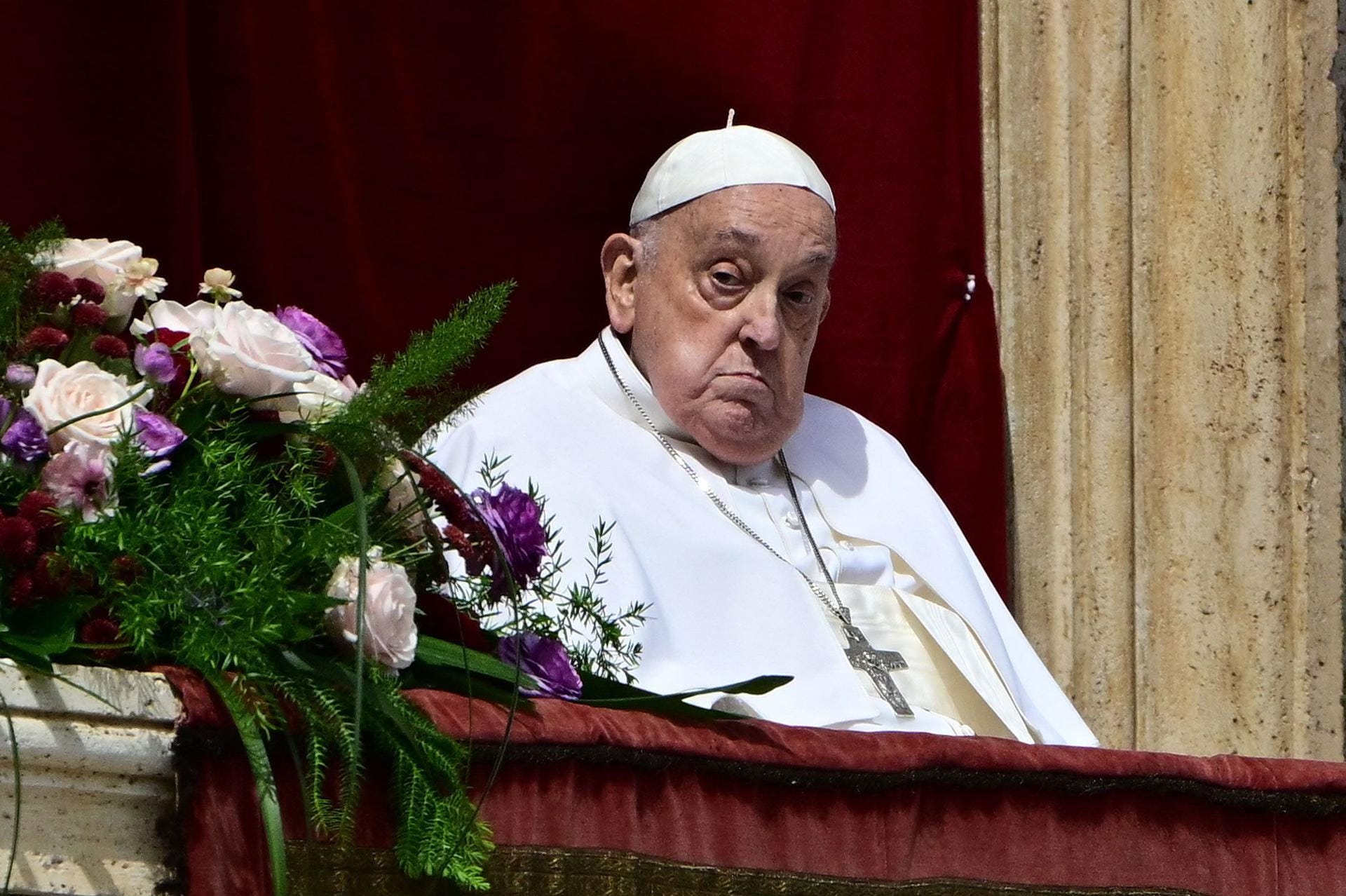
Pope Francis (Tiziana Fabi/AFP/Getty Images)

I was raised Catholic, getting confirmed back in 1979, but I’m very much a lapsed one today. I think the Church should allow female priests and should not persist in upholding chastity for the hierarchy. I think the Church should speak out far more strongly against genocidal nuclear weapons and warfare in general. I think the Church should use its great wealth and power to ease the suffering of people around the world. And I know all this is not going to happen in an institution dedicated to its own survival.

There are, of course, many “good” priests, “good” sisters, committed to charity and guided by the teachings of Christ, but those who are bumped upstairs, who become the bishops and cardinals of the Church, are often those who are most committed to the trappings of power. They are the most political, the most worldly, the most vulnerable to vainglory and sin, especially the sin of pride and the lust for power.

Perhaps a new pope will carry on the legacy of Francis, but something tells me that the College of Cardinals is going to coalesce behind a traditionalist, a symbol of orthodoxy. There will be no Vatican III, no fresh opening of the Church, no revolutionary spirit. 

After Francis I see regression, not reformation, and it makes me sad to type that.

“The Lord Almighty’s Not Coming Down”

W.J. Astore

So we’re stuck with Biden

President Biden had his big post-debate interview with ABC News during which he vowed to stay in the race unless he was sent a message from God.

“If the Lord Almighty came down and said, ‘Joe, get out of the race,’ I’d get out of the race, but the Lord Almighty’s not coming down.”

The Lord Almighty is apparently not coming down to speak to Joe Biden

Well, that settles that, America.

Like me, Biden is a Roman Catholic, though I must admit my faith in the church has lapsed. Still, I know something of theology, having studied the history of science and religion, and having done my share of research on Christianity. It’s strange indeed for a believer like Biden to suggest the Lord Almighty is not coming down to speak to him. Does Biden now know the will of God? Or perhaps he thinks the Lord Almighty isn’t “coming down” because he doesn’t truly believe in Him?

The Lord works in mysterious ways, and (assuming you’re a believer) no one truly knows His will. Biden, however, seems to think he does know His will, which is apparently to stand by His man, Joe Biden.

Of course, Biden was perhaps just being hyperbolic here with his claim about the Lord Almighty. Still, it’s such a strange thing for him to have said.

My wife put it best this AM: The real Lord Almighty, meaning Democratic mega-donors, may indeed come down from high places to tell Joe to get out of the race, and then Almighty Mammon will have spoken to Biden in a voice he can’t ignore.

Liberation from Fear

W.J. Astore

A New Book on Philip Berrigan Is a Must-Read

A Ministry of Risk” is a new book on Philip Berrigan that gathers his “writings on peace and nonviolence.” It’s edited by Brad Wolf, who has helped to lead the ongoing “Merchants of Death” war crimes tribunal against the vast profiteering of America’s military-industrial complex. (Full disclosure: I participated in the tribunal and blurbed the book.)

The Berrigan brothers, Phil and Dan, fought courageously against war and for peace, coming from a deeply felt Catholicism centered in Christ’s teachings, e.g. blessed are the peacemakers, for they shall be called the children of God. I previously wrote about Dan Berrigan and his spirited protest against the Vietnam War as part of the Catonsville Nine. Phil was equally devoted to peace, being a Christian witness against America’s deep-seated culture of war and other forms of violence.

Phil wrote with great eloquence about the need to change America, and his short entry on “Liberation from Fear” in 1969 from New Politics vividly shows the brilliance of his insights. I’ve written before about the salience of fear in America and the need to counter it. Given my own peculiar interests, I’ve cited a powerful saying from “Dune” that “fear is the mind-killer” as well as the words of Master Po from “Kung Fu” that “fear is the only darkness.” 

This is what Phil Berrigan had to say about fear, love, and the need for a revolution in America, not, hopefully, a violent revolution, but a complete change in values:

As for myself [wrote Berrigan], I fail to see how a society can be thrown into revolution except through massive civil disobedience, which in the case of America means that domestic and foreign business is rendered unprofitable, and hence inoperable. And I fail to see how extensive civil disobedience can be an effective factor unless the movement is built of people who are less concerned about power and more about justice; who are fearless but not rash; who are disciplined but not bureaucratic; who are patient but not dilatory; who are moral but not moralistic—in private and in public.

But above all, a movement must be built of those who would risk the jaws of the Beast, not in the prospect of being torn alive but rather in trust of their own weapons—truth, justice, freedom, love. Revolution is a time of personal and public purification if it is truly revolution, and the liberation principally sought after is a liberation from fear. Doesn’t Scripture say something about perfect love casting out fear? Which may suggest that the chief obstacle to revolution is fear, or the fear to love. And revolution without vast resources of love will be a bloodbath and, at best, a mere shift in power.

These words pulse with meaning and insight. America needs a revolution, and one based on love is the one least likely to end in a violent bloodbath. Marianne Williamson, to her credit, campaigned on a message of love four years ago to counter the fear she saw being stoked by candidates like Donald Trump. She wasn’t wrong about this.

Mike Johnson, Preacher of the House

W.J. Astore

There shall be no wall between the state and (my) church

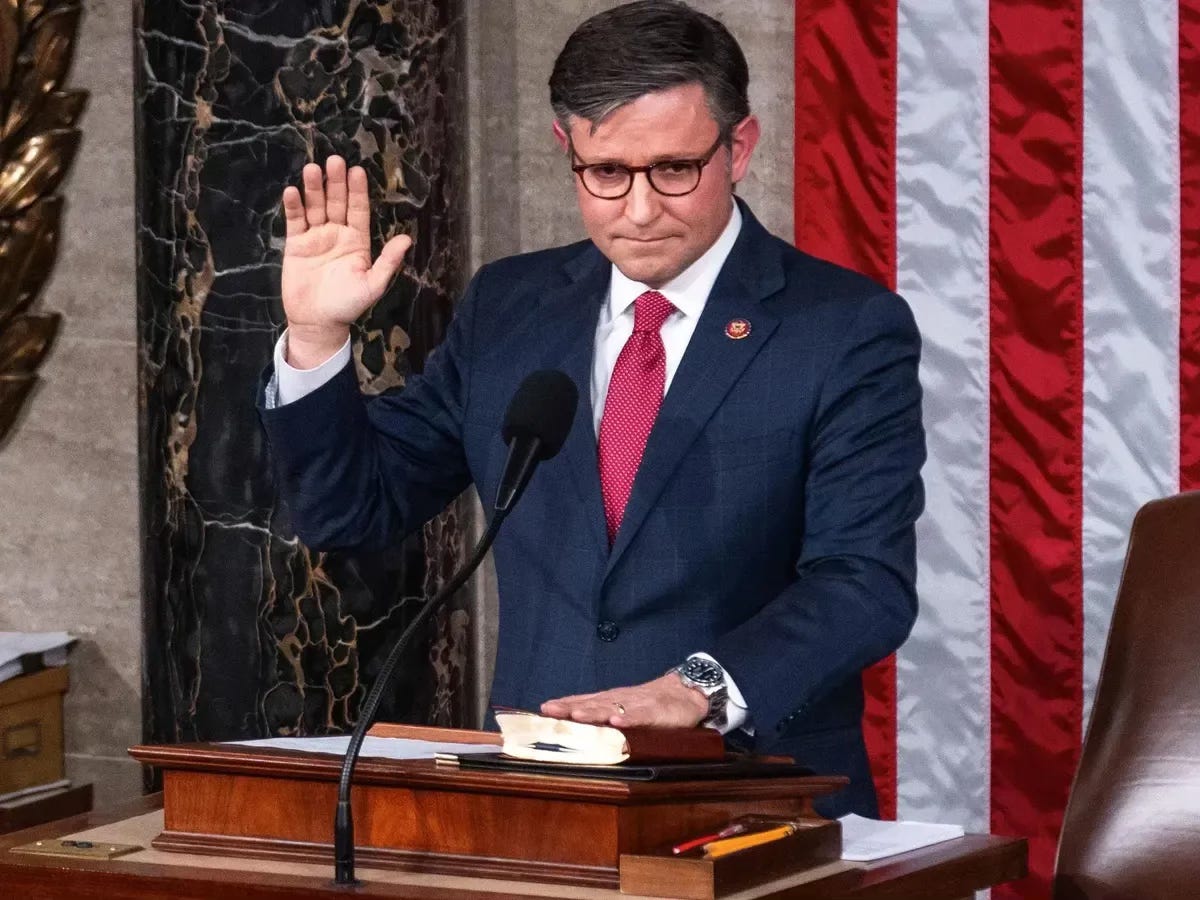
Speaker of the House Mike Johnson made news again by claiming the idea of a wall between religion and state in America is a “misnomer.” Johnson blamed Thomas Jefferson for the misnomer, stating that there is no Constitutional injunction separating church and state.

Of course, by “church,” Speaker Johnson means his church, a Christian one that is evangelical and nationalist. He didn’t mention freedom of religion in America, or Muslims or Hindus or atheists or Wiccans. Johnson, who’s said that the Christian Bible is his operating manual and his belief system, has only one church in mind.

Preacher Mike Johnson

Johnson sees himself as a Christian preacher. He should resign his position, take up the Bible and cross, and preach. Because he totally misunderstands the intent of the founders.

From its earliest days, the colonies were a haven for Christian dissenters, meaning those who didn’t kowtow to the establishment Church of England, which indeed was and is a state church. Among the founders were deists like Thomas Jefferson and non-theists like Thomas Paine. Not surprisingly in the “rational” Age of Enlightenment, America was founded on the notion of freedom of belief and tolerance of others and their beliefs, however imperfectly that tolerance was often practiced. (Few Americans, even today, for example, cop to being atheists, especially if they’re in politics.)

The colonists recognized that the conjunction of state power with organized religion corrupted both. They knew history, including their own, hence that “wall” that Thomas Jefferson spoke of. That wall wasn’t anti-church or anti-religion. It was erected to protect religion and personal beliefs from being tainted by state interests and power.

Preacher Mike Johnson wants to tear down that wall—as long as the state embraces and advances his version of Christianity and not any other version, or for that matter any other religion.

It’s a sign of the times that when America most needs talented and skilled leaders, it gets instead a self-admitted Christian zealot who takes his guidance from his particular reading of the Bible.

Can someone please tell Mike Johnson he’s Speaker, not Preacher, of the House?

Why I’m A Lapsed Catholic

W.J. Astore

Too many Church positions trouble me, as does the awful legacy of sexual abuse

I was raised Catholic and attended church well into my twenties until I began to lose interest in the ritual and repetition.  Still, I did my master’s thesis on American Catholic responses to evolution, polygenism, and geology in the 19th century, a version of which was published when I was in my early thirties.  To this day, I continue to read the New Testament and am still inspired by the teachings of Jesus Christ.  As a popular ad campaign puts it, He (Jesus Christ) gets us.  Or at least he gets me, or I get him.

Yet I am seriously out of step with today’s Catholic church.  I believe priests should be able to marry if they so choose.  I believe women who have a calling should be ordained as priests.  I believe the Church’s position on abortion is absolutist and wrong.  More than anything, I believe the Church is too concerned with itself and its own survival and therefore is alienated from the true spirit of Christ, a spirit of compassion and love.

Yes, I still have a rosary

Scandals involving the Church contributed to my loss of commitment to the Church and especially its patriarchal hierarchy, which was so intimately involved in the coverups of crimes committed against innocents.  The betrayal struck close to home.  In my hometown, the Church assigned a known predatory priest. His name was Robert F. Daly.  He abused minors and was eventually defrocked by the Church, but far too late and more than thirty years after his abusive behavior.

Fortunately, I was never abused.  I had a scheduled meeting with him, alone, when I was about fifteen, but fortunately it was cancelled at the last minute.  So many other children and teens were not so fortunate. To be blunt, I remain thoroughly disgusted by the moral cowardice exhibited by the Church in confronting fully its painful legacy of failing to protect vulnerable children against predatory priests.  Shame on the Church.

The Bible says that all sins may be forgiven except those against the Holy Spirit.  This is supposed to refer to a stubborn form of blasphemy.  Yet I truly can’t think of a worse sin committed by the Church than to allow innocent children to suffer at the hands of predators disguised as “fathers.”

I have written to the Church and have heard from prominent leaders that the Church takes these crimes seriously and can now police itself in the matter of predatory priests.  I’m sure these officials are sincere, but the idea of a self-policing church is a self-serving one.

As I wrote to one Catholic bishop, who assured me the Church now “gets it”:

Skeptics would reply that it took a huge scandal with major financial implications to force the Church to do the right thing.

For too long, the Church tolerated these crimes.  The Church is hardly unique here. Think of sexual assaults within the military (notably during basic training), or think of the Sandusky scandal at Penn State, where Joe Paterno clearly knew of (some) of Sandusky’s abuse yet chose not to take adequate action.  (I was at Penn College when that scandal broke.)

The challenge, as you know, is that the Church is supposed to be a role model, an exemplar of virtue.  Priests hold a special place of trust within communities and are therefore held in especially high regard.

As my brother-in-law, who’s now 76, explained to me, if a young boy or girl accused a priest of assault in the 1950s or 1960s, few if any people would have believed them. Indeed, the youngster was likely to be slapped by a parent for defaming a priest.  That moral authority, that respect, was earned by so many priests who had done the right thing, set the right example.  It was ruined by a minority of priests who became predators and a Church hierarchy that largely looked the other way, swept it under the rug, or otherwise failed to act quickly and decisively.

As you say, the Church has learned.  It is now better at policing itself.  The shame of it all is that it took so much suffering by innocents, and the revelations of the same and the moral outrage that followed, to get the Church to change.

I’m encouraged by the example set by Pope Francis and especially his commitment to peace, but I don’t believe I will ever be a practicing Catholic again.  Too many church policies still trouble me, as does the awful legacy of the sexual abuse scandal.

America’s New Godly House Speaker

W.J. Astore

Mike Johnson Emerges as America’s God-Chosen Speaker

America has a new House Speaker in Mike Johnson, a Republican from Louisiana. We have something in common: we are both firefighter’s sons. But that’s about all we have in common.

His hand’s on the Bible—trust him!

Speaker Johnson believes that members of the House have been chosen by God to lead. I thought the voters chose them (actually, the oligarchs choose them, but bear with me), but Johnson is an evangelical and a godly man. His wife is godly too; she spent two weeks on her knees in prayer, according to the new Speaker, and I guess her prayers were answered in her husband’s elevation.

Speaker Johnson, besides mentioning the Lord and God repeatedly, repeated the usual platitudes about America: that we’re the “greatest nation in the history of the world,” the “freest,” most powerful one, truly exceptional, with the “best” system of governance. I guess faith really is blind. Indeed, for much of his speech, the House was applauding itself for working so hard and being so devoted to the people.

So how best to show this devotion to America? Speaker Johnson said his first bill would be in support of America’s “dear friend,” Israel! Nothing says “I love America” more than money and weapons for Israel.

Speaker Johnson was at pains to denounce the “barbarism” of Hamas but declared that the actions of Israel in response have been “good.” So it’s good versus evil yet again in the Middle East, with a “strong America” being the brightest “beacon of freedom.”

Yet that beacon dare not shine too brightly because too many “illegal migrants” are seeking to cross America’s “broken border” to the South. Dammit, America is such a godly land that too many people seek to come here and enjoy the bounty given by God to Americans. Thus Congress must act to keep these illegals out. Dim the beacon! Eject the migrants!

Speaker Johnson was at pains to note Americans can’t afford their groceries, their soaring credit card interest rates, and higher mortgages, but again his first bill in the House was not to help struggling Americans but to send more weapons to Israel to kill barbarians in Gaza. In short, he should fit in just fine in leading his fellow swamp creatures to glory.

Invoking the Founders, Johnson talked about the promise of America as a theological creed, but of course the Founders themselves rejected the coupling of religion with state power. They had had enough of state churches with the Anglican Church of England. Speaker Johnson obviously sees himself and his fellow members of Congress as bishops in the Church of America, which isn’t exactly the vision the Founders had in mind when they wrote the U.S. Constitution.

So there you have it. Speaker Johnson is on a mission from God in the greatest and strongest nation in the history of the world. What could possibly go wrong?

American Exceptionalism

W.J. Astore

Two images of American exceptionalism to mull over today. The first shows how exceptional the U.S. is with its military spending:

Of course, U.S. military spending is projected to rise in FY 2023 to $840 billion or so. Note how most of the countries that spend significant sums on their military are U.S. allies, such as Germany, the U.K., Japan, and South Korea. Russia is weakening due to its war with Ukraine, yet U.S. military spending continues to soar because of alleged threats from Russia and China.

The second image is a spoof sent by a friend, but it wouldn’t entirely surprise me if it did become the official seal of the Department of Education:

Jesus riding a dinosaur: Why not? We have serious museums for creationists in the U.S., where dinosaurs wear saddles and Adam and Eve are depicted as cavorting with creatures dating to the Jurassic and Cretaceous eras. I’m not sure how they all fit on Noah’s ark, but the Lord does work in mysterious ways.

Given the emphasis on gun rights, babies, and Jesus in America, perhaps the bald eagle isn’t our best national symbol. Perhaps it should be the Baby Jesus holding an assault rifle. It certainly would give new meaning to “love God” and “love thy neighbor.”

In Search of Christianity Lost

Michael Gallagher

Despite the possibility that what a deranged Vladimir Putin planned as a small war against Ukraine could morph into a nuclear catastrophe capable of engulfing us all, the United States is still the most warlike nation on earth.

Wars don’t come cheap these days, so it shouldn’t come as a surprise that the only truly non-partisan issue in Congress is the Pentagon budget. Democrats and Republicans alike, neither of whom expect to get shot at, vie with one another to show how resolute they are in keeping America strong no matter what the cost, even in human lives, though preferably those of foreigners.

The Pentagon budget, now creeping toward $800 billion, is more than three times that of China, our closest rival, a country that had the effrontery to build an aircraft carrier of its very own to challenge our eleven.  The generosity of Congress enriches people who in the 1930s were stigmatized as “merchants of death,” but the latter have since learned the value of public relations.  America’s military-industrial complex, as might be expected, led the way in recruiting the very best PR talent.  The war to liberate Kuwait (Desert Storm) came to us thanks in part to the creativity of Hill & Knowlton (known in the trade as the Torture Lobby).  Wars have persisted even as critical domestic problems continue to go unaddressed, such as American school children suffering brain damage due to lead-contaminated drinking water.

There is something immoral about all this. To be fair, the Catholic Church in the United States, for which morality is presumed to be a major concern despite some very public failings, does take notice of war now and then.  Or rather it used to.  It hasn’t done so lately.

The United States Council of Catholic Bishops meets twice a year, which you’d think would give a troubled bishop the opportunity to call into question the morality of much of what our armed forces have been up to.  But you’d think wrong.  Successive cliques of ill-educated, narrow-focused reactionaries—Burke, Gomez, Lori, Cordileone, Kurtz, and Dolan the most prominent among the current crop—have succeeded in keeping the topic of war off the agenda for more than thirty years.  Nor have they seemed to have had much trouble doing so.

Recently, however, two bishops have spoken up in their own dioceses.  Bishop Stowe of Lexington and Archbishop Wester of Santa Fe have pleasantly surprised Catholics like me by issuing pastoral letters calling for the abolition of nuclear weapons. Unfortunately, my pleasure is diminished by the realization that such efforts, however welcome, will do little to stave off a nuclear Armageddon after which, in the words of Nikita Khrushchev, the living will envy the dead.

The Vatican—even during the imperious reign of John Paul II, whose attention was fixed upon restoring freedom to his native land (which is now on the road to dictatorship)—has been forever calling for nuclear disarmament.  But how has it called?  In what tone of voice?  That’s the key question.

Forty years ago, and far too long after the nuclear massacres of Hiroshima and Nagasaki—atrocities that the Catholic Church in America, like its government, has yet to condemn—the bishops of the United States, prodded, I’m sure, by Ronald Reagan’s missile-rattling rhetoric, surprised everybody by announcing that they were going to prepare a pastoral letter on war.

The deliberations of the committee, headed by Cardinal Bernardin of Chicago, got off on the wrong foot when Bernardin was forced to announce at the first meeting that they were by no means to condemn the possession of nuclear weapons, an edict from Rome that slammed the door in the face of the Holy Spirit, whose guidance they presumably would be imploring. 

But the bishops labored on and brought forth “The Challenge of Peace.”  It was a good but compromised document. Not compromised enough, however, for John Paul II and Cardinal Joseph Ratzinger.  After the first draft was scrutinized in Rome, Bernardin and Archbishop John Roach, chairman of the U.S. Council of Bishops, were called on the carpet in Rome to defend it to the “NATO bishops” (a Vatican dicastery previously unknown to me), who were more concerned about a Soviet armor thrust through the Fulda Gap than anything that Jesus might have said.

Bernardin and Roach duly met with their critics, and the NATO bishops came away content.  The concessions were major. One, for example, was purging a declaration of “no first use” of nuclear weapons in response to an attack with conventional weapons.  The first draft had not done anything quite so bold. It merely proposed that any circumstances in which a first use would be morally acceptable would be difficult to imagine.  Well: Ratzinger and the NATO bishops had no problem imagining one. 

When the final version of The Challenge of Peace came out in May of 1983, the Pentagon, which had been a bit worried, and hawks everywhere—especially devout Catholic hawks like William F. Buckley Jr—breathed a sigh of relief.  It was obvious to all who cared to read it that the bishops had waffled.  With all due modesty—well, some anyway—the title of a subsequent article of mine in Commonweal, “Sidestepping The Challenge of Peace,” summed it up.  (Commonweal disagreed with me, and still does, but that’s another story.)

Whatever the case, the Peace Pastoral is gone and forgotten, a failure that casts a pall to this day over subsequent (and toothless) Vatican statements on how nice peace is and how bad war is.

What do I want the Church to do?  Let me quote somebody else, somebody who answered that question far better than I ever could.   

In 1948 the Dominicans of Paris invited Albert Camus to address them about what he and other non-believers wanted to hear from the Catholic Church in the wake of the horrors of World War II, their hope being that they could unite to confront the horrors that yet impended. 

Camus, who described himself and others like him as “isolated individuals,” was quite willing to challenge the Church. He did not share the beliefs of the Dominicans, he said, but neither did he dismiss them.  He recounted how during the war he, even as a non-believer, had looked to Rome.  He wanted to hear a “great voice” raised to condemn the monstrous evil of the war, but he failed to hear it.  There were those who said that they had heard it, but what little the world heard from Rome was the Church speaking in what he dismissed, not without cause, as its “encyclical voice,” a form of speech that was prolix, abstract, and devoid of inspiration for all those not attuned to it.  (The word “Jew,” incidentally, did not make the cut.)

The Dominicans wanted to know what the world expects of Christians.  He gave them his answer:

What the world expects of Christians is that Christians should speak out loud and clear and proclaim their condemnation in such a way that never a doubt, never the slightest doubt, could rise in the heart of the simplest man.  Christians must get away from abstraction and confront the bloodstained face that history has taken on today. 

And what happens, Camus went on to ask, if Christianity doesn’t rise to the challenge?  And here Camus shows a prescience that eludes the U.S. Council of Catholic Bishops.  For it was a question quite pertinent to our own era, marked as it is by empty churches and tepid bishops.

If Christianity does turn away from the challenge, Camus told the Dominicans, 

Christianity will lose once and for all the virtue of revolt and indignation that belonged to it long ago. In that case self-proclaimed Christians may still be among us, but Christianity itself will die, and world will suffer greatly for its loss.

In the spirit of Camus, here’s my recommendations.  However reluctant our bishops might be to confront the blood-stained face of history, they could make a start by talking to people who know more than they do and have experienced more than they have.

In his book The Doomsday Machine, Daniel Ellsberg, working for RAND, tells how he was shocked to see an unguarded fighter plane on the tarmac armed with a nuclear bomb.  (This was more than 60 years ago, but even today nuclear surety remains less than sure.). A drunken pilot could jump into the cockpit and be off to Beijing to set off World War III just like that.  In any case, Ellsberg took the opportunity to place his hand on the bomb and feel the heat of radiation.  I’m sure he would be happy to share his feelings at the next USCCB conference if invited.

Then there’s Bishop Botean, who leads the Romanian eastern rite Church in the United States.  He’s the only Catholic bishop who issued a letter condemning the Iraq invasion, calling it an unjust war in which Catholics may in nowise participate.  If the USCCB was willing to hear what he had to say, it would give some of the disgruntled brethren an opportunity to ask what prompted him to be such a spoilsport. 

There’s also Andrew Bacevich, a retired colonel and veteran of the Vietnam war, who is the head of the Quincy Institute for Responsible Statecraft.  He’s a conservative Catholic who is a severe critic of American foreign policy, especially in the Middle East. 

Finally, Archbishop Wester had the grace to praise the late Sr. Megan Rice who appeared on the front page of the New York Times after, at age 82, invading the Holy of Holies of nuclear weaponry in Oakridge, Tennessee.  The USCCB could follow up on the incredible feat that she and her two companions carried off by recognizing and commending the Plowshares Movement, founded by the Berrigans, a group of heroic men and women who have borne witness against nuclear weapons and suffered greatly for it.  They have heeded Jesus’ command to shout what he taught them from the rooftops, instead of keeping their mouths shut about anything that might disturb major donors.  (Those big churches and episcopal palaces aren’t going to maintain themselves!)  

The bishops have much to learn from talking to people like the ones I’ve listed here.  They might even learn to denounce the abomination of genocidal nuclear weapons—and especially any idea that a “first use” policy of the same is in any way morally defensible. 

Michael Gallagher served as a paratrooper during the Korean War.  His book on Catholic activists, Laws of Heaven, won the National Jesuit Book Award in theology, and his translation of Yukio Mishima’s Spring Snow was a finalist for a National Book Award.