“America’s children are unwell.” From the New York Times this morning:
Nearly one in four 17-year-old boys in the United States has attention deficit hyperactivity disorder. In the early 1980s, a diagnosis of autism was delivered to one child in 2,500. That figure is now one in 31. Almost 32 percent of adolescents have at some point been given a diagnosis of anxiety. More than one in 10 have experienced a major depressive disorder, my colleague Jia Lynn Yang reports.
And the number of mental health conditions is expanding. A child might be tagged with oppositional defiance disorder or pathological avoidance disorder. “The track has become narrower and narrower, so a greater range of people don’t fit that track anymore,” an academic who studies children and education told Jia Lynn. “And the result is, we want to call it a disorder.”
Why did this happen? A lot of reasons. Kids spend hours on screens, cutting into their sleep, exercise and socializing — activities that can ward off anxiety and depression. Mental health screenings have improved.
And then there’s school itself: a cause of stress for many children and the very place that sends them toward a diagnosis.
I can’t read the main article since it’s behind a paywall. The gist of the article is that American schooling is hyper competitive, constricting, perhaps too demanding, and therefore a big part of the problem.
Maybe. Schools are also chronically underfunded. Teaching remains an underpaid profession. Classrooms can be overcrowded. Standards vary widely. And parents are stressed as they try to get their kids into the “right” schools. It’s not hard to see how that educational ecosystem might amplify distress.
But the explosion in ADHD diagnoses, autism, and anxiety is surely also driven by Big Pharma.* “We’ve got a drug for that” should be the motto of these companies. Americans are bombarded every day with drug ads promising to change our lives. I’m not a parent myself, but if my kid had trouble focusing or otherwise had behavioral issues, I’d explore medication as an option. I’m guessing it’s easier to get a prescription for Adderall or Ritalin than for kids to get wise treatment and sustained counseling from a psychiatrist or other mental health specialist.
Not just “mother’s little helper”
Some parents may even feel that particular diagnoses confer a kind of status— confirmation that their child is not merely struggling but exceptional in some “high-functioning” or creatively gifted way. That, too, reflects broader cultural forces.(“Annie is autistic and really too intelligent/creative/artistic/sensitive for this world.”)
But beyond parental dysfunction, omnipresent screens, school pressures, and pharmaceutical marketing, there’s a deeper question: Are our kids simply mirroring the broader dysfunction of American society? We live in a culture marked by relentless competition, materialism, polarization, and chronic stress. There’s little about our adult world that could be described as calm or balanced. If our society itself is unwell, why would we expect our kids to feel—or behave—otherwise?
I know it’s not easy, but surely kids need to unplug more (especially from social media, with all its pressures). They need to get outside more. They need to play more—they need more unstructured time. They probably need less stimulation—and arguably more time to be, in a word, bored. To find their own way to play, their own hobbies and interests to pursue, their own path in life.
A dysfunctional society produces dysfunctional kids. If that’s true, how do we make a society that better serves everyone? If American society and culture is uniquely disorienting and destabilizing, can’t we change that? Can’t we make a better saner world for our kids?
Grim factoid: In 2008, Americans consumed 80% of the world’s opioid supply. Though that percentage has dropped to roughly 40% today, what is it about American life that is so painful? Why are we so addicted to (legal and illegal) drugs? And now our kids too?
Readers, what do you make of all this?
*By no means am I dismissing mental illness; my brother Stevie had his first schizophrenic episode when he was sixteen in 1973 and never fully recovered from it. I have friends with a daughter with severe Asperger’s syndrome. My concern here is the vast increase in ADHD, autism, and similar diagnoses and the potential reasons for this.
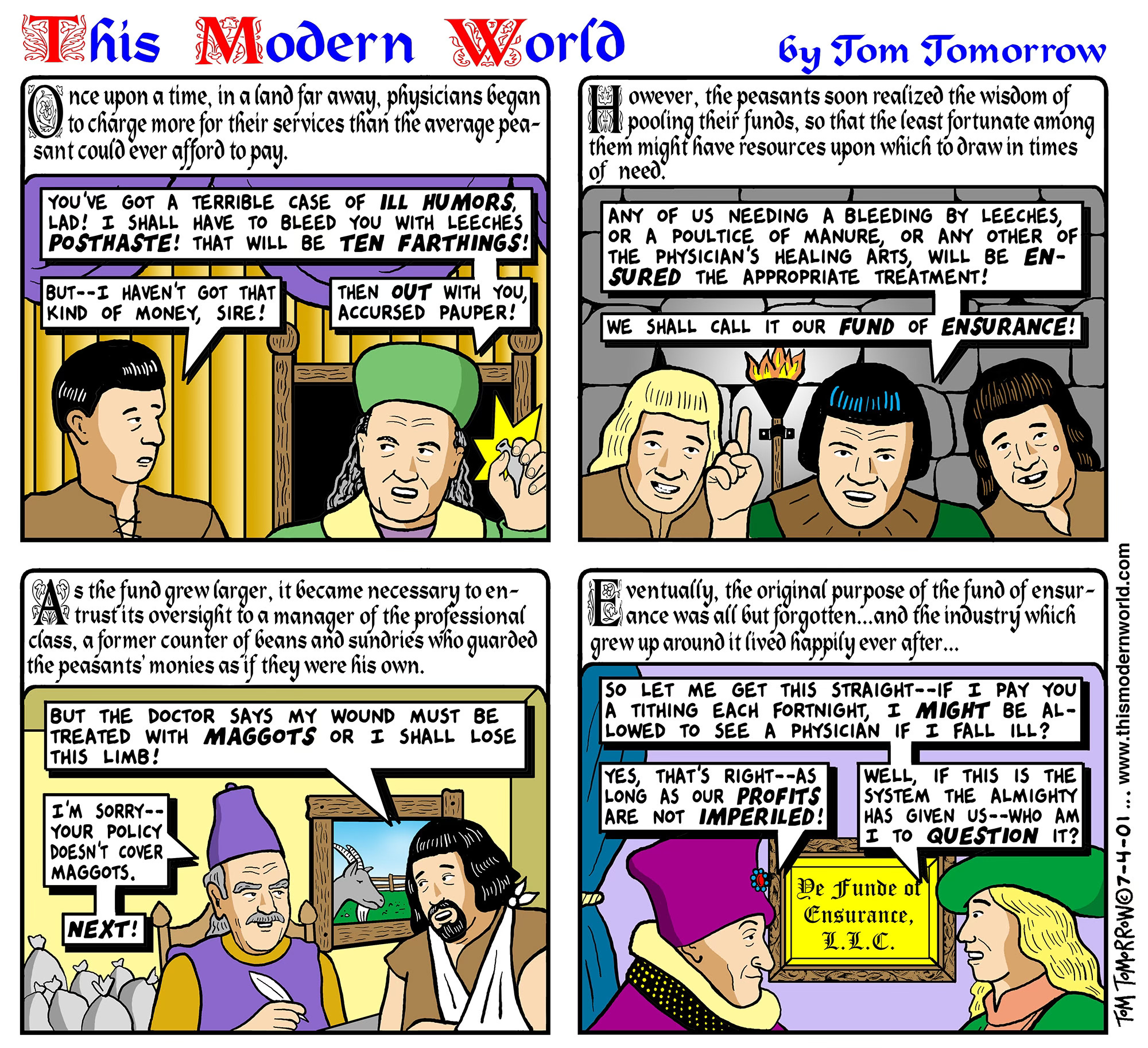
Private health insurers make money denying care–not providing it
Luigi Mangione, the young man who shot and killed a senior health insurance executive, is emerging as a folk hero of sorts in America. This requires some explanation for people outside of America.
Luigi Mangione
Most peer countries to the United States have national health care systems. Countries like Britain, Germany, France, Japan, New Zealand, and the like. These national health care systems, run by the government, are not perfect, but overall they are cheaper and produce better results for patients than the American system, where health care is basically wealth care for the rich and privileged.
America primarily has a privatized health care system where profit is the prime directive. (Programs like Medicare* and Medicaid are a public-private partnership and are government-funded; the former focuses on people 65 and older, the latter on the poorest of Americans.) Most Americans get their private health insurance with their job, else they’re required to buy private health insurance on their own nickel. These health insurance plans are expensive and often come with high deductibles and co-pays.
So, for example, when you visit a doctor for a routine appointment, your co-pay is likely between $50 and $100 per visit. If you get seriously sick, break a bone, etc., your health insurance provider may not start paying your bills until a certain yearly deductible is met, which may sit between $5000 and $10,000. Not surprisingly with these deductibles, co-pays, and the like, Americans often declare bankruptcy due to medical bills even when they have health insurance and are in theory “covered.”
A quick Google search reveals that an unsubsidized private health care plan for a family of four in America cost an average of $24,000 a year in 2023. Other figures suggest a cost of roughly $18,000 a year, but it depends on what state you live in as well as your age. The various plans that you can buy are quite complicated and include the aforementioned deductibles, co-pays, and other complexities. Employer-based plans cost less; perhaps in the neighborhood of $6000 to $8000 per year.
Again, health insurers’ #1 priority isn’t to provide health care. It’s to make money for shareholders—and for the senior executives in the industry. So their profit-driven approach to claims is the now infamous “deny, delay, depose (or defend)” strategy. As often as possible, they seek to deny claims outright, forcing sick and desperate people to fight an incomprehensible bureaucracy shrouded in fine-print legalese. Or they seek to delay payment on claims. Or they take Americans to court (“defend and depose”), forcing people to hire lawyers (quite expensive) while aiming for the quickest and cheapest settlement.
For the insurers, this strategy makes all the sense in the world. They are in this business to maximize profits and earnings, not to provide generous health care benefits.
Efforts to create a fairer and more just system for Americans have failed due to political corruption at the highest levels as well as propaganda (remember those rumored “death panels” if the government ran health care). The idea of a national non-profit healthcare system is nothing new; the Truman administration advocated for it after World War II, and various other proposals were floated by LBJ in the 1960s, the Clintons in the 1990s, and even tepidly by the ultimate sellout Barack Obama with his Affordable Care Act, which is unaffordable for many and less than generous with its care. These and similar efforts have failed as Big Pharma, the AMA, health insurers, and other forces have combined to exert tremendous pressure so as to prevent meaningful reforms that would cut into their profits, salaries, and market share.
Basically, the U.S. health wealth care system costs roughly double that of comparable countries with worse outcomes for patients. Again, this isn’t a surprising result, since the health and well-being of patients isn’t the guiding priority. It never has been. The U.S. system is all about producing the highest possible salaries and profits for Big Pharma, for health insurers, for privileged doctors (specialists often make yearly salaries in the high six-figures), and for all the other stakeholders (and shareholders) in the current system.
Here in America, the Hippocratic oath of “first do no harm” in medicine doesn’t apply. Our oath is the Gordon Gekko one of “Greed is good.” It doesn’t matter if people go bankrupt or die as a result. It’s wealth care, not health care, silly!
It’s unlikely the Trump administration will do anything to change this. Its top priority seems to be the expulsion of immigrants. Members of Congress are completely in the pocket of Big Pharma, the health insurers, and powerful medical lobbies, so don’t look for meaningful change there.
That’s why so many Americans, deeply frustrated with an exploitative system of healthwealth care, where costs rise year by year as benefits shrink, sympathize with Luigi Mangione, even if they disagree with his murderous method of expressing his anger and disgust.
Put bleakly, America’s health wealth care system is another way of enriching the few while impoverishing the rest. It is also a form of social control. (Act out, protest—lose your job, your health care, maybe your life.) Only the most revolutionary acts are likely to change this system. That is exactly why the government, the mainstream media, and corporate elites are acting to suppress sympathy for Mangione.
Consider this article by Ken Klippenstein about a mom who, frustrated with her health insurer, repeated “deny-delay-depose” while saying “you people are next” on the phone; she quickly apologized, but not before the police and FBI were called in and charged her with threatening “an act of terrorism.”
Know your place, Americans. Stay supine and obedient or they’ll take away your health insurance. Better yet, they’ll finally give you affordable health care—in prison.
Most people think Medicare is a government program. That’s only partly true. While Congress created Medicare, and continues to develop Medicare coverage and appeal rules, decisions to pay claims are actually made by private companies. The government does not make those decisions. This was one of the compromises made in order to pass Medicare in 1965 – and the public-private partnership continues to date.
Indeed, the entities granting or denying coverage, and those deciding whether or not to pay claims, are mostly private insurance companies. For example, Anthem is the parent company of “National Government Services,” one of the major Medicare claims administrators. Another Medicare administrative contractor, “MAXIMUS,” is a for-profit company that helps state, federal and foreign governments administer programs.
In addition, about 30% of Medicare beneficiaries are enrolled in private “Medicare Advantage” plans. These plans are also run by private companies, mostly within the insurance industry, and they make Medicare initial coverage decisions for their enrollees.
We know that when Medicare is working right and covering necessary care, everyone is content. But, if coverage is denied unfairly… don’t blame the government. It’s probably not “Medicare” that made the decision; it’s most likely a private insurance company that’s paid by Medicare to make coverage decisions.
Thanks to a reader, Sally Moore, for pointing out the public-private nature of Medicare. It’s more complicated than I thought—I should have known better.
Update: A classic cartoon from Tom Tomorrow seems appropriate here:
Overconfidence and Profiteering Trumped Humility and Public Service
Here are a few thoughts on America’s response to Covid that I hope are useful, especially in light of RFK Jr’s nomination to run health and human services. RFK is often portrayed as an “anti-vaxxer,” when, as I understand it, he is more of a skeptic or a critic of certain vaccines, whether of their efficacy or possible side effects. He’s associated with assertions that vaccines could be linked to higher rates of autism in children, with questions about the use of mercury (now eliminated) in trace quantities in certain vaccines.
People seem concerned that RFK is eroding parents’ trust in vaccines, especially for preventable childhood diseases like measles, mumps, and the like. It’s also true that vaccines are money-makers for big pharmaceutical companies, so some skepticism or at least caution may be warranted when claims are made that vaccines are 100% safe and effective. (That certainly wasn’t true of the various Covid vaccines.) When tackling such issues, I’d defer to the experts you trust, such as your pediatrician or your family practitioner. Don’t listen to RFK—and certainly don’t listen to me. My doctorate is in history, not medicine.
Medical science can survive the skepticism of RFK and maybe even profit from it in the sense of being more truthful and transparent about vaccine efficacy and risks.
Anyhow, here are some thoughts about the Covid crisis that I jotted down about two years ago.
*****
The Covid response by the U.S. government and medical community was a highly complex event. The whole idea of flattening the curve (so as to not overwhelm hospitals with patients) made sense to me. The vaccines, rushed into production, weren’t even close to perfect (“leaky” was the word used), and there were some people injured by them, but overall Operation Warp Speed made sense to me. As a precaution, my wife and I got the initial two shots and wore masks when we had to. We never got subsequent shots or boosters. (We were not in vulnerable risk categories and our doctor told us the virus was changing too rapidly for the boosters to offer much protection.)
That said, mortality in the U.S. due to Covid was very high compared to other countries that had less access to the vaccines. It’s unclear why, though preexisting conditions like obesity or compromised immune systems contributed.
What is clear is the upward transfer of wealth driven by the pandemic response as passed by Congress and the unequal suffering of small businesses compared to giants like Amazon. The Covid response created more billionaires in the U.S. and even wider discrepancies between the “haves” and “have-nots.” Meanwhile, lots of older Americans died in nursing and veterans’ homes, and America ultimately lost more than a million people to Covid and its complications.
What pissed many people off was the way in which the so-called experts insisted that they knew what they were doing even when they clearly didn’t. There was a lot of uncertainty about the origins of Covid and how best to contain it, but the government showed no humility. The message was “obey” us because we know best.
Again, I’m not defending anti-vaxxers. I’m pointing out that Covid vaccines were “leaky” because they didn’t prevent transmission, nor did they prevent Covid. Many so-called experts oversold the vaccines, saying they would prevent infection and transmission. Those statements proved to be wrong.
Medical science is a realm of complexity and uncertainty, and when it meets the realm of politics, especially as structured in the U.S., where you’re either “blue” or “red,” and where politicians avoid complexity as dangerous to one’s reputation, both realms suffer from the mix, especially medicine and science.
What we really needed during the Covid pandemic was humility before uncertainty. What we got was arrogance and an illusion of certainty. Trump, obviously, was way out of his depth. His ignorance put a premium on the experts to act like, well, experts. To admit uncertainty. To turn aside from overconfident statements issued literally in the name of science.
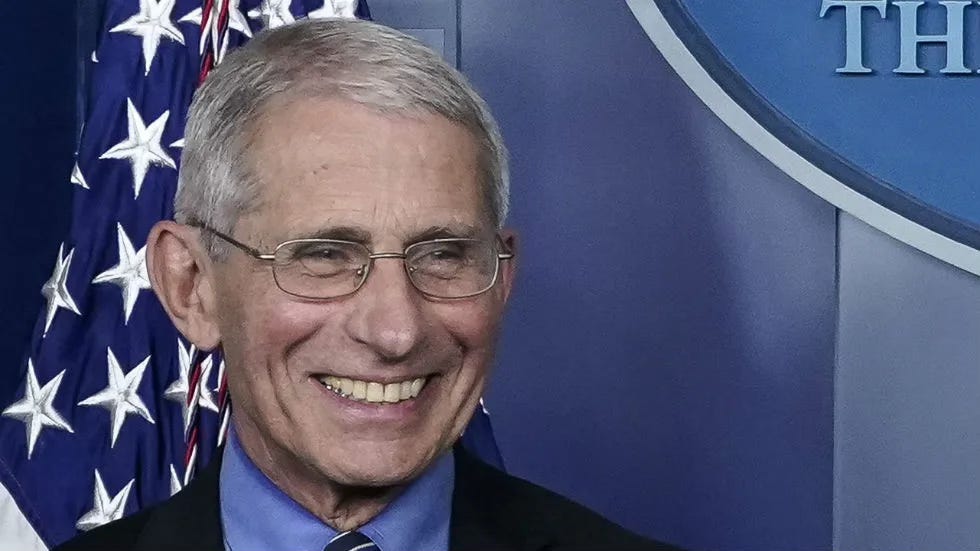
Dr. Anthony Fauci was neither as humble nor transparent nor truthful as he should have been.
Anthony Fauci, if nothing else, forgot to be humble. Forgot how to be an expert. Instead, he became a poseur. Just about everyone knew Trump was clueless. We expected more from a medical doctor, more transparency, a greater command over the facts, so the sense of betrayal was that much greater.
As a historian of science, I’m certainly not anti-science. Medical science at “warp speed” is tricky, however. There was a rushed effort to develop vaccines quickly, and not all of them were equally safe and effective. Calculated risks were taken in the cause of saving lives—and some people were vaccine-injured as a result. This doesn’t mean, of course, that vaccines are somehow “bad.” Most vaccines are safe and effective. Again, trust your doctor. And educate yourself. But remember too that a little knowledge can sometimes be a dangerous thing.
*****END OF NOTES
I just hope the experts learned valuable lessons from Covid, as it likely won’t be the last pandemic we face. Collectively, we should handle future crises with more care, more maturity, and more humility, as well as less panic and less arrogance.
We look to experts in life to help us, but we don’t expect them to be all-knowing. What I think we want, above all else, is frankness and honesty from doctors. And of course a commitment to “first do no harm.”
Time for Glasnost, Perestroika, and a New Generation of Leaders in America
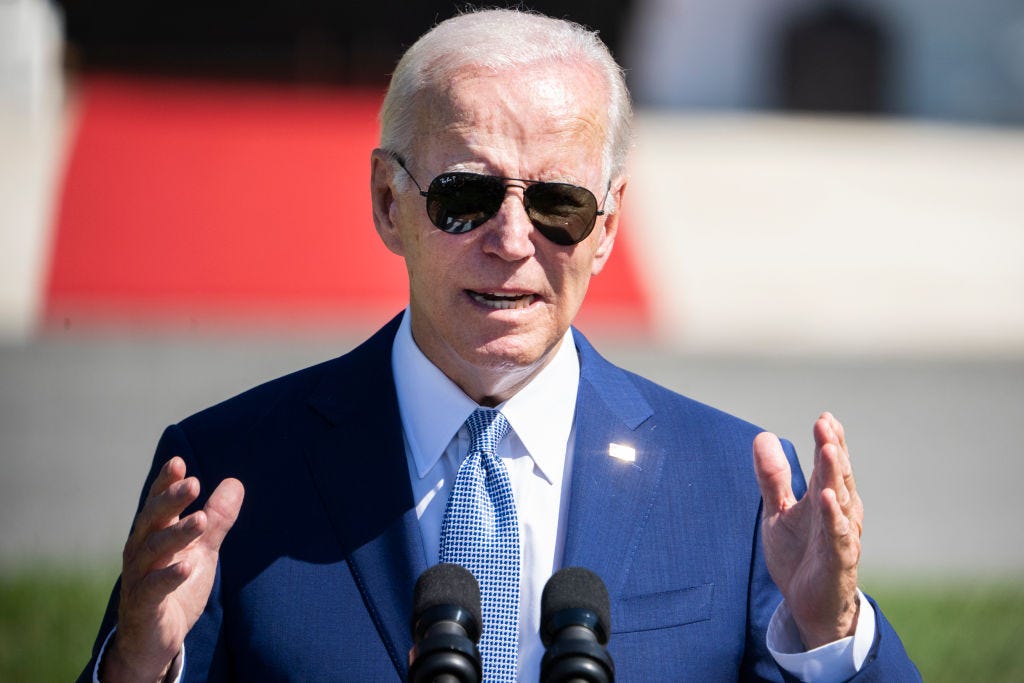
A year ago, I asked whether Joe Biden and Donald Trump were too old to serve as president. Recently, concerns about advanced age and failing health have come to the fore in Congress. Senator Diane Feinstein, 90 years old, recently had to be told by her aides to vote “aye.” Senator Mitch McConnell, 81 years old, recently froze mid-sentence at a press conference; he may have suffered a mini-stroke, possibly related to a bad fall he had previously that resulted in a concussion. Meanwhile, concerns about President Biden’s age and declining health are being openly aired even among Democrats, with Hillary Clinton opining that Joe’s age is a legitimate campaign issue. At the young age of 75, is she angling to ride to the rescue in the 2024 election?
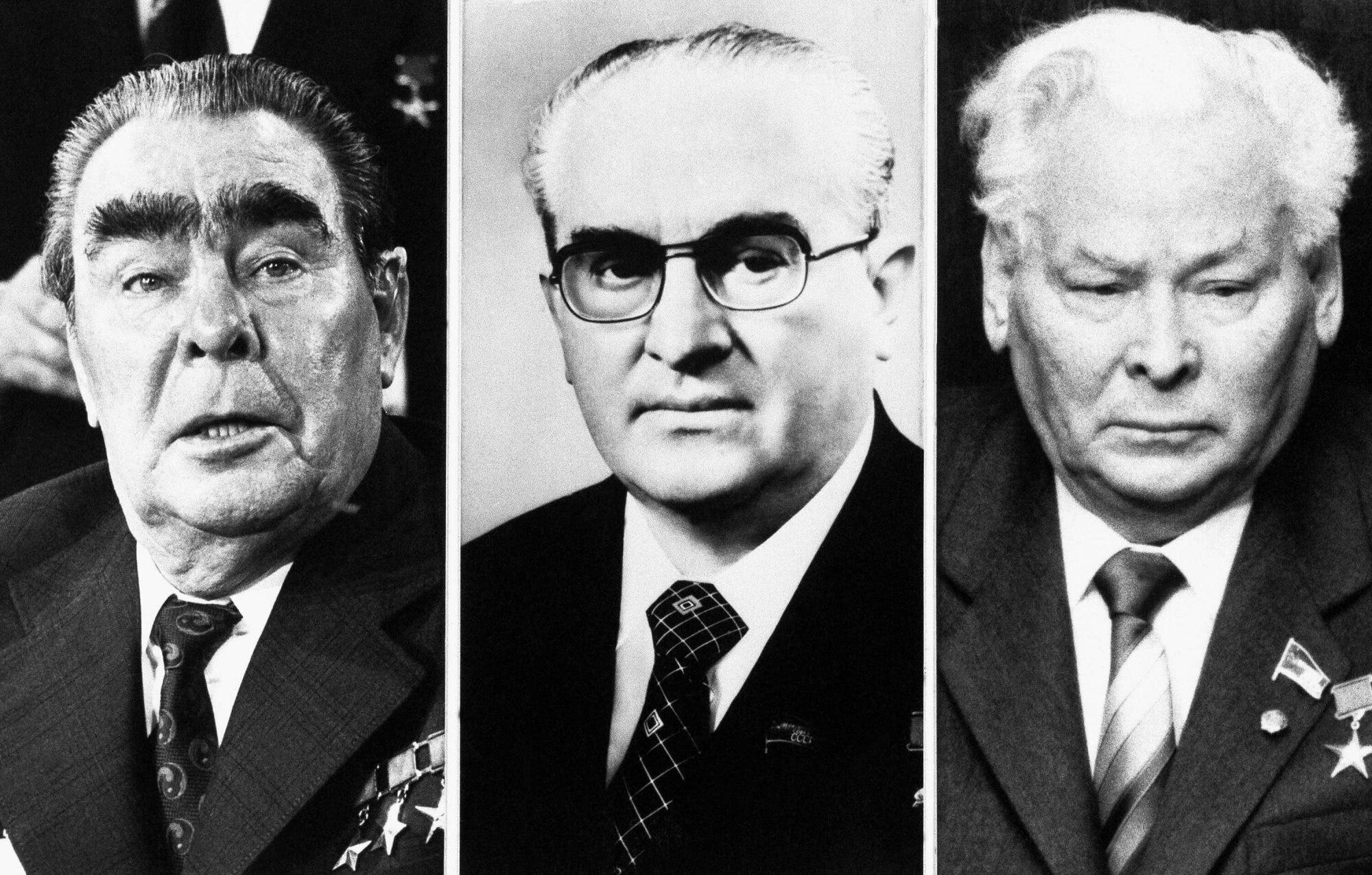
Glenn Greenwald did a long segment on Washington’s gerontocracy that is well worth watching. A point he made is one that I echoed in my article from a year ago. Back in the 1970s, the U.S. pointed to an alleged gerontocracy in the Soviet Union to criticize the hidebound nature of the Communist party there and the way its leaders were holding back much-needed reforms.
Americans made fun of “old” Soviet leaders of the 1970s and early 1980s. They were younger than Biden, Trump, Feinstein, McConnell, and the U.S. gerontocracy of today
The same, of course, is now true of the U.S. empire and its uniparty of Republican and Democrat enablers. An American gerontocracy with a near-death grip on power are holding back much-needed reforms here, especially reductions to the enormous sums of money being spent on weapons and warfare by the federal government.
Much like the former Soviet Union, the United States is a declining empire that’s been debilitated by constant and unnecessary wars and wanton spending on weaponry. Fresh thinking is needed. Remember glasnost and perestroika? Openness and restructuring? They were ushered in by Mikhail Gorbachev in the 1980s, who at age 54 was relatively young when he assumed the reins of power in the USSR.
I still remember when Americans made fun of “old guard” Soviet leaders and used words like “sclerotic” to describe them. They were a visible symbol of Soviet tiredness and decline, the refuse of the past when compared to a younger, more vigorous, United States with its dominant and thrusting world economy.
Who’s laughing now?
Surely, America needs a new generation of leaders who are willing to fight for glasnost (much greater openness and transparency in government) and perestroika (a restructuring of government away from imperialism, weapons, and war). The collapse of the Soviet Union should teach us something about the fate of sclerotic empires that refuse to change.
Mobsters are known for breaking kneecaps to bend people to their will. Marketers break into heads with repetitive and manipulative advertising, images, and narratives. Mobsters of the mind, they are.
I thought of this after watching all those repetitive (and largely interchangeable) ads for “legal” prescription drugs. Rarely do they show the often serious conditions they allegedly treat. Instead it’s image after image of people enjoying life, whether at amusement parks, the beach, dancing, or what-have-you. It’s as if drug companies are selling happiness pills whose only side effect is experiencing the best day of your life. Meanwhile, as images spill into your head of eternal bliss, a narrator quietly intones about potential serious side effects, even possible death in the case of one drug I’ve seen advertised.
Excuse me while I pop a few pills and denounce Russia—or China
Drug ads are the worst. People wonder why Americans take so many illegal drugs and why we have so many drug addictions — well, just look at all the ads for legal drugs, and how they’re advertised as making people incandescently happy. It’s all about the messaging: the repetition of powerful feel-good imagery, with drugs as panaceas.
Speaking of repetition, something similar is true of political manipulation. To cite one example: Russia. Has there ever been a worse “drug” with more serious side effects than Russia? Russia keeps hacking our elections! Russia is led by war criminals! Russia is raping Ukraine! Over and over again, the mainstream media encourages us to hate Russia and Vladimir Putin. Is this truly all we need to know about Russia? As Sting sang, don’t the Russians love their children too? (Back in the 1980s, the media didn’t go easy on Sting for his alleged naïveté and pro-Russian sentiments.)
Whether it’s drug advertisers, the mainstream media, or the U.S. government for that matter, America is infested with various “ministries of truth” that are driven by a mobster-like mentality. They may not break your kneecaps, but they nevertheless find ways to break into your mind.
Now you’ll excuse me while I pop a few pills while denouncing Russia. And China too, perhaps?
When I was teaching college in Pennsylvania, I had a colleague whose car sported a telling bumper sticker: “Our national health care plan: Don’t get sick.” As true as that is, I think America’s real health care plan can be summed up by a corporate motto of my own coining: You can make a lot of money off sick people.
This came to mind today as my wife returned from a routine medical appointment. She overheard a lady complaining to a clerk that she didn’t understand her health insurance and why her latest procedure hadn’t been covered. Meanwhile, my wife noticed a sign about Medicare at the office, something about a new requirement that medical professionals were apologizing for in advance. And so it goes in the land of the free …
If you’re an American and 100% pleased with your medical care, you are a rare bird indeed. It’s an incredibly complex “system” with its own logic driven by the need to make money, whether off drugs or surgical procedures or whatever. I’ve talked to doctors and they tell me they’re typically allotted fifteen minutes per patient. They have to see a certain number of patients per hour, creating billable actions in the computer tablets they increasingly carry around with them, to fulfill quotas and to stay in business.
A heart specialist I was seeing, a truly sympathetic and knowledgable doctor, got fed up with all the emphasis on billing and money and took another position at a different hospital where he could do more research. At his practice, I noted new computer monitors in the examination rooms featuring videos that advertised drugs to lower cholesterol, improve blood pressure, and the like, along with pamphlets featuring shiny happy people taking various drugs related to heart and blood care. Honestly, I felt good for my doctor that he was going to a better job for him even as I felt bad for all his patients, myself included.
A big reason I supported Bernie Sanders was his seemingly empathetic and principled call for affordable health care for all, some kind of national plan that would deemphasize the profit motive, ending the tragic reality that some Americans have to choose between their own health and bankruptcy. Naturally, the Democratic Party, in league with big Pharma, health insurers (they should be called health deniers for their business model that seeks to deny claims whenever possible), and other corporate forces, threw their considerable financial support behind corporate tools like Hillary Clinton and Joe Biden.
He promised a public option. I guess he forgot about it.
Speaking of Biden, he of course promised a public (government) option on the campaign trail, only to renege on that promise once he became president. Biden, a tired corporate hack, will never go to bat for affordable health care, which is no endorsement of his Republican opponents. Their “plan” consists of encouraging bake sales and go-fund-me appeals along with vague hints of Scrooge-like notions: If you can’t afford your health care, you had best die to decrease the surplus population.
Are there no prisons, no workhouses?
The health of our society, in a sense, is the aggregate of the health of 333 million of us. Americans are increasingly sick, obese, depressed, tense, even suicidal. And it seems the first question some “providers” ask here is: How can I make money off this?
P.S. I kid you not. I just got an email from Amazon saying that “Your new pharmacy is here.” I feel happier and healthier already!
There’s way too much fear mongering in America, which helps to drive the paranoid nature of U.S. foreign and domestic policy. This is the subject of my latest article at TomDispatch.com, which I’ve included below in its entirety. If you don’t read TomDispatch, I urge you to subscribe (top right corner on the home page). Tom Engelhardt has been running the site for 20 years (I’ve been writing for it for 15 of them), and I’ve found the content to be stimulating and thought-provoking. Many thanks for your continued interest in “Bracing Views” as well, which, I joke to Tom, is a little like a baby TomDispatch.
Dystopia, Not Democracy
I have a brother with chronic schizophrenia. He had his first severe catatonic episode when he was 16 years old and I was 10. Later, he suffered from auditory hallucinations and heard voices saying nasty things to him. I remember my father reassuring him that the voices weren’t real and asking him whether he could ignore them. Sadly, it’s not that simple.
That conversation between my father and brother has been on my mind, as I’ve been experiencing America’s increasingly divided, almost schizoid, version of social discourse. It’s as if this country were suffering from some set of collective auditory hallucinations whose lead feature was nastiness.
Take cover! We’re being threatened by a revived red(dish) menace from a “rogue” Russia! A “Yellow peril” from China! Iran with a nuke! And then there are the alleged threats at home. “Groomers”! MAGA kooks! And on and on.
Of course, America continues to face actual threats to its security and domestic tranquility. Here at home that would include regular mass shootings; controversial decisions by an openly partisan Supreme Court; the Capitol riot that the House January 6th select committee has repeatedly reminded us about; and growing uncertainty when it comes to what, if anything, still unifies these once United States. All this has Americans increasingly vexed and stressed.
Meanwhile, internationally, wars and rumors of war continue to be a constant plague, made worse by the exaggeration of threats to national security. History teaches us that such threats have sometimes not just been inflated but created ex nihilo. Those would, for instance, include the non-existent Gulf of Tonkin attack cited as the justification for a major military escalation of the war in Vietnam in 1965 or those non-existent weapons of mass destruction in Iraq used to justify the 2003 U.S. invasion of that country.
All this and more is combining to create a paranoid and increasingly violent country, an America deeply fearful and perpetually thinking about warring on other peoples as well as on itself.
My brother’s doctors treated him as best they could with various drugs and electroshock therapy. Crude as that treatment regimen was then (and remains today), it did help him cope. But what if his doctors, instead of trying to reduce his symptoms, had conspired to amplify them? Indeed, what if they had told him that he should listen to those voices and so aggravate his fears? What if they had advised him that sanity meant arming himself against those very voices? Wouldn’t we, then or now, have said that they were guilty of the worst form of medical malpractice?
And isn’t that, by analogy, true of America’s leaders in these years, as they’ve driven this society to be ever less trusting and more fearful in the name of protecting and advancing their wealth, power, and security?
Fear Is the Mind-Killer
If you’re plugged into the mental matrix that’s America in 2022, you’re constantly exposed to fear. Fear, as Frank Herbert wrote in Dune, is the mind-killer. The voices around us encourage it. Fear your MAGA-hat-wearing neighbor with his steroidal truck and his sizeable collection of guns as he supposedly plots a coup against America. Alternately, fear your “libtard” neighbor with her rainbow peace flag as she allegedly plots to confiscate your guns and brainwash your kids. Small wonder that more than 37 million Americans take antidepressants, roughly one in nine of us, or that, in 2016, this country accounted for 80% of the global market for opioid prescriptions.
A climate of fear has led to 43 million new guns being purchased by Americans in 2020 and 2021 in a land singularly awash in more than 400 million firearms, including more than 20 million assault rifles. A climate of fear has led to police forces being heavily militarized and fully funded rather than “defunded” (which actually would mean a bit less money going to the police and a bit more to non-violent options like counseling and mental-health services). A climate of fear has led Democrats and Republicans in the House of Representatives who can agree on little else to vote almost unanimously to fork over $840 billion to the Pentagon in Fiscal Year 2023 for yet more wars and murderous weaponry. (Of course, the true budget for what is still coyly called “national defense” will soar well above a trillion dollars then, as it often has since 9/11/2001 and the announcement of a “global war on terror.”)
The idea that enemies are everywhere is, of course, useful if you’re seeking to create a heavily armed and militarized form of insanity.
It’s summer and these days it just couldn’t be hotter, so perhaps you’ll allow me to riff briefly about a scene I’ve never forgotten from The Big Red One, a war film I saw in 1980. It involved a World War II firefight between American and German troops in a Belgian insane asylum during which one of the mental patients picks up a submachine gun and starts blasting away, shouting, “I am one of you. I am sane!” In 2022, sign him up and give him a battlefield commission.
Where fear is omnipresent and violence becomes routinized and normalized, what you end up with is dystopia, not democracy.
We Must Not Be Friends but Enemies
At this point, consider us to be in a distinctly upside-down world. Reverse Abraham Lincoln’s moving plea to Southern secessionists in his first inaugural address in 1861 — “We must not be enemies but friends. We must not be enemies” — and you’ve summed up all too well our domestic and foreign policy today. No, we’re neither in a civil war nor a world war yet, but America’s national (in)security state does continue to insist that virtually every rival to our imperial being must be transformed into an enemy, whether it’s Russia, China, or much of the Middle East. Enemies are everywhere and must be feared, or so we’re repetitiously told anyway.
I remember well the time in 1991-1992 when the Soviet Union collapsed and America emerged as the sole victorious superpower of the Cold War. I was a captain then, teaching history at the U.S. Air Force Academy. Those were also the years when, even without the Soviet Union, the militarization of this society somehow never seemed to end. Not long after, in launching a conflict against Saddam Hussein’s Iraq, this country officially kicked ass in the Middle East and President George H.W. Bush assured Americans that, by going to war again, we had also kicked our “Vietnam Syndrome” once and for all. Little did we guess then that two deeply destructive and wasteful quagmire wars, entirely unnecessary for our national defense, awaited us in Afghanistan and Iraq in the century to come.
Never has a country squandered victory — and a genuinely global victory at that! — so completely as ours has over the last 30 years. And yet there are few in power who consider altering the fearful course we’re still on.
A significant culprit here is the military-industrial-congressional complex that President Dwight D. Eisenhower warned Americans about in his farewell address in 1961. But there’s more to it than that. The United States has, it seems, always reveled in violence, possibly as an antidote to being consumed by fear. Yet the intensity of both violence and fear seems to be soaring. Yes, our leaders clearly exaggerated the Soviet threat during the Cold War, but at least there was indeed a threat. Vladimir Putin’s Russia isn’t close to being in the same league, yet they’ve treated his war with Ukraine as if it were an attack on California or Texas. (That and the Pentagon budget may be the only things the two parties can mostly agree on.)
Recall that, after the collapse of the Soviet Union, Russia was in horrible shape, a toothless, clawless bear, suffering in its cage. Instead of trying to help, our leaders decided to mistreat it further. To shrink its cage by expanding NATO. To torment it through various forms of economic exploitation and financial appropriation. “Russia Is Finished” declared the cover article of the Atlantic Monthly in May 2001, and no one in America seemed faintly concerned. Mercy and compassion were in short supply as all seemed right with the “sole superpower” of Planet Earth.
Now the Russian Bear is back — more menacing than ever, we’re told. Marked as “finished” two decades ago, that country is supposedly on the march again, not just in its invasion of Ukraine but in President Vladimir Putin’s alleged quest for a new Russian empire. Instead of Peter the Great, we now have Putin the Great glowering at Europe — unless, that is, America stands firm and fights bravely to the last Ukrainian.
Add to that ever-fiercer warnings about a resurgent China that echo the racist “Yellow Peril” tropes of more than a century ago. Why, for example, must President Joe Biden speak of China as a competitor and threat rather than as a trade partner and potential ally? Even anti-communist zealot Richard Nixon went to China during his presidency and made nice with Chairman Mao, if only to complicate matters for the Soviet Union.
If imperial America were willing to share the world on roughly equal terms, Russia and China could be “near-peer” friends instead of, in the Pentagon phrase of the moment, “near-peer adversaries.” Perhaps they could even be allies of a kind, rather than rivals always on the cusp of what might potentially become a world-ending war. But the voices that seek access to our heads prefer to whisper sneakily of enemies rather than calmly of potential allies in creating a better planet.
And yet, guess what, whether anyone in Washington admits it or not: we’re already rather friendly with (as well as heavily dependent on) China. Here are just two recent examples from my own mundane life. I ordered a fan — it’s hot as I type these words in my decidedly unairconditioned office — from AAFES, a department store of sorts that serves members of the military, in service or retired, and their families. It came a few days later at an affordable price. As I put it together, I saw the label: “Made in China.” Thank you for the cooling breeze, Xi Jinping!
Then I decided to order a Henley shirt from Jockey, a name with a thoroughly American pedigree. You guessed it! That shirt was plainly marked “Made in China.” (Jockey, to its credit, does have a “Made in America” collection and I got two white cotton t-shirts from it.) You get my point: the American consumer would be lost without China, the present workhouse for the world.
You’d think a war, or even a new Cold War, with America’s number-one provider of stuff of every sort would be dumb, but no one is going to lose any bets by underestimating how dumb Americans can be. Otherwise, how can you explain Donald Trump? And not just his presidency either. What about his “Trump steaks,” “Trump university,” even “Trump vodka”? After all, who could be relied upon to know more about the quality of vodka than a man who refuses to drink it?
Learning from Charlie Brown
Returning to fears and psychiatric help, one of my favorite scenes is from “A Charlie Brown Christmas.” In that classic 1965 cartoon holiday special, Lucy ostensibly tries to help Charlie with his seasonal depression by labeling what ails him. The wannabe shrink goes through a short list of phobias until she lands on “pantophobia,” which she defines as “the fear of everything.” Charlie Brown shouts, “That’s it!”
Deep down, he knows perfectly well that he isn’t afraid of everything. What he doesn’t know, however, and what that cartoon is eager to show us, is how he can snap out of his mental funk. All that he needs is a little love, a little hands-on kindness from the other children.
America writ large today is, to my mind, a little like Charlie Brown — down in the dumps, bedraggled, having lost a clear sense of what life in our country should be all about. We need to come together and share a measure of compassion and love. Except our Lucys aren’t trying to lend a hand at the “psychiatric help” stand. They’re trying to persuade us that pantophobia, the fear of everything, is normal, even laudable. Their voices keep telling us to fear — and fear some more.
It’s not easy, America, to tune those voices out. My brother could tell you that. At times, he needed an asylum to escape them. What he needed most, though, was love or at least some good will and understanding from his fellow humans. What he didn’t need was more fear and neither do we. We — most of us anyway — still believe ourselves to be the “sane” ones. So why do we continue to tolerate leaders, institutions, and whole political parties intent on eroding our sanity and exploiting our fears in service of their own power and perks?
Remember that mental patient in The Big Red One, who picks up a gun and starts blasting people while crying that he’s “sane”? We’ll know we’re on the path to sanity when we finally master our fear, put down our guns, and stop eternally preparing to blast people at home and abroad.
I have a brother who’s mentally ill. When you deal with mental illness in your family, you come to realize that local, state, and federal resources are limited. Funding is iffy. Expertise is dodgy. Facilities are often disappointing. And systems and bureaucracies can seem heartless.
I take nothing away from the dedicated doctors, nurses, and other staff I’ve met who’ve helped care for my brother. Considering the resources available to them, they often do a fantastic job.
It soon appears my brother will be assigned to a nursing home, though he does not yet require that level of care. The system, however, has virtually no other options available between a halfway-house-like setting, where a nurse isn’t available 24/7, and a nursing home, which does have nurses 24/7.
My brother was in a smaller group home where he had his own room, but a series of minor medical issues caused him to be “re-leveled” beyond the care provided by that home. He was rather unceremoniously dumped into a private, for-profit, nursing home, where he remains as he awaits a much-delayed court date. Indeed, his “temporary” assignment to the nursing home expired last December, with various agencies finger-pointing and blaming each other for the delay in reviewing my brother’s case.
Mental illness is such a devastating thing. It can be far worse than physical illness. When my brother had his first serious breakdown in 1973, we certainly didn’t understand what was happening. Back then, there was far more stigma attached to mental illness, and few people talked about it. It’s a shattering experience, and my brother had the worst of it, including ECT or electroshock treatments and powerful drugs like Stelazine and similar anti-psychotic drugs.
I was writing to a sympathetic attorney about my brother’s case today, and I thought maybe I’d share a little of what I wrote. My brother’s situation, I wrote,
speaks to a larger point about how our government cares for the mentally ill, the lack of funding and so forth, something that’s not going to be fixed by an email by me.
Still, it’s a system that tends to see my brother as just another client, just another case file, just another court date, even just another billable moment.
Wouldn’t it be nice to have asylums in the true sense of that word for those among us who needed them? But our government chooses to fund more F-35 jet fighters, more nuclear missiles, more police forces, and so forth.
The poor and mentally ill have no power because they have no lobbyists and very few advocates.
It’s a sign of the sickness of our society that we care so little for the sick.
That poor attorney got more than she bargained for. But I truly believe a society can be judged by how it treats the poor, the sick, the unhoused, the desperate. Our society tends to treat them like dirt, like losers, like a nuisance, even as the government gushes money for more police, more weapons, and more wars, whether internally or externally.
This is ultimately why our society is so sick. Because we care so little for the neediest among us.
I’m sorry this is so depressing, and I plead guilty as well for not caring enough, for not acting instead of just blogging away about it.
Jesus healed the sick and dying and attracted society’s outcasts. He praised the poor and railed against the rich. Is it any wonder He was crucified? So, we Americans invented our own Jesus, one who showers money on his believers, one who rewards them with happiness and health, a Santa Claus Jesus who gives out gifts to good little girls and boys.
And if you’re not “good”? I guess you get to be homeless or dumped in a nursing home. Next time, pray harder, loser.
So much for the idea of “settled law” and judicial precedent. The Supreme Court of the U.S. (SCOTUS) has overturned Roe v Wade by a 6-3 majority vote. For nearly 50 years, abortion was legal in America if not always cheap or readily accessible. Now roughly half the states in America are poised to make it illegal, a major setback for women’s rights and bodily autonomy.
Many things will be written about this decision, and in fact I’ve already written about it. But one thing is glaringly obvious: this is a thoroughly politicized court of justices, several of whom perjured themselves before the Senate during their confirmation hearings.
Oh sure, they all talked carefully, saying neither “yes” nor “no” when it came to Roe v Wade. But the new justices all made noises about respecting previous court decisions, like Roe v Wade, suggesting that they wouldn’t reach a sweeping decision to overturn it. Of course, it was all BS, and many people knew it at the time. Speaking of “grooming,” recent SCOTUS justices have been groomed for decades to ensure they are against abortion and for business and corporations.
We now have a thoroughly partisan and mean-spirited court majority that will always side with business and corporations against the individual and who apparently believe that guns have far more rights to privacy and autonomy than women do.
A 6-3 majority court that embraces and advances gun rights while denying privacy and bodily autonomy to women is truly an American court.
A small coda: Shame on the Democrats for not codifying Roe v Wade into law. Even when Obama had a super-majority and promised abortion rights would be his first priority, he waffled because he just didn’t care. Now Democrats will cynically use this SCOTUS decision to raise funds. It’s just my opinion, but they’ve proved by their gutless inaction that they deserve none of your money.
The clock is spinning backwards, America. Will it stop in the 1950s — or the 1850s? And don’t forget that the 1850s were both bloody and led directly into the U.S. Civil War (1861-65).
Another small coda: I hate the calculated cowardice of these decisions that are announced on Fridays as a way of trying to limit controversy and outrage, as people’s attention is distracted by weekend plans. Dropping the bad news late on a Friday — it’s a tired approach by cowardly institutions.
One final saying: I think an anonymous female taxi driver had it right: If men could get pregnant, abortion would be a sacrament.
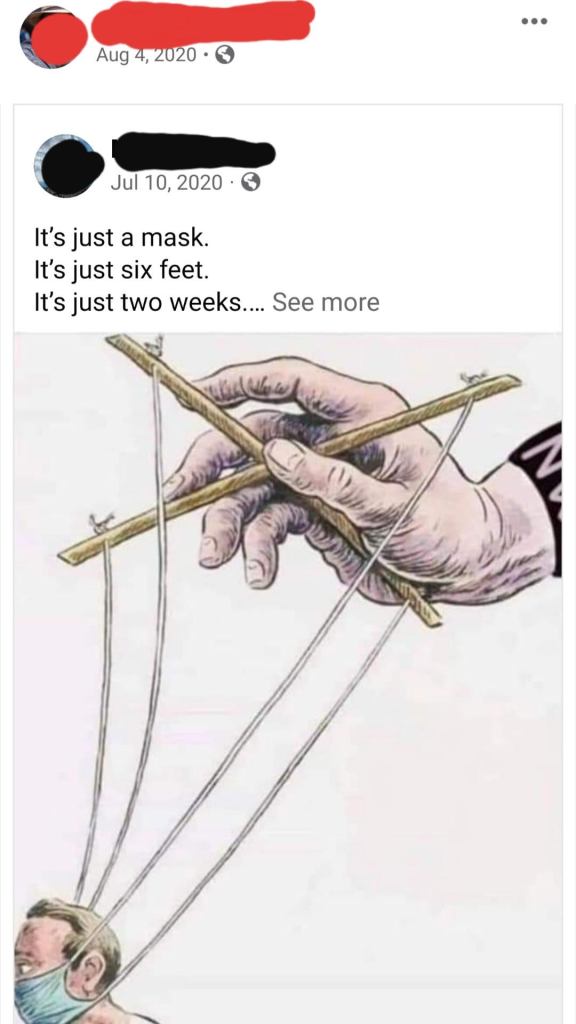
Agency and autonomy are fundamental to democracy. Panic is fundamental to fear and chaos. Preserving personal agency while avoiding panicked reactions is one of the great challenges ahead of us. While the Covid pandemic will burn itself out, America’s pandemic of panic–manifested in the rise of wild and often evidence-free conspiracies–continues to accelerate. How much misinformation and mistrust can America tolerate before democracy itself crashes around us? Our very own M. Davout, who teaches political science, introduces the concept of “agency panic” and challenges us to take the red pill of uncomfortable truths. W.J. Astore
America’s Twin Pandemics of Covid and Agency Panic
M. Davout
America is awash in conspiracy thinking and it is doing terrible damage to the country. However, the solution is not to dismiss conspiracy thinking altogether but to distinguish fake conspiracies from real ones.
Consider the many theories afloat about Covid-19. Scrolling through the Facebook posts of anti-maskers and anti-vaxxers curated on the Herman Cain Award subreddit, one is struck by the sheer quantity of conspiratorial memes circulating among networks of likeminded Facebook friends. The Covid pandemic is variously presented as the product of a nefarious plot enacted by the Chinese government or by the US government or by the Centers for Disease Control or…the list goes on. Public health measures that have been recommended or mandated at the federal, state or local levels such as quarantining, masking, and vaccinating are similarly condemned as elements of the conspiratorial machinations of Anthony Fauci or Bill Gates (or both of them working in cahoots), of profiteering Big Pharma, of collectivizing communists, of Medicare-For-All socialists, and so on.
As Richard Hofstadter demonstrated in his famous essay, “The Paranoid Style in American Politics,” the United States has from very early in its history provided fertile ground for the organized circulation of political rhetoric warning in shrill tones about the impending takeover of the political system. Alleged nefarious groups named in these conspiracy theories included the Illuminati, the Freemasons, papists, Jesuits, anarchists, Jews, international financiers, and communists.
While the anti-mask and anti-vax conspiracies circulating on Facebook today manifest the characteristics of “heated exaggeration, suspiciousness, and conspiratorial fantasy” which Hofstadter identified as typical of the paranoid style, the sense of what is at stake has changed. It is no longer just constitutional government that seems to be at risk. When you read the conspiratorial warnings available across the ideological spectrum—from QAnon enthusiasts or Trumpist dead-enders or health purists or anti-corporate populists, among others—you get the sense that people feel their very identities to be under threat. Has a threshold been passed that separates the conspiracy-mongers of today from their anti-papist, anti-Masonic forebearers?
In his book, Empire of Conspiracy: The Culture of Paranoia in Postwar America (2000), Timothy Melley argued that conspiracy thinking fundamentally changed after World War II with the rise of the “information age.” Consumers of electronic mass media became susceptible to what he characterized as a state of “agency panic,” an “intense anxiety about an apparent loss of autonomy or self-control” in the face of pernicious systems of social control acting with a singular will. Notions of secret plots hatched by bands of conspirators aiming at the conquest of political power were increasingly replaced by visions of “whole populations being openly manipulated without their knowledge” through the effects of advertising, schooling, fluoridation, and so on. The USA was ground zero for this new form of conspiratorial thinking because the American embrace of the idea of rugged individualism was so at odds with the reality of an increasingly interdependent society in which self-sufficient farmers were a dying breed.
Empire of Conspiracy was published at the dawn of the surveillance economy ushered in by Google and Facebook. This economy has at the same time systematically perfected the relentless tracking of individual activities and facilitated the exchange of conspiratorial memes and messages lamenting the threats to individual integrity and freedom. Paranoid messages that are likely to attract eyes are moved algorithmically to the top of search results or share lists. The Covid pandemic has only supercharged these developments by boosting mass dependence on the internet and amplifying mass grievance against infringements on individual freedoms.
The easy response to this internet-fueled conspiratorial dynamic would be to dismiss conspiracy thinking as the paranoid raving of the uneducated and ignorant if it weren’t for the fact that real conspiracies are continually afoot in our political system. One has only to take note of the ever-accelerating revolving door between public officialdom and the lobbying-industrial complex or to monitor the ever-greater lobbying and campaign expenditures of major industries such as Big Pharma or Big Coal or Big Tech to know that well-paid influencers are working diligently with corrupted politicians to poach the common good.
Yet the rising tide of agency panic-driven conspiratorial thinking continually diverts Americans from the true causes of their collective misery into attacks on those few public measures that are in our collective interest.
It truly is a choice between taking the red pill or the blue pill, as The Matrix meme circulated by so many of the Covid conspiracy Facebook posters suggests. But, against their expectation, taking the red pill would lead to a clear-eyed understanding of how corporate influence peddling diminishes our lives rather than to a revelation that supposed college roommates Bill Gates and Anthony Fauci hatched a conspiracy against our freedoms fifty years ago.
M. Davout, an occasional contributor to Bracing Views, teaches political science at the collegiate level.






 Bracing Views