Kamala Harris Is Lost in Space

W.J. Astore

Did you know Vice President Kamala Harris is Chairwoman of the National Space Council? I didn’t — until a friend notified me of a feel-good video featuring Harris and a few earnest and photogenic kids on YouTube. The kids were decidedly diverse: boys and girls, black and brown and white, but they all had something in common. No, it wasn’t their enthusiasm for space — it’s that they were all paid actors.

Here’s the link if you haven’t seen the video: https://www.youtube.com/watch?v=U5PABXXdDwA

As my wife and I watched the video, my better half turned to me and said, “stagey” and “fake.”

I had to laugh as Kamala Harris tried to wow the kids about seeing craters on the moon. My goodness — on a clear night you can see craters with the naked eye. A decent pair of binoculars (I have 10×50 Tasco binoculars) will reveal plenty of gorgeous detail. You don’t exactly have to visit the Naval Observatory to see moon craters.

Even through my relatively cheap $200 camera, I can see plenty of detail. Here’s a photo I took of the moon, a handheld shot done quickly and inexpertly:

The Moon by me. Look at the craters!

I have some experience talking to real kids about astronomy. Elementary school kids can be fun. One class I talked to wanted to know all about UFOs. Another wiseguy kid asked about Uranus, pronouncing it “your anus,” of course. I smiled, quietly corrected his pronunciation, and answered his question. We both had a laugh.

Yet apparently Kamala Harris is not to be trusted talking to real kids who might go off-script. Perish the thought of a kid who might make a joke about Uranus. The horror! It doesn’t inspire confidence that she’s only a heartbeat away from the presidency, as the saying goes.

If and when the space aliens come for me, I know what I’m saying: Take me to your leader — mine is lost in space.

We’re Mad As Hell — And Fighting Each Other

Peter Finch in “Network”

W.J. Astore

In the movie “Network” from 1976, a TV news anchor played by Peter Finch builds a mass following by promising to kill himself on the air while declaring that “I’m as mad as hell and I’m not gonna take this anymore!”  The network execs are all too happy to encourage him – as long as his outrage is good for ratings and doesn’t threaten the system.  But when Finch starts to step on corporate agendas, he has the riot act read to him by Ned Beatty, who explains “There is no America.  There is no democracy” and that “The world is a college of corporations.”  A visibly shaken Finch realizes he’s in over his head.

I’ve always liked that catchphrase from the movie, for we the people should be as mad as hell, and we should refuse to take it.  We should act.  But what’s interesting is how our anger is redirected before we can act.    

We’re not supposed to be mad at the oligarchs – that “college of corporations” – who own it all and who push all the buttons. No — our anger is supposed to be tribal. We’re supposed to hate Republicans, or Democrats, or anti-vaxxers, or Trump supporters, or someone — someone ultimately like us, without much power. The anger is ginned up to encourage us to punch down while keeping us disunited.

Being mad can be good if the anger is channeled against the exploiters; it’s not good when it’s exploited by the powerful to keep us divided and weak.

America’s two-party system is designed to deflect anger away from the moneyed interests and toward each other.  What we need is a new political party that truly represents the people rather than the oligarchs.  Neither major party, Republican or Democrat, seems reformable.  Both are captured by moneyed interests.  After all, if money is speech, who can yell louder: you and me, or Lockheed Martin and Amazon? Even the “anti-establishment” voices in either major party have largely been neutralized. Or they get sicced on the enemy of the day, whether it’s evil woke Democrats or evil unwoke Trumpers.

Hence nothing really changes … and that’s the point.

America needs an anti-imperial party, a “Come home, America” party, a party that puts domestic needs first as it works to downsize the military and dismantle the empire.  Yet, in the spirit of Orwell’s 1984 and the Two Minutes’ Hate, Americans are always kept hating some putative enemy.  Russia!  Radical Islamic Terror!  China!  Immigrants at the gate!  Maybe even an enemy within.  We’re kept divided, distracted — and downtrodden

If we continue to be at war with each other while punching down, we’ll never turn righteous anger against the right people.  We’ll never effect meaningful change.

It’s said that power never concedes anything without a demand.  Why do we demand so much from the powerless and so little from the powerful?  Isn’t it high time we reversed that?

On Radical Skepticism, Friendship, and Truth

W.J. Astore

My dad was a skeptic. He taught me the saying, never believe anything you read, and only half of what you see. Sound advice in this heavily propagandized world of ours.

Despite my dad’s skepticism, I eventually earned a doctorate in history and wrote books in which I pretended to know what was going on in the past. Or, that’s the way my dad would have put it. To my claims he would sometimes say, “Were you there, Charlie?” In other words, if you weren’t a direct witness to the event in question, how can you say what really happened? In fact, even if you did witness it, are you sure of what you saw or heard or sensed? Our senses can be unreliable for all sorts of reasons, such as fatigue, bias, distractions, and so on.

How do we know what we know? Can we ascertain truth? “Truth — what is truth?” Pontius Pilate asked Christ. Small wonder that so many people seek truth through religion when there’s so little of it available in non-religious realms. (Of course, religion operates on faith, not on truth per se, though those who believe see faith as a way to truth, perhaps as a form of truth.)

I think the most “true” thing in my life, the thing I doubt least of all, is the love of my closest friends and family. Once again, my dad had something to say here. He believed that you’d be lucky to have a handful of friends in your life who truly cared about you, who’d be there for you no matter what, who’d take a bullet for you, as my dad put it. And, let’s face it: not many Facebook “friends” fit my dad’s definition here!

So, I suppose my dad taught me to question received “truths” and also to ponder what real friendship is all about. The latter shouldn’t be easy; it’s not a trivial matter of clicking “friend” on a social media site. Friends are there for you, my dad explained, they are sympathetic, they are sacrificial, because in some sense they love you.

Which leads me back to Christ, friend of humanity, who was sympathetic to our human plight in all its zaniness and sordidness and who nevertheless sacrificed himself for us. How many of us think of Christ as the Ultimate Friend? For that’s what he was and is, if you believe in him.

I was raised Catholic by my dad (my mom didn’t go to church, but that’s another story). My dad, the radical skeptic, had faith in the Church and in Christ. I have no faith in the Church, sadly, but I do have faith in Christ and his teachings, which to me show us a path toward the truth in the form of a better life, a more compassionate and generous one.

Today, we find ourselves immersed in a matrix of lies, or “alternative truths” if you prefer. My dad had, I think, the way out. He taught me not to believe too easily, not to be glib, even as he showed me through his own example what living a life of value was about.

Be radically skeptical, yes. But believe in what is right; seek truth and recognize its demands on you. (Truth is rarely easy, especially truth about oneself.) And then manifest it as best you can.

It’s a tall order, dad, and I still have a long way to go. We all do, for it’s really all about the quest, not the destination. Seek and ye shall find are words that comfort me. Surely I heard them first standing next to my dad in church, listening to the gospel, the good news, the teachings of Christ.

But no man, no church, no entity has a monopoly on truth. It can be found in other religions and outside of religion. It can be found within and without. All I know — or think I know — is that it won’t be easy. But what of value is?

My dad as a young man, looking, always looking

Time for a Real Peace Dividend

W.J. Astore

On “Two Minutes to Midnight,” I talk about some of the themes I’ve developed at this site. Produced by Catalysta, the idea behind the series is to encourage fresh thinking on the challenges confronting us in a rapidly changing world.

Here is the Youtube link: https://www.youtube.com/watch?v=JTc7Qj4AXWU&t=59s

In this interview, I explain how and why America spends way too much on weaponry and wars, and how we can shift the narrative and revive the idea of peace. Echoing George McGovern, it’s time to “come home, America,” to invest in our country and ourselves, rather than to fund more weaponry and more overseas wars.

Near the end of the video, I make an appeal to younger generations of America to lift their voices against the military-industrial-Congressional complex. I urge them not to be intimidated and to speak their mind, explaining that many veterans are just as fed up as they are. Collectively, we need to act. And perhaps the first and most critical step is getting big corporate money out of politics even as we work to make major cuts to the U.S. war budget.

Special thanks to Edward Goldberg at Catalysta.net for inviting me and offering me a chance to share my views with a wider audience.

Fear Is the Mind-Killer

W. J. Astore

As a new movie version of Dune is released, it’s a good time to be reminded of Frank Herbert’s wise saying that fear is the mind-killer.

Americans are kept constantly in a state of fear, or at least of high anxiety (a Mel Brooks movie, if memory serves), and that fear or anxiety makes us open and responsive to claims the Pentagon must have more weapons, more authority, and always more money, justified in the name of keeping us safe, whether from “terror” or from China (echoes of the old “Yellow Peril”) or from some other threat just beyond the horizon.

How is it that the world’s most militarily powerful empire is always so fearful? And always needs more weaponry for “security”? Perhaps it’s precisely because fear helps to stifle critical thinking? And because we think of weaponry as job-creators instead of life-takers?

I talk about this and other subjects with Burt Cohen on his podcast, “Keeping Democracy Alive.” Even Yoda makes an early appearance! To listen, please click on the link below.

https://bit.ly/3ijbePc

Wars not make one great

In Praise of Whistleblowers

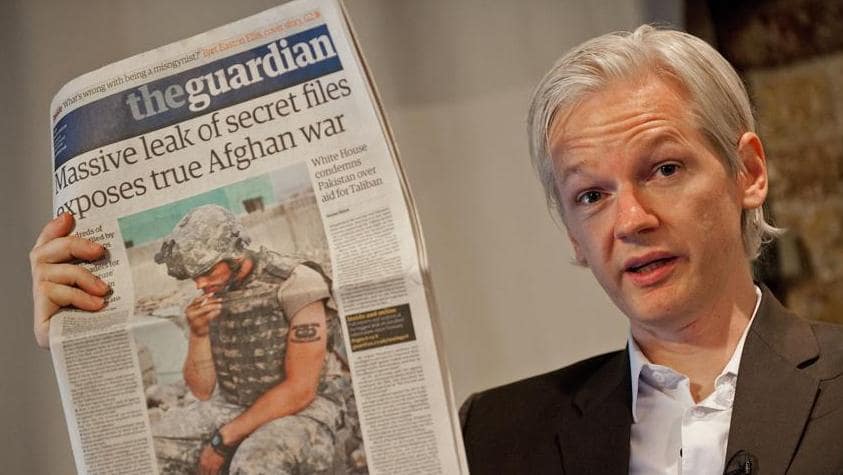
Julian Assange. The “true” Afghan War was not for us to see, but the truth will out, at least in this case, as total defeat in war is hard to hide

W.J. Astore

Edward Snowden. Daniel Hale. Chelsea Manning. Julian Assange. And of course Daniel Ellsberg. These and other whistleblowers courageously spoke out to reveal the lies the government feeds us to keep us pacified and compliant.

What do whistleblowers do? Some might say they speak truth to power. But power already knows the truth, indeed the powerful manufacture the truth, and they like their near-monopoly on truth and its creation and distribution.

What whistleblowers really do is speak truth to the powerless. They speak truth to us, and their version of the truth is one that reveals the manipulation and mendacity of the powerful. It exposes power to the light, revealing the rot, the greed, the lies, and for this act of defiance and of patriotism, the whistleblower must be punished.

Snowden was forced into exile in Russia. Hale was recently imprisoned for up to four years. Manning spent years in prison under humiliating conditions that included solitary confinement. Assange is still in prison, and the U.S. government still seeks to extradite him and punish him under an espionage act that shouldn’t even apply to a citizen of another country (not to mention a journalist who should be protected in a democracy that allegedly reveres the freedom of the press).

It’s not that the American people can’t handle the truth, to cite the words of Colonel Jessup as played by Jack Nicholson. It’s that the American people can handle the truth, that the truth would empower us while weakening the powers-that-be and their various plots and privileges. That’s why the truth is such a scarce commodity in Washington, D.C. It must be guarded while being massaged and manipulated before its fed to the masses as formless, often truthless, pabulum.

America’s punishment of principled whistleblowers is yet another sign of the death of democracy in America. If President Biden wanted to do something important, something inspiring, something meaningful, he’d permit Snowden to return with no charges, he’d pardon Hale, and he’d stop pursuing the extradition of Assange. But Biden will do none of these. Whistleblowers must be persecuted, must be punished, not because they’ve done something wrong, but because they’ve done something right, something that embarrasses the powerful. And that simply cannot be tolerated.

After all, if Americans in positions to know start speaking the truth to their fellow Americans, where will that end? We might see a resurgence of accountability, of justice, even of democracy in America. And we can’t have that.

Addendum: For a terrific book on whistleblowing that will make you angry indeed, check out Tom Mueller’s “Crisis of Conscience: Whistleblowing In An Age of Fraud” (New York, Riverhead Books, 2019).

War Profits Soar as Diplomacy Sinks

W.J. Astore

I came across a remarkable stat while reading William Hartung’s latest article, “The Profits of War,” at TomDispatch.com. The giant military contractor, Lockheed Martin, received $77 billion in federal funds in FY2020 (Lockheed Martin builds the F-35 fighter jet), almost double the entire budget for the U.S. State Department (roughly $44 billion). So as President Biden gives speeches about favoring diplomacy over military action, he might want to consider how the Pentagon’s budget (and related spending on weaponry, including new nuclear weapons) is roughly 20 times that of the State Department. Biden once said, show me your budget and I’ll tell you what you value. Looks like weaponry and war remains number one and job one. USA! USA!

I had to laugh when I saw this headline from the New York Times in my email this morning: “At U.N., Biden calls for diplomacy, not conflict, but some are skeptical.” Readers, I can’t fathom any skepticism about U.S. intentions, can you? We are a peace-loving nation. We just choose to show it by constantly building new weapons in a febrile quest for “full-spectrum dominance” as we showcase our global reach and global power with assassin drones and endless wars. Does any other country in the world have 750 overseas military bases in 80 countries? Does any other country in the world slice and dice the map into regional commands (Africa Command, Central Command, and so on) led by four-star generals and admirals? Proving the world is not enough, America now seeks to dominate space with our “Space Force” and virtual worlds like cyberspace.

Time to practice some “diplomacy” in space.

Remember how Teddy Roosevelt said to speak softly but also to carry a big stick? That needs to be amended. The U.S. policy for decades has been: Shout loudly and swing a big stick. And that “big stick” is the U.S. military, which routinely gobbles up more than half of the federal discretionary budget.

Let me know when the State Department’s budget soars to $750 billion and the Pentagon’s budget plunges to $44 billion and maybe I’ll believe Joe Biden’s words about the new importance of diplomacy in America.

The Pentagon Gets More Money

W.J. Astore

Imagine you’re a parent with a difficult son. You send him to the most expensive schools, you give him prodigious sums of money, but when Johnny comes home from school with his report card, you see he got an “F” in Afghanistan, an “F” in Iraq, and an “F” in Libya, among other “classes.” Projects he’s working on, like the F-35 jet fighter or Ford-class carriers, are also proving to be expensive failures. Even in deportment he’s receiving an “F,” with the teachers telling you he’s prone to bullying his fellow students as he boasts of being the most exceptional student in the world.

How would you handle Johnny? Well, our collective Johnny is the Pentagon and the National Security State, and our government’s way of handling him is to shove more money his way, another $24 billion or so, with more promised in the future.

Is it any wonder why Johnny Pentagon never changes its behavior?

That’s the subject of my latest article at TomDispatch.com. Here’s the first half of the article; please go to TomDispatch.com to read the rest. Many thanks!

William Astore, A Bright Future for Weapons and War

Yoda, the Jedi Master in the Star Wars films, once pointed out that the future is all too difficult to see and it’s hard to deny his insight. Yet I’d argue that, when it comes to the U.S. military and its wars, Yoda was just plain wrong. That part of the future is all too easy to imagine. It involves, you won’t be shocked to know, more budget-busting weaponry for the Pentagon and more military meddling across the globe, perhaps this time against “near-peer” rivals China and Russia, and a global war on terror that will never end. What’s even easier to see is that peace will be given no chance at all. Why? Because it’s just not in the interests of America’s deeply influential military-congressional-industrial complex.

When that vast complex, which President Dwight Eisenhower warned us about six decades ago, comes to my mind, I can’t help thinking of a song from the last years of the then seemingly endless Cold War. (How typical, by the way, that when the Soviet Union finally imploded in 1991, it barely affected Pentagon funding.)

“The future’s so bright (I gotta wear shades)” was that 1986 song’s title. And I always wonder whether that future could indeed be nuclear-war bright, given our military’s affection for such weaponry. I once heard the saying, “The [nuclear] triad is not the Trinity,” which resonated with me given my Catholic upbringing. Still, it’s apparently holy enough at the Pentagon or why would the high command there already be planning to fund the so-called modernization of the American nuclear arsenal to the tune of at least $1.7 trillion over the next 30 years? Given this nation’s actual needs, that figure blows me away (though not literally, I hope).

What is that “triad” the complex treats as a holy trinity? It consists of land-based intercontinental ballistic missiles, or ICBMs; nuclear-weapons-capable bombers like the B-1, B-2, and the venerable B-52; and submarine-launched ballistic missiles, or SLBMs. Given our present vast nuclear arsenal, there’s no strategic need for building new ICBMs at a price beyond compare. In fact, as the most vulnerable “leg” of the triad, the ones the Air Force currently has should be decommissioned.

Nor is there a strategic need for an ultra-expensive new bomber like the Air Force’s proposed B-21 Raider (basically, an updated version of the B-2 Spirit “stealth” bomber that’s most frequently used these days for flyovers at big college and Super Bowl football games). America’s Ohio-class nuclear submarines that still wander the world’s oceans armed with Trident missiles are more than capable of “deterring” any conceivable opponent into the distant future, even if they also offer humanity a solid shot at wholesale suicide via a future nuclear winter. But reason not the need, as Shakespeare once had King Lear say. Focus instead on the profits to be made (he might have added, had he lived in our time and our land) by building “modernized” nukes.

As my old service, the Air Force, clamors for new nuclear missiles and bombers, there’s also the persistent quest for yet more fighter jets, including overpriced, distinctly underperforming ones like the F-35, the “Ferrari” of fighter planes according to the Air Force chief of staff. If the military gets all the F-35s it wants, add another $1.7 trillion to the cost of national “defense.” At the same time, that service is seeking a new, “lower-cost” (but don’t count on it) multirole fighter — what the F-35 was supposed to be once upon a time — even as it pursues the idea of a “6th-generation” fighter even more advanced (read: pricier) than 5th-generation models like the F-22 and F-35.

I could go on similarly about the Navy (more Ford-class aircraft carriers and new nuclear-armed submarines) or the Army (modernized Abrams tanks; a new infantry fighting vehicle), but you get the idea. If Congress and the president keep shoveling trillions of dollars down the military’s gullet and those of its camp followers (otherwise known as “defense” contractors), count on one thing: they’ll find ever newer ways of spending that dough on anything from space weaponry to robot “companions.”

Indeed, I asked a friend who’s still intimate with the military-industrial complex what’s up with its dreams and schemes. The military’s latest Joint Warfighting Concept, he told me, “is all about building Systems of Systems based in AI [artificial intelligence] and quantum computing.” Then he added: “All it will do is give us more sophisticated ways to lose wars.” (You can see why he’s my friend.) The point is that AI and quantum computing sound futuristically super-sexy, which is why they’ll doubtless be used to justify super-expensive future budgetary requests by the Pentagon.

In that context, don’t you find it staggering how much the military spent in Afghanistan fighting and losing all too modernistically to small, under-armed units of the Taliban? Two trillion-plus dollars to wage a counterinsurgency campaign that failed dismally. Imagine if, in the next decade or two, the U.S. truly had to fight a near-peer rival like China. Even if the U.S. military somehow won the battles, this nation would undoubtedly collapse into bankruptcy and financial ruin (and it would be a catastrophe for the whole endangered planet of ours). It could get so bad that even Jeff Bezos and Elon Musk might have to pay higher taxes, if, that is, they haven’t already slipped the surly bonds of Earth to mingle with the twinkling stars.

If America’s post-9/11 war-on-terror military spending, including for the Afghan and Iraq wars, has indeed reached the unimaginable sum of $8 trillion, as Brown University’s Costs of War Project estimates, imagine how much a real war, a “conventional” war, featuring the air force, the fleet, big battalions, and major battles, would cost this country. Again, the mind (mine at least) boggles at the prospect. Which is not to say that the U.S. military won’t fight for every penny so that it’s over-prepared to wage just such a war (and worse).

The idea that this country faces a perilous new cold war that could grow hot at any moment, this time with China, crops up in unusual places. Consider this passage by Dexter Filkins, a well-known war reporter, that appeared recently in the New Yorker:

“We’ve spent decades fighting asymmetrical wars, but now there’s a symmetrical one looming. The United States has never faced an adversary of China’s power: China’s G.D.P. is, by some measures, greater than ours, its active-duty military is larger than ours, and its weapon systems are rapidly expanding. China appears determined to challenge the status quo, not just the territorial one but the scaffolding of international laws that govern much of the world’s diplomatic and economic relations. If two forever wars are finally coming to an end, a new Cold War may await.”

A new war is “looming.” Our adversary has more money and more troops than us and is seeking better weaponry. Its leadership wants to challenge a “status quo” (that favors America) and international laws (which this country already routinely breaks when our leaders feel in the mood).

Why are so many otherwise sane people, including Joe Biden’s foreign policy team, already rattling sabers in preparation for a new faceoff with China, one that would be eminently avoidable with judicious diplomacy and an urge to cooperate on this embattled planet of ours?

Why indeed? Please read the rest of my article at TomDispatch.com.

AOC’s “Radical” Gown

W.J. Astore

AOC got a lot of attention wearing a gown to the Met Gala that read, “tax the rich.” Here’s a fetching image:

Of course, this is hardly a radical message. Firstly, the rich are already taxed. Secondly, something like 70% of Americans, and perhaps more, agree that the richest Americans should pay more taxes. Thirdly, attendees of the Met Gala are, though rich, generally supportive of liberal causes, if not of true leftist agendas, so her message was hardly offensive to most of the people there.

Many people have pointed out AOC’s hypocrisy, such as her lack of action on issues like health care for all or a $15 minimum wage. Her gown was basically an exercise in performative theater. It garnered “hits” and “likes” as well as fury, but in the end it signified nothing.

Actions speak louder than words, even on gowns, but I can imagine more powerful words for her to have worn, if she’d really wanted to send a subversive message. Examples that occur to me:

EAT THE RICH. Much more amusing and to the point.

END THE WARS. Why not focus on America’s forever wars that have (or will) cost us $8 trillion?

HELP THE POOR. Why not remind the rich at the gala that there is such a thing as poor people in America?

GREED IS BAD. The anti-Gordon Gekko message.

CLASS WAR: Why not go all Marxian on them?

NO MORE NUKES: Why not remind Americans that the Pentagon plans to spend as much as $1.7 trillion on new ICBMs, bombers, and nuclear submarines, when the “old” ones we have are already capable of ending most life on Earth?

OK: Wearing what amounts to a bumper sticker on a gown isn’t going to change the world. It’s a stunt to grab attention, with an element of narcissism to it. But if you’re going to pull a stunt like this, why not go big? Why not be radical?

One more thought: If you watched the Met Gala and all the celebrities showing off their gowns and outfits, and you’ve also read “The Hunger Games” or saw the movies, you couldn’t help but recall the scenes of the decadent few in The Capitol, thoroughly enjoying life as all the proles in the Districts suffer to serve their prodigal and hedonistic lifestyle.

Something tells me AOC is very much a Capitol creature. She’s no Katniss Everdeen, no matter what she puts on her gown.

Readers: What message would you dare to wear on your gown or suit to show your “betters” you mean business? Have some fun in the comments section, but let’s keep it rated “R,” not “X.” And short!

Never Forget — What?

W.J. Astore

The 20th anniversary of the 9/11 attacks has come and gone. The theme I often heard was “never forget.” Never forget what, exactly? That we were attacked? All of us of a certain age remember 9/11. We remember where we were when we first heard the news. We remember the shock, the confusion, the sense of loss. We really don’t need to be reminded to “never forget.”

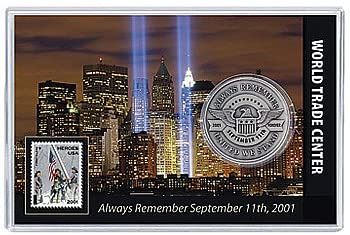
A similar phrase is “always remember.” Like “never forget,” it’s remarkably labile, much like Obama’s slogans of “hope” and “change.” And that’s the point. It’s vague while being emotive. It plays on our emotions without encouraging us to think.

So, let’s think critically for a moment. What should we “never forget”? We should never forget the victims, of course. The heroes. The first responders who gave their lives. And, by the way, why is Congress always so reluctant to provide health care to those first responders who worked so tirelessly in the dangerously unhealthy rubble of the Twin Towers? Let’s not forget them in their moments of need.

But what else shouldn’t we forget and “always remember”? I think we should remember the colossal failure of the Bush/Cheney administration to act on intelligence that indicated Al Qaeda was determined to strike in the U.S. We should remember the chaos generated by those attacks, and how our government responded so slowly, and with a measure of panic. And we should remember how quickly men like Bush and Cheney and Rumsfeld deflected any blame and took no responsibility for what can only be described as a massive defeat.

Also, it’s important to recall that 15 of the 19 hijackers were Saudi nationals, yet America’s leaders chose to invade Afghanistan and Iraq after announcing a global war on terror. In short, they used 9/11 as a pretext to embark on wars that they wanted to fight, wars of choice that proved disastrous, and for which they’ve largely evaded responsibility.

As a military historian, I’m also taken aback by our leaders choosing to rebrand 9/11 as “Patriot Day.” When the Japanese attacked Pearl Harbor on December 7th, 1941, America’s leaders didn’t rebrand that day as an occasion for patriotism. They recognized it was a date of infamy and declared war on the attacker.

It’s almost as if 9/11 has become a date of victimhood for the U.S. An old Air Force buddy of mine put it well recently in a message to me:

“It felt like it wasn’t about remembrance as much as just wallowing in self-pity. Interesting you bring up Pearl Harbor. Back then we went off and fought a 4-year war, beat our enemy, and helped them rebuild. For 9/11, we went off and fought a 20-year war, came home with our tails between our legs, and left our enemy more empowered. A celebration of victimhood, but not of honor.”

I like my friend’s appeal to honor. It’s an old-fashioned word that you hear rarely in America’s offices and corridors of power. Where is the honor in turning the 9/11 calamity into some kind of celebration of victimhood and patriotism?

As a historian, of course I want 9/11 to be remembered. But let’s not allow propaganda and cheap sentiment to shape our memories. And let’s “never forget” the failures of our leaders both before and after that date of infamy.