
The Missions Unaccomplished Force

060503_MI3_hmed_1p.grid-6x2
At least we win in Hollywood …

Tom Engelhardt.  Introduction by W.J. Astore.

Colonel (retired) Andrew Bacevich has a new article at TomDispatch as well as a new book on America’s War for the Greater Middle East (my copy is already coming in the mail). Bacevich’s main point in his latest article couldn’t be more clear: Congressional cowardice.  Congress refuses to exercise the people’s authority over presidential warmaking, a gross dereliction of duty that ensures perpetual wars with missions perennially left unaccomplished.  And that is the theme of Tom Engelhardt’s introduction to Bacevich’s article.

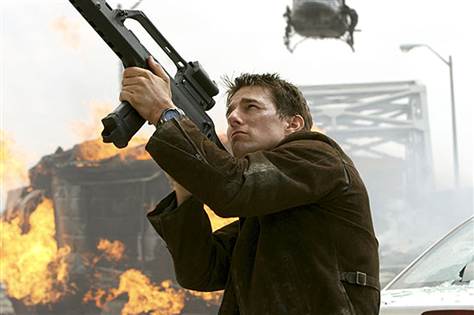
You’ve heard of the Impossible Missions Force, or IMF, which somehow always gets the job done, whether led by Martin Landau or Peter Graves or Tom Cruise?  Well, that’s Hollywood.  In the real world, we have the MUF, or Missions Unaccomplished Force.  Yes, they always muff it, no matter if the “Decider” is the strutting George W. Bush or the cool and calculating Barack Obama.  But let Tom Engelhardt tell the tale …  W.J. Astore  

The Missions Unaccomplished Force, by Tom Engelhardt

It was a large banner and its message was clear.  It read: “Mission Accomplished,” and no, I don’t mean the classic “mission accomplished” banner on the USS Abraham Lincoln under which, on May 1, 2003, President George W. Bush proudly proclaimed (to the derision of critics ever since) that “major combat operations in Iraq have ended.”  I’m actually referring to a September 1982 banner with those same two words (and an added “farewell” below them) displayed on a landing craft picking up the last Marines sent ashore in Beirut, Lebanon, to be, as President Ronald Reagan put it when they arrived the previous August, “what Marines have been for more than 200 years — peace-makers.”  Of course, when Bush co-piloted an S-3B Viking sub reconnaissance Naval jet onto the deck of the Abraham Lincoln and made his now-classic statement, major combat had barely begun in Iraq (and it has yet to end) — nor was it peace that came to Beirut in September 1982: infamously, the following year 241 Marines would die there in a single day, thanks to a suicide bomber.

“Not for the last time,” writes Andrew Bacevich in his monumental new work, America’s War for the Greater Middle East: A Military History, “the claim proved to be illusory.”  Indeed, one of the grim and eerie wonders of his book is the way in which just about every wrongheaded thing Washington did in that region in the 14-plus years since 9/11 had its surprising precursor in the two decades of American war there before the World Trade Center towers came down.  U.S. military trainers and advisers, for example, failed (as they later would in Iraq and Afghanistan) to successfully build armies, starting with the Lebanese one; Bush’s “preventive war” had its predecessor in a Reagan directive called (ominously enough given what was to come) “combating terrorism”; Washington’s obsessive belief of recent years that problems in the region could be solved by what Andrew Cockburn has called the “kingpin strategy” — the urge to dismantle terror organizations by taking out their leadership via drones or special operations raids — had its precursor in “decapitation” operations against Muammar Gaddafi, Saddam Hussein, and Somali warlord Mohamed Farrah Aidid with similar resulting mayhem.  The belief that “an additional increment of combat power might turn around a failing endeavor” — call it a “surge,” if you will — had its Iraq and Afghan pretrial run in Somalia in 1993.  And above all, of course, there was Washington’s unquenchable post-1980 urge to intervene, military first, in a decisive way throughout the region, which, as Bacevich writes, only “produced conditions conducive to further violence and further disorder,” and if that isn’t the repetitive history of America’s failed post-2001 wars in a nutshell, what is?

As it happened, the effects of such actions from 1980 on were felt not just in the Greater Middle East and Africa, but in the United States, too.  There, as Bacevich writes today, war became a blank-check activity for a White House no longer either checked (in any sense) or balanced by Congress.  Think of it as another sad tale of a surge (or do I mean a decapitation?) that went wrong.
Why Are PTSD Rates So High Among Veterans?

kalkriese_mask
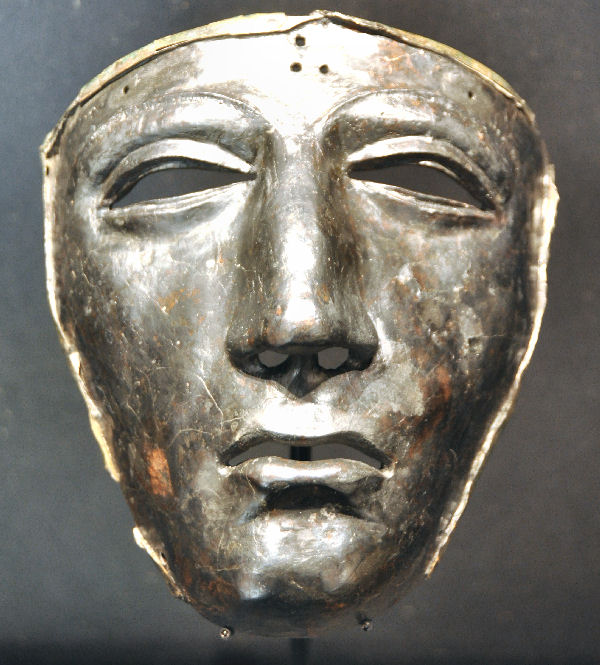
One of the many masks of war

W.J. Astore

Post-traumatic stress disorder (PTSD) is a major problem among veterans who fought in Iraq and Afghanistan.  The VA government web site explains that “OEF/OIF service members are at risk for death or injury. They may see others hurt or killed. They may have to kill or wound others. They are on alert around the clock. These and other factors can increase their chances of having PTSD or other mental health problems.”  The site goes on to say that “Research on OEF/OIF Veterans suggests that 10% to 18% of OEF/OIF troops are likely to have PTSD after they return.” (OEF and OIF are acronyms for the wars in Afghanistan and Iraq.)

That’s a lot of veterans.  Hundreds of thousands, potentially.  Why is this number so high?  Is there something uniquely bad or intense about wars in Iraq or Afghanistan?  We can point to several factors, to include constant redeployments – four or five were not uncommon – on high-risk and high-stress missions, only to witness regress instead of progress.  Add to this the everyday shifts between secure bases and insecure field ops (as with air crews in World War II), direct electronic connections to home (which can prove discomforting rather than reassuring), and transitions from battlefront to homefront that are often too rapid for bodies and minds to adjust.  Finally, we’re witnessing better diagnosis (think of the “epidemic” of concussions in the NFL, which is much more about better recognition of the symptoms rather than an explosion in cases).  Small wonder there’s almost a pandemic of PTSD cases among the troops.

Are today’s troops not adequately prepared to handle the stresses of war?  Were warriors of the past somehow different?  A colleague, the classicist Steven Willett, explained that within ancient Greece there’s no direct evidence of warriors suffering from what we today term PTSD (though doubtless men suffered physical and mental anguish in the aftermath of brutal physical combat associated with Greek phalanxes).

In Willett’s words,

The evidence [of PTSD] is nonexistent because their [the Greek’s] emotional attitude to service and death for the state is not ours.  One way to appreciate this is to look carefully at the beautiful funeral sculptures set up in the Kerameikos of Athens after the first years of the Peloponnesian War.  Dead soldiers stand serenely in the confidence of having done their duty, perhaps with a favorite dog or horse by them, and the parents looking on never betray grief.  The emotional ambience is calm, the tears long shed, the family proud in its sorrow.  A lot of these funeral sculptures are available on line, but the best are in National Archaeological Museum of Athens.  The families and relatives of Spartan soldiers who had died [are] nobly celebrated, while those of the survivors almost mourned.  Think of Thermopylae.

It got me thinking anew about America’s current wars, and how these wars – unlike those for the Greeks – are not directly for communal defense.  Nor are America’s wars fought by communities, not when 99% of Americans exempt themselves from military service.  In Greek society, all able-bodied men believed it to be both duty and honor to wield shield and spear to defend their communities.  (Socrates was one of them.)  In America today, “support” for the troops often begins and ends with a bumper sticker.

Shared sacrifice for communal ideals: such common purpose doubtless acted as a cushion for the physical and mental blows inflicted in Greek warfare.  No matter the era, troops in combat see and experience horrible things, but the trauma is arguably easier to process when blows are cushioned by necessity, and softened by sacrifices shared within tightknit communal settings.

And that’s precisely what’s lacking in the USA today: a sense that our overseas wars are for a communal cause, for honored ideals held in common.  (Other than a vague sense of protecting the “homeland” from “terrorists.”)  The lack of a strongly held communal cause/purpose for our wars ultimately contributes, I believe, to PTSD rates among our returning veterans.  A sense of confusion – why did I suffer – what was it for, intensified by bitterness – my suffering wasn’t worth it – I killed people and saw my buddies killed and it was all for nothing, plagues the troops that our government sends to war ostensibly in our name.

The military historian Sir Michael Howard quotes Carl von Clausewitz on the larger meaning of war.  War, Clausewitz wrote, “cannot be divorced from political [communal] life; and whenever this occurs in our thinking about war, the many links that connect the two elements [of political purpose and war] are destroyed and we are left with something pointless and devoid of sense.”

If we want to lower PTSD rates, the easiest way is to stop sending troops to war, full stop.  And the second easiest way is to stop sending troops to pointless wars that are devoid of political or communal sense.  Wars that serve no larger communal purpose lack meaning.  And where meaning is debased, so too is our troops’ ability to deal with wars in all their horrors.