
Asymmetrical Warfare: Its Real Meaning

Don't worry, it's just a game, and we have the best toys
Don’t worry, it’s just a game, and we have the best toys

When U.S. military theorists talk about asymmetrical warfare, they nearly always mean that the enemy has a diabolical advantage against us (They use human shields!  They have no qualms about endangering women and children!).  Rarely do these theorists recognize our own asymmetries, the enormous advantages they convey, and the seemingly irresistible temptation to use those advantages to smite our enemies, real or imagined.

Our enormous military capability and virtual invulnerability to direct attack combine to actuate “proactive” and “kinetic” aggressiveness whose means are entirely out of proportion to the ends.  We “shock and awe” because we can, and because the targets on the receiving end of American firepower have little recourse and no ability to reply in kind.

How likely would it be that we’d meddle in Afghanistan or Iraq or Libya or Syria if these countries could strike with equal fury against the U.S.?

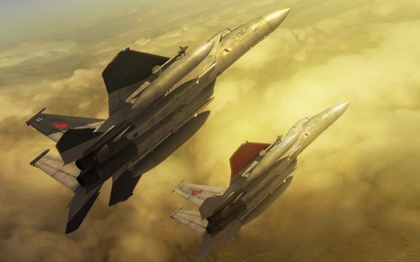
As the U.S. military responds with “urgent fury” in the name of “enduring freedom,” ordinary Americans are reduced to spectators at a bloodless video game, watching on American TV stock footage of missiles being launched, jet aircraft taking off, etc.  We’re supposed to gaze, with pride, at our arsenal in action, and applaud when U.S. missiles, at a cost of $50 million plus, slam into their targets.  It’s all bloodless (to us), just explosions from a distance blossoming on our TV screens in our living rooms.

So, when we talk of asymmetrical war, let’s remember our own asymmetries: the asymmetry of enormous American firepower, and the asymmetry of seeing war as a bloodless video game even as various enemies (or innocents) get vaporized by remotely-launched American missiles.

Our government has worked tirelessly to insulate the American people from the true costs of making war, which makes it far more likely that our war on terror, in one form or another, will continue indefinitely.

Let us recall, once again, the words of James Madison: No nation can preserve its freedom in the midst of continual warfare.

W.J. Astore

Fighting Forest Fires

A firefighter of Alcoy and Elda tries to

Very sad news coming out of Arizona: the loss of nineteen firefighters as they fought valiantly against wildfires started by lightning.  My Dad fought forest fires in Oregon in the mid-1930s when he was in the Civilian Conservation Corps, or CCC.  He once worked nearly 24 hours straight on a fire line to contain a blaze.  He confessed he volunteered for the extra shift because he was in part too scared to sleep with the fire so close and so unpredictable.

Fire is protean, capricious, an almost living thing.  Fire is truly “wild.”  Small wonder we have nightmares about fire-breathing monsters or the fires of hell.  It’s takes tough and courageous men and women to face down fire, to confront it, to try to contain it.  Not only do you face the hell of heat and flames, but also the dangers of choking and blinding smoke and collapsing (even exploding) trees.

Here’s an excerpt from my father’s journal about some of the wildfires he fought in the 1930s:

We also fought a 10,000 acre fire in the foothills of Mt. Rainier in the State of Washington.  Mt. Rainier is a pretty impressive mountain and over 14,000 feet high.   A bus took us from Enterprise Oregon via the highway that followed the Columbia River for over 400 miles.  The whole trip to the fire was 600 miles.  Talk about scenery; very breathtaking.  Off the highway you could see plenty of waterfalls and minor streams that flowed into the Columbia River.

 Another big fire we fought burnt to the edge of the Pacific Ocean.  We were discussing the fact, all that ocean water but we couldn’t put it on the fire.

 Oddities: Two CCC boys were killed because a truck ran off a mountain road because visibility was bad with smoke and fog.

 Also, we built a fire trail and we were going to start a backfire to the main fire.  We couldn’t start a fire because of mist that wet the area that we wanted to burn.  Where the fire was approaching you could hear the burning trees and snags falling.  You looked towards the fire but you couldn’t see anything on account of the smog.  We went to another area.  Later when the sun came out and it cleared the fire went out of control again.

Work on the fire line was exhausting, even for men in the prime of life, as my father knew:

We were in the area of the North Fork of the Pistol River.  Our crew was resting.  It was a flat area, heavily wooded, miles from anything.  One end of the stream had narrowed because of a sandbar and formed a pool that was a hundred yards long and about twenty yards wide.  There was about a twenty-foot-high rock ledge on one bank.  What a beautiful natural swimming pool.  The water was cold and clear as crystal.  The ranger said if you wanted to go in for a swim, go ahead.  No one went in; the answer must be because we were too tired. 

Amazing, isn’t it, that young men were so exhausted after fighting fires that they didn’t have the energy to jump in a stream-fed pool of cool water?

We owe a debt to firefighters around the world for the dangers they confront when taking on fire.  True heroes, indeed.

W.J. Astore