Even Visceral War Movies Are Often Pro-War

W.J. Astore

Three anti-war movies worth watching

FEB 07, 2025

I was reading a memoir by a combat veteran today who served in Afghanistan and he had this to say:

“I remember watching the movie Saving Private Ryan with him [my dad] and all I wanted after that was to be a soldier.”

Perhaps you’ve seen Saving Private Ryan. The opening sequence is harrowing–a visceral depiction of war (the bloody U.S. landing at Omaha Beach on D-Day, June 6, 1944)–followed by a “feel-good” Spielberg gloss that follows a band of heroes that “rescues” Private Ryan.

This is the problem with war films, even visceral ones. Boys and teenagers watch them and think they’re cool; they seek the deadliest of challenges, even war, guided and motivated as they are by BS pro-war government/Hollywood propaganda.

It’s very difficult to depict war without valorizing it. The director Samuel Fuller, who served in World War II and made the movie The Big Red One, noted how movies don’t depict combat realistically, even ones like Saving Private Ryan. In his words: “You can’t see anything in actual combat. To do it right, you’d have to blind the [movie] audience with smoke, deafen them with noise, then shoot one of them in the shoulder to scare the rest to death. That would give the idea [of real war], but then not many people would come to the movies.”*

I love that description of a “real” immersive war movie. Now, who wants to volunteer to be the one who gets shot in the shoulder?

Obviously, you’ll rarely see “real” war in the mainstream media or in Hollywood movies because ratings and profits matter. Those movies that truly show the very worst aspects of war, without glorifying war in any way, are rare indeed. Perhaps one of these is Johnny Got His Gun (1971).

The scene featuring Donald Sutherland as Jesus Christ—his howl at the end on the train of death—is unforgettable.

Another incredibly harrowing war film that I’ve never forgotten is Come and See (1985). Set on the Russian Front during World War II, it is a shattering depiction of the utter brutality of war.

One more war film that is perhaps prettier than it should be but which captures the sadness and loss of innocence of the World War I generation is Testament of Youth (2014). The scene near the end where Alicia Vikander calls for an end to killing—an end to war—is heartrending.

Readers, what “war” movies have you seen that truly made you want to reject war in all its sheer bloody awfulness and waste?

*Quoted in “Reel War vs Real War,” article by Peter Maslowski, MHQ: Military History Quarterly, Summer 1998 issue.
The Rambo Mystique

W.J. Astore

Forgotten Lessons from “First Blood”

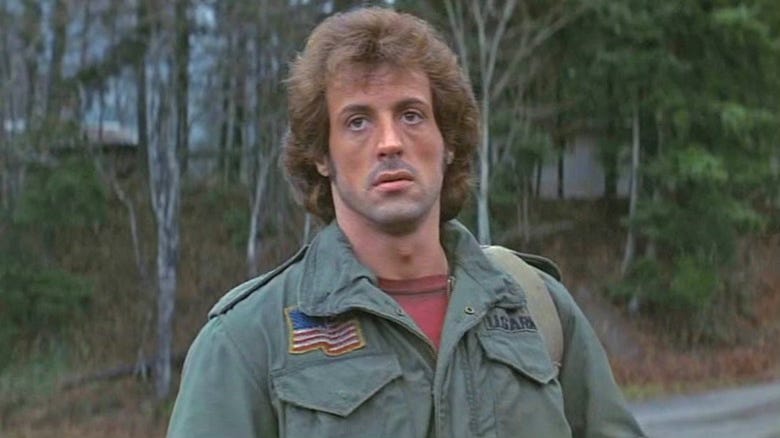
I remember seeing the first Rambo flick (“First Blood”) in a movie theater in 1982 when I was nineteen and rooting for Sly Stallone’s character against the police and national guardsmen who are sent to kill him.  The police think it’ll be easy to subdue one man, but we the viewers know better.  As Colonel Trautman, Rambo’s former commanding officer, says in the movie: In war, it’s wise to have “a good supply of body bags” on hand, a telling reminder about the harsh reality of combat.

In “First Blood,” military clothing and the flag offer no protection to John Rambo, who’s treated as a lowlife by the local sheriff 

Yet, there’s a deeper meaning to “First Blood” captured near the end of the movie, when John Rambo, having improbably acted as a one-man invincible army (a true “Army of One”), bitterly reflects on his own post-Vietnam experiences.  Rambo, breaking down, admits he can’t adapt to regular civilian life.  A loner, he feels himself to be a loser, even though he was decorated for heroism in war with the Medal of Honor.  Wounded and haunted by war, his soul seared by violence, he surrenders to Colonel Trautman.

The original Rambo movie wasn’t necessarily deep, but it did remind us that soldiers like Rambo carried hidden wounds of war; it also highlighted a societal suspicion, whether just or unjust, of military veterans.  The sheriff in “First Blood” has no respect for Rambo as a military “hero”; he sees him as a disreputable and dangerous outsider and just wants to be rid of him, one way or another.

Subsequent Rambo films would portray him as a virtually unstoppable killing machine. In the first sequel, Rambo is sent back to Vietnam to rescue American POWs betrayed and abandoned by the U.S. government.  Perhaps the most famous line from that movie is when Rambo asks Colonel Trautman whether, in returning to Vietnam, the government will finally allow U.S. soldiers to win this time.  It was a concise statement of the stab-in-the-back myth, the idea the U.S. military would have won the war in Vietnam if only it hadn’t been betrayed by a duplicitous and spineless government.

“Do we get to win this time?”  That’s a question that should haunt all Americans, since we haven’t won a war since 1945.  But who is to blame for not winning?  And have the wars America has fought since World War II really been worth fighting to begin with?

Update (9/2923): A lot has changed in forty years, as a couple of my friends pointed out in response to this article. We could imagine at least two scenarios for a revised Rambo made in 2023:

Version 1: In 2023, the sheriff wouldn’t have to call in the National Guard.  All his deputies would gear up with assault rifles, sniper rifles, body armor, and MRAPs donated by the Pentagon as excess gear and the local SWAT team would be mobilized and deployed to find and kill Rambo.

Version 2: Perhaps the most likely one: Rambo would be wearing a “blue lives matter” flag, the sheriff’s patrol car would be festooned with “support our troops” stickers, and they’d call a town meeting to give Rambo the keys to the town as a Medal of Honor winner.

Top Dove: Peacenik

W.J. Astore

I’m still waiting for the blockbuster Hollywood production that celebrates peace

Last year, “Top Gun: Maverick” was all the rage. It was a silly war flick with a plot ripped from the original “Star Wars” movie featuring plenty of bloodless, high octane action sequences. I enjoyed it in the way I occasionally indulge in unhealthy fast food. The movie was instantly forgettable except for one scene where hotshot pilot Maverick, played of course by Tom Cruise, meets his old rival Iceman, played by Val Kilmer. In real life, Kilmer suffers from throat cancer, and his condition is not hidden in the movie, where Kilmer is now an admiral who still believes in his old friend, Captain Pete “Maverick” Mitchell.

Naturally, Maverick saves the day, pummeling a nameless enemy (most likely Iran) with bombs because that country is developing nuclear weapons. Nothing, of course, is said of the thousands of nuclear warheads and bombs in America’s arsenal, or that the USA is the only country to have used atomic bombs in war (Hiroshima, Nagasaki). But I digress.

Hollywood loves war movies. They sell well. Yet I still await “Top Dove: Peacenik,” in which an intrepid, brave, determined, and charismatic person stops a war without bombing or killing anyone. What a breath of fresh air that would be!

Exactly ten years ago, I posted the article below at Bracing Views. We need peacemakers now more than ever. Sadly, they are still very much forgotten, or ignored, or dismissed as unserious or even delusional.

Forgotten Are the Peacemakers (2013)

Monument to Elihu Burritt in New Marlboro, Mass. (author's photo)
Monument to Elihu Burritt in New Marlboro, Mass. (author’s photo)
The Plaque in Honor of Burritt
The Plaque in Honor of Burritt (author’s photo)

Being Catholic, I’m a big fan of the Sermon on the Mount and Christ’s teaching that “blessed are the peacemakers.”  Yet in American history it seems that “forgotten are the peacemakers” would be a more accurate lesson.  We’re much more likely to remember “great” generals, even vainglorious ones like George S. Patton or Douglas MacArthur, than to recognize those who’ve fought hard against long odds for peace.

Elihu Burritt was one such peacemaker.  Known in his day as “The Learned Blacksmith,” Burritt fought for peace and against slavery in the decades before the Civil War in the United States.  He rose from humble roots to international significance, presiding over The League of Universal Brotherhood  in the 1840s and 1850s while authoring many books on humanitarian subjects.

Interestingly, peacemakers like Burritt were often motivated by evangelical Christianity.  They saw murder as a sin and murderous warfare as an especially grievous manifestation of man’s sinfulness.  Many evangelicals of his day were also inspired by their religious beliefs to oppose slavery as a vile and reprehensible practice.

Christian peacemakers like Burritt may not have had much success, but they deserve to be remembered and honored as much as our nation’s most accomplished generals.  That we neglect to honor men and women like Burritt says much about America’s character.

For if we truly are a peace-loving people, why do we fail to honor our most accomplished advocates for peace?

On War Movies

W.J. Astore

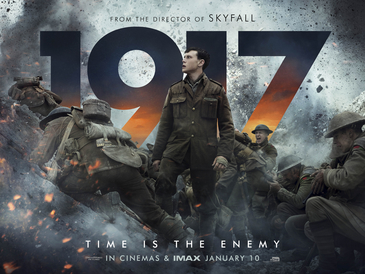
The other night, my wife and I watched “1917,” a movie set during World War I. The Western Front was the setting, and the movie took pains to show the many horrors of trench warfare. Rotting corpses of men and horses. Rats and flies around those corpses. Huge shell craters. Barbed wire everywhere. Broken down tanks and other discarded military equipment. Nature itself blasted. It made you wonder how men could have slaughtered each other under such conditions for so long.

But it’s hard to sustain such horrors, even in a war movie crafted with such care. Because the overall story was a noble one about sacrifice, persistence, and endurance at the longest of odds.

Most war movies are like this. They may show the horrors of war, and do it viscerally and effectively, as Steven Spielberg did in his opening sequence of D-Day in “Saving Private Ryan.” But such horror can’t be sustained in what is ultimately meant as a form of entertainment, so in Spielberg’s film there is meaning and purpose. Sacrifice is ennobling. It is memorable and remembered. The hero does not die in vain.

I’ve seen war movies that have stayed with me, but no war scene in any movie captures the horrors of real life. And if somehow a movie could capture such horrors, who would voluntarily go and see it? Especially if they were not mere spectators but participants — with skin in the game, so to speak.

There are many good war movies out there, but has a movie ever stopped anyone from fighting and dying?

We make war into something larger than life. The irony is that war is most often the negation of life. Too many people die for no purpose and no reason. There is no dramatic arc. Only death and more death.

Yet we remain fascinated by war. Libraries are filled with books on war, and new war movies come out on a regular basis, promising drama and meaning and authenticity.

What was the last peace movie you saw?

Winning the Afghan War — In Hollywood

12STR_VERT_MAIN_DOM_2764x40

W.J. Astore

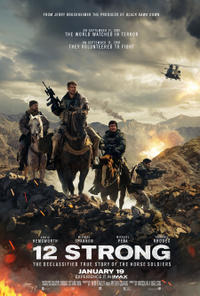
A new movie, “12 Strong,” is opening on January 19th.  I’ve been seeing a lot of trailers for it while watching the NFL playoffs.  It’s being advertised as America’s first victory in the “war on terror.”  Based on a popular book, “Horse Soldiers,” it features American special operations troops charging into battle on horseback.  The synopsis of the movie (at Fandango) describes it as follows:

“12 Strong” is set in the harrowing days following 9/11 when a U.S. Special Forces team, led by their new Captain, Mitch Nelson (Hemsworth), is chosen to be the first U.S. troops sent into Afghanistan for an extremely dangerous mission. There, in the rugged mountains, they must convince Northern Alliance General Dostum (Negahban) to join forces with them to fight their common adversary: the Taliban and their Al Qaeda allies. In addition to overcoming mutual distrust and a vast cultural divide, the Americans—accustomed to state-of-the-art warfare—must adopt the rudimentary tactics of the Afghani (sic) horse soldiers. But despite their uneasy bond, the new allies face overwhelming odds: outnumbered and outgunned by a ruthless enemy that does not take prisoners.

I don’t think it will surprise anyone that, despite those “overwhelming odds” and being “outnumbered and outgunned by a ruthless enemy,” U.S. troops prevail.

Watching the trailers on TV is a surreal experience.  You get the impression the U.S. cavalry sounded the charge and won the Afghan war in 2001.  You’d never know U.S. forces are still fighting in Afghanistan in 2018, facing a “stalemate” and a resurgent Taliban that controls vast swaths of territory, and that U.S. forces face a “generational” slog to an endpoint where victory is indeed ill-defined.

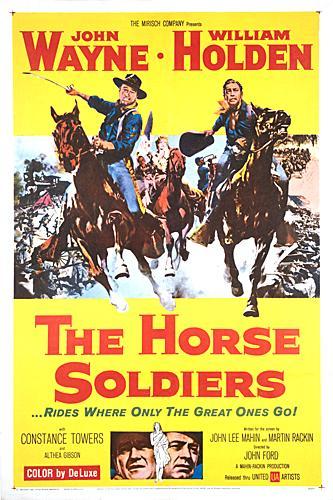
Even though America is treading water in the Afghan war, Hollywood has cherry-picked an episode from the early days of that war, in the tradition of a John Wayne movie (like “The Horse Soldiers“).

wayne

The Wild West has been reset to Afghanistan with U.S. troops as the new sheriff in town, with the Taliban serving as the “savages” in the old Western tradition.

It’s the U.S. cavalry to the rescue, in the wild Afghan mountains.  Yet highlighting this one episode in America’s quagmire war in Afghanistan is more than misleading.  It’s as if the Japanese made a film about World War II that began and ended with Pearl Harbor.

Remember when Candidate Trump boasted that, when he became president, Americans would win so much, we’d get bored with winning?  “Believe me,” he said.

Maybe this is believable … at the movies.

America’s Wars as Bloated Hollywood Productions

Age of Extinction, indeed (Source: Wikipedia)

W.J. Astore

Like so many bloated Hollywood movies nowadays, America’s wars may bomb, but they always produce their own sequels.

Look at the latest news from Iraq and Afghanistan.  These wars have persisted for more than a decade, with several re-releases to include “surges” and repeats.  The latest from Iraq is preparations to retake the city of Mosul from ISIS, which promises a repeat of the level of destruction visited upon Fallujah in 2004.  In this there are echoes of Vietnam: in Mosul, we may have to destroy the city to save it.  Five Iraqi brigades, most likely supported by American airpower and some American troops on the ground (air controllers and Special Forces), are poised to strike as early as April.  Doubtless they’ll prevail, at least for the moment, as the city and its civilians pay a price so dear as to be indistinguishable from defeat.  Mosul will be “liberated,” but just look what happened to Fallujah, which after the American “victory” in 2004 is now a devastated city retaken by elements of al-Qaeda in 2014.

(As an aside, it’s interesting that the New York Times uses the word “epic” to describe the Battle of Fallujah from 2004.  Surely a better word is “catastrophic.”  What is epic about a battle that destroys a city, a battle that is ultimately inconclusive?  Check out Bing West’s book about Fallujah, whose title, “No True Glory,” captures the frustrations and contradictions of that battle, mainly from the American perspective.)

Moving to Afghanistan, the latest is that American troops may stay longer than expected (surprise!).  Despite all the talk of “progress” in Afghanistan, the takeaway is the following section, from Secretary of Defense Ash Carter’s recent visit to Afghanistan:

“Despite the aid of American air power, 2014 was the deadliest year for Afghan forces since the start of the war in 2001, and many Afghan and Western officials in Kabul believe that 2015 will likely be worse, particularly with less support from Western allies. That has begun to change the conversation about the possibility of slowing down in the [American] withdrawal.”

In other words, expect more micro-surges of American troops and assets in the coming years, as well as more reports of “progress,” however temporary or illusory (at least America’s best and brightest learned from Vietnam not to talk of seeing light at the end of tunnels).

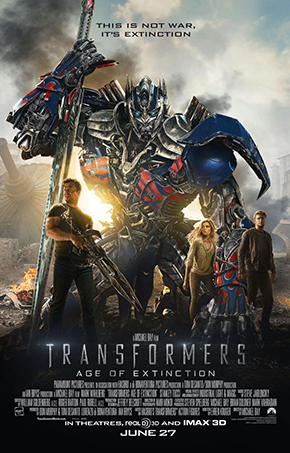
America’s wars are much like the “Transformers” franchise of movies: thrilling and seemingly conclusive at first, with much talk of missions being accomplished, followed by sequel after sequel of repetitive battles, increasingly loud and destructive, signifying vapidity and intellectual bankruptcy even as a few profit greatly from them.

And no one (certainly none of the producers at the Pentagon) seems to be able to pull the plug on green-lighting ever more sequels to these wars.  Even when they bomb.

(For a different perspective on how recent Hollywood movies support American warmaking through myth-making, see Peter Van Buren’s insightful article “War Porn” at TomDispatch.com.)