Richard Sahn
These are not exactly happy times. Americans have fewer safeguards for their jobs, financial well-being, and, ultimately, their very lives. Uncertainty and insecurity have become more prevalent than ever I can remember. As a consequence, insomnia, depression, angst seem to be characteristic of an increasing number of people across the country, almost as American as apple pie. Just as being a divorcee in California is nothing to write home about—you’re even considered odd if you have never been divorced—so is the sense that something “bad” can happen at any time, without warning. Sociologists—I am a sociologist–call this condition “anomie,” a concept formulated by one of the founders of sociology, Emile Durkheim. The Trump presidency, it may be argued, exacerbates anomie since we seem to be moving closer to economic nightmares and possibly nuclear holocaust than in recent decades.
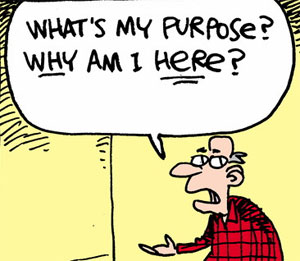
What exactly is anomie? Anomie literally means without norms. It’s a psychological condition, according to Durkheim, in which an individual member of a society, group, community, tribe, fails to see any purpose or meaning to his/her own life or reality in general. Anomie is the psychological equivalent to nihilism. Such a state of mind is often characteristic of adults who are unemployed, unaffiliated with any social organization, unmarried, lack family ties and for whom group and societal norms, values, and beliefs have no stabilizing effect.
The last situation can readily be the outcome of exposure to sociology courses in college, providing the student does not regularly fall asleep in class. I’ve always tried to caution my own students that sociology could be, ironically, dangerous to their mental health because of the emphasis on critical thinking regarding social systems and structures. Overcoming socialization or becoming de-socialized from one’s culture—when one begins to question the value of patriotism, for instance—can be conducive to doubt and cynicism which may give rise to anomie. Of course, I also emphasize the benefits of the sociological enterprise to the student and to society in general. For example, a sociology major is perhaps less likely to participate voluntarily in wars that only favor special interests and which unnecessarily kill civilians.
Clinical depression is virtually an epidemic in the U.S. these days. Undoubtedly, anomie is a major factor, especially in a culture where meaningful jobs or careers are difficult to obtain. To a great extent social status constitutes one’s definition of self. In Western societies the answer to the perennial philosophical question, “Who are you?” is one’s name and then job or role in the social structure. Both motherhood and secure jobs or careers are usually antidotes against anomie. Childless women and unemployed or under-employed males are most susceptible to anomie.
What does postmodernism offer to combat the anomie of modern society and now the Trump era itself? An over-simplification of post-modernism or the postmodern perspective is that there is no fixed or certain reality external to the individual. All paradigms and scientific explanations are social constructs, one model being no more valid than the other. A good example of the application of the postmodern perspective is the popular lecture circuit guru, Byron Katie. Ms. Katie has attracted thousands of followers by proclaiming that our problems in life stem from our thoughts alone. The clutter of consciousness, thoughts, feelings, can simply be recognized as such during meditation and then dismissed as not really being real. Problems gone.
An analogy here is Dorothy Day, the founder of the Catholic worker movement, proclaiming in the 1960s that “our problems stem from our acceptance of this filthy, rotten system.” Postmodernists would claim that our problems stem from our acceptance of the Enlightenment paradigm of reality—the materialist world-view, rationality itself. Reality, postmodernists claim, is simply what we think it is. There is no “IS” there. Postmodern philosophers claim that all experiences of a so-called outside world are only a matter of individual consciousness. Nothing is certain except one’s own immediate experience. The German existential philosopher, Martin Heidegger, contributed significantly to the postmodern perspective with his concept, “dasein,” or “there-being.” Dasein bypasses physiology and anatomy by implying that neurological processes are not involved in any act of perception, that what we call “scientific knowledge” is a form of propaganda, that is, what we are culturally conditioned to accept as real. There is no universal right or wrong, good or bad.
The great advantage of adopting the postmodern perspective as a way of overcoming anomie is the legitimacy or validation it gives to non-ordinary experiences. If the brain and nervous system are social constructs then so-called altered states of consciousness such as near death experience (NDE), out-of-body experience, reincarnation, time-travel, spirits, miraculous healing become plausible. Enlightenment science and rationality are only social constructs, byproducts of manufactured world-views. The “new age” idea that we create our own reality rather than being immersed in it has therapeutic value to those suffering from anomie.
Sociologist Peter Berger employs the concept of “plausibility structures” to legitimize (make respectable) views of the “real world” which conflict with the presuppositions of Enlightenment science. Science then becomes “science” or social constructs which may or may not have validity even though they are widely accepted as such. A good example is the postmodern practice of deconstructing or calling into question empirical science and rational thought itself, disregarding the brain as source of all perceptions, feelings, desires, and ideas. Postmodernists maintain that only individual consciousness is real; the brain is a social construct which doesn’t hold water—no pun intended—as the source of what it means to be human.
CAVEAT
The postmodern perspective may work for a while in suppressing anomie and dealing with the horrors of a hostile or toxic social and political environment. Sooner or later, however, existential reality intervenes. The question is, can postmodernism alleviate physical pain, the death of a loved one, personal injury and illness, the loss of one’s home and livelihood? At this point in the evolution of my philosophical reflections I would argue that postmodernism can reduce or eliminate the depression that inevitably comes from too much anomie–but only temporarily. The postmodern perspective is not up to the task of assuaging the truly catastrophic events in one’s life. As much as I would like not to believe this, I’m afraid only political and social action can help us out when the going really gets rough, although I don’t recommend sacrificing the teaching of critical thinking, a possible cause of anomie, in regard to society’s values and institutions.
Richard Sahn, a professor of sociology in Pennsylvania, is a free-thinker.



 Bracing Views