
Stop All U.S. Aid to Israel

W.J. Astore

Israel, a Rich Country, Can Pay Its Way

I have a modest proposal: Stop all U.S. aid to Israel. Why does Israel need billions and billions in aid, mainly so they can buy U.S. weaponry? If they need it, they can pay for it. And if they’re going to use U.S. weapons to kill massive numbers of innocent Palestinians in Gaza, America shouldn’t sell them the weapons no matter what Israel is willing to pay.

Am I anti-Israel? Anti-semitic? Only if IDF General (and war hero) Matti Peled was.

Here’s what Israeli general Matti Peled had to say about U.S. aid to Israel:

“Until 1974, Israel had not received foreign aid money and we did fine. Receiving free money, money you have not earned and for which you do not have to work, is plain and simply corrupting.” His son, Miko Peled, then added that his father consistently argued “that the weapons the U.S. sold [or gave] to Israel were corrupting the country and were being used to maintain the occupation and oppression of the Palestinians.”

Miko Peled wrote that his dad consistently said “It is bad for Israel, it is morally wrong, and it is illegal” (cited on page 68). Again, was General Matti Peled, IDF war hero, anti-Semitic? A self-hating Jew? Of course not. He was a moral, principled, courageous person who fought against Israel’s oppression of Palestinians. His son Miko continues that fight.

Miko Peled recounted his dad’s position in “The General’s Son: Journey of An Israeli in Palestine,” published in 2012 by Just World Books. I first learned of the Peled family’s activism against Israeli oppression of the Palestinian people in an interview between Miko Peled and Chris Hedges in January of this year. I highly recommend both that interview and Miko Peled’s book.

The Chris Hedges Report

The Chris Hedges Report with Miko Peled, the son of an Israeli general who served in the Special Forces in the Israeli army, on the racist indoctrination and militarization of Israeli society.

The Israeli army, known as the Israel Defense Forces or IDF, is integral to understanding Israeli society. Nearly all Israelis do three years of military service. Most men continue to serve in the reserves until middle age. Its generals often retire to occupy senior positions in government an industry. The dominance of the military in Israeli society he…
Listen now

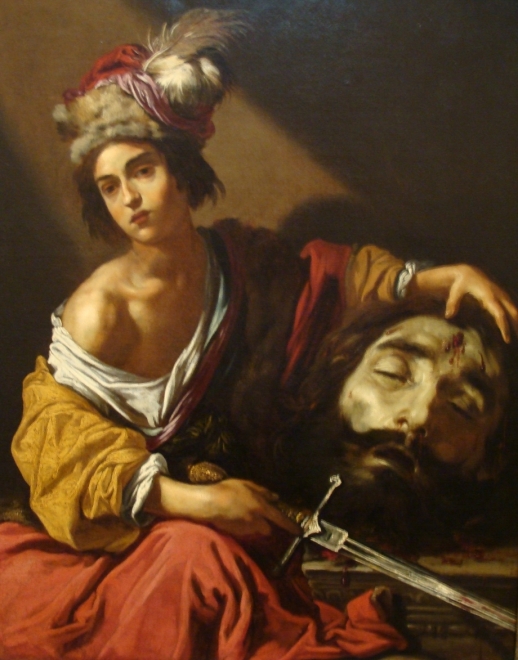
David versus Goliath in the Middle East

david and goliath_aaron wolpert

W.J. Astore

When I was a kid, I was a big admirer of Israel.  I saw Israel as being surrounded by implacable enemies bent on its destruction.  Israel was the plucky underdog, David against Goliath, with Goliath being Arab countries like Egypt and Syria, having militaries trained and equipped by the Soviet Union, sworn enemy of the U.S. during the Cold War (or so my ten-year-old mind saw it).  I recall keeping a scrapbook of articles on the Yom Kippur War of 1973.  I cheered the Israeli “blitzkrieg” (What an odd term for a daring Jewish armored attack!) that crossed the Suez Canal and isolated the Egyptian Third Army, as well as the Israeli riposte on the Golan Heights against Syria.

That was 1973.  Forty-one years later, Israel is engaged in yet another assault on Gaza and the Palestinians.  Compared to the Israeli Defense Forces (IDF), the Palestinian militants are undergunned and hopelessly outclassed.  Organizations like Hamas rely on the traditional tactics of terrorists (or freedom-fighters, choose your loaded word): hit-and-run raids, random attacks (unguided rockets), war in the shadows (or in the tunnels).  Who is David and who is Goliath now?

What hasn’t changed, of course, is the mainstream media in the U.S., which cheers the Israelis while condemning Hamas and any other Palestinians who choose resistance instead of compliance.  Watching a snippet of CNN, I witnessed Wolf Blitzer, who poses as a disinterested journalist, demanding from his Palestinian interviewee an immediate stoppage in rocket attacks.  Blitzer had nothing critical to say of Israeli air raids or the disproportionate casualties suffered by the Palestinians in this latest skirmish in a very long war.

What can be done?  As one of my historian friends put it, the Middle East has “a massive legacy of entropy.”  All I know is that more bloodshed, and more innocents killed, like those four young boys playing soccer on the beach, only adds to that entropy — and the legacy of hatred.

Perhaps one thing I’ve learned in four decades is that negotiations in good faith can’t occur when either side sees itself as a heroic David fighting against a glowering Goliath.  Until Israelis and Palestinians see each other as fellow human beings, as equals rather than as monsters, wars will continue, innocents will suffer, and hopes will be left in the dust, slayed like so many Goliaths by self-anointed Davids.