

Experts? We Don’t Need No Experts
JUN 03, 2025
Over at Foreign Exchanges, there’s an informative article by Alex Thurston on the devaluation of foreign area expertise by the U.S. government.
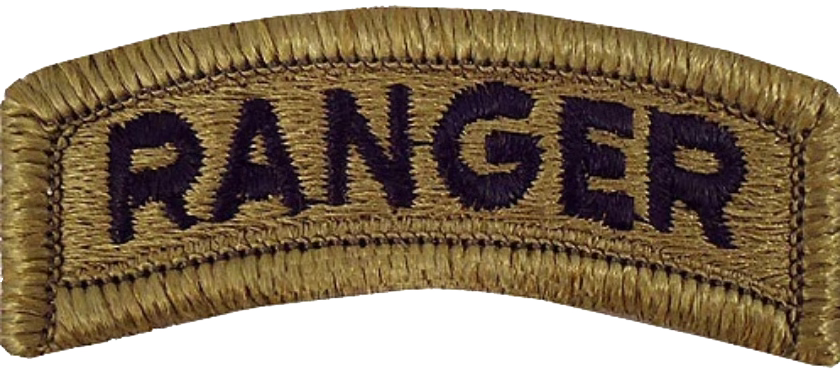
I witnessed this myself after the 9/11 attacks in 2001. The Army has FAOs, or foreign area officers, who specialize in specific regions and countries, learning the language and culture while being stationed overseas in Spain, Germany, South Korea, or wherever. What I discovered in talking to FAOs, however, is that they weren’t on the fast-track to promotion in the Army. So-called Big Army didn’t look with favor on FAOs. You were more competitive for promotion if you served and specialized in a specific combat branch, like infantry or armor, and if you also had some special forces training (a Ranger Tab or the like).
After 9/11, the U.S. government in general, and the U.S. military specifically, lacked foreign area expertise with respect to the Middle East. FAOs who could speak Arabic and had some knowledge of Iraq, Iran, and so on were especially in short supply. Thus what the Army did was to deploy FAOs to the Middle East whose specialty was Latin America or Asia or whatever. Makes sense, right? Who cares if they spoke Spanish or Mandarin and knew nothing about Arab culture: they were FAOs, dammit! They could learn!
The U.S. military has occasionally pushed for its senior officers to become less parochial, perhaps by learning a foreign language, but to my knowledge proposals to that effect have never gained much traction. The U.S. military says it values education, but education often becomes a box-checking exercise. To be promoted to field grade (major or above; the Navy equivalent is lieutenant commander or above), you generally need a master’s degree in, well, something. Anything. In my day (roughly 25-30 years ago), many officers got an MBA or similar degree, often from an online university that catered to military and government personnel. (An MBA was desirable for future possibilities after one separated or retired from the military.)
Another box military officers had to check was PME, or professional military education. This could be done by correspondence (online), by seminar, or “in residence” at specific military schools. (For me as a major in the Air Force, this was ACSC, or Air Command and Staff College). Doing your PME “in residence” was seen as more desirable than doing it other ways, but ultimately what mattered was that you did it. It was a sign of your commitment—and your conformity. I did ACSC by correspondence, a necessary box to check on my way to being promoted to lieutenant colonel.
All this is to say that FAOs, who worked hard to develop specific expertise in areas of alleged vital interest to America, were in a way often punished by the system, or at the very least misused by it. I don’t know what it’s like in the U.S. military today, in 2025, but something tells me FAOs are still not valued for the knowledge they’ve gained. What matters is being a “warrior” and focusing on “kinetic action” and getting a CIB (combat infantryman badge). I assume officers on the career track are still getting master’s degrees in, well, something and also completing PME while learning very little. (PME tends to promote the party line. You won’t hear meaningful and sustained critiques of the military-industrial complex here: surprise!)
But perhaps it really doesn’t matter, as the article by Alex Thurston cited above suggests. America’s senior leaders seem most concerned about exercising power for power’s sake; the subtleties and nuances that FAOs and other foreign area experts bring to the table are typically ignored or disregarded. Who needs language skills and deep knowledge of local culture and customs when you can just shock and awe them? As President Trump recently said at West Point, America spreads democracy at the point of a gun. Again, who needs language skills or deep knowledge for that?
 Bracing Views