
Is Real Change Possible in America?

W.J. Astore

Speaking Truth to Power Isn’t Enough

I was reading R.F. Kuang’s fine novel, Babel, or the Necessity of Violence, and came across this passage:

Power did not lie in the tip of a pen. Power did not work against its own interests. Power could only be brought to heel by acts of defiance it could not ignore. With brute, unflinching force. With violence. (p. 432)

It’s hard to disagree with that, especially within imperial settings in countries dominated by rich and powerful interests. Kuang’s novel is set in the British Empire during the 1830s and 1840s, as Britain was ramping up its first opium war against China. Her quote readily applies to the U.S. empire today and its various global wars of dominance.

I’ve been thinking a lot about the so-called Capitol Insurrection on January 6th and the heavy-handed response to it, especially the long-term prison sentences being handed out. Too much attention is being paid to punishing Trump’s so-called coup supporters and not enough to how Washington, D.C., is increasingly fortifying itself against potential protests. Recall, for example, those Democrats who said they wanted to “defund” the police even as they voted for an expansion of the Capitol police force.

As my wife and I watched the January 6th “coup,” we both had the same thought: What if those protesters hadn’t been so misguided? What if they were truly protesting and “breaching” the Capitol for meaningful change? What if they had been advocating for universal health care, higher wages, an end to expensive and unnecessary wars? Would they ever had gained access to the Capitol? Would members of the Capitol police have moved the barricades, or posed for selfies, with the protesters? I highly doubt it.

America today has a rigged political system that is thoroughly captured by the moneyed interests. You don’t change that by speaking truth to power because the powerful already know the truth. Indeed, they create the truth. The golden rule is that he who has the gold makes the rules. And that’s what America means when it talks about a rules-based order. The wealthiest, most powerful, nations and people have the gold, want to keep and expand it, so they make the rules with that goal in mind.

How to effect meaningful change in a rigged system without violence is one of the huge questions of our age or any age. In her novel, Kuang suggests that powerful interests only respond to the demands of the less powerful when they are forced to “by acts of defiance” they can’t ignore. She may well be right.

The problem, of course, is that violence that drives change doesn’t always make things better. The French Revolution produced a Reign of Terror followed by the Napoleonic Wars. The Russian Revolution produced Lenin, Stalin, gulags, and ruthless five-year plans. Here I recall an Alexander Solzhenitsyn quote: “All revolutions unleash the most elemental barbarism.”
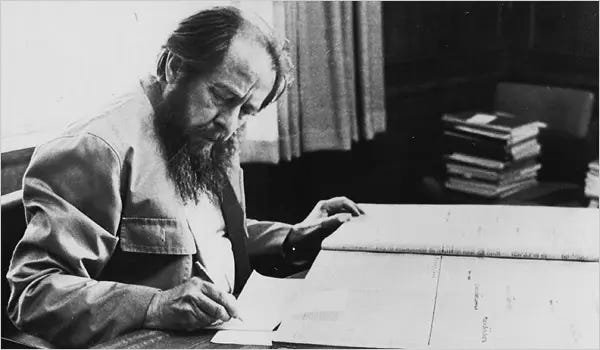
Alexander Solzhenitsyn

Yet, if America’s so-called elites continue to close all legitimate avenues to meaningful change, they may be making elemental barbarism inevitable. And I’m not sure they care, in the sense they believe they will always come out on top, that they will, in a word, win, because the masses can always be manipulated or bullied into compliance.
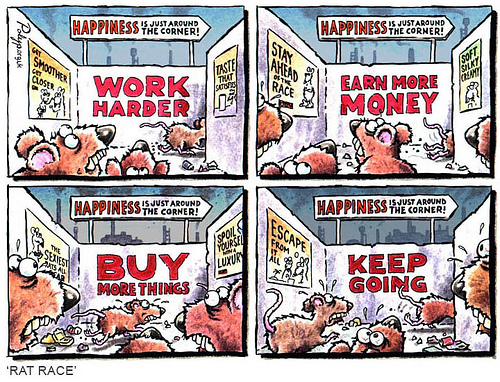
America, Land of Discontent

W.J. Astore

Binary logic is common in America. Us versus them. Republican versus Democrat. BLM versus BLM (that’s Black lives versus blue lives). Love it or leave it.

I remember as a teenager reading a coda to that saying: Or change it. If you don’t “love” America, you shouldn’t have to leave it. Indeed, if you truly “love” America, you’d want to change it to make it even better.

This idea was on my mind as a I watched a couple of videos on YouTube by Americans who’ve been living overseas for many years, only to return recently and reflect on how life in America seemed to them after being away for so long. Here are a few notes I jotted down:

Features of America: Consumerism. Materialism. Advertising everywhere, especially for prescription drugs. Fast pace of life and a stress on competition. A mainstream media that’s propagandistic — and that pushes fear and outrage. Only two major political parties that stifle debate and change. Constant divisiveness.

Features of Americans: Stress on individualism and ethnocentrism. Empathy and our common humanity is downplayed. Sense of entitlement. Lack of curiosity about the wider world. A lack of purpose in the sense of living a life of meaning. Lack of integrity, especially at the higher levels of government and the corporate world.

These observations reminded me of Michael Moore’s “Where to Invade Next” (2015). Moore goes to various countries (Germany, France, Italy, and so on), looking for ideas Americans can steal as they “invade.” I recall German workers who only had to work one job to make ends meet (roughly 37 hours a week, if memory serves), and also German workers who served by law on the board of major companies like Mercedes; I recall school lunches made for French kids by chefs using local ingredients (the contrast with American school lunches was stomach-turning); I recall Italian workers with six weeks of paid vacation per year, as opposed to American workers who are lucky to get two weeks. Why can’t America change to be more worker- and kid-and family-friendly?

The female leaders of Iceland, if memory serves, put it well near the end of Moore’s excursions. They said America is a me-me-me society, whereas Iceland prefers “we” to “me.”

I’ve written before about how Americans are kept divided, distracted, and downtrodden as a way of preventing meaningful, organized, societal change. Another “d” word related to this is discontent. Americans are often discontented in ways that inhibit change. It’s something Tana French touched on in her novel, “The Likeness,” from 2008. Here’s an excerpt:

Our entire society’s based on discontent: people wanting more and more and more, being constantly dissatisfied with their homes, their bodies, their décor, their clothes, everything.  Taking it for granted that that’s the whole point of life, never to be satisfied.  If you’re perfectly happy with what you’ve got—specially if what you’ve got isn’t even all that spectacular—then you’re dangerous.  You’re breaking all the rules, you’re undermining the sacred economy, you’re challenging every assumption that society’s built on. By being content, you become a subversive.  A traitor.

To which another character replies: “I think you’ve got something there.  Not jealousy, after all: fear… Throughout history—even a hundred years ago, even fifty—it was discontent that was considered the threat to society, the defiance of natural law, the danger that had to be exterminated at all costs.  Now it’s contentment.”

There’s a potential paradox here. Won’t the discontented favor positive change, whereas the contented will favor the status quo?

But French’s insight suggests otherwise. The discontented are so busy trying to become contented, most often through a me-first consumerism and materialism, that they can’t come together and mobilize for change. Fear drives them to pursue what their “betters” have, and to admire those people as well. It’s the contented who are dangerous, the ones who’ve left consumerism and materialism behind, the ones with the confidence, time, and independence of thought to contemplate a changed world, a better world. Perhaps even a better America.