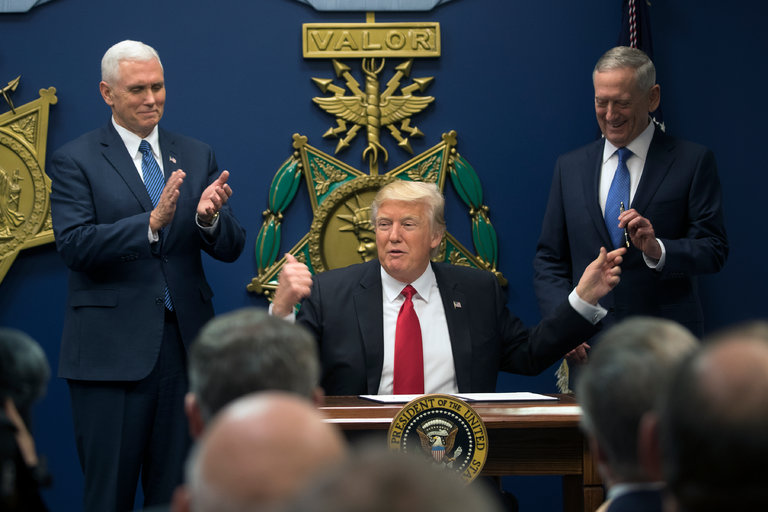
Trump has done it again. At the Pentagon, before a backdrop that honors America’s highest award for valor, the Medal of Honor, Trump signed an Executive Order on immigration. The backdrop seemed to suggest that Trump was doing something honorable and brave himself in signing yet another Executive Order. This EO, as the New York Timesreported, “suspended entry of all refugees to the United States for 120 days, barred Syrian refugees indefinitely and blocked entry for 90 days for citizens of seven predominantly Muslim countries. It also allows Christians to be granted priority over Muslims.”
Last week, Trump appeared at the CIA, before its wall of heroes, blustering again about grabbing Iraq’s oil and boasting of the number of times he’d appeared on Time magazine (more than Patriots quarterback Tom Brady, which seemed to please him to no end).
Perhaps Trump will next appear before Christ on the cross to complain about how he (Trump) is being crucified in the press.
You’ve got to hand it to Trump: the man simply has no shame. And no taste either.
Trump’s pomposity was captured perfectly yesterday in a quip at my local bank. I was asking the teller about dollar coins (yes, we still have those), and she showed me a couple. They looked too much like quarters so I passed on getting any. The gent behind me quipped: “Just wait until Trump puts himself on the coin.” As I laughed and said words to the effect of, I can see it happening, the gent then quipped, “Trump will be on both sides!”
That about sums it up. Trump would indeed put his own mug on both sides of the coin. It would be a clear case of “heads he wins, tails we lose.”
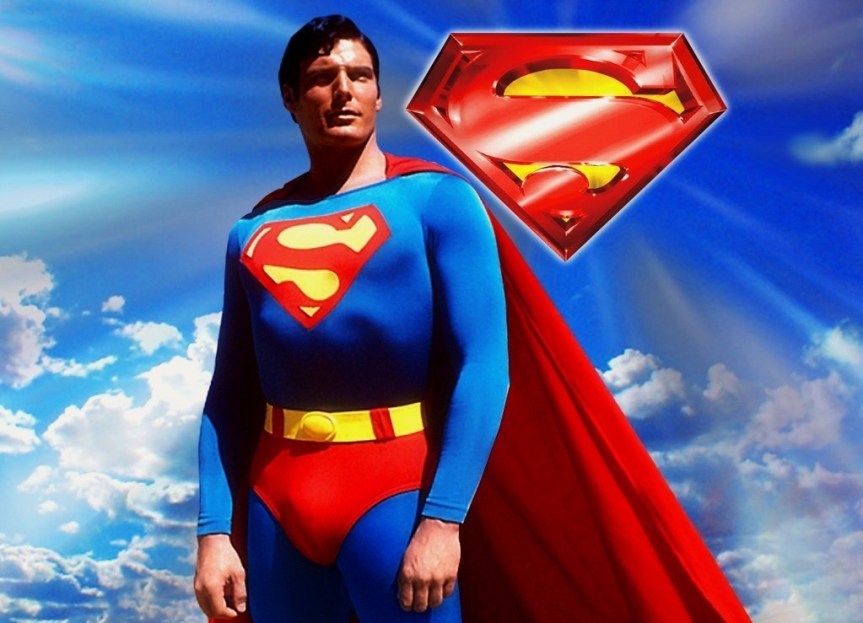
He said he fought for truth, justice, and the American way. Why does that seem so much more far-fetched today?
W.J. Astore
This is an Andy Rooney moment for me, but did you ever notice how Americans tend to favor either humongous trophy houses (McMansions), or closet-like tiny houses? Did you ever notice how so many Americans tend to be either very fat or super fit? Crusading evangelicals or militant atheists? Faithful believers in creationism or fervid followers of science? Proud “cave man” carnivores or proselytizing vegans? Coffee fiends or caffeine avoiders? Lushes or teetotalers? Materialists and hoarders or declutterers and minimalists?
The list of opposites, of extremes, goes on. Heck, why not include Obama supporters or Trump followers? Obama is urbane, sophisticated, cerebral, “no drama.” A devoted family man with one very successful marriage. The Donald? Well, let’s just say he’s very different than our sitting president. And I’m not talking skin color.
A good friend of mine once complained about his fellow Americans that he didn’t necessarily mind their extremism. What he did mind was their efforts to convert him to whatever extreme causes they believed in. Rodney King famously asked, Can’t we all just get along? My friend’s cry was more plaintive: Can’t you all just leave me alone?
As Trump crawls closer to power, America risks devolving even more into a society where the byword is “My way or the highway.” Where the national motto is no longer “In God we trust” or the older “E pluribus unum” (out of many, one) but instead “America: love it or leave it.”
I once read a great rejoinder to the “America: love it or leave it” sentiment. I first saw it in a bicycle repair book. The author simply added this coda: “Or change it.”
Extremism in the pursuit of your own selfish definition of “liberty” can indeed be a vice, America. We need to reject a black/white, love/hate, on/off, Manichean view of each other and the world. Moderation as a way of pursuing a more inclusive and compassionate world can indeed be a virtue.
That doesn’t mean one submits supinely to injustice. That doesn’t mean one surrenders meekly to tyrants. What it does mean is a rejection of a “shoot first, ask questions later” approach to life and each other. We have enough polarization already in America, and we certainly have enough death.
Superman used to say he fought for truth, justice, and the American way. There was a sense, a few generations ago, that those words were not laughable. That they meant something. We need to get back to those times.
In the crusade against Communism, otherwise known as the Cold War, the U.S. saw “freedom” as its core strength. Our liberties were contrasted with the repression of our chief rival, the USSR. We drew strength from the idea that our system of government, which empowered people whose individualism was guided by ethics based on shared values, would ultimately prevail over godless centralism and state-enforced conformity. An important sign of this was our belief in citizen-soldiers rather than warriors, and a military controlled by democratically-elected civilians rather than by dictators and strong men.
Of course, U.S. foreign policy during the Cold War could be amoral or immoral, and ethics were often shunted aside in the name of Realpolitik. Even so, morality was nevertheless treated as important, and so too were ethics. They weren’t dismissed out of hand.
Fast forward to today. We no longer see “freedom” as a core U.S. strength. Instead, too many of us see freedom as a weakness. In the name of defeating radical Islamic terrorism, we’ve become more repressive, even within the USA itself. Obedience and conformity are embraced instead of individualism and liberty. In place of citizen-soldiers, professional warriors are now celebrated and the military is given the lion’s share of federal resources without debate. Trump, a CEO rather than a statesman, exacerbates this trend as he surrounds himself with generals while promising to obliterate enemies and to revive torture.
In short, we’ve increasingly come to see a core national strength (liberty, individualism, openness to others) as a weakness. Thus, America’s new crusades no longer have the ethical underpinnings (however fragile they often proved) of the Cold War. Yes, the Cold War was often unethical, but as Tom Engelhardt notes at TomDispatch.com today, the dirty work was largely covert, i.e. we were in some sense embarrassed by it. Contrast this to today, where the new ethos is that America needs to go hard, to embrace the dark side, to torture and kill, all done more or less openly and proudly.
Along with this open and proud embrace of the dark side, America has come increasingly to reject science. During the Cold War, science and democracy advanced together. Indeed, the superior record of American science vis-à-vis that of the Soviet Union was considered proof of the strength and value of democracy. Today, that is no longer the case in America. Science is increasingly questioned; evidence is dismissed as if it’s irrelevant. “Inconvenient truths” are no longer recognized as inconvenient — they’re simply rejected as untrue. Consider the astonishing fact that we have a president-elect who’s suggested climate change is a hoax perpetrated by China.
Yesterday, I saw the following comment online, a comment that summed up the new American ethos: “Evidence and facts are for losers.” After all, President-elect Trump promised America we’d win again. Let’s not let facts get in the way of “victory.”
That’s what a close-minded crusader says. That the truth doesn’t matter. All that matters is belief and faith. Obey or suffer the consequences.
Where liberty is eroded and scientific evidence is denied, you don’t have democracy. You have something meaner. And dumber. Something like autocracy, kleptocracy, idiocracy. And tyranny.
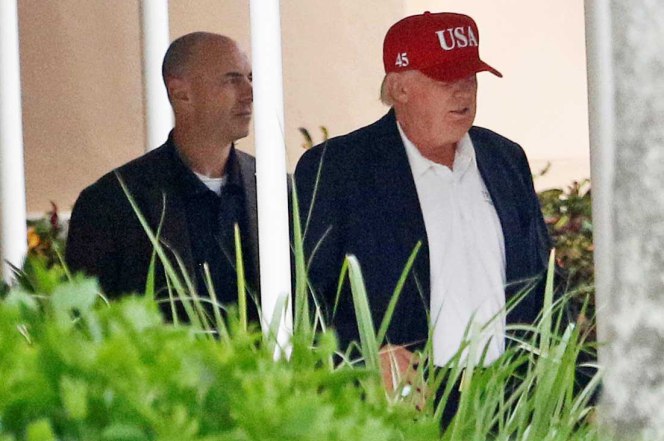
Trump’s latest “con man” hat puts USA front and center, with 45 on the side (Trump, sadly, will be America’s 45th president, unless widespread sanity breaks out)
W.J. Astore
Back in 2010, I wrote an article for TomDispatch.com in which I compared the U.S. government and its corporate handlers to a kleptocracy. Here’s what I wrote:
What drives America today is, in fact, business — just as was true in the days of Calvin Coolidge. But it’s not the fair-minded “free enterprise” system touted in those freshly revised Texas guidelines for American history textbooks; rather, it’s a rigged system of crony capitalism that increasingly ends in what, if we were looking at some other country, we would recognize as an unabashed kleptocracy.
That’s what we’re witnessing right now with Trump and his family: crony capitalism. Unabashed kleptocracy. It’s nothing new, except now it’s being done openly and unapologetically by the president-elect, who claims the law of the land says he can’t have conflicts of interest, because as president he’s exempted from those laws.
Recall the saying that history repeats itself, first as tragedy and then as farce. Trump is both tragedy and farce, but more than anything, he’s a tragedy for our democracy.
Here’s more of what I wrote back in 2010. It’s prescient, I think, and I’m not proud to say that:
An old Roman maxim enjoins us to “let justice be done, though the heavens fall.” Within our kleptocracy, the prevailing attitude is an insouciant “We’ll get ours, though the heavens fall.” This mindset marks the decline of our polity. A spirit of shared sacrifice, dismissed as hopelessly naïve, has been replaced by a form of tribalized privatization in which insiders find ways to profit no matter what.
Tom Engelhardt documents Trump’s opportunistic greed in his latest introduction to Nick Turse’s humorously painful article on the farce that is Trump. Here’s what Engelhardt has to say about Trump’s emerging kleptocracy:
Trump is a family man in every sense of the word. His business is a family business. No matter what anyone tells you, there’s no more way to separate him from his brand, with his kids running it, than there is to separate a shark from the ocean or Ivanka from her line of jewelry. There’s no way this administration can be anything but a walking, talking conflict of interest of a kind never before seen or even imagined in this country. It’s easy, in fact, to guarantee one thing: that foreign business and political interests will have a field day when it comes to applying pressure to the new American president.
Truer words were never written. Imagine placing Gordon “Greed is Good” Gekko (he of cinematic “Wall Street” infamy) in charge of America, and that’s Trump, except Trump seems to have even fewer scruples.
Anyway, the intrepid Nick Turse journeyed to Trump Tower in Manhattan to survey the farce that is the Trump transition team. I urge you to read his article in full, but here’s his conclusion:
Descending the switchback escalators [in the Trump Tower], I found myself gazing at the lobby where a scrum of reporters stood waiting for golden elevator doors to open, potentially disgorging a Trump family member or some other person hoping to serve at the pleasure of the next president. Behind me water cascaded several stories down a pink marble wall, an overblown monument to a bygone age of excess. Ahead of me, glass cases filled with Trump/Pence 2016 T-shirts, colognes with the monikers “Empire” and “Success,” the iconic red “Make America Great Again” one-size-fits-all baseball cap, stuffed animals, and other tchotchkes stood next to an overflowing gilded garbage can. Heading for the door, I thought about all of this and Joe [a secret service agent] and his commando-chic colleague and Trump’s deserted private-public park, and the army of cops, the metal barricades, and the circus that awaited me on the street. I felt I’d truly been given some hint of the future, a whisper of what awaits. I also felt certain I’d be returning to Trump Tower — and soon.
Circus, indeed. Trump has mastered that, but will he provide the bread as well to complete the bread and circuses pairing? And will the people be satisfied with empty spectacle and a few crumbs of bread as Trump takes America for a kleptocratic ride?
It was said about the Emperor Nero that he fiddled while Rome burned. Instead of fiddling, Trump, one assumes, will make deals and sell trinkets, all for his personal profit, even as American democracy burns.
Welcome to kleptocracy in the open, America. As the inferno rages, remember this happy fact: For only $10,000 you too can wear Ivanka’s bracelet!
One bracelet to bring them all and in the darkness bind them.
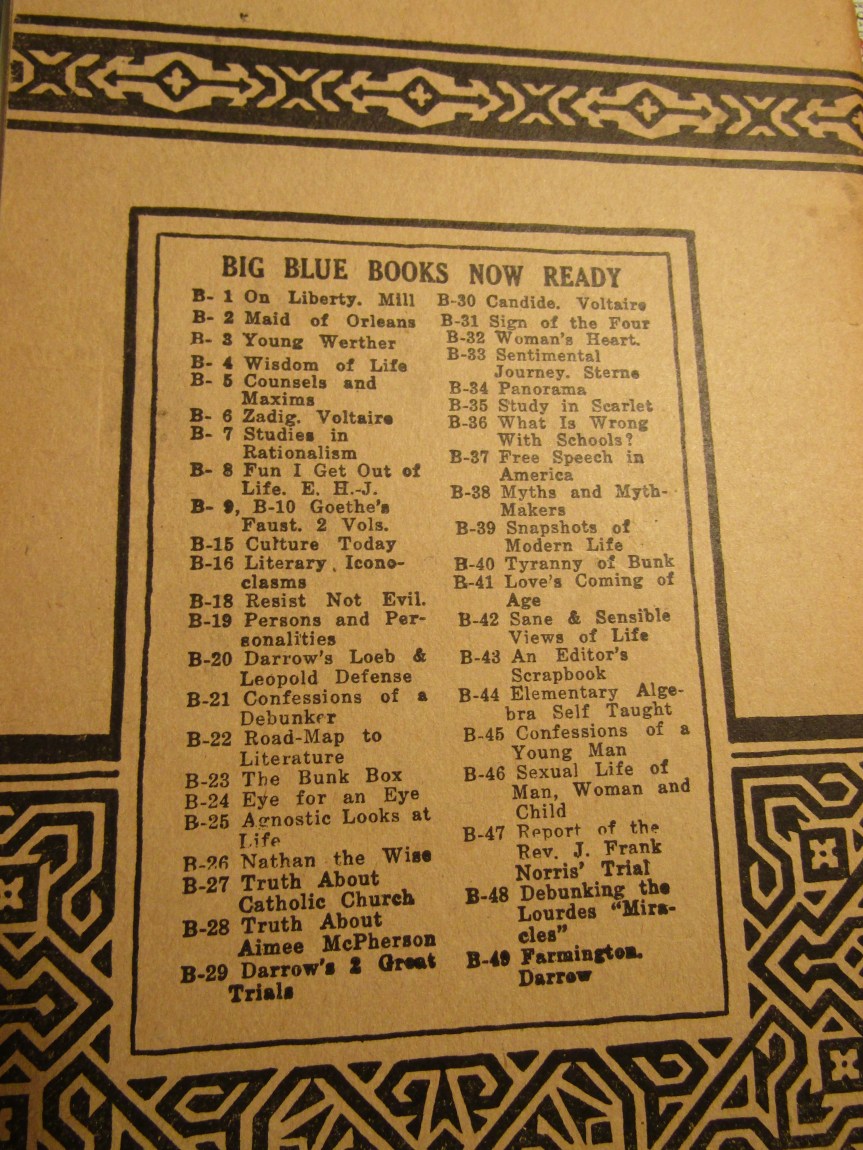
Long ago in a used bookstore, I came across a “Big Blue Book” featuring the counsels and maxims of the philosopher Arthur Schopenhauer. My dad liked philosophy and was a fan of Schopenhauer, so I picked it up, I think for one dollar. My tattered paperbound copy, published by Haldeman-Julius Company in Girard, Kansas, is not dated, so I had to do a little research. According to Indiana State University:
Sold for as little as a nickel or a dime the Little Blue Books and the larger-format Big Blue Books were published and republished by the Haldeman-Julius publishing house located in Girard, Kansas to foster the ideals of American socialism and to provide a basic education for the working man. Titles began appearing as early as 1919, but the Little Blue Books series was not christened until 1923.
I think my copy dates from the late 1920s or early 1930s, since it features a catalog at the back that says 1500 “Little Blue Books” are available, all for a nickel each. You could order all of them — all 1500 books — for $45.00, “packing and carriage charges” included. The “little” books were about 3.5″ x 5,” or the size of a small index card, a handy size for shirt pockets; my “big” book is roughly 5.5″ x 8.5″.
Amusingly, the advert used these words to sell them: “There is not a trashy, cheap book in the lot.” The “blue” came from the color of the cover (mine is faded), not from any “blue” or lurid contents.
What strikes me today is the focus on educating the working classes, with the expectation that workers wanted intellectually challenging and controversial material. The back cover of my book features the following list of “Big Blue Books” available:
Perhaps my favorite title is the “Tyranny of Bunk.” We could use a book like that for these times.
Titles featuring Voltaire, agnosticism, Clarence Darrow (of the famous Scopes Trial, in which he defended the teaching of evolution), and the debunking of religious miracles point to the free-thinking nature of these books. Here the “working man” is not being talked down to; rather, he’s being given the intellectual tools with which he can lift himself up. Workers of America, read Blue Books and become educated: that was the message of these books.
Workers of those days had fewer distractions than the workers of today. No vapid television, no video games, no materialistic orgies on Black Friday and Cyber Monday: one can imagine more than a few workers picking up a Blue Book for a nickel and enjoying it.
How much was a nickel back then? My dad was a teenager in the early 1930s. He told me you could go to the cinema for a nickel. In other words, a nickel was real money, but it was also a manageable sum.
Nowadays, I suppose, anyone with a computer and an Internet connection has access to libraries of knowledge that far surpass 1500 “Little Blue Books” and their “Big Blue” cousins. Yet I can’t quite shake the feeling that something is lost in today’s cyberworld. Under socialism and other free-thinking systems of the Roaring Twenties and Depressed Thirties, there was faith in workers, specifically in educated workers, as representing the future of a better, a more just, a fairer America.
Do we still have that same faith, that same optimism, in the common man (and woman)? It doesn’t seem that way. We are simply not trying to educate everyone roughly equally, irrespective of social class and status and so on.
Assuming literacy, back then it seemed that all that was needed was to place the right books in the hands of workers thirsty for knowledge. Maybe that was a simple vision, but I admire its idealism.
Can we “make America great again” by getting Americans to read again? To read real books that address serious subjects in a mature way? Why not start with some new, inexpensive, little and big blue books? No lithium batteries or internet required.
Not a bad step, I think, as we fight to restore Democracy and against idiocracy.
Bernie Sanders pointed the way forward for Democrats
M. Davout
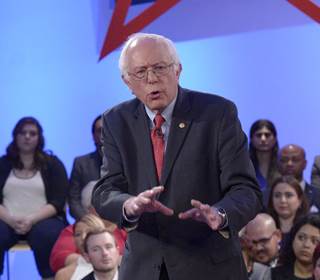
Editor’s Intro: My good friend M. Davout is a Democrat. Like me, he favored Bernie Sanders in the primaries. After donating to Sanders, holding a Sanders fundraising dinner with like-minded Democrats, making calls on his behalf and voting for him on Super Tuesday, Davout gave his vote to Clinton in the general election. In this article, he suggests that, in this dark political moment, the Sanders primary campaign continues to have a positive impact. For those dedicated to a form of democratic self-rule based on mutual respect and fraternal solidarity, a silver lining exists in the example set by the Sanders campaignof an opposition movement built on a democratic socialist vision that is centered on America’s working families. W.J. Astore
Hillary Clinton was the best-known Democratic establishment politician in the country. She led a state-of-the-art campaign organization, which enjoyed the unstinting support of a popular incumbent president and first lady, the incumbent vice president, her former primary opponent, and her husband/former president. Her shocking defeat at the hands of an authoritarian-minded political amateur who ran as an unapologetic nativist and bigot should give little satisfaction to progressives.
For the next two years and possibly for the next eight, the federal government will be entirely controlled by a Republican Party, whose decades-long promotion of an “every man for himself” ethos may finally result in the gutting of most, if not all, of the remaining institutional legacies of the Great Society, New Deal and Progressive eras. Or, if Trump’s most objectionable instincts and his impulsive nature are not adequately controlled by the Republican establishment, we may be in for worse—a destabilizing foreign policy that may land us in conflicts that will make George W. Bush’s Iraq adventure seem harmless by comparison.
The silver lining for progressives in this grim picture? It isn’t the expectation that Trump’s election will lead to such catastrophic outcomes that U.S. voters will finally come to their senses and swing in overwhelming numbers to the political left. Stories (whether apocryphal or not) about German leftists of the Thirties, who saw Adolf Hitler’s elevation to the chancellorship in just such terms, should disenthrall us of this idea.
The silver lining, rather, is that Bernie Sanders gave Clinton a real run for her money in the primaries. Had he not run and had she been coronated as the party nominee (an outcome fervently wished by the then-DNC chair and other DC establishmentarians), the electoral defeat of Democrats would likely have been worse and the current feeling of despair would be far deeper. That Sanders, articulating a compelling social democratic vision of sensible self-government for the common good, was able to motivate and mobilize so many young people offers Democrats and left-leaning independents a path forward.
Sanders demonstrated that there is a significant opening for a social democratic party that can appeal across racial and ethnic lines and forge alliances with unions and new economy business people (e.g., producers of green tech and energy, internet entrepreneurs, and urban-based economic interests supportive of mass transit). The importance of that demonstration, which came in the form of millions of votes and volunteer hours, a campaign funding juggernaut powered by small donations, and over 20 state primary or caucus victories, should not be underestimated.
Whether one believes that a party led by Sanders would not have lost Michigan, Wisconsin, and Pennsylvania, the reality is that future candidates of the left cannot afford to cede those states to the party of Reagan-Bush-Trump. If the Democratic Party cannot be reshaped into the social democratic party evoked by Sanders (and soon), his and our goal should be to persuade progressive Democratic politicians to join a new party of the left.
One thing is certain: Another establishment candidate in the mold of a Hillary Clinton, a candidate who is so comfortably ensconced in elite circles that he or she would not recognize the problem in accepting quarter-of-a-million dollar speaking fees from a Wall Street investment firm that helped tank the economy or in declaring Henry Kissinger to be a foreign policy making role model, will only ensure the triumph of reactionary candidates such as Trump.
It’s time for Democratic politicians to recognize the economic realities of ordinary Americans and fight unashamedly for progressive policies that answer the challenge of fostering lives of decency and mutual respect. It’s time not only to embrace progressive candidates willing to reject a rigged system in the cause of economic and social justice but also to create (or re-create) a political party deserving of such candidates.
The ink hasn’t yet dried on Trump’s victory and we’re already hearing about how his campaign promises are being “modified,” i.e. reneged on. Trump’s infamous wall along the border with Mexico is already becoming more virtual than real, with admissions that Mexico will not pay for it. Trump himself has suggested he favors certain features of Obamacare (no denial of coverage based on preexisting conditions, and coverage extended to “children” until the age of 26), so there’ll be no wholesale “repeal and replace,” as he promised. He also promised to appoint a special prosecutor to go after Hillary Clinton, to “lock her up,” as his followers chanted, but he’s backtracked on that as well. Talk about draining the swamps of government, of bringing in fresh faces and new ideas, has produced tired old faces like Pence, Gingrich, Giuliani, and Christie. In a classic case of nepotism, the “fresh” faces are those in his own family, his two sons and daughter Ivanka (she seems to be the one with the most smarts).
Many Trump voters appear to have voted for him because he represented “change,” a rejection of the usual suspects in the establishment. Yes, the Clintons and their fellow travelers are out, but the hardline Republican establishment is back in, complete with the usual corporate hacks and think tanks. And if you think these “conservatives” are going to start embracing the working classes and helping them financially with higher wages and better job prospects, I have a Chris Christie bridge for you that’s named after our first president.
These events are hardly surprising. Trump is a con man. For him, “the art of the deal” is basically the art of the con. Consider his promise of bringing back American jobs. How is that supposed to happen? Simply through higher tariffs against foreign goods? Who’s going to replace those with American-made goods at an affordable price to the working classes?
Here’s an example. I got dressed this morning with no thought about using my clothes as an illustration for this article. My jeans are made in Mexico (of fabric from the USA, so why weren’t they made here?). My shirt is from Thailand. My leather belt is from China, and so too are my shoes. We all know why. Labor costs in those countries are much cheaper than those in the USA. Profits to corporations are thus much higher. How is Trump going to change this dynamic?
I actually try to buy clothes that are made in America. I got a nice pair of shoes that are made in Maine. I got them on sale for a great price, but they retail for over $300. If they were made in China, they’d probably retail for about $100. How many members of the working classes are able to spend roughly triple the price for the privilege of wearing shoes and clothes “Made in the USA”?
Here’s one thing Trump could do: Raise the minimum wage to $15 an hour so that Americans can afford the up-charge for domestic goods. Any chance that Trump’s regime is going to do this?
It’s great to talk about bringing back American manufacturing jobs that pay well. It’s possible to raise barriers to foreign trade to make American goods more competitive. But who’s going to build the new factories? And where are the skilled workers with the requisite knowledge base? With the right advanced tools and technologies?
Speaking of technology, there’s an ever greater push in America to automate everything, even long-haul driving jobs, a job that provides a decent living for many Americans. Is Trump going to reverse this push? Is he going to preserve American blue-collar jobs against the pressure applied by multinational corporations to cut costs and maximize profits, workers be damned? Given Trump’s own record of using cheaper foreign labor and goods, this doesn’t seem bloody likely.
Believe me, I hope I’m wrong, but the early signs are that America’s working classes, along with a lot of Trump enthusiasts, are already getting conned.
In my last post, I predicted Trump would lose. I thought his declinist message and his blatant vulgarity would ultimately cost him too many votes. As Trump would say, “wrong.”
What are we to take from Trump’s stunning upset? Here are a few quick thoughts:
The Democrats ran the wrong candidate. Remember when Bernie Sanders was saying he had the best chance to defeat Trump? That the polls favored him and not Hillary? Turns out Bernie was right. People were looking for a candidate who represented change. Real change. Bernie had that. So too did Trump. But Hillary was the establishment personified. Not only that, but she had extensive baggage that led to high negatives. Too many people just didn’t like her. Or they simply wanted a fresh face and a new approach — even if that face was Trump.
The October surprise. Does Trump win without the last minute intervention of the FBI in the email follies? We’ll never know, but Hillary had the momentum prior to the letter issued by the FBI. That letter may have slowed her momentum just enough to allow Trump to win.
All politics is local — or, at least, personal. The Democrats addressed global issues like climate change. The Republicans basically denied it’s happening. The Democrats talked about embracing immigrants and tolerating Muslims. The Republicans did neither. What the Republicans did was to emphasize personal pain. The pain of those who’ve seen their jobs disappear and their way of life suffer. The Republicans also played to nostalgia. Yes, America is in decline, they said, but we can make the country great again (by making it less inclusive, by keeping out the “bad” people, by being tough). That message proved appealing to so many Americans who see in Trump the possibility of returning to “the good old days” (whatever that may mean).
“I won’t play the sap for you.” That’s a Humphrey Bogart line from “The Maltese Falcon.” Many Americans believe they are being played for saps by foreign powers. Trump recognized this. He called for tougher trade deals. He called for NATO and other U.S. allies to pay their way. He promised a new approach to foreign policy, one where enemies would be smashed even as Americans would avoid dumb wars like Iraq. Basically, Trump promised that America would no longer play the sap for the rest of the world. And the American people liked what they heard.
That’s my quick take. Lots of Americans truly wanted a change in course — a sort of reactionary revolution. That desire led them to downplay Trump’s sexism, ignorance, incivility, and vulgarity. (Of course, there were some who embraced Trump precisely for these qualities.) In essence, they simply had no patience for Hillary’s “politics as usual” message.
Finally, let’s not forget that Trump said the election is “rigged.” He was a sore loser even before the results were in. What kind of winner will he be? Much will depend on the answer to that question.
Donald Trump claims that if he loses the election it’s because the whole process is rigged. But a rigged game is not why Trump will lose. He’s going to lose because he’s offered no compelling vision about why he should be president. (I don’t think “making America great again” is such a vision.)
What’s most remarkable to me about Trump’s campaign is how negative it’s been. America is in decline! Our inner cities are wastelands! Immigrants are thugs and rapists! Muslims are out to get us! Our leaders are stupid and crooked! Indeed, until recently, Trump argued our top leader wasn’t even born in America.
A relentlessly negative campaign says a lot more about Trump than it does about America. Sure, this country has problems. But there are many silver linings in the dark clouds (economy on the mend; job growth up; health care extended to more people; rights for the LGBTQ community more accepted; the U.S. auto industry is back; more action on climate change is forthcoming, as long as Trump doesn’t win).
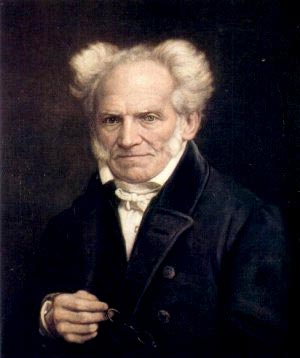
I was reading Arthur Schopenhauer’s “Counsels and Maxims” and came across a passage that reminded me of Trump. Here it is:
No man can see over his own height … You cannot see in another man any more than you have in yourself; and your own intelligence strictly determines the extent to which he comes within its grasp …. Hence intercourse with others involves a process of leveling down. The qualities which are present in one man, and absent in another, cannot come into play when they meet; and the self-sacrifice which this entails upon one of the parties, calls forth no recognition from the other.
Consider how sordid, how stupid, in a word, how vulgar most men are, and you will see that it is impossible to talk to them without becoming vulgar yourself for the time being. Vulgarity is in this respect like electricity; it is easily distributed…
That’s Trump in a nutshell: vulgar. Vulgar language. Vulgar action. Vulgar appeals. The question is: Will that vulgarity triumph on election day? Is it enough? My guess is that it isn’t. That it won’t be.
His opponent, Hillary Clinton, has her own set of issues, but compared to Trump she has run a more hopeful campaign, or, at the very least, a much less vulgar one. “Stronger together” is a tepid slogan, but it does stress togetherness, a certain strength in numbers, a degree of tolerance. And Hillary has simply done a better job than Trump at reaching out to wider constituencies with a message that is positive rather than declinist.
Sure, a lot of people will vote for Trump, and for many reasons. They don’t like or trust Hillary. They’re loyal to the Republican Party. They see something in Trump that resonates with them. They feel they’ve gotten the shaft and think that a wild card like Trump can help them more than a face card like Hillary.
But ultimately I believe Trump will be done in by his own vulgarity. He will lose because he couldn’t see past the limitations of his own height — his own flawed character.
But if I’m wrong, prepare yourself for four years of vulgar appeals, of sordidness and stupidity, to quote Schopenhauer. For as the philosopher said, vulgarity is easily distributed.
In 1976, I remember my mom voted for Jimmy Carter for president. It surprised me because I was a fan of Gerald Ford, the Republican candidate. Both Carter and Ford were decent men, and their debates were informative and issues-oriented. Back then, the big scandal was Jimmy Carter’s admission, in an interview for Playboy magazine, that he had lusted in his heart. What innocent times! Two generations later, we have a Republican candidate, Donald Trump, who by his own words has done far more than lust in his heart.
My mom would have been appalled by Trump (as are many people today). My dad, I think, would have found Trump objectionable and shallow. One of my dad’s favorite sayings was “the empty barrel makes the most noise.” He didn’t respect other men who bragged and bellowed about themselves. And he didn’t like anyone who was a sore loser, those who, when they lost, resorted to “sour grapes.” Even before Trump has lost (if he does), he’s already resorted to sour grapes, claiming the election is “rigged” against him.
I know my parents would be against Trump. Would they be for Hillary? I don’t know. I think my mom would have voted for Hillary, respecting her struggles as a woman for equality and fair treatment in a man’s game (and politics in America is still very much a man’s game, despite important strides made by women). My dad? When in doubt, he voted for the Democratic Party. As a firefighter, he was a union man who knew first-hand the hard experience of factory workers and the penury of a hand-to-mouth existence during the Great Depression.
Resuscitating my parents to vote in 2016: yes, it’s fantasy, one that I share with Tom Engelhardt, who wrote this telling article at TomDispatch.com on next week’s election and what his parents would have thought of the whole spectacle. To me, two aspects of election 2016 are especially telling when compared to 1976:
On foreign policy and national defense, Hillary Clinton is running to the right, not only of Jimmy Carter, but of Gerald Ford, a moderate Republican.
Donald Trump not only lacks the fundamental decency of Carter and Ford: he lacks any experience in public service. His entire life has been dedicated to making money. This may qualify him to run a business, but it doesn’t qualify him to run a country and to represent a people.
A few more words on Trump and what his rise represents. Trump is the candidate of casino capitalism. He’s the logical terminus of a system that wants to run everything for profit, winner-take-all. Such public systems and concerns as education, health care, the prison system, even the military, are increasingly run as businesses, often privatized, the operative words being “efficiency” and “productivity” and “growth.”
With so many sectors of American society being privatized and run as for-profit businesses, with corporations being enshrined as superpower citizens with especially deep pockets to influence public elections, with the media also almost completely privatized and also run for-profit, is it any wonder a candidate like Trump has emerged as the business leader to “make America great again”? Americans used to call men like Trump “robber-barons.” Now, some Americans treat Trump as a savior.
In America, we seem to measure societal progress strictly in terms of economic growth as measured by GDP and the stock market. Such measures are indicative not of true progress but of our shallow desires, our preference for glitzy materialism. Again, isn’t Trump the very embodiment of insatiable appetite, bottomless greed, and casino capitalism?
I know my parents — decent members of the working classes — wouldn’t have voted for him. Hillary, I think, would have been their (reluctant) choice. And I think they’d hope for better candidates in 2020, or, at the very least, a political process that takes vitally important issues like climate change seriously.
Seriousness of purpose is what we need in America, along with courage, honesty, and strength of mind. Let’s strive for those in the aftermath of this depressing election season.







 Bracing Views