
Surging to Defeat: Learning from the Germans

armor show

W.J. Astore

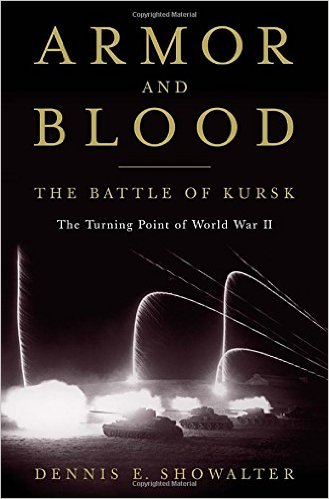
I recently read “Armor and Blood” by Dennis Showalter.  It’s about the Battle of Kursk in July of 1943, the massive, last-ditch offensive by the Nazis on the Eastern Front, and how the Soviet Army was able to stymy it, seize the initiative, and take the offensive for good.  As Showalter notes, the Nazi offensive at Kursk in 1943 was much like the Ludendorff Offensives in the Spring of 1918 near the end of World War I.  They were offensives of desperation.  As General Ludendorff said in 1918, first we’ll punch a hole in the enemy’s lines, and then we’ll see.  Tactical zeal (and wishful thinking) took the place of careful strategic calculation.

In 1918 as well as in 1943, the German military was given free rein to pursue a military solution when there wasn’t one to be had.  Germany simply didn’t have the military means for the strategic end they sought to achieve.  In 1918, Ludendorff believed he could defeat the Entente forces (the French, British, and other allies, to include the rapidly arriving Americans) on the Western Front, but his offensives only served to weaken his own army, ensuring its exhaustion and defeat by that November.  In 1943, Hitler gambled he could defeat the Soviet Army at Kursk, but his massive offensive only weakened his own army, ensuring its exhaustion and eventual defeat in the spring of 1945.  Both times, more military action only precipitated defeat and disaster.

Is the United States the inheritor of this Germanic bias?  Instead of punching a hole, the U.S. military speaks of “surges.”  It surged in Iraq in 2007.  It surged in Afghanistan in 2010-11.  But after each “surge,” the situation in those countries was basically the same – and, over time, grew worse.

Of course, U.S. “surges,” in each case involving roughly 30,000 additional troops, were in scale dwarfed by the German offensives in 1918 and 1943, involving millions of men and the movement of entire armies.  But scale is less important than process.  In each case, “victory” was staked on more military action, in part because both Germans and Americans believed themselves to be in the possession of “the finest fighting forces in the history of the world.”  Neither, of course, would admit that they were fighting on foreign soil, that the enemy had agency too, and that the longer the fighting continued, the weaker they grew as the enemy grew stronger.  So, in the name of “victory” the German and American “surges” played themselves out, and nothing changed strategically – there were no victories to be had.

The Germans, of course, drove themselves to utter collapse, both in 1918 and especially in 1945, after which they could no longer fool themselves as to the success of their “surges.”  A superpower with enormous resources, the United States is not yet on the verge of collapse.  But enormous budgetary deficits, driven in part by endless wars and a plethora of imperial commitments and overseas bases, are gradually eating away at the sinews of American strength, even as militarism eats away at the marrow of democracy.

After their utter defeat in 1945, the Germans learned to avoid endless war and the seductions of militarism.  The question is: Will it require a total collapse of the American Empire before its leaders learn the same lesson?

Real War: The Horror

blood

W.J. Astore

I recently read Blood Red Snow: The Memoirs of a German Soldier, by Günter Koschorrek, which focuses mainly on combat on the Eastern Front between the Germans and Soviets during World War II.  As Dan White has noted, military history sometimes degenerates into war porn – exciting tales of derring-do that save the day and end in citations and medals.  Real war isn’t like that.  Real war is horror, a horror that Koschorrek quickly came to know as a very young man.

Writing about his first weeks of combat, Koschorrek notes “how impatiently we waited for the opportunity to fight at the front!  Now, after exactly three weeks in combat, no one talks of heroism or enthusiasm any more.  On the contrary, the only wish is to get out of this death trap alive.”

Koschorrek’s first wound in combat is a minor one, which does not qualify him for evacuation from the front.  He writes:

I feel the disappointment—a hope has been dashed.  And then I think how quickly human feelings and attitudes can change.  It is only a matter of weeks since I was dreaming of glory and heroism and was so full of élan that I was almost bursting.  Now I long for a Heimatschuss—because it appears to me to be the only way that I can, with any sort of honor, say goodbye to this soul-destroying environment …

Koschorrek, a machine-gunner, quickly became a hardened veteran of the war.  When he sees friends killed in combat, he writes of a “sort of madness” that came over him, the desire for “bloody revenge.”  He writes:

Revenge and retaliation!  That inflammatory clarion call for revenge!  That’s the way all war leaders want their soldiers to be.  Remorseless, and with hatred and retaliation in their hearts, men can win battles, and quite ordinary soldiers can be converted into celebrities.  Fear is converted into hatred, anger and calls for retribution.  In this way you are motivated to fight on—even decorated with medals as a hero.

As the war drags on and Nazi Germany begins to lose, Koschorrek writes of “deserters and dissenters” within the ranks.  “They are called traitors to the fatherland,” he notes, but Koschorrek concludes with an important insight: “Nobody can be himself during a war—we all belong to the people and the state.”

War witnesses the death of individuality in the name of a collective: the people, the state.  More frightening is the death of individual conscience, as even the worst war crimes are excused in the name of “defending” the state.

As the Soviets close in and begin to invade Germany proper, Koschorrek encounters the aftermath of horrific reprisals committed by the Soviet invaders on the German people.  In one case, he notes how ordinary German villagers “were surprised in their sleep by the Soviets and couldn’t escape.  The [Nazi] party bigwigs, however, were all able to get away in time.”

When the war is finally over, Koschorrek was able to evade capture by the Soviets and transportation to Siberia as a POW.  He writes of trading his war medals (such as the Iron Cross) and ribbons for cigarettes, noting how American soldiers lusted after German war memorabilia.  Koschorrek’s medals and ribbons—marks of valor he wanted so keenly at war’s start—became by war’s end nothing but barter for smokes.

His last words reflect the hard-won wisdom of a man who fought as part of a war of annihilation on the Eastern Front:

when will people realize that it is possible for any of us to be manipulated by domineering and power-crazed individuals who know how to motivate the masses in order to misuse them for their own ends?  While they keep well out of the way [of war], in safety, they have no hesitation in brutally sacrificing their people in the name of patriotism.  Will mankind ever stand together against them?

Koschorrek, a frontline combat soldier, can be faulted for not being more critical of Nazi ideology and its megalomaniacal designs.  He has little to say about Nazi war atrocities.  His account is focused on combat and comrades, in the thick of the fighting, where the desire to stay alive is all-consuming.

It’s a book to be read carefully by anyone who thinks war is glorious.