

W.J. Astore
Thoughts on the Ongoing Russia-Ukraine War
In 1998, as an Air Force major, I attended a military history symposium on coalition warfare that discussed the future of NATO. One senior officer present, General Sir Anthony Farrar-Hockley, spoke bluntly in favor of NATO expansion. From my notes taken in 1998:
Farrar-Hockley took the position that to forego expansion because of Russian concerns would be to grant Russia a continuing fiefdom in Eastern Europe. Russia has nothing to fear from NATO, and besides, it can do nothing to prevent expansion. If the Soviet Union was an anemic tiger, Russia is more like a circus tiger that may growl but won’t bite.
That sums up the Western position vis-a-vis NATO expansion and Russia: too bad. You lost the Cold War. There’s nothing you can do.
Until the “circus tiger” finally bit back.
The U.S. and NATO calculated that Russia, now led by Vladimir Putin, wouldn’t bite back. It did so in 2022.
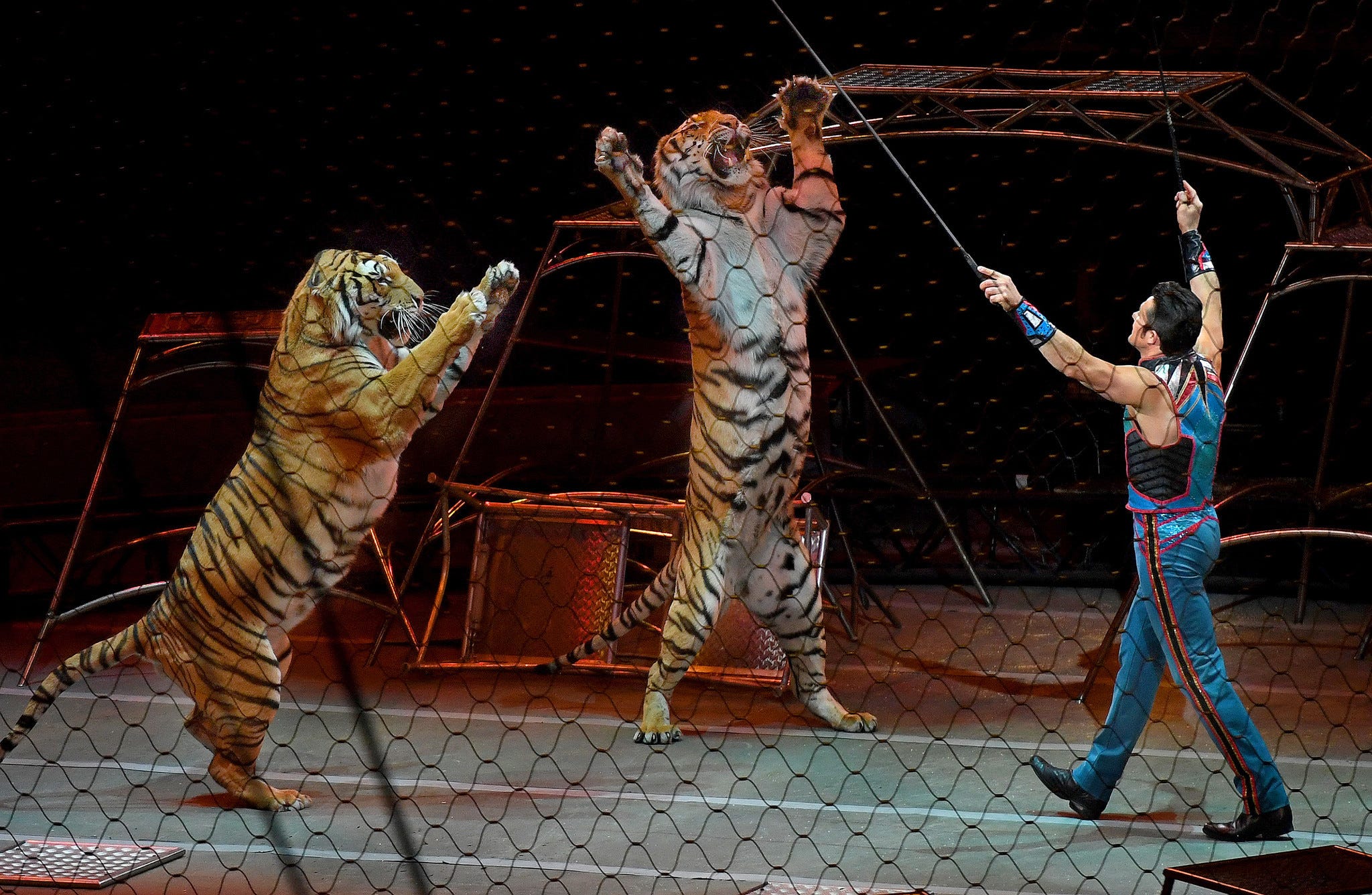
Now, you might argue it’s the tiger’s fault for biting; you might say Ukraine didn’t deserve to be bitten. But I don’t think you can say that U.S. and NATO actions were entirely guiltless or blameless in provoking the tiger. At the very least, the actions were misjudged (assuming there wasn’t a plot to provoke Putin and Russia into attacking).
Ukraine is central to Russia’s concerns. Both countries share a long common border and an even longer history. By comparison, Ukraine, I think, is peripheral to U.S. concerns, just as Afghanistan and Vietnam ultimately proved peripheral. Here I recall the critique of political scientist Hannah Arendt that, with respect to America, the Vietnam War was a case of using “excessive means to achieve minor aims in a region of marginal interest.” Whether in Vietnam or more recently in Afghanistan, the U.S. could always afford to accept defeat, if only tacitly, by withdrawing (even though die-hard types at the Pentagon always want to keep fighting).
All this is to say Russia’s will to prevail may prove more resilient than the current U.S. commitment to Ukraine of “blank check” support.
Ukraine resistance to Russia has indeed been strong, backed up as it has been by bountiful weapons and aid from the U.S. and NATO. Faced by an invasion, they are defending their country. But a clear victory for Ukraine is unlikely in the short term, and in the long term will likely prove pyrrhic if it is achieved.
No one in the U.S. thought that a punitive raid against the Taliban in 2001 would produce an Afghan War that would last for 20 years. When the U.S. committed troops in big numbers to Vietnam beginning in 1965, most at the Pentagon thought the war would be over in a matter of months. How long is the U.S. and NATO truly prepared to support Ukraine in its war against Russia?
In the 17 months or so since the Russian invasion, the U.S. has already committed somewhere between $115-$200 billion to Ukraine and the war. Should that commitment remain open-ended at that level until Ukraine “wins”? What of legitimate fears of regional escalation or nightmare scenarios of nuclear exchanges?
Long wars usually don’t end with a healthier democracy. Indeed, wars most often generate censorship, authoritarianism, suppression of dissent, and many other negative aspects. Think of the enormous burden on Russia and Ukraine due to all the wounded survivors, the grieving families, the horrendous damage to the environment. The longer the war lasts, the deeper the wounds to society.
Scorched by decades of war, areas of Afghanistan are wastelands. Vietnam, Laos, and Cambodia are still recovering from America’s orgy of violence there. What will Ukraine have to recover from, assuming it’s fortunate enough to “win”?
I don’t see a quick victory for either side in the immediate weeks and months ahead. Channeling John F. Kennedy’s famous “peace” speech of June 10, 1963, I do believe that peace need not be impractical, and war need not be inevitable. As JFK also cautioned, forcing a nuclear power into a humiliating retreat while offering no other option is dangerous indeed.
Recent attention has focused on the Biden administration’s decision to provide cluster munitions to Ukraine. Russia can, and likely will, match Ukraine’s use of U.S.-provided cluster munitions. Earlier, the U.S. claimed Russia was guilty of war crimes for using these munitions. Now it’s all OK since Ukraine needs them. When they kill Russians, they’re “good” bombs?
I also hear U.S. commentators speaking of “terror bombing campaigns” by Russia. Perhaps so, but when U.S. commentators use that expression, they should fully acknowledge what the U.S. did in Japan, North Korea, Vietnam, Laos, Cambodia, Iraq, Afghanistan, and elsewhere. No country in the world comes close to the number and amount of bombs, defoliants, cluster munitions, DU shells, and napalm that the U.S. has used in various wars in the last 80 years. When it comes to terror bombing, the U.S. is truly the exceptional nation.
But can the U.S. be exceptional at peace? The U.S. should and must wage diplomacy with the kind of fervor that it usually reserves for war.
 Bracing Views
A flat-out superlative commentary. Appreciated!
LikeLike
I respectively submit — especially given the UK’s eager participation in the present US attempts to “weaken” Russia — that bear baiting would constitute a more appropriate metaphor than trained tigers in a circus. From Wikipedia:
“Bear-baiting is a blood sport in which a chained bear and one or more dogs are forced to fight one another.
Bear-baiting was very popular from the 12th until the 19th century.[4] From the sixteenth century, many bears were maintained for baiting. In its best-known form, arenas for this purpose were called bear-gardens, consisting of a circular high fenced area, the “pit”, and raised seating for spectators. A post would be set in the ground towards the edge of the pit and the bear chained to it, either by the leg or neck. Several well-trained fighting or baiting dogs, usually Old English Bulldogs, would then be set on it, being replaced as they got tired or were wounded or killed.… For a long time, the main bear-garden in London was the Paris Garden, a section of the Bankside lying to the west of The Clink, at Southwark.
Henry VIII was a fan and had a bear pit constructed at his Palace of Whitehall. Elizabeth I was also fond of the entertainment; it featured regularly in her tours. …”
Only one problem: What to do if the bear has gotten loose and — having killed or maimed most of the yapping hounds sent to torment it — now has its eyes focused on the fashionably dressed spectators nervously meeting in Vilnius, Lithuania, trying their best to ignore the ratty little puppy begging for more of anything and everything that it might use to further annoy the larger animal: one obviously capable of dispatching both the animals and humans seeking to “weaken” it for their own amusement and profit.
LikeLiked by 1 person
Speaking of lowbrow animal entertainments:
During my fourteen months spent languishing at ATSB “Solid Anchor” — where the Bottom of the Barrel and Asshole of the Universe meet — a shipmate had a pet Burmese Python that he kept in a long wooden ammunition crate. Every Sunday, he would take it out for a feeding, which event usually passed for the highlight of our dreary existence for the week. A bunch of bored, bearded, half-dressed sailors would form a ring into the center of which someone would throw a live duck. The python would slowly slither over to the petrified fowl and then take an hour or so enveloping, crushing, and swallowing it. I still have pictures. As I recall, the guy who owned the giant snake had stenciled on the side of its wooden-crate home, in all-caps military-style lettering: “SNAKE, BIG FUCKING”.
What the “troops”
will do to momentarily alleviate the insufferable boredom of “life” on the forgotten fringes of a declining, meaningless Empire. . . . And we didn’t even have Internet or cell phones.
LikeLiked by 1 person
While I support your last sentence Bill, as should every sane person, I realize only too well: there’s no profit in peace it seems.
LikeLiked by 1 person
Oh that you occupied a position of power, then your wise words would have more consequence perhaps. But do keep writing for us.
LikeLiked by 1 person