

W.J. Astore
Reforming the Catholic Church
I woke to the news that Pope Francis had died at the age of 88. Francis had qualities that I admired, including his lack of pomp and his support of the disadvantaged. As Caitlin Johnstone notes, Francis was an advocate for the Palestinians. He was known as a “liberal” pope, so my guess is that we’ll soon see an old-school conservative elected as the new pope.
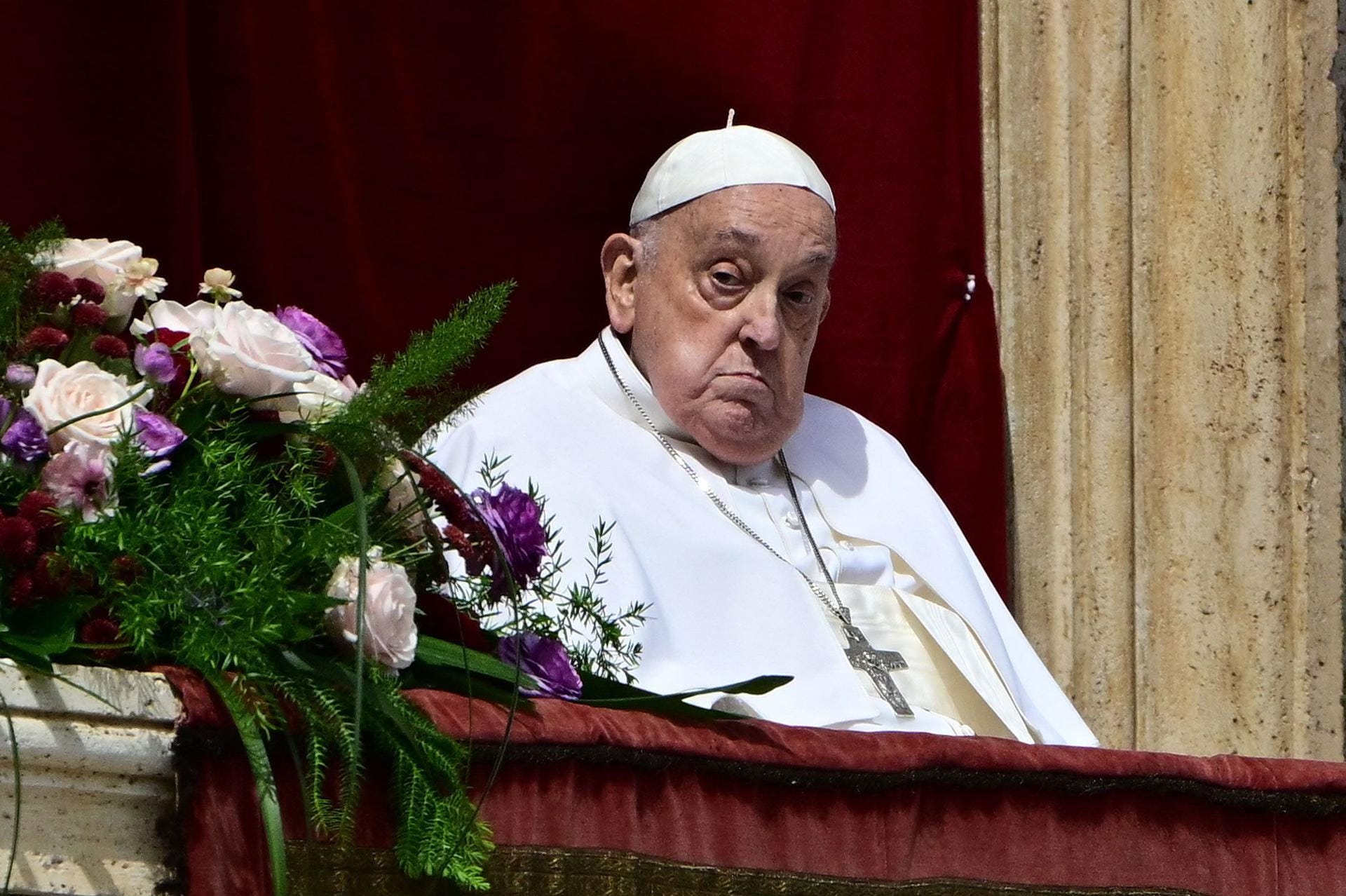
I was raised Catholic, getting confirmed back in 1979, but I’m very much a lapsed one today. I think the Church should allow female priests and should not persist in upholding chastity for the hierarchy. I think the Church should speak out far more strongly against genocidal nuclear weapons and warfare in general. I think the Church should use its great wealth and power to ease the suffering of people around the world. And I know all this is not going to happen in an institution dedicated to its own survival.
There are, of course, many “good” priests, “good” sisters, committed to charity and guided by the teachings of Christ, but those who are bumped upstairs, who become the bishops and cardinals of the Church, are often those who are most committed to the trappings of power. They are the most political, the most worldly, the most vulnerable to vainglory and sin, especially the sin of pride and the lust for power.
Perhaps a new pope will carry on the legacy of Francis, but something tells me that the College of Cardinals is going to coalesce behind a traditionalist, a symbol of orthodoxy. There will be no Vatican III, no fresh opening of the Church, no revolutionary spirit.
After Francis I see regression, not reformation, and it makes me sad to type that.
 Bracing Views
“After Francis I see regression, not reformation, and it makes me sad to type that.”
Sad to read that too, but the swing of Western institutions seems to be increasingly to the right (thus presaging the fall of the West altogether?). Ironically, or perhaps as an example of that swing, a piece in yesterday’s NYT by Lauren Jackson, “America Wants a God,” Americans are returning to religion after abandoning it over the past three decades.
The reasons? There are many, from doomscrolling during the Covid pandemic, to the genocide no nation is countering exception for Yemen, to the political, economic, and social upheavals and uncertainties existing before Trump but accelerated by him since, and more. With all that confronting them, Jackson writes that, “Religion seems to help people by giving them what sociologists call the ‘three B’s’ — belief in something, belonging in a community and behaviors to guide their lives.”
How the post-Francis Catholic church responds to what people are seeking remains to be seen, whether with that “old time religion” of platitudinous homilies and staid encyclicals, or a more vigorous church, taking on the life-sapping political and economic forces – and by extension, the warmongering ones – that atomize individuals and reduce societies to little more than loyalty card memberships?
I don’t know. As I mentioned above, I fear that our Western institutions are being dismantled as they progress(?) to the right. A genocide being openly broadcast for 19 months now, and no response from those who could put an end to it (and what about those genocides that aren’t getting the coverage?)? The turning of government on its own people as it is simultaneously being dismantled by an oligarchic cabal? The blithe, inexorable march to environmental catastrophe?
Where is Western leadership to address these threats, is is that what Western leadership has wrought?
Let us light a candle in solemn prayer for wisdom, fortitude, and courage.
LikeLiked by 1 person
I discovered in my readings of history that celibacy for priests was not popular with the church hierarchy, but was wildly popular among the people and it was that demand that pushed it through. The idea was that priests were something more than just ordinary human beings and celibacy would put a stamp of authenticity on them, proven by abstention from the most powerful human drive.
As we known, this idea was and is preposterous. The sexual predation by priests surely must extend far back in time. At least we have to credit the historic priesthood with opposing celibacy.
LikeLike
That’s interesting. I wasn’t aware of that.
LikeLike
It was in Bertrand Russell’s “History of Philosophy”
LikeLike
Your guess is likely right Mr. Astore. But there’s some chance that the choiice will be influenced by the thought that electing an “old fashioned conserative” is liable to accelerate the ongoing defection of Roman Catholic parishioners from the Church. True orthodxy would consist in being guided by the words of Jesus as expressed clearly and understandably in the Beatitudes, unloved by the Roman Catholic hierarchy, which has always discouraged Catholic parishoners from reading the gospels becuase the words of Jesus throw what goes by the name of “orthodxy” within what may be called “industrial Catholcism” (not modern) into serious doubt. The Roman Catholic heirarchy, and much of the clergy, are much like the Pharisees of the ancient Sanhedrin who condemned Jesus because he challenged and exposed their “orthodoxy” as dogmatic, self-serving, and corrupt.
LikeLike